
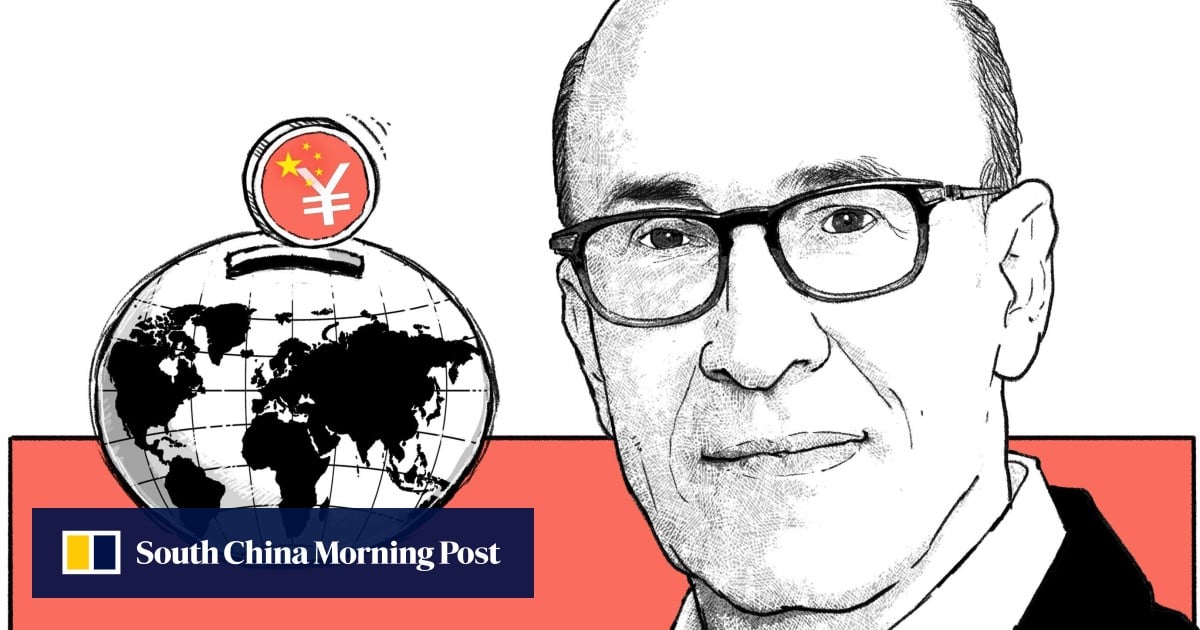
Professor Kenneth Rogoff of Harvard University has repeatedly warned that the US dollar is approaching a crisis of legitimacy. Having written extensively on the global recession in the late 2000s, Rogoff has turned his focus to the US currency’s increasingly unstable place at the top of the world’s financial hierarchy. A former chief economist at the International Monetary Fund and a chess grandmaster, he published Our Dollar, Your Problem in May last year.
In this interview, Rogoff elaborates further on the US dollar’s competition from the yuan and euro, the race among global policymakers to reduce their dependency on the US currency, and how the rise of cryptocurrencies factors into future developments.
This interview also appeared in SCMP Plus. For other interviews in the Open Questions series, click here.You have argued that the US dollar’s dominance is declining due to the rise of China, geopolitical tensions and the growing influence of cryptocurrencies. President Xi Jinping has called for making the yuan a global reserve currency. What is your take on this? How long would it take for the yuan to become a vital global reserve currency?
The fact that the Chinese president recently and explicitly called for making the yuan a global reserve currency is an extremely important moment.
In my experience over a couple of decades, some of which I talk about in my book, China’s technocrats have long wanted to make the yuan more independent of the US dollar. They have long recommended that, given China is a large country, it needs to have its own independent monetary policy.
However, at the very top, the president and the premier have typically opposed this. They did not want to take the risk of making a change in the US dollar policy simply because China was doing so well. Why change anything? Why rock the boat?