
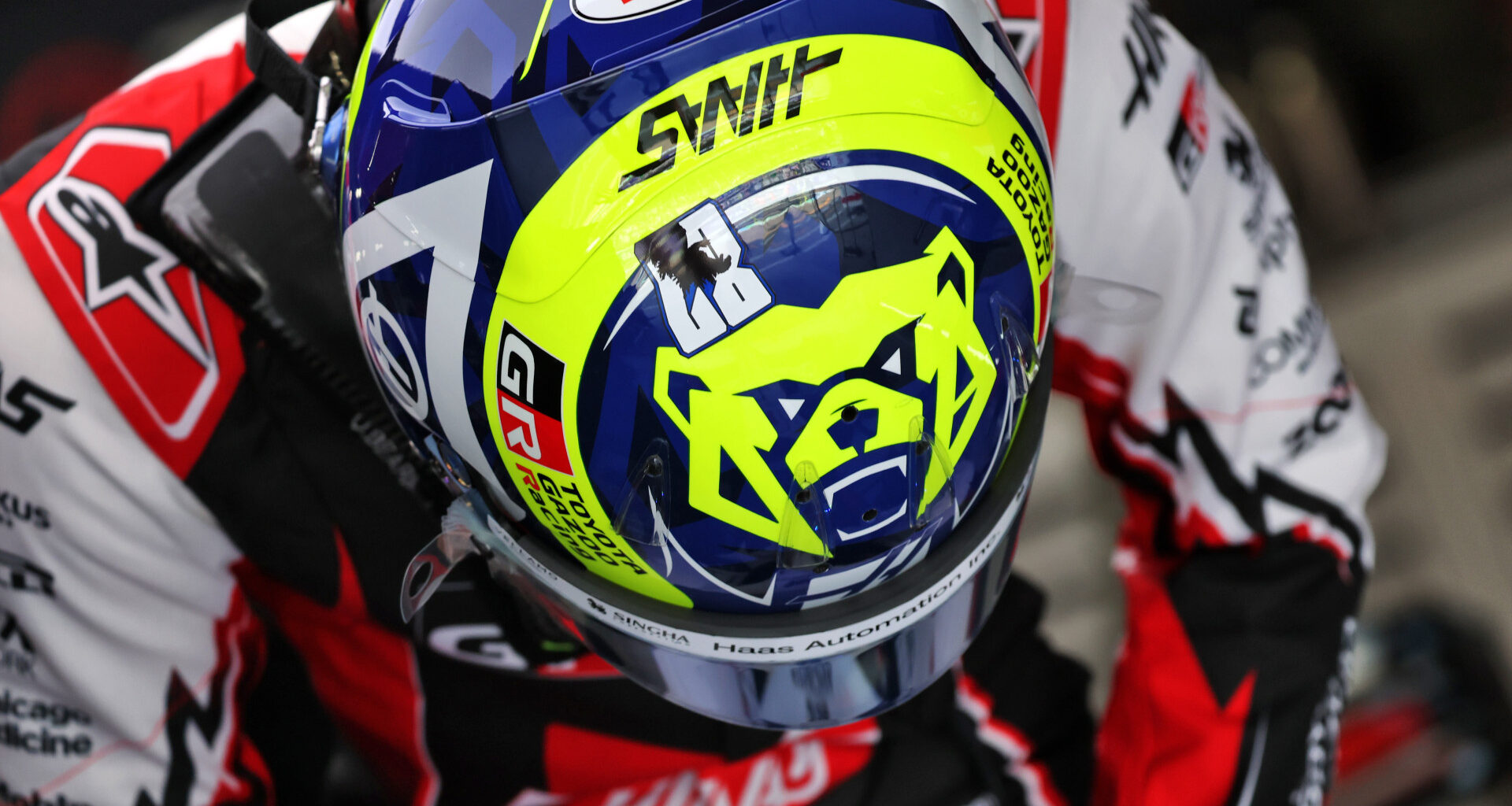
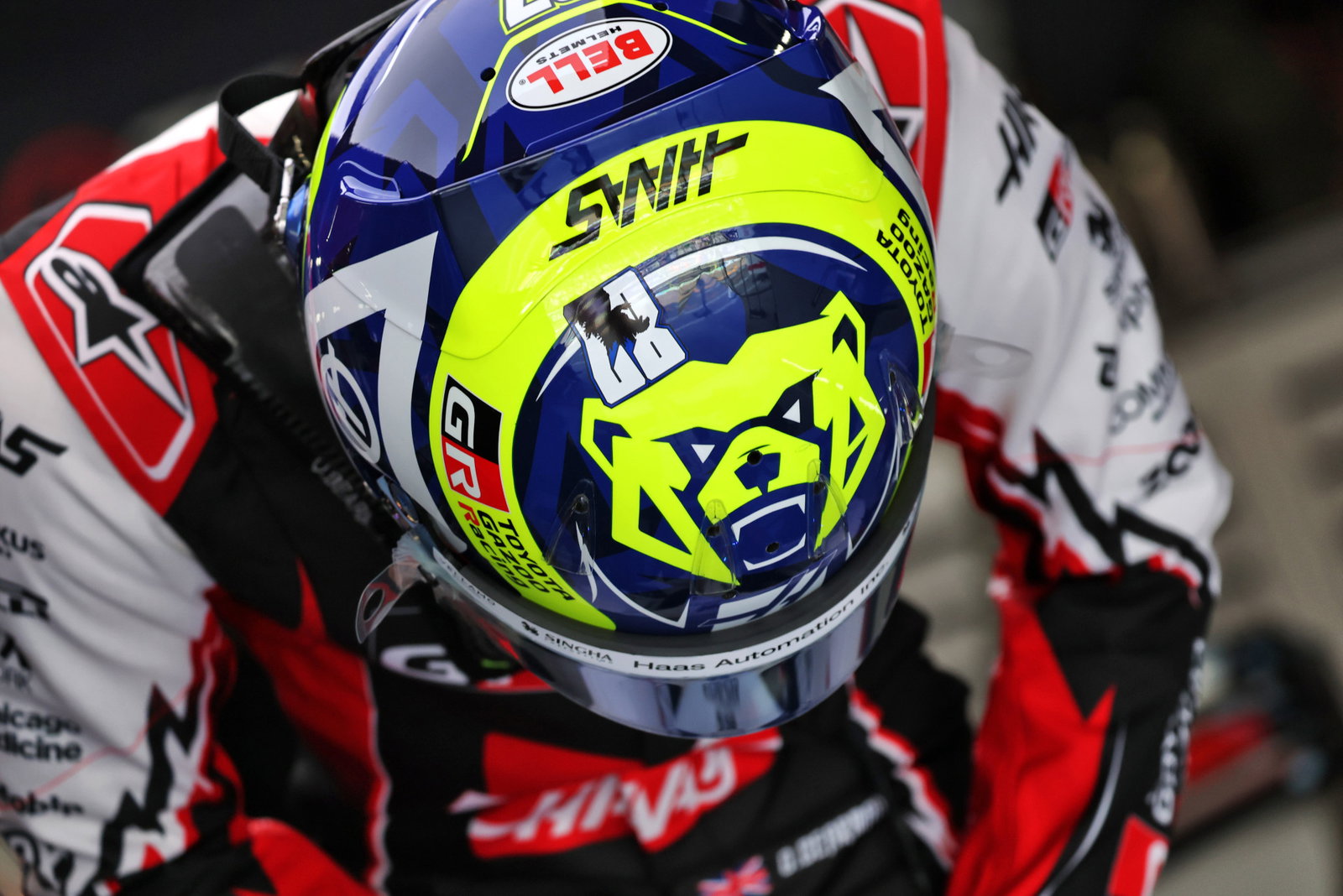
Ollie Bearman climbs from his Haas. Image: XPB Images
Bearman crashed his Haas after veering off the circuit at approximately 300km/h to avoid colliding with the rear of Franco Colapinto’s Alpine.
A 45km/h closing speed existed at the time, with Colapinto later labelling himself a “sitting duck”.
Bearman was deploying his boost button for maximum power while Colapinto’s battery was derating (ramping down its output).
Haas later indicated that even without the boost button, Bearman had repeatedly been 20km/h faster than his rival at that part of the circuit due to different energy management tactics.
The incident is one that some have been warning of since pre-season testing and followed a number of near-misses across the opening race weekends.
Grand Prix Drivers’ Association director Carlos Sainz made a public plea to F1 and the FIA in the wake of the race, urging them to act.
The FIA acknowledged the closing speed contributed to the crash and affirmed already scheduled meetings in April will determine whether any rule adjustments are made.
F1’s new-for-2026 regulations that aim for a 50:50 split between internal combustion and electrical power have been under fire since the start of the year.
The underwhelming nature of qualifying and the ‘artificial’ overtaking in races as a result of the need to manage energy harvesting and deployment have dominated headlines.
‘Listen to us’: F1 drivers demand action after Bearman crash
However, the safety concerns – which are the result of the unpredictable and often counterintuitive behaviour of the cars – could well be what triggers changes.
Upcoming talks will include the power unit manufacturers, each of which must balance their own agendas with the common good.
F1 continues to enjoy sold out attendances and booming global attention amid the controversy, with the increased overtaking and uncertainty seen by some as adding to the show.
While there was some derating and clipping (where engine power is diverted to recharging the battery at high speed) with the previous ruleset, the increased reliance on battery power has taken it to new levels.
Drivers are also now lifting and coasting into some corners to charge the battery, while other details within the engine mapping requirements are also having unforeseen impacts.
The rules have been slammed by many drivers including Charles Leclerc, who in Melbourne described the electrical energy boost button as “like the mushroom in Mario Kart”.
Aussie hero Oscar Piastri chimed in on that after finishing second in the Suzuka race, which marked his first Grand Prix of the season after failing to start the opening two.
Watching a replay of the Bearman crash in the pre-podium cool-down room, Piastri turned to Leclerc and said: “I finally see what you mean now about the mushroom. It’s pretty accurate.”
What do you think? Are F1’s new regulations dangerous? Vote now in this week’s Pirtek Poll.

