
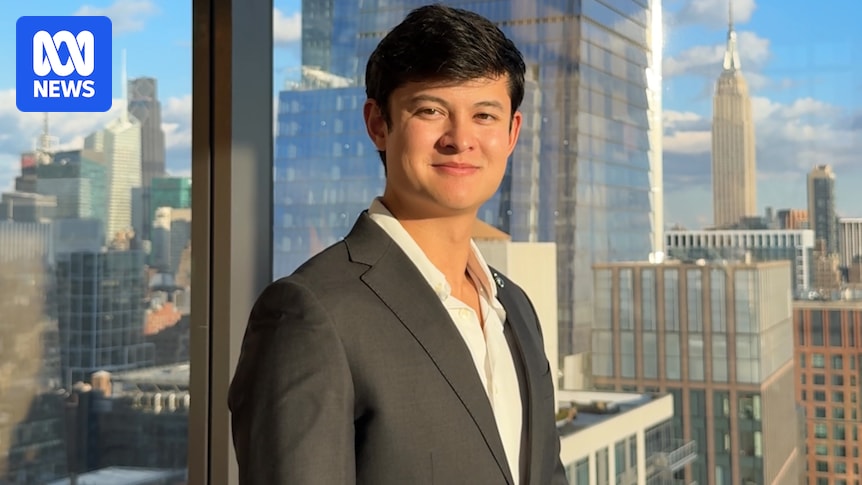
Former PwC employee Donald King has a bleak warning for workers not using artificial intelligence yet.
“If you’re not using AI then you should be worried. You should definitely be worried,” he told 7.30.
“It really is adopt AI or die.”
Mr King worked as an associate consultant at the forefront of AI during his time at PwC, one of the biggest consultancy firms in the world, between 2021 and 2024 in the United States.
He says he was part of the firm’s “AI Factory”, which focused on building autonomous agents for companies.
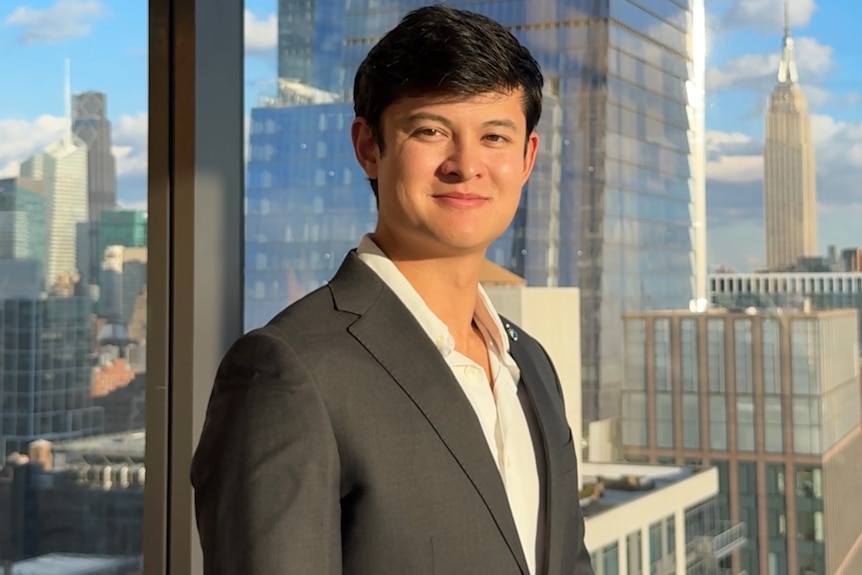
Former PwC employee Donald King worked in the consultancy firm’s ‘AI Factory’, which was responsible for building AI agents for companies. (Supplied)
“It was kind of like a young college grad’s dream job,” he told 7.30.
“Working directly with OpenAI, the hottest tech around, working with the largest clients around.
“I was very happy to join.
“But that shifted as I got into the weeds and understood really what we were doing.”
He says his team’s goal was to automate at least 30 per cent of the manual work involved in routine back-office tasks.
He also found himself grappling with a “moral dilemma” because he was training AI systems to perform work traditionally done by people.
AI is changing people’s jobs and, in some cases, replacing them. (AP: Peter Morgan)
“We were working with a large telecom company and we built 45 AI agents that were working together,” Mr King said.
“We made a Microsoft Teams agent that was pretending to be a human to update the team.
“That was a really big gut punch morally.”
Mr King left PwC in 2024 after being laid off.

PwC is one of the biggest consultancy firms in the world. (Reuters: Lewis Jackson)
“There’s definitely a little bit of guilt there,” he said.
“But in reality, it’s like when Excel was invented or Google was invented, it didn’t replace anyone’s jobs. It just raised the bar on output for everyone.
“If you’re using AI you’re going to 10-times your output. If you’re not using AI, you’re falling behind.
“That applies for the businesses as well. If the business is using AI … they’re going to have better profit margins, they’re going to have better earnings. If you’re not, you’re going to die.”
PwC did not respond to 7.30’s requests for an interview.
No human employees
Software developer and tech entrepreneur Shaon Diwakar has embraced AI.
After working for Meta for six years in Sydney, Mr Diwakar launched his own start-up company called InboxAPI, which is an email for AI agents.
His product allows users to have a standalone inbox for their AI agents – which can autonomously send, read, search, reply to, and forward emails – and keep their personal inbox, which may include sensitive personal information, separate.
Mr Diwakar has no human employees. Every facet of his work, except for what he does, is AI-generated.
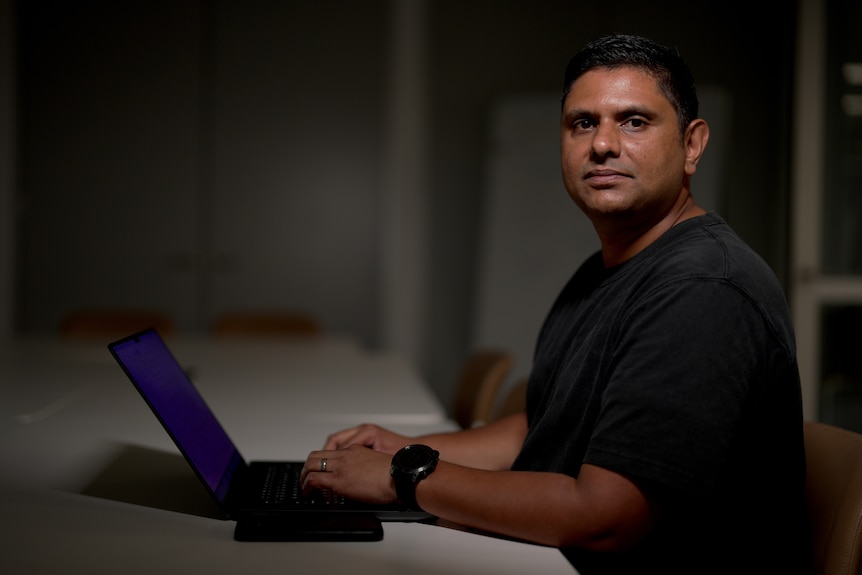
Shaon Diwarkar launched a start-up called InboxAPI, an email for AI Agents. (ABC News: Craig Hansen)
“I use Claude to write code. I’m using ChatGPT for marketing. I’m using Gemini to create videos. I use Perplexity to do really deep research or competitor analysis,” he told 7.30
It costs Mr Diwakar “a couple thousand” dollars a month in AI subscriptions to run his company.
“It’s cheaper than hiring a human, which is the sad reality,” he said.
When he started working at Meta in 2018, he says AI was like an unreliable assistant.
“In the early days it was sort of gimmicky. It would hallucinate a lot. It would make a lot of really trivial mistakes that were easy to pick up for even a novice engineer.”
He says in that time AI has improved dramatically.
“In around November last year, Anthropic dropped a new model called Opus 4.5 and it was exceptional. It was exceptionally good at finding mistakes in code that I had written,” he said.
“There was a sense of fascination and curiosity with that shift. But also, holy cow, this may well remove the need for me to write code at all.”
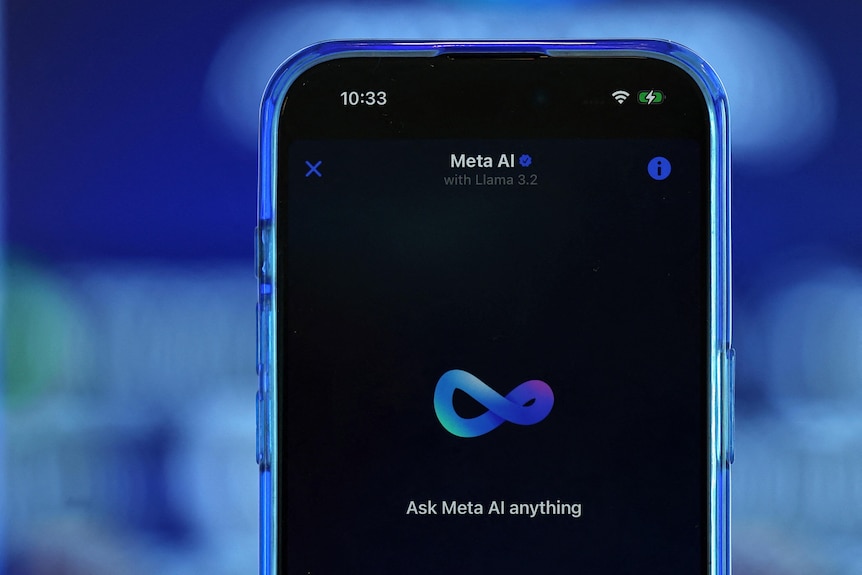
Software engineer Shaon Diwaker worked for Meta for six years and witnessed the rapid rise of AI. (Reuters: Yves Herman)
Mr Diwakar has studied and worked in technology and software engineering for more than two decades. He said he feels “grief” when he reflects on how AI’s ability to code is surpassing human ability.
“You spend a really large portion of your life getting really good at it, and all of a sudden you have a computer [that] kind of comes along and can do it better than you can.”
Although AI can do a lot, it still cannot outperform humans in several vocations.
Professor Clinton Free from the University of Sydney mapped Australian job listings and the potential for AI to automate tasks.
He found garbage collectors, carers and gardeners have the least number of tasks that can be automated – meaning they are the least at risk for being replaced by AI.
“As a parent I think about this a lot, what are the types of roles which are more resilient against AI?” Professor Free said.
“I think [it will be] human-centred roles and jobs which involve the real world, physical touch, like some work in trades and construction, physiotherapy, human connectedness jobs.
“I think even jobs in education will be resilient.”
AI being blamed for lay-offs
However, some of the world’s biggest tech companies are taking advantage of AI’s advancements and have begun laying off staff.
Atlassian cut 1,600 jobs, Amazon recently announced 16,000 lay-offs and there are reports Meta is planning to reduce its workforce by 20 per cent to make way for AI.

Ben Schorr is a former Microsoft employee. (Supplied)
Former Microsoft employee Ben Schorr worked with the company for nine years before being laid off last year. He is sceptical as to whether AI is to blame.
“There was certainly a lot of rumours going around that it was all because of AI, that AI was driving it,” Mr Schorr told 7.30.
“I didn’t see a lot of evidence that AI was driving that particular lay-off personally.”
He believes major companies use AI investment as an excuse to lay-off staff, even when it may not be the whole story.
“I think the PR folks have realised that you can, when you make cuts like that and you have to give the investors an explanation, that if you say it’s because of AI it makes it sound like you’re tech-forward and you’re investing and things are great,” he said.
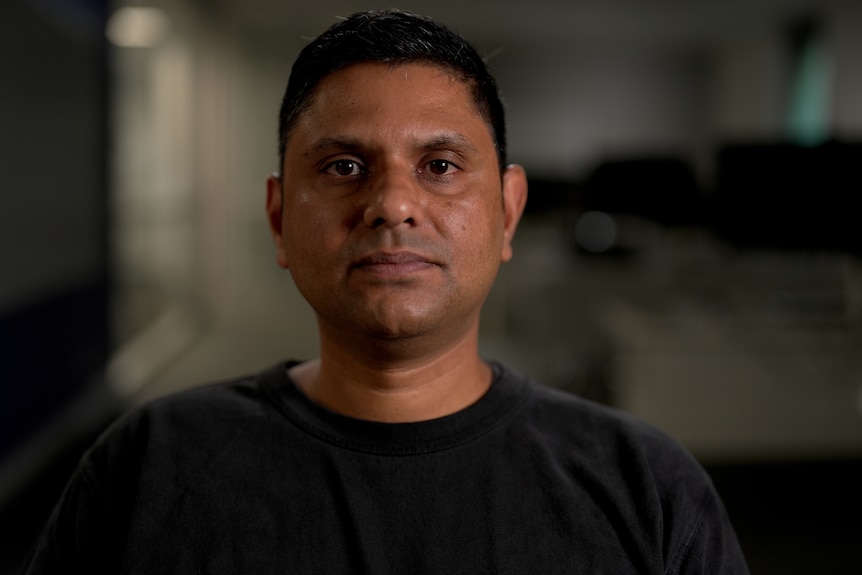
Shaon Diwarkar says every company should be considering AI tools to automate operations. (ABC News: Craig Hansen)
Mr Diwakar agreed that could be the case for some companies but believes it is essential for businesses to integrate AI into their workflows, or they risk falling behind.
“I think if a small business or any medium-sized business is not thinking about AI right now, they will be replaced or overtaken by businesses that are augmenting humans with AI by the end of this year,” he said.
Mr Diwakar warns that a job wipe-out is on the way and Australians aren’t prepared.
“I don’t think we have the policy or infrastructure in place to support mass redundancies or displacement of jobs. I don’t think our policy makers have really thought through it,” he said.
“I fear for what happens when AI comes for our jobs.”
Watch 7.30, Mondays to Thursdays 7:30pm on ABC iview and ABC TV
Contact 7.30
Do you know more about this story? Get in touch with 7.30 here.