
Before the 2023 Women’s World Cup (WWC) in Australia, 35-year-old Ella Gordon didn’t follow many sports.
She then found herself swept up in the Matildas hype that gripped the nation. She went to a few games live, watched others on TV and soon “fell in love”.
“I hadn’t any interaction with professional sport [previously] because it just seemed like not a kind of welcoming environment or somewhere I’d like to be, to be honest,” Gordon, a queer woman with a musical theatre background, told ABC Sport.
“If you had told me two years ago that I would be staying up to midnight to watch 11 women run around a pitch and kick a ball, I would have told you you’re crazy.”
Straight after the tournament, the Queenslander bought a Brisbane Roar A-League Women’s (ALW) membership and has since gone to as many home games as possible.
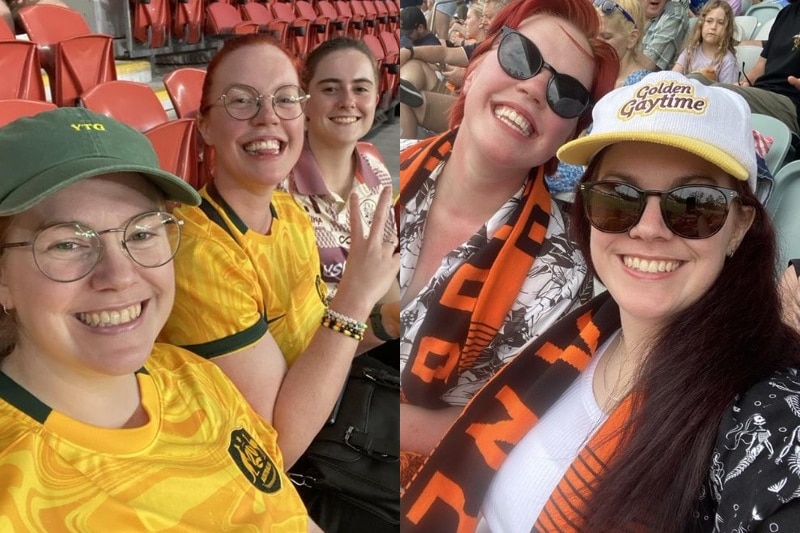
Ella Gordon became a member of Brisbane Roar after the Matildas hype during the 2023 Women’s World Cup. (Supplied)
Gordon is one of many Australians who bought ALW memberships or wanted to learn more about the domestic competition following the success of the world cup.
However, like many others, she found that support didn’t always come easy.
“I don’t really know what I expected, but it was definitely not as professional as I expected it to be,” Gordon said, referencing both on and off the pitch.
Many cite inaccessibility of games and production, game-day experience and broadcast quality to be lacking — which has resulted in the domestic league largely seeing no long-term increase in crowd numbers despite the recent fanfare of the Matildas.
Matches that are hard to get to
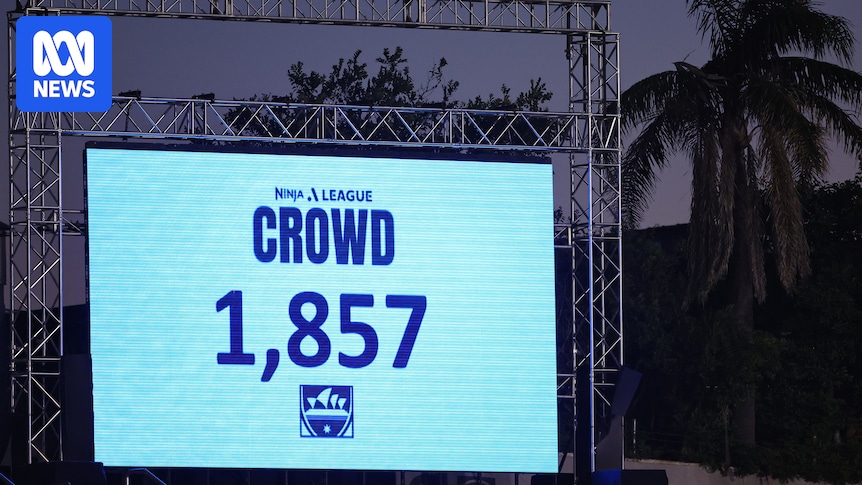
The A-League Women’s initially saw a boost in crowds following the Women’s World Cup from an average of 1,583 per match to 2,248 the following season (2023/2024) and a record-breaking attendance of 312,199 across the season.
However, during the following 2024/2025 season, crowds dropped back down to about 1,570 per match.
Like Gordon, Melbourne-based Alison Malek — who previously never paid much attention to soccer — thought, “I’m going to put my money where my mouth is” and signed up for a Melbourne Victory Women’s membership after getting hooked during the WWC.
Yet she is still to go to a single match.
Some Melbourne Victory members find the club’s home ground in Bundoora hard to get to for matches. (Getty Images: Martin Keep)
Victory’s home-ground is in Bundoora, a residential suburb about 15 km north-east of Melbourne’s CBD and nowhere near a train line, meaning Malek would need to drive or take a few buses to get there.
“I’ve read some things about how there’s not much of a grandstand there [too]. It’s a lot of being out in the elements. I was like, I don’t want to go and stand in the sun,” she said.
“So as much as I wanted to be supportive, it ended up being a monetary, not physical go-to-the-game, support.”
The home ground of Gordon’s Roar has moved around a few times since she signed up, making forming a routine or connection difficult.
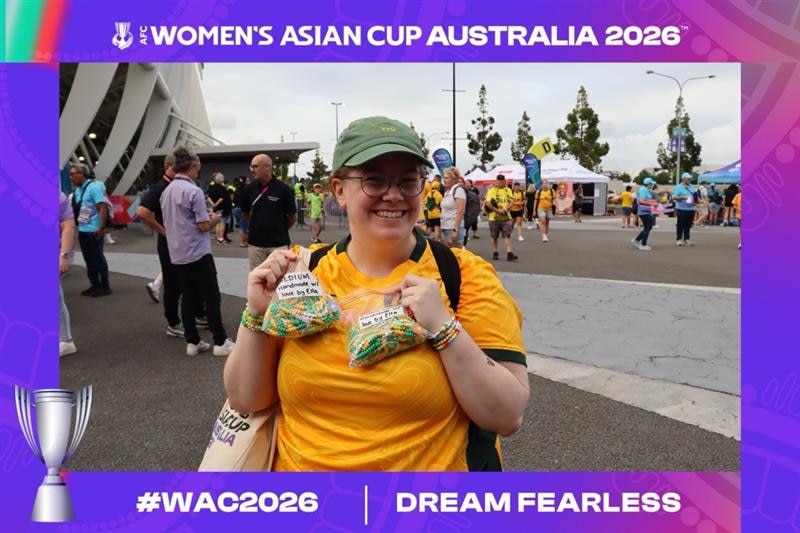
Ella Gordon started following women’s soccer after the 2023 Women’s World Cup in Australia. (Supplied: Ella Gordon)
Meanwhile, 40-year-old Rachael Bettiens signed up for a Melbourne City membership for the 2023/2024 season following the WWC, not realising the club played most games in Casey Fields, an hour’s drive from the centre of Melbourne.
She said realistically she wouldn’t be able to get out there on a regular basis. Plus when she looked at the fixture for the season, there were two games on Wednesday nights at 4:30pm and 5:30pm, which she said would be near-impossible to attend.
“I think this season I’ve been to one game and it was a double header at AAMI,” Bettiens said.
“And with that, it was on a Friday at 4:50pm, so I literally had to plan my work day so that I could start early and finish early to get to the game … I think it’s really unrealistic for most people.
“[Then] you do show up and then there aren’t many people there.”
Lack of visibility
Malek said the other thing that helped her connect with the Matildas was how visible they were in the media, including social media apps like TikTok.
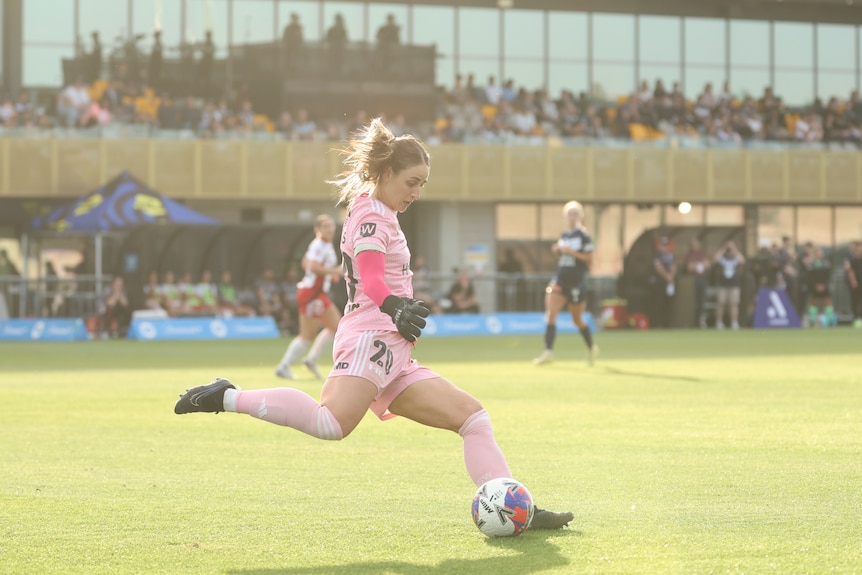
“All the players and the Matildas account itself was really active through the world cup and by the end of it, I knew who all the players were … I do not have that connection to Victory. I couldn’t tell you one player,” Malek said, adding that the A-League Women’s not featuring much on mainstream news didn’t help.
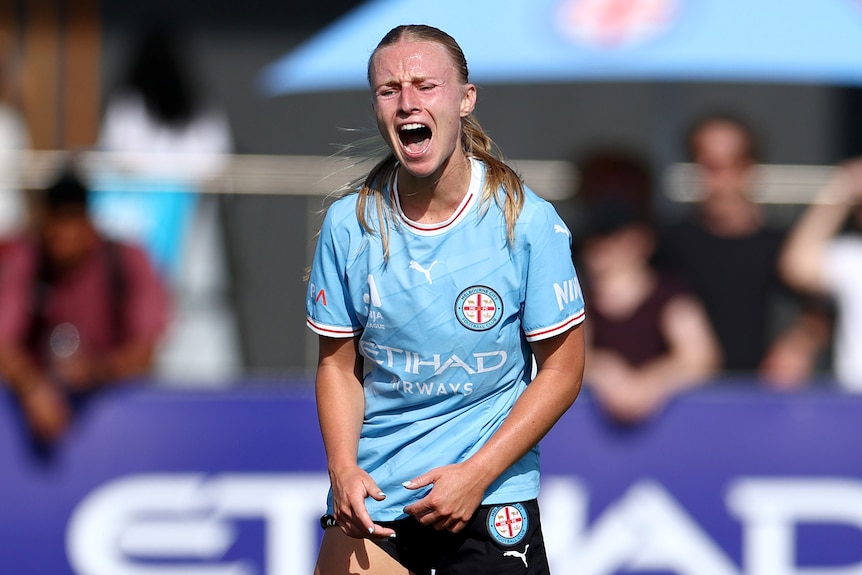
Holly McNamara is a fan favourite in the Matildas and plays for Melbourne City in the A-League Women’s. (Getty Images: Josh Chadwick)
Bettiens echoed this, adding that clubs often still prioritised men’s content over women’s.
She watches a lot of AFLW and thinks the ALW would benefit through broadcasting including experts or hosts talking about the game pre-show and at half-time.
“It makes it a little bit harder to kind of feel connected and to learn who the players and teams are, the history, the competition, who the favourites are, like any of that sort of stuff,” Bettiens said.
“And depending on where the games are held, sometimes it really just feels like you’ve got one shitty camera swinging on a head back and forth from one end to the other and you don’t get any kind of close-ups.
“You don’t get sometimes the replay and you’re like, ‘What just happened to them?’ And then it just moves on and you’re like, ‘Okay, all right.'”
Making things difficult for A-League clubs is the financial turbulence that continues to hit the league, while broadcast deals are yet to have the funding for better production.
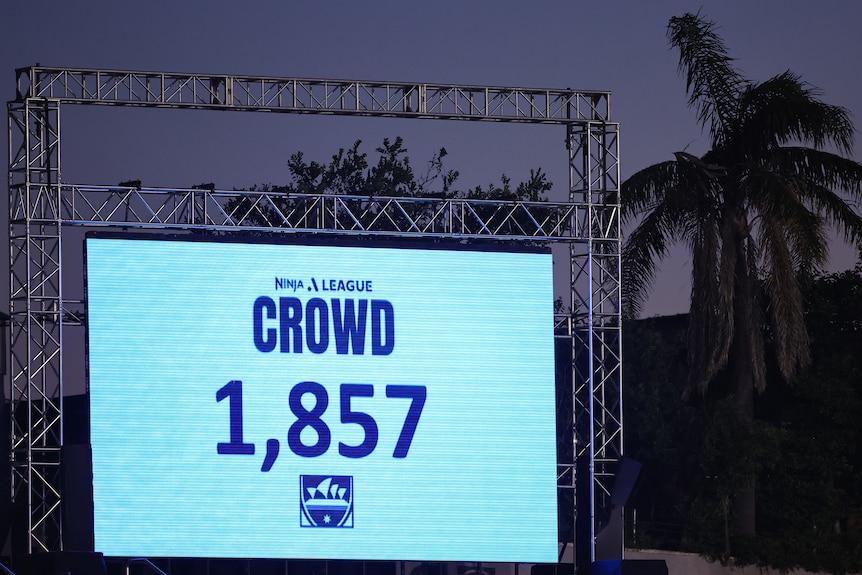
Crowd numbers spiked after the Women’s World Cup, but fell back to an average of a few thousand per game. (Getty Images: Jeremy Ng)
The Australian Professional Leagues (APL) slashed clubs’ funding by almost 75 per cent for the 2024/2025 season, where distribution from head office totalled just $530,000, down on close to $2m handed out the season prior.
In 2024, five A-League insiders told the Herald Sun, on the condition of anonymity, that the elite competition was in a perilous financial state.
Yet there are fans like Gordon who plan to keep showing up to games.
“Partly it’s a hope that it’s going to get better and I want to be a part of that,” she said.
“Because they can’t improve if they don’t have the people there supporting them, and I really want that so badly for the players and for the staff who are working really hard to make that happen — and I would hate for it to completely crumble.
“The other part is just that I like watching the sport now, even if the quality is not as good.”
There’s also the added benefit of pride when Brisbane players get national call-ups, such as goalkeeper Chloe Lincoln, who featured in the recent Women’s Asian Cup, Matildas veteran Tameka Yallop and fan-favourite Sharn Freier.