
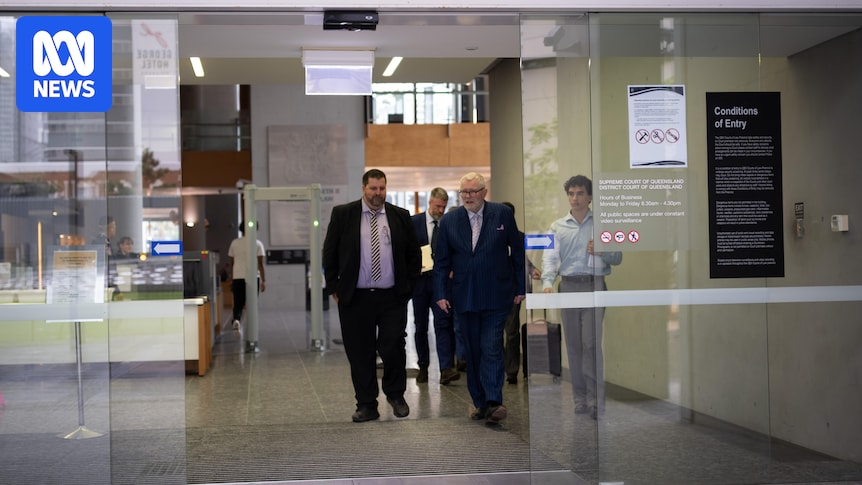
A Shell executive was sacked because he raised concerns of financial fraud within the company, Queensland’s Supreme Court has heard.
Shell Power fronted a court hearing today to defend a challenge by Kent Quinlan, a former executive of ERM Power, which was bought by Shell in 2019.
This morning, Mr Quinlan’s barrister, Anthony Morris KC, asked the court to compel Shell Power to hand over a raft of internal documents the company had refused to release.
The documents had been previously deemed privileged company information, but Mr Morris told the court the privilege did not apply because they covered up fraudulent conduct.
Mr Morris told the court his client was a whistleblower who raised suspicions of insider trading and several “bogus” transactions by company directors in 2012.
Sham trades inflated shares
Mr Morris told the court this included the buying and selling of “sham” futures in order to artificially inflate the company’s share price.
“This was the sham or artifice to mislead the market and give ERM shares a greater value than they would have attracted if those transactions had not taken place,” Mr Morris said.
“Mr Quinlan became indirectly, and later directly aware, of such transactions.
“He reported them to a particular director whom he trusted not to cover up such conduct.”
Anthony Morris says this case will set an important precedent for Australian whistleblowers. (612 ABC: Kenji Sato)
Mr Morris said his client suffered “retaliatory” treatment by the company, being denied bonuses before being made redundant in 2014 as a “false pretext” to get rid of him.
Shell Power’s lawyers told the court the company had already released a “huge amount” of information to Mr Quinlan, and his additional requests were not reasonable.
Shell’s counsel told the court Mr Quinlan was asking for large volumes of company data, without demonstrating it was relevant to the case.
He said this included employee pay data and every reference to the word “gas” in company emails.
“There has been transparency for some time over what has been done,” the counsel for Shell said.
“What is absent from the plaintiff’s case is any real evidence … that what’s being done has a likelihood or a real chance to identify important, relevant evidence.”
The case is due to return in May.
An important precedent
Speaking outside of the court, Mr Morris told the ABC this case would set an important precedent for Australian whistleblowers.
He said it would test whether companies could block whistleblowers from obtaining documents and defending themselves in court.
“That’s one aspect of the whistleblower law which has never really been effectively tested in court,” Mr Morris said.
“If we succeed on that, which I’m optimistic we will, that will be a positive step for all whistleblowers everywhere.”