
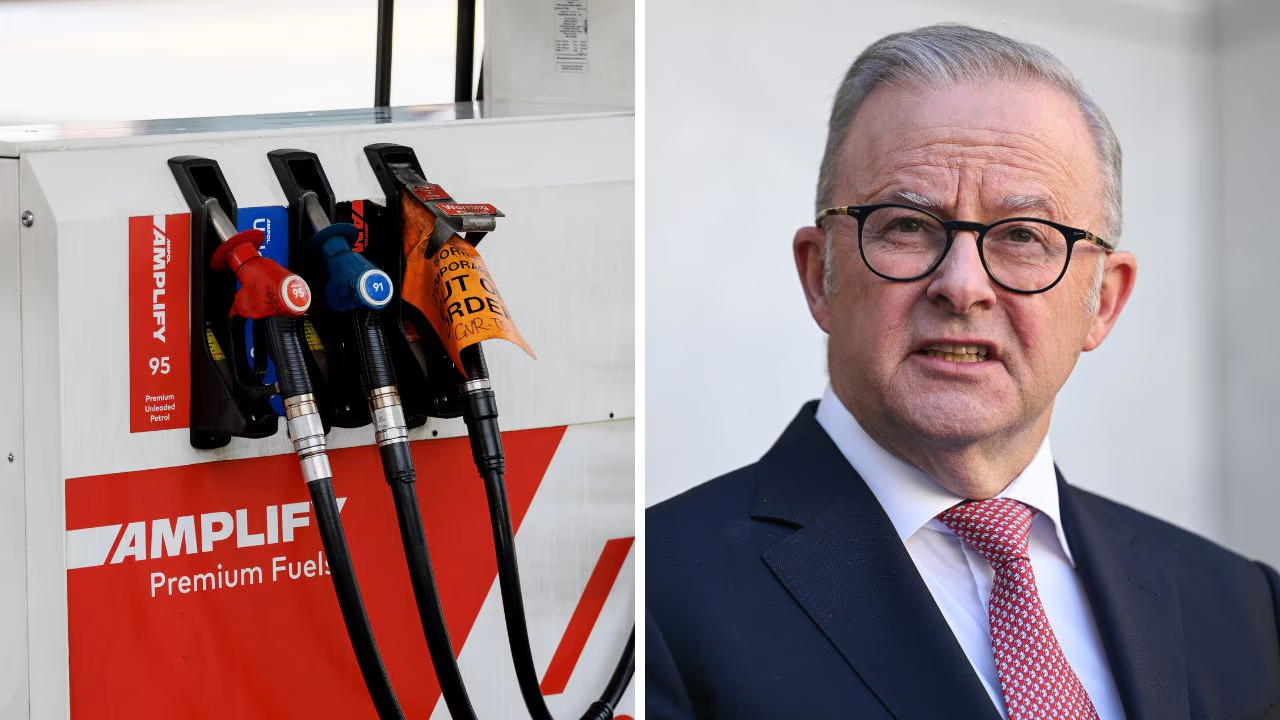
An economist has issued a brutal critique of the government’s move to cut the fuel excise, warning it could add to rampant inflation, rate hikes and mortgage pain.
Anthony Albanese announced a 50 per cent reduction in the fuel excise for three months on Monday, as the federal government came under mounting pressure to address the nation’s fuel crisis.
The measure will reduce the cost of petrol by 26.3 cents a litre, or about $16 when filling up a $60-litre tank.
But it’s already copping criticism from experts, including AMP Chief Economist Shane Oliver, who feared it was a “temporary sugar hit” that would add to Australia’s inflation woes.
The cut would make inflation appear lower initially, pulling the headline number down by about 0.5 per cent in the year to June, Mr Oliver told news.com.au.
But it risked causing higher underlying inflation by increasing demand in the economy.
Underlying inflation is the long-term trend with volatile items like fuel stripped out, which the Reserve Bank of Australia (RBA) prefers to rely on for cash rate decisions.
When inflation is being driven by strong demand, the goal is to slow spending, not encourage it, because excess demand is what pushes prices higher.
Australia was already dealing with persistent inflation before the war in Iran, with the RBA pointing to strong demand as a key driver.
Our annual inflation rate has been above the RBA’s target band of 2-3 per cent since August.
The RBA has responded by hiking the cash rate twice so far — and the war has made the outlook for future hikes much worse.
Westpac has forecast another three rate hikes by the end of this year – which would take the cash rate to 4.85 per cent – and no cuts until 2028.
In addition to his inflation concerns, Mr Oliver also believed the excise cut would threaten the country’s limited supply by encouraging Aussies to buy petrol and diesel.
“We should have been adopting policies to encourage less use of fuel, not more, to make sure essential use can continue for as long as possible,” he said.
“By cutting fuel excise and GST on fuel, we will weaken the signal from higher fuel prices to use less, and the move actually seems aimed at encouraging motorists to use more at Easter.
“I understand the desire to support the economy, but there are much better ways to do that, including by conserving fuel, than with a temporary sugar hit of the fuel excise cut.”
In the near-term at least, there would be some relief for Aussie families, with the average household saving $9 a week as a result of the cut.
“But at current petrol prices, households will still be $22 a week worse off, inflation will still rise to more than 5 per cent, it won’t prevent RBA hikes, won’t do anything to save fuel, and will be forgotten if petrol keeps rising.”
‘They are throwing money at us’
“We’ve seen this movie before,” wrote economist and former Treasury official Chris Richardson, another critic of the fuel excise cut, on social media.
“If Budget responses add more to demand (without helping supply), that may well worsen the overall pain by adding to inflation.”
In addition to the fuel excise cut, federal and state governments had also promised other “handouts,” including free public transport and above-inflation pay rises, Mr Richardson said.
These would come with a “sting in their tail,” he warned, keeping inflation higher for longer.
“So they are throwing money at us. And I 100 per cent understand the politics of that, but the economics of it are poor.
“Back in 2022, Australia already had inflation when a war in Europe added an energy price shock.
“Back then, the feds and the states gave us a range of handouts. And yes, inflation ended up rumbling on longer here in Australia.”
The fuel excise was last cut in half in 2022 – for six months – when Russia’s invasion of Ukraine resulted in an energy supply shock.
Financial adviser Ben Nash from Pivot Wealth also criticised the cut, arguing that the true measure of pain for Aussies was the cash rate rather than the price of petrol.
“For high-income families, the real impact is (from) inflation and interest rates, not the bowser,” Mr Nash wrote on social media.
“A temporary cut pulls inflation down now and pushes it up later. Watch the RBA, not the fuel price.”
Mr Albanese’s Monday announcement came days after Treasurer Jim Chalmers ruled out cutting the excise, saying it was not being considered by the government.
The Coalition welcomed the move but decried it as “overdue”.
“Australian families and small businesses will pay less for fuel because the Coalition led and the government followed,” Opposition Leader Angus Taylor said in a statement.