
Kevin McGonigle opened last season in A ball, then skipped Triple A altogether to make the Detroit Tigers’ Opening Day roster this spring, splitting time between shortstop and third base. He’s 21 and collected four hits in his big league debut.
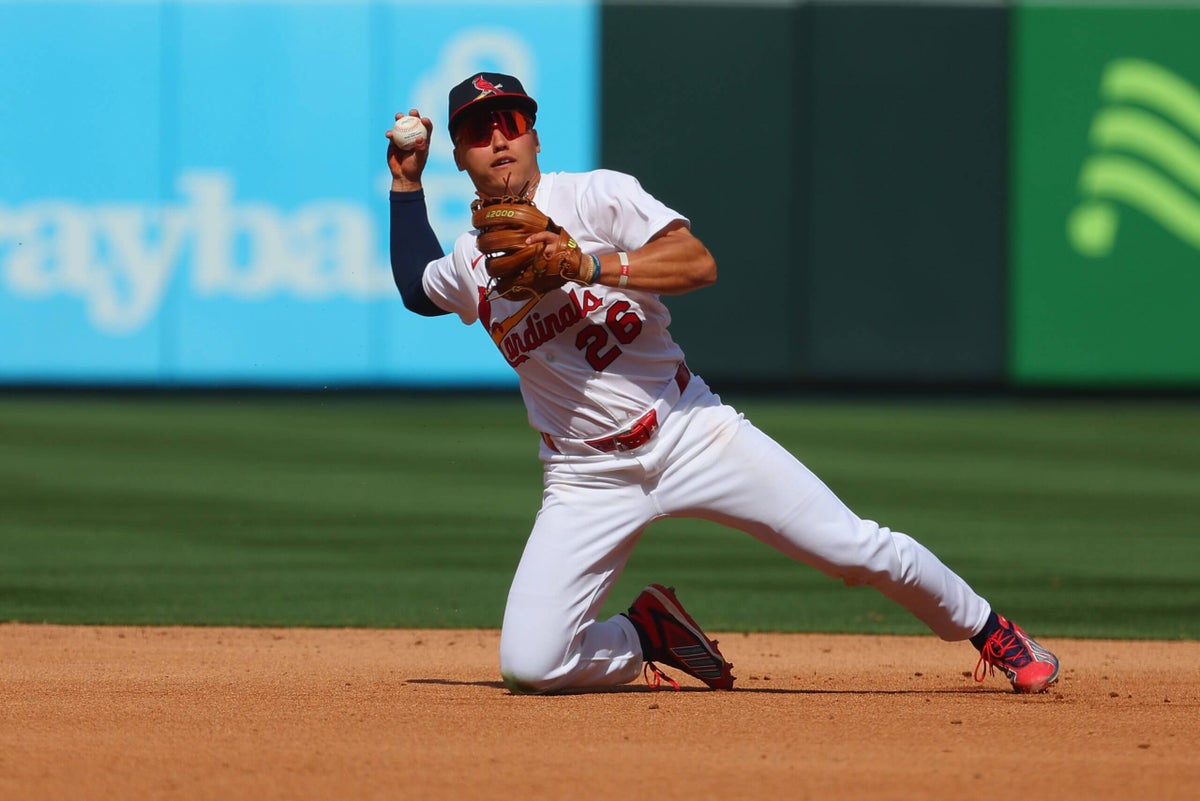
JJ Wetherholt also made an Opening Day roster. He had eight months of minor league experience when the St. Louis Cardinals picked the versatile infielder to be their second baseman and leadoff hitter. He homered on Opening Day and had a hit in every game of the season-opening series.
It’s a matter of time — and maybe not much time — before Konnor Griffin joins them. The ninth-overall draft pick in 2024, Griffin entered last season ranked somewhere in the middle to second half of most Top 100 lists but blew through three minor league levels as a teenager and emerged as the top prospect in baseball. The Athletic’s Keith Law called him “the most exciting prospect we’ve had in the minors since Mike Trout.”
Griffin could be playing shortstop for the Pittsburgh Pirates before his 20th birthday in April.
Such a rapid rise was exceedingly rare a decade ago, but structural and technological changes have decimated the conventional wisdom of generations past, opening a player development fast lane that’s accelerated the career path of the game’s top prospects, especially at premium positions up the middle.
“Players are definitely moving up faster as teams try to optimize age and time in the big leagues to capture the most productive years of a player’s career,” Boston Red Sox director of player development Brian Abraham said.
Major League Baseball is demanding younger talent, and a streamlined minor league system is providing it.
The elimination of short-season leagues has pushed top high school draft picks straight into more advanced competition, while advanced metrics and batted ball data have destroyed the old conventional wisdom about players needing a certain number of at-bats before moving into the upper levels. The proprietary models teams use to predict future impact have further incentivized organizations to keep their best prospects at shortstop, center field and catcher, while pushing them higher and faster toward the big leagues.
“Don’t get me wrong, I do think as an industry sometimes we might be moving some guys too soon,” Philadelphia Phillies director of player development Luke Murton said. “But usually, the good ones, they figure it out.”
Top prospects who not only survive the fire but thrive in its heat can more easily — and thoroughly — separate themselves from their peers, letting the minor league filter work more quickly to identify and promote elite talent.
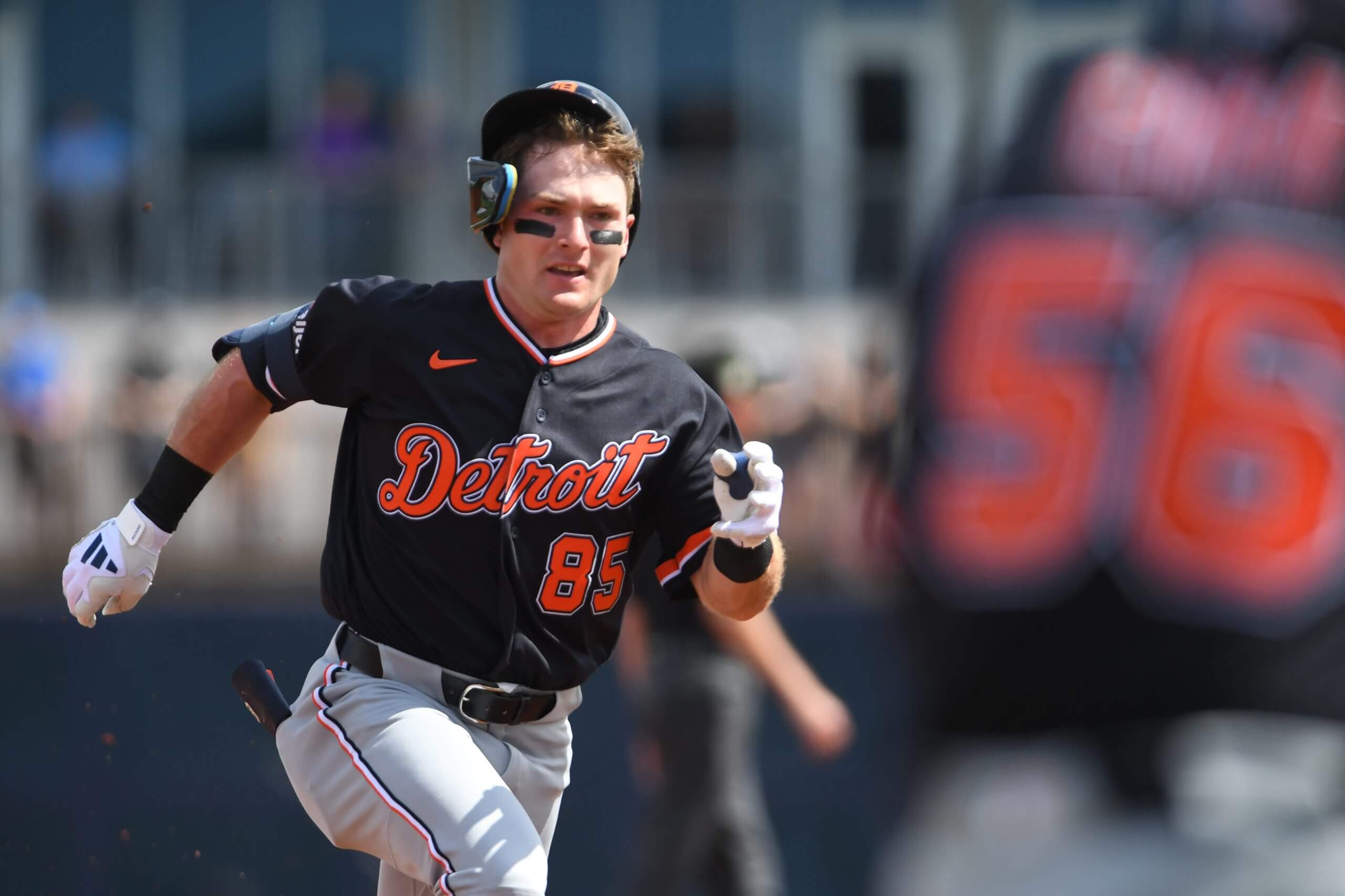
Kevin McGonigle has made an immediate impact in the Tigers lineup. (Mark Taylor / Getty Images)
McGonigle, Wetherholt and Griffin clearly have been fast-tracked, but they’re not the only ones. Colt Emerson, 20, is one step away from his debut with the Seattle Mariners, 19-year-old Leo De Vries could play for the Athletics this season, and even 18-year-old Jesús Made seemingly has a chance to be with the Milwaukee Brewers by year’s end. All are shortstops. Most played at three different levels last season.
Shortstop has always been a prestige position, and baseball has seen groups of star players rise together in recent years.
In the late 1990s, it was Alex Rodriguez, Derek Jeter, Nomar Garciaparra and Miguel Tejada heralding a new era of power-hitting shortstops. In the mid 2010s, Francisco Lindor, Carlos Correa, Corey Seager, and Xander Bogaerts rose to prominence around the same time. Now, another group has a chance to take baseball by storm, again, but their rise is explained by more than just pure talent. Structural factors within the game are helping to push these shortstops up fast and keep them at the position.
The Prospect Promotion Incentive helps explain some of those final leaps to the big leagues, but it doesn’t explain why eight of the top 13 prospects on Law’s top 100 list are shortstops who have already reached Double A, and seven of them got there before turning 21. Historically, that’s an unusual number of upper-level shortstops getting this much prospect attention. Elite athletes have always played shortstop when they were young, but many have moved down the defensive spectrum as they’ve gotten older, or else they’ve failed to hit enough to maintain Top 20 prospect hype in the upper levels.
Upper-level shortstops in Top 100
YearTop-100 SS
2026
9
2025
4
2024
5
2023
4
2022
2
2021
0
2020
2
2019
2
2018
4
2017
4
2016
3
2015
3
The Athletic
Now, more than a third of Major League organizations have an upper-level shortstop ranked among Law’s top 31 prospects, and the second half of Law’s Top 100 list is loaded with 19- and 20-year-olds playing premium positions and primed to take off if they can prove themselves early and move quickly.
“Teams are getting better at development and pinpointing things that players need to work on,” New York Yankees director of player development Kevin Reese said. “Or at least expediting the amount of time it takes to figure out, is this going to work or not?”
That’s good news for those young players who thrive out of the gate, but for prospects who take a while to gain traction, the game’s relatively new minor league roster limits leave less margin for error and less room for second chances.
“You find out about guys sooner,” Tampa Bay Rays vice president of player personnel Kevin Ibach said. “The flip side of that is, when guys don’t have success as early on in their minor league careers, you see turnover among minor league prospects in ways you might not have 10 or 15 years ago.”
Fifteen years ago, the amateur draft was 50 rounds and MLB placed no meaningful limit on the number of minor league players a team could keep in its farm system. Teams were allowed to add extra affiliates, and each affiliate had far more roster spots than it needed. As recently as 2019, the Yankees had eight minor league affiliates in the U.S. alone, meaning they had enough roster spots for nearly 300 domestic minor league players.
In 2021, Major League Baseball cut the draft to 20 rounds and limited each team to only five domestic affiliates. In 2024, the league reduced each minor league roster from 36 to 33 players, meaning organizations are now allowed only 165 minor league players outside of their Latin American complexes. It’s survival of the fittest to fill those spots.
“You’re releasing guys that you know are good players,” Murton said, “but that you know probably are not that guy.”
That guy — the one with a superstar ceiling, who’s too advanced for Class A pitching even as a teenager — no longer has to pass the eye test or meet some arbitrary at-bats benchmark to move up the ladder. When, in 2023, 19-year-old Roman Anthony was hitting just .228 with one home run through 42 games for Low-A Salem, the Boston Red Sox promoted Anthony to High A based on his outrageous plate discipline and batted ball data. Anthony finished that year in Double A, and a year later was considered by many to be the top prospect in all of baseball.
This spring, Anthony was the standout left fielder for Team USA in the World Baseball Classic, and he just made his first Opening Day roster as the Red Sox leadoff hitter.
“We’re getting better at predicting who’s going to sink and who’s going to swim beyond the typical back-of-the-baseball-card performance,” Reese said.
It remains an imperfect science — Kristian Campbell, who also had outrageous under-the-hood numbers, ultimately fell flat when the Red Sox pushed him to the Major Leagues last spring — but teams have faith in their internal models to predict future performance.
As starting pitchers have thrown fewer innings, pitching prospects have become less valued — there were only two pitchers among Law’s top 20 prospects this year — and prediction models tend to place a premium on those athletes who can handle the game’s most difficult positions.
“I think teams tend to keep players at certain spots longer because those positions carry more value both in internal models and externally,” Abraham said.
The younger the player, the better the outlook.
“Young-for-level makes guys pop a lot higher,” Murton said. “They don’t have to perform as well because they’re young-for-level, so I think a lot of teams are being aggressive to make sure these prospects are popping in other teams’ models because they want to have more value in trades.”
For players entering pro ball, the shift in player development norms is happening almost immediately, especially for draft picks out of high school. The eliminated short-season level came in-between the introductory rookie league and full-season Low A. It was a go-to assignment for elite high school talent coming out of the draft, but those high-upside 18-year-olds are now going straight to Low A, where the rush of biomechanical and batted-ball data helps identify strengths and weaknesses while testing hitters against more advanced pitching.
When elite athletes are given detailed workout plans and need-based drills, massive gains can happen in a short amount of time. Aggressive promotions can help developing players avoid complacency and stagnation so that they keep rising.
“If they’re just kind of hovering in A ball for too long, you’re not seeing those adjustments take place,” Ibach said.
There is a domino effect to such an accelerated career path. As teenagers are pushed into A ball, more experienced players are pushed out of minor league affiliates altogether. Often, it’s talented organizational players and so-called Four-A players — veterans who are excellent in Triple A but unable to sustain success in the big leagues — who lose their roster spots. Those players rarely became difference makers in the big leagues, but they historically raised the level of play across the minors.
Now, every minor league level is skewing younger.
According to Baseball Reference, the average Double-A Eastern League batter in 2006 was 25 years old. When Griffin got to the Eastern League last season, the average batter was 23.8.

Konor Griffin could be the next impact shortstop to arrive soon. (Julio Aguilar / Getty Images)
“There’s a huge separation now between Double A and Triple A,” Murton said. “And I think the gap right now between Triple A and the big leagues is probably the biggest it’s ever been.”
Minor league baseball has always been a race to the top, but modern player development has evolved to create, not shortcuts, but express lanes for elite young players who can adapt early and move quickly. The path to a rapid rise is more readily available than ever before.
“I feel weird about it still,” Reese said. “I’m like, ‘Dude, if this guy was playing three years ago, he’d still be in Staten Island,’ and we’re throwing him out in Double A and seeing what happens.”
What happens sometimes is a kid just never stops hitting until he has a four-hit game in his debut, a home run on Opening Day, or his sights set on wearing a big league uniform before his 20th birthday.
“We throw a lot of these kids in the deep end,” Ibach said. “And you hope they can swim.”