
Matt Roller
CloseMatt Roller is an assistant editor at ESPNcricinfo. He tweets at @mroller98
Multiple Authors
Apr 1, 2026, 02:17 AM
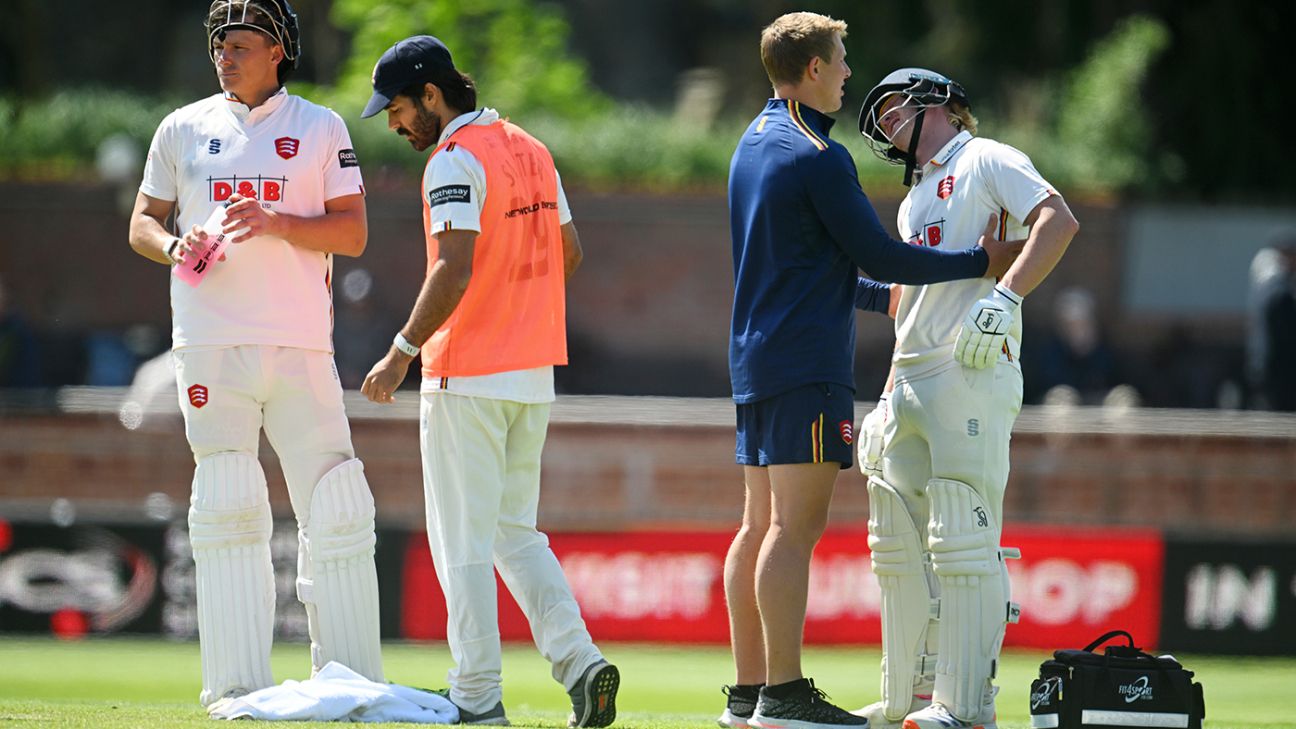
The ECB has urged counties to “do the right thing” ahead of the launch of a season-long trial of player replacements in the County Championship amid fears that the system could be abused by teams desperate for a competitive advantage.
New regulations have been introduced for the 2026 season as part of the ICC’s worldwide trial of injury replacements, which has seen similar pilots in Australia, India and South Africa’s first-class competitions. The scheme is being described as a “season-long trial” but the ECB expects it will become a permanent feature.
One major difference is that counties will be permitted to use replacements – which must be like-for-like – when players experience “significant life events” as well as injury and illness, with examples including players leaving matches to attend children’s births or when they have a bereavement in their immediate family.
Editor’s Picks
2 Related
Injury and illness replacements must be signed off by both relevant counties’ chief medical officers, and will feature an eight-day stand-down period in which replaced players are unavailable for selection in county competition. Replacements for “significant life events” must be approved by both clubs’ chief executives.
“We’ve got to be asking other people to do the right thing,” Alan Fordham, ECB’s head of cricket operations, said at Lord’s on Tuesday. “What we haven’t got is… some sort of central resource monitoring all of these circumstances, receiving scans and so on. I don’t think there’s a version where that probably could work.
“We’re putting in place some regulation that we think is right at this time. We might not have it all right, and iteration two may look a little bit different. [But] it’s over to the teams to play this one properly, I think.”
Fordham threatened counties that the trial could be removed if it is seen to be abused, and said that its success depends on medical officers taking their responsibilities seriously. “We’re relying on their medical ethics, their medical integrity. All being well, they won’t be signing on a dotted line that they shouldn’t be signing on.
“This is all about getting the best-quality cricket, looking after players and not having players playing in games where they shouldn’t be. If teams are going to start pushing right at the edges of the regulation, then it risks a chance that we’ll have to backpedal from some of the things that we are putting in place… We just hope that people will buy into what we’re trying to do and not thumb their nose at it, because that will spoil it for everyone.”
Fordham gave the example of New Zealand’s Blair Tickner, who was unable to be replaced in a Championship match for Derbyshire in 2024 during which he learned that his wife had been diagnosed with leukaemia. “If something similar happened this year, heaven forbid, then we would be able to say, ‘Yes, you can have a replacement player’,” he said.
Based on the recent trial in Australia’s Sheffield Shield, the ECB expects that replacements could be used in as many as 25% of Championship fixtures this season. The trial will only apply to the Championship, though players replaced due to injury or illness will be unavailable for any county fixtures in the eight days after the event.
Unlike in the Shield, the Championship trial will not allow teams to activate a tactical player replacement if their opponents use one. There are also no restrictions on when a replacement can be used.
The ICC’s trial follows several recent examples of players continuing to play in matches despite major injuries, including Rishabh Pant (fractured foot) and Chris Woakes (dislocated shoulder) who batted while in clear pain during England’s Test series against India last year.