
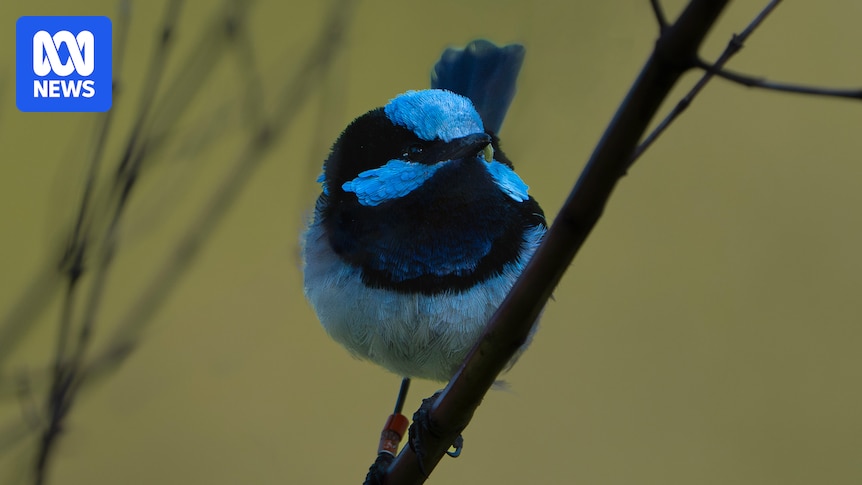
The superb fairy-wren is likely to become extinct in the next 30-40 years, according to new research based on a study conducted in Canberra.
The research, published in the science publication Nature, found that an “accumulation of many small effects of climate change had caused a decline in the species” at the Australian National Botanic Gardens.
The researchers said that if that data were extrapolated, the entire species across Australia could go extinct by 2062 unless action was taken to stop greenhouse gas emissions causing climate change.
The study was published after it was revealed last year that more than half of the superb fairy-wrens at the Australian National Botanic Gardens had died, the largest loss in any one 12-month period.
Those findings also showed that another group of fairy-wrens, located 8 kilometres away in the foothills of Mount Ainslie, recorded a 70 per cent mortality rate over the winter of 2025.
The impacts of weather
The researchers said under the intermediate and very high greenhouse gas emission scenarios, “the fairy-wren population was projected to go extinct between 2059 and 2062”.
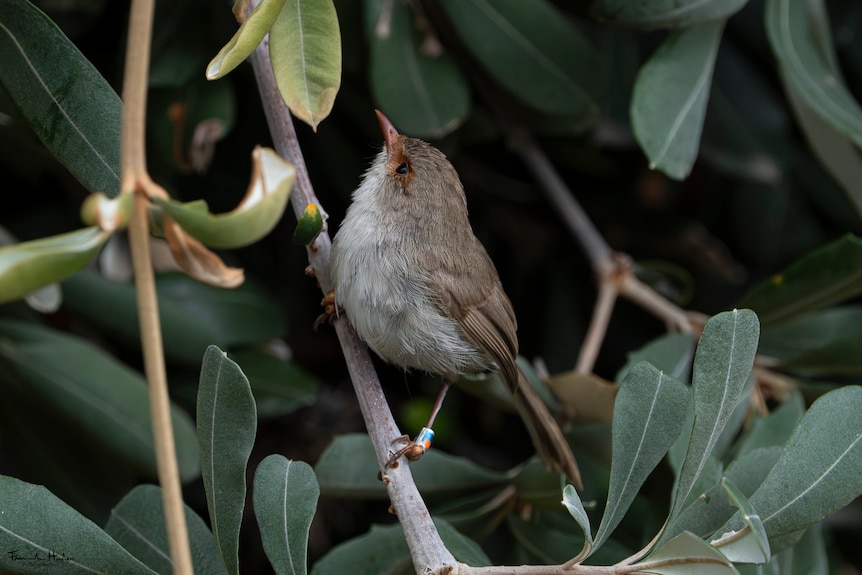
The birds have been named Australia’s favourite after contests conducted by The Guardian. (Supplied: Franziska Hacker)
They said the population growth of the species was limited by above-average winter and summer maximum temperatures, but also below-average winter minimum temperatures.
“Increased winter maximum temperatures worsen the severity of an annual period of reduced survival that occurs just after the winter solstice, when temperatures are coldest,” the paper stated.
“Population growth has been influenced by multiple aspects of climate, but declines are most strongly linked to low fecundity during dry springs and reduced survival during unusually warm winters and preceding hot summers.”
However, researchers did observe that during the same period, there had been an even steeper decline in their most significant nest predator, the pied currawong.
“Superb fairy-wrens may therefore be rescued by climate-driven reductions in predators, but this hypothesis requires further testing,” they said.
The team concluded that the study results highlighted “the value of year-round monitoring and comprehensive analysis of all vital rates across seasonal and life cycles”.
“We expect climate change to affect many species in multiple ways.
“However, most species have not been studied comprehensively year-round over decades, meaning such effects may occur during periods when researchers are not in the field and therefore often go undetected.”
‘The canary in the coal mine’
In the paper, the researchers said they had been able to study the superb fairy-wren more closely than other species.
They said its dire situation could indicate others may be facing the same fate.
“Such predicaments can only be detected in very well-studied species, and superb fairy-wrens may be the canary in the coal mine,” they said.
Researchers observed that while the superb fairy-wren was a common species, and not a rare species, that did not make it “safe”.
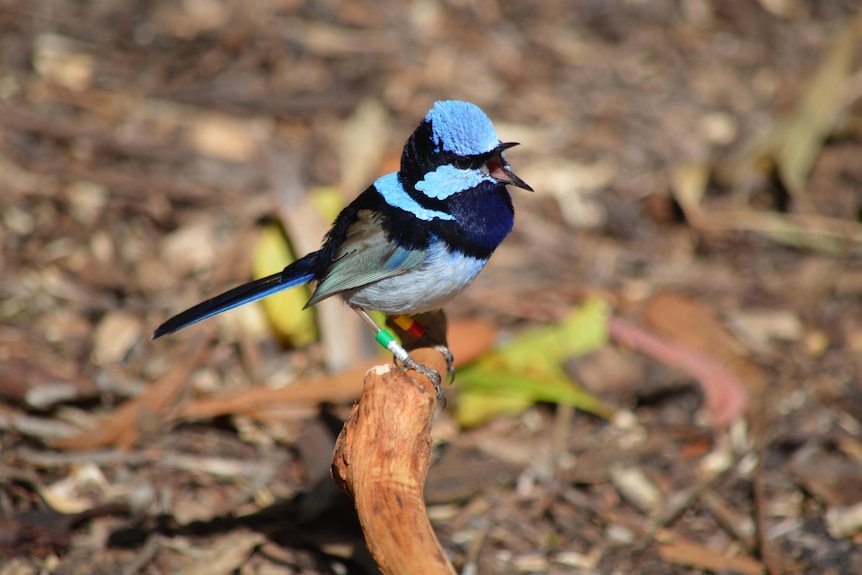
There are fears for the future of superb fairy-wrens. (Supplied: Andrew Katsis)
“Historically, some common species have gone extinct very rapidly,” they said.
“Notably, the passenger pigeon was once the most abundant bird species, with an estimated population of 3-5 billion individuals, but went extinct only a few decades after the first concerns about its declining numbers were raised.
“Whether and how quickly the current decline of common species will lead to extinction remains unclear.
“However, this question is urgent, as the extinction of common species is likely to have disproportionate impacts on ecosystems.”A clear solution
Australian National University Emeritus Professor Andrew Cockburn, who was among the researchers, said the superb fairy-wren was a nationally beloved bird.
“The fairy-wrens have the distinction of being the only dual-winner of the contest that The Guardian runs every few years to find Australia’s favourite bird,” he said.
“They’re beautiful, they’re charismatic, they’ve got extraordinarily interesting lives and I’ve been studying them for decades and enjoy having the sheer pleasure of doing so.”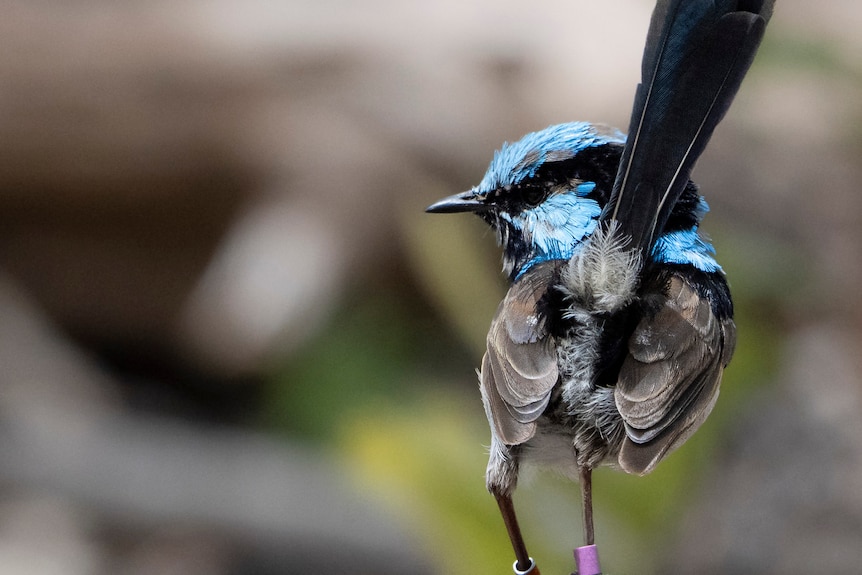
Professor Andrew Cockburn described the species as “charismatic”. (Supplied: Franziska Hacker)
Professor Cockburn said the paper was based on predictions about the effects of climate change in the coming decades.
“We’ve modelled four different climate scenarios, and we’ve found that in three of those scenarios the birds are likely to be extinct.”
He said there was a solution.
“There is something that humans can do now, they’ve got the technology, they’ve got the skills, and that is to abandon the consumption of greenhouse gas emissions,” he said.
Professor Cockburn said the researchers’ findings were based on the botanic gardens in Canberra, as that was the most densely populated area for the species, and that other parts of the wider region might be less affected.
“But basically conservation biology typically is all about finding a cause, it might be feral cats or the destruction of habitat, and stopping that,” he said.
“But, in this case, this is just many, many, many impacts that come from many, many aspects of climate, and we know we’re changing the climate and we know we have the capacity to stop doing that.”