
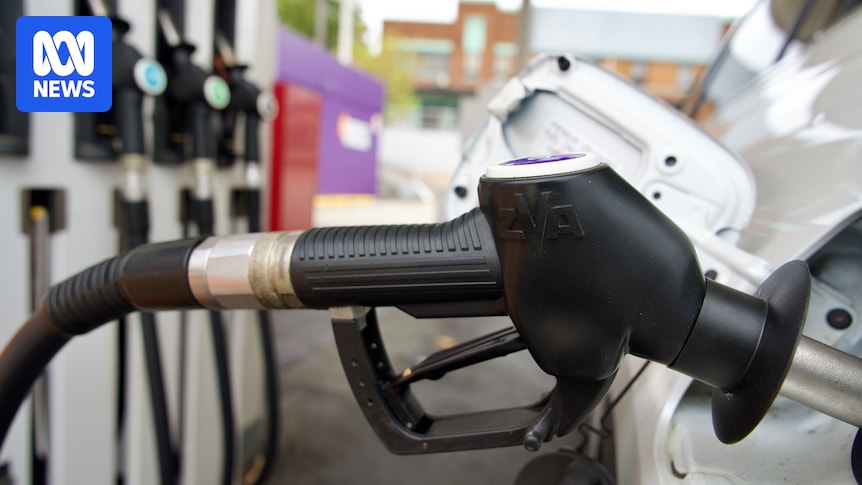
Foreign Minister Penny Wong says Australia is exploring how it can help protect Pacific nations from global oil shocks caused by the war in Iran, with officials warning the conflict could spark a regional economic crisis with “catastrophic” impacts.
Pacific nations are not yet suffering large-scale petrol shortages but are already starting to grapple with the economic impacts of the war, with fuel price hikes threatening to drive up inflation.
And the situation could get vastly worse if there are further major disruptions to global shipping or if fuel stops flowing to the Pacific, which remains heavily reliant on imported diesel and food.
Iran war live updates: For the latest news on the Middle East conflict, read our blog.
Global jet fuel shortages could also spell disaster for Pacific tourism, which remains one of the region’s most critical industries.
Most Pacific governments are trying to reassure the public that there is no need to hoard petrol, and insist they have enough to keep their countries running over the next few months.
But that has not stopped panic buying at petrol stations across the region.
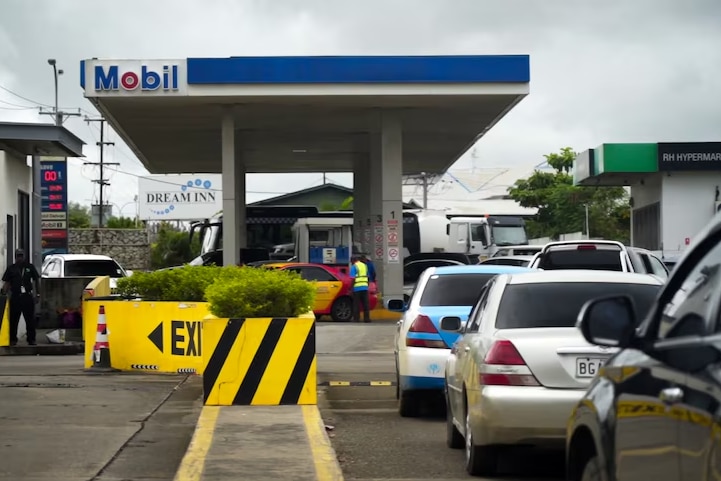
Australian officials are wargaming what the crisis might mean for the Pacific. (ABC News: Tim Swanston)
Privately some Pacific officials acknowledge that they are deeply worried about how exposed they will be if there is no resolution to the war and contracted deliveries of oil to the region shudder to a halt.
Australian officials are also wargaming what the crisis might mean for the Pacific, with Senator Wong telling the ABC’s AM program that the government had held “discussions” with Pacific nations about how Australia could help with future fuel shortages.
“We’re looking at what we can do and how it is we might assist,” she said.
“Obviously at this time our first priority has to be to secure [fuel] supply for Australians. And that’s what we’re doing.
“But we’re a responsible Pacific partner. We’ll continue to work with them and look at what we can do to support them through this.”
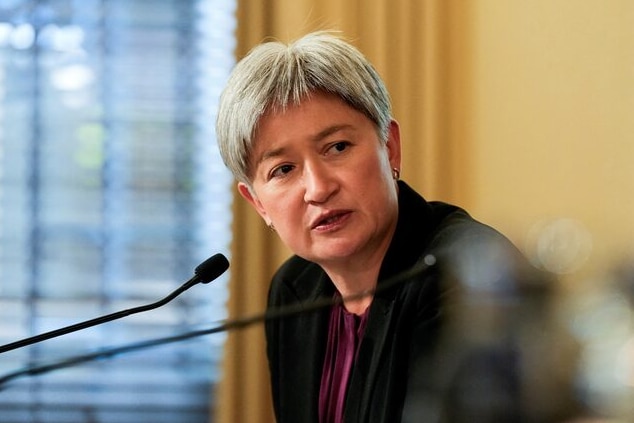
Penny Wong says the government has held discussions with Pacific nations about how Australia could help with fuel shortages. (Reuters: Asanka Brendon Ratnayake)
Pacific won’t get left behind, government assures
Minister for Pacific Island Affairs Pat Conroy also told the ABC that while “our priority is securing supply of fuel for Australians”, the government was “listening to Pacific partners and closely monitoring the situation”.
A third Australian government source, speaking on the condition of anonymity, said Australia “would not leave the Pacific behind” but declined to say whether the government would contemplate sending fuel to Pacific nations if they faced serious shortfalls in supply.
“Most of the Pacific still basically runs on diesel,” they said.
Coalition frontbencher Michael McCormack also urged the government to ensure Pacific neighbours had ample supplies of fuel during the crisis.
“I would implore and encourage the government to do just that, whether it’s fuel, whatever the case might be, we need to absolutely help our friends in the blue Pacific, and if that means shoring up their fuel supplies [we should do it],” he said.
Shadow Foreign Minister Ted O’Brien also backed any move to help the region, saying Australia “should be doing everything it can to assist our Pacific family”.
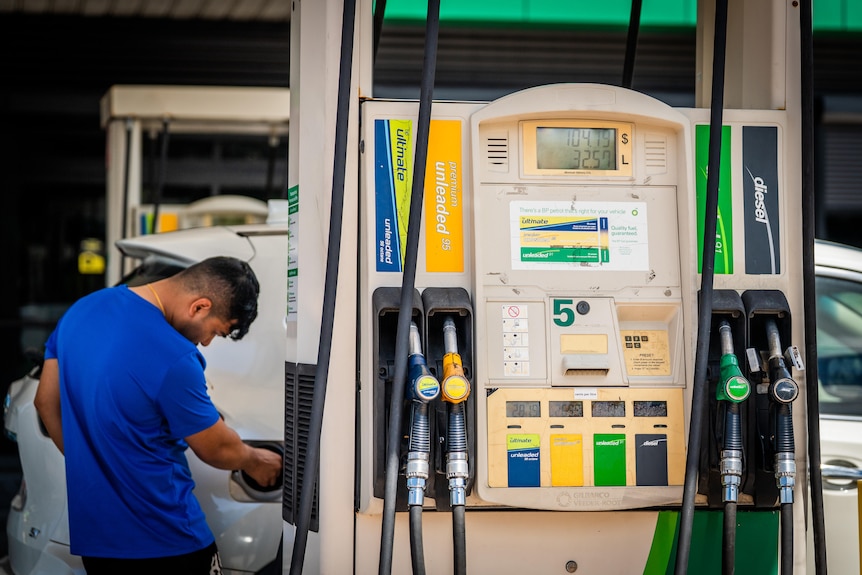
Fears of fuel shortages are growing around the Asia-Pacific region. (ABC News: Pete Garnish)
Multiple New Zealand officials also confirmed Wellington was looking at what it could do to help the region, particularly Polynesian nations.
A spokesperson from New Zealand’s Ministry of Foreign Affairs and Trade said it was “working closely with the Pacific, and Australia, to understand the current situation with fuel supply and potential need across the region”.
After meeting New Zealand Prime Minister Christopher Luxon last month, Samoan Prime Minister La’aulialemalietoa Leuatea Schmidt suggested he might need to ask New Zealand to help “cover us” if his country faced crippling shortages.
But the Samoan government has since said that its scheduled fuel tanker delivery arrived on March 24 and that it has “50 to 60 days” of petrol and diesel, and “80 days” of jet fuel supplies.
In Fiji, there were reports of long lines at service stations on Tuesday night after the government announced a fuel price increase of about 20 per cent for petrol and 35 per cent for diesel starting today.
The government says fuel supply is safe until mid-April. What happens after that?
This comes despite Prime Minister Sitiveni Rabuka last month assuring the country it had “three months of supply” of fuel.
This morning, Vanuatu also announced the government was working on a national plan “to prepare Vanuatu for potential disruptions”, while insisting that “current fuel supplies are assured”.
Papua New Guinea’s Foreign Minister Justin Tkatchenko told the ABC that his country still had more than three months’ supply of fuel and was not planning on introducing rationing measures at this stage, but added PNG could face “issues” if the war continued.
He also said if PNG’s stocks ran low then his country would look to its “traditional security partners” such as Australia and the US for help — although he stressed there had been no detailed discussions yet with Canberra.
“Diplomatically, we haven’t spoken about this in depth or put anything on the table at all … At this point in time, we have that buffer, and we will work with our security partners going forward if needed,” he said.
Steeper prices and power cuts could come
The ABC has confirmed at least one fuel supplier in PNG, Total, has announced it will start fuel rationing from today.
Last week, the government of Solomon Islands, which gets the vast bulk of its power from diesel generation, flagged steeper prices and potential power cuts when its pre-paid stockpiles ran out in May.
In Tonga, a price increase has been flagged, and its government will brief the country on its supply status at a press conference today.
Smaller countries across the Pacific are particularly anxious about the impact of global oil shortages.
Tuvalu, which also draws almost all its power from diesel-powered generators, has ordered all government staff to work from home while it assesses the situation.
The Marshall Islands has also declared a 90-day economic emergency in response to surging petrol prices, with the president signing an executive order to limit government fuel usage.
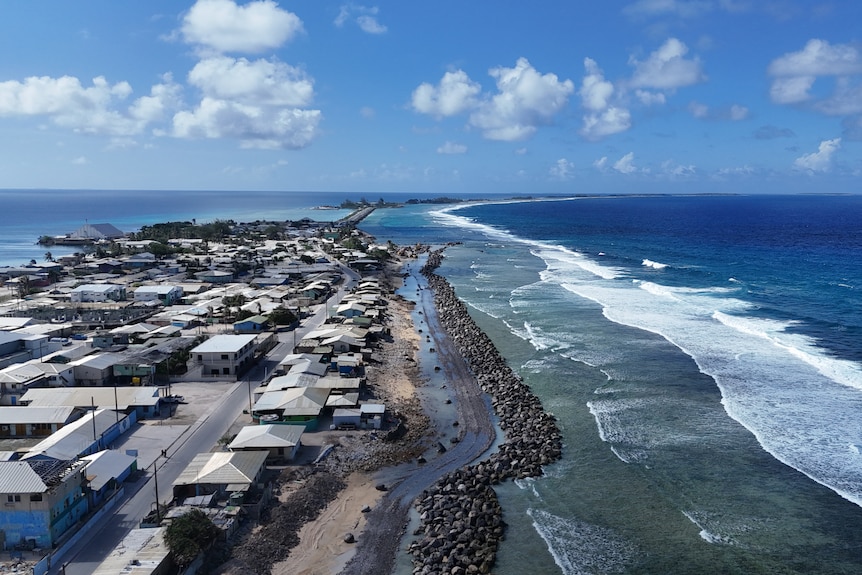
A seawall under construction at Ebeye in Marshall Islands. (Supplied: Hall Contracting)
Roland Rajah from the Lowy Institute said Pacific states were “among the most exposed” to the looming global oil crisis “due to their heavy reliance on imported food and other goods, while the international tourism industry is often vital for income and employment”.
“These countries face two problems. They don’t have the budgetary resources to pay more for fuel and, as very small countries, it’s hard for them to negotiate to secure emergency supplies,” he said.
“Australia can and should help in terms of funding via its aid program and it can also help with securing physical supplies, perhaps by sharing our own or by helping to arrange supply deals.”
Matthew Maury, CEO of the Australian Council for International Development (ACFID), said Australian NGOs had “serious concerns related to the growing economic impacts of the war and global fuel shortages on Pacific communities”.
“These include rising risks to critical infrastructure such as hospitals, ongoing development projects and more widely on food security,” he said.
“It is always the most vulnerable communities around the region who are most at risk with these types of global shocks, and our members are working to ensure they are not left behind.
“ACFID is pleased to see Minister Wong and the Australian government actively looking at how to respond to the growing crisis and we are keen to see funding to resource NGOs and local partners who are working to protect vulnerable communities and ensure the ongoing work on development projects and priorities across the region.”
The looming crisis has also illuminated the region’s vulnerability to supply shocks, with climate groups saying it is a powerful illustration of why the Pacific needs to rapidly decarbonise.
New research from Zero Carbon Analytics has found that Fiji’s annual fuel import bill could swell to almost $970 million, while Vanuatu’s could surge to about $175 million — vast sums for their relatively small economies.
“Every extra dollar spent on fossil fuels is money that can’t be spent elsewhere, such as on healthcare or education,” Zero Carbon Analytics researcher Amy Kong said.
“Almost every Pacific nation has committed to 100 per cent renewable energy, and the timelines are ambitious.
“The faster the international community supports that transition, the better the economic outcomes and the better the lives of people across the region.”
Loading…