
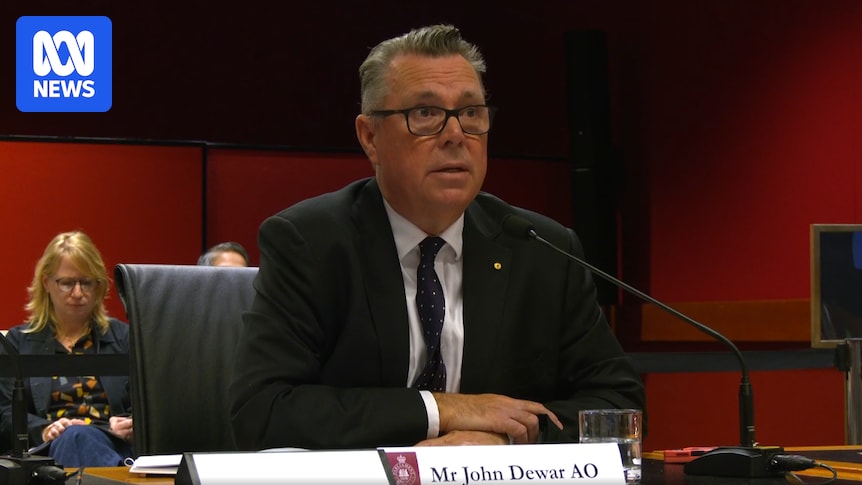
Former University of Wollongong (UOW) interim vice-chancellor John Dewar acknowledged there was a “perception” of a conflict of interest over his links to consulting firm KordaMentha during testimony at a NSW parliamentary inquiry.
The inquiry is examining university governance and transparency, including the use of external consultants in shaping university operations.
At the time of his appointment in 2024, Mr Dewar was a partner at KordaMentha, and focused primarily on higher education.
Four days after he took up the role, UOW invited the firm to tender for a $3.8 million operational review, a contract KordaMentha ultimately won.
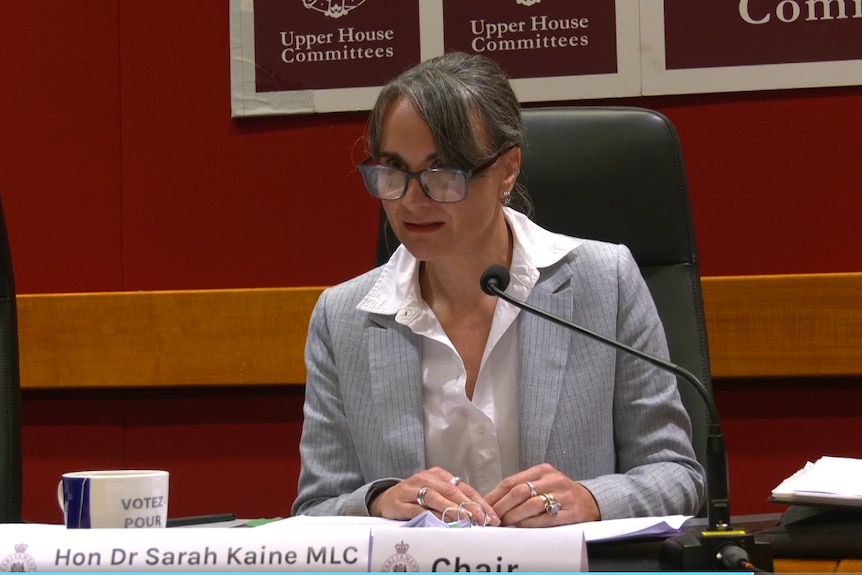
Inquiry chair Sarah Kaine pressed Dewar on potential conflicts of interest. (Supplied: NSW Parliament)
Inquiry chair Sarah Kaine today asked whether he knew the firm would be invited to tender.
Mr Dewar said he was aware the chancellor held KordaMentha in “very high regard” and was considering including it, but denied any involvement in the procurement process.
“I had nothing to do with that decision … nor the supervision of the work that they did,” he said, adding that the process was conducted with “a high degree of probity”.
Mr Dewar told the inquiry it was his idea to bring in external consultants, saying he told Chancellor Michael Still the university’s challenges would “take more than me to come in and fix”.
During his eight-month term at UOW, Mr Dewar worked one day a fortnight for the consultancy firm, unpaid, to “provide leadership to a team of consultants in the Higher Education practice”.
Dr Kaine put to him that the overlap created a perception of conflict.
“I agree that there is probably a perception of that,” Mr Dewar said.
Mr Dewar also said that while he was not paid for that one day a week, he was entitled to a fixed percentage of remuneration from KordaMentha.
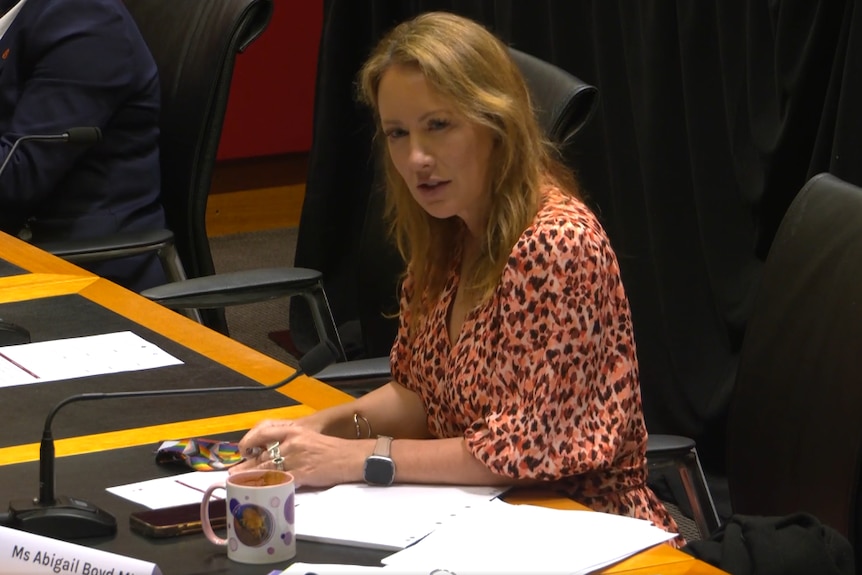
Greens MLC Abigail Boyd described Mr Dewar’s separation from KordaMentha as a “fiction” and a “direct conflict of interest”. (Supplied: NSW Parliament)
Greens MLC Abigail Boyd suggested that his separation from KordaMentha was a “fiction”.
“How on earth could you … that is not even a perceived conflict, that is a direct conflict,” she said.
“No, I don’t accept that … I can see how the interpretation or the perception might be very different,” Mr Dewar replied.
“So what you received in your job at University of Wollongong and what you did in relation to KordaMentha was going to come back to your profitability as a firm … and then your direct financial interest,” Ms Boyd said.
“It’s a direct conflict of interest.”
“No, I disagree with that,” Mr Dewar said.
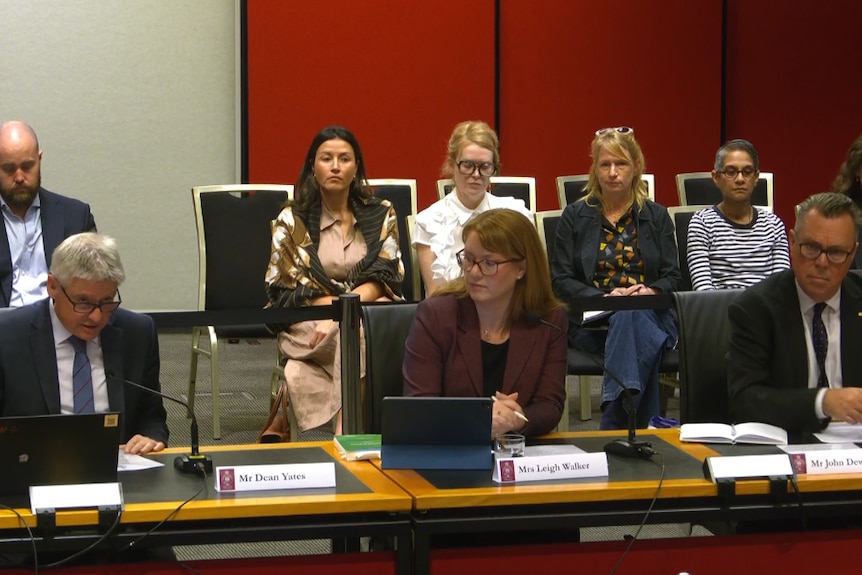
Consultants Dean Yates, Leigh Walker and John Dewar give evidence to the NSW parliamentary inquiry. (Supplied: NSW Parliament)
Sector-wide concerns
The hearing comes amid broader scrutiny of university spending.
A recent Four Corners investigation revealed that Australian universities spent around $1.8 billion a year on external consultants, often without disclosing the firms or the purpose of the work.
National Tertiary Education Union (NTEU) delegate Fiona Probyn-Rapsey told the program that poor quality data used in consultancy reports had led to wholesale job cuts at Wollongong and other universities.
“Poor quality data is not an obstacle for consultancy groups to come up with wholesale job losses,” Professor Probyn-Rapsey said.
“This kind of data is known as garbage in, garbage out.”
Dr Kaine also questioned whether the sector’s financial strain was as clear-cut as presented, or partly driven or “framed” by decisions about how quickly universities choose to repay debt.
Mr Dewar agreed there were “financial choices available,” but said refinancing could lead to worse outcomes.
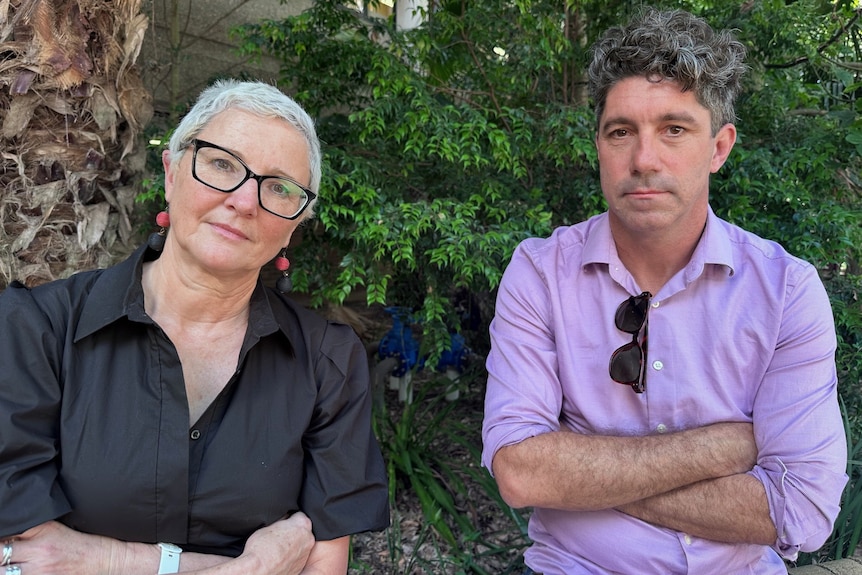
Susan Engel, with Martin Cubby, says the inquiry highlights serious concerns about the university’s understanding of conflicts of interest. (ABC Illawarra: Kelly Fuller)
NTEU branch president at the UOW, Susan Engle, said watching Mr Dewar give evidence today almost left her speechless.
“[I am] wondering whether UOW Council and management understand the meaning of the term conflict of interest,” Dr Engel said.
“Indeed, it would be important to know if and when they’ve completed training.’
UOW is in the midst of its third ‘change management’ phase, now affecting IT, media, and communications departments.
Dr Engel said while there was a new vice-chancellor at UOW, it was still following the same model of restructuring designed by the consultant-led process.
“So, the chaos continues for staff and the anxiety, that continues,” she said.