
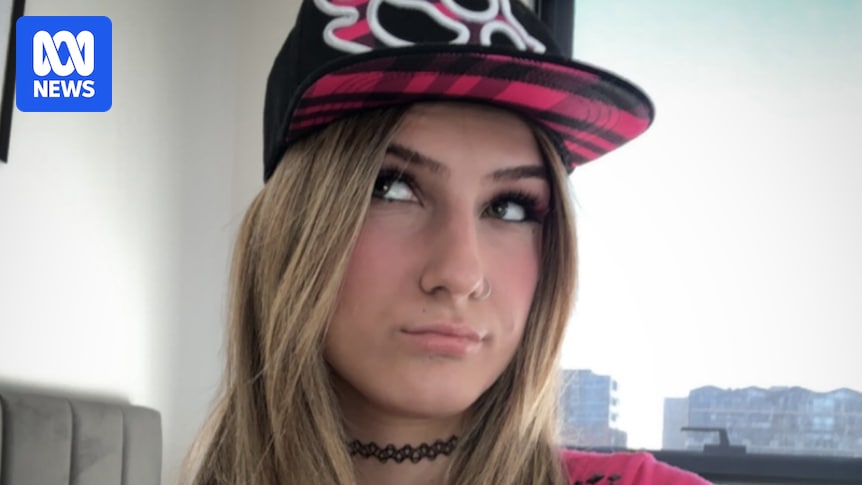
Daria Strezova does not have a record player, CD player, or cassette player, but she collects vinyl, CDs and cassettes and keeps them sealed.
The 20-year-old, who is based in Sydney’s inner west, is part of generation Z.
“I think a lot of gen Z find a lot of happiness in collecting things, whether that’s vinyl or Pokémon or games, or figurines,” Ms Strezova said.
“To me, vinyl isn’t just about the music of it. It’s the cover art. It’s the symbol that you really love that album.
“I think it’s also because people probably fear to a certain extent that that will be a lost thing in itself, that vinyl will no longer be produced in the future.”
Live Nation has released its largest study on gen Z, which it called Love Song.
Why more gen Zs are getting cosmetic injectables such as botox
The annual study surveyed 5,692 Australians, including 1,411 gen Z respondents, who are 13-29 years old and make up 18.2 per cent of the Australian population.
It found gen Z were embracing retro tech that they would not get notifications on, like iPods, wired headphones, and Polaroid cameras, and were creating memories through physical scrapbooking.
Many attend concerts alone, meeting new people at the gigs.
And 85 per cent are seeking deeper, more meaningful real-world connections — more than any other generation.
“I think COVID had a massive influence on that for gen Z because we were all really young when that happened,” Ms Strezova said.
“It was really hard during those formative years to create connections.
“So, then everyone kind of turned to social media to create those connections there.
“And I think people are noticing that that is one level of connection, but it’s pretty surface-level.
“And so, people probably now just crave way more of that in-person type of connection.”
The study pointed out that gen Z were embracing Polaroid cameras, but Ms Strezova said they never really went out of fashion.
“So, when I was 15, I remember going out hanging out with people my age, obviously, and everyone always had a Polaroid,” she said.
“And that kind of translated into now, my sister’s 15, and she is also gen Z, and she has a Polaroid herself, and she’s obsessed with it.
How gen alpha’s fascination with Asian culture will shape Australia’s future
“And I remember back then when I was 15, I really wanted a Polaroid camera. And that kind of has never died down in what I’ve seen at least, at hangouts and stuff.”
Although she was not into it personally, she said scrapbooking had not really died either.
“I think it probably just helps a lot of gen Z, if it’s trending at the moment, with mental health stuff and just having an outlet,” she said.
She said she had been on board with wired headphones, which she was using for a “really long time” until she upgraded to noise-cancelling headphones last year.
“Everyone around me uses wired headphones,” Ms Strezova said.
“I think it’s honestly probably because they’re easy to take care of, easy to keep, they survive longer than things like Bluetooth and I think gen Z are kind of tired of these new technologies being constantly cyclical and new things coming out all the time and things dying on us.”

Daria Strezova met American rapper 2hollis at a gig. (Supplied)
Nostalgia and fandom
The Live Nation study found that fandom was central to gen Z’s identity.
Ms Strezova said she did not buy into fandom but it had always been a thing.
“Fandoms are quite huge,” she said.
“Me, personally, I’m a fan of artists, but I wouldn’t say I’m part of a fandom. I see that as two separate things.
“To me, a fan is someone who actively engages in a person’s music or a person’s media.
“But I would say fandom is the community that comes from that.”
She said fandom was more parasocial.
“I don’t feel that way towards artists,” she said.
“I feel more so like their music is my escapism, but I don’t know the artist.”
She said she went to a lot of concerts and was partial to a bit of merchandise.
“If I really love the artists, I will buy merch and I will actually wear it,” she said.
She said she was still “very digitally-inclined” and listened to a lot of old-school hits from producers and artists such as Flo Rida, Peking Duk, Mike Posner, Nelly, Timbaland and Justin Timberlake.
“I would say I went from listening to what was on the radio, what was charting, to kind of going back to my nostalgic roots because even though I wasn’t a teenager or an adult in the 2000s, I still had a lot of nostalgia as a kid listening to that kind of music,” she said.
Why cinemas will ‘never die’
Concerts are fast becoming one of the few environments where gen Z can disconnect from digital noise, according to the study.
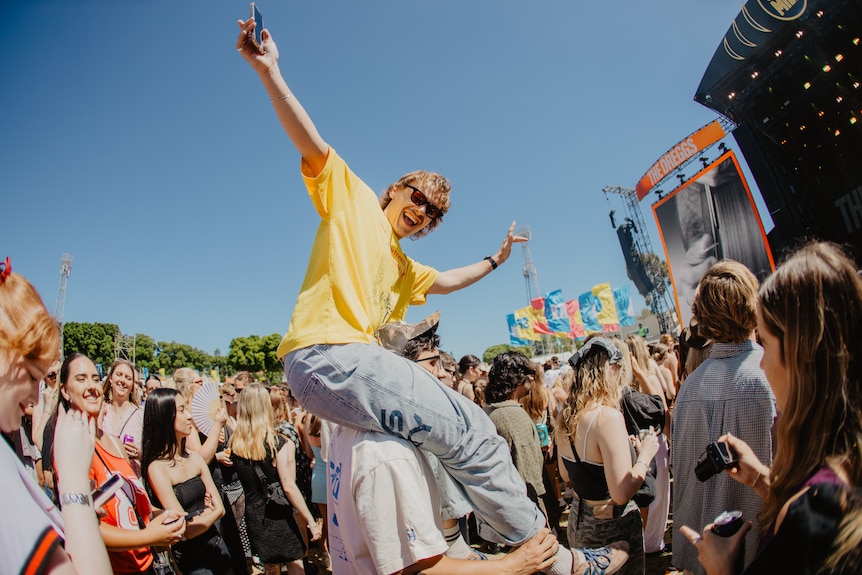
The study found young people often attended gigs alone. (Supplied: Mackenzie Sweetnam)
“It forces you to be there,” Ms Strezova said.
“You paid for the ticket. You’re standing there, you’re listening to the music. Why would you be on your phone?
“I guess I’ll kind of bring in the analogy with why I think cinema would never die either.
“Because people feel like being [in a movie theatre] forces them to actually be there versus on social media … you can click out of whatever you want to click out of.
“I think people are just very tired of being online. I think there’s too much noise all the time.”