
More than 110 new species from 200 to 4,000 metres beneath the ocean surface have been documented by Aussie scientists.
Ghostshark, demon-catshark, ray and octopus are among the new discoveries announced by Australia’s national science body CSIRO following a research mission by its vessel (RV) Investigator in October and November on the Coral Sea.
Some of the more unusual creatures include an apricot-coloured starry handfish, a grumpy-looking deep-sea batfish, and a lizardfish with a mouthful of threatening teeth.
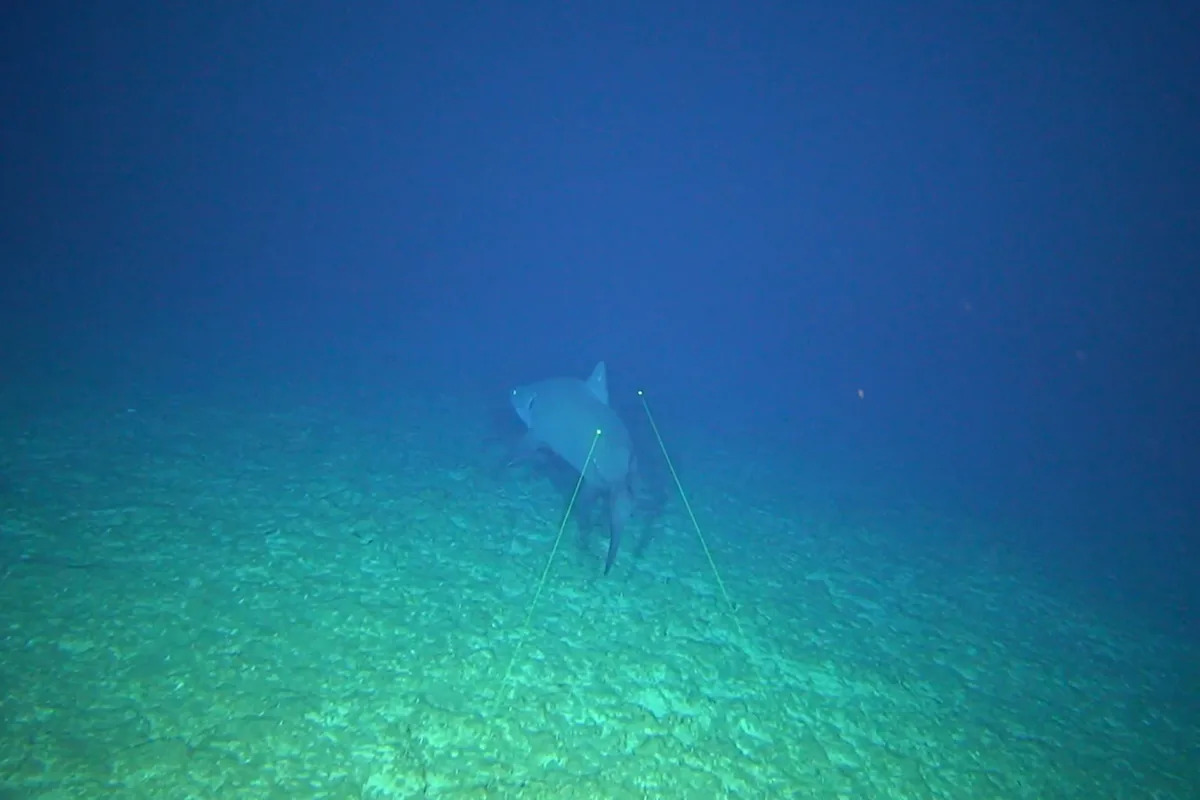
They were also able to observe rare creatures in their natural environment, like the sand tiger shark, a deepwater cousin of the endangered grey nurse shark.
The voyage took place in remote areas of the Coral Sea Marine Park, including Kenn Plateau, which is around 500km off the central Queensland coast.
Voyage chief scientist and CSIRO shark expert, Dr Will White, told Yahoo News it was unusual to document such a high number of species so quickly.
“These are the ones that we’re confident are new species, but that number is going to keep growing as we get genetic results in, and people get to examine more animals,” he said.
“So to be this early on and to already be looking at over 110 species is a real win.”
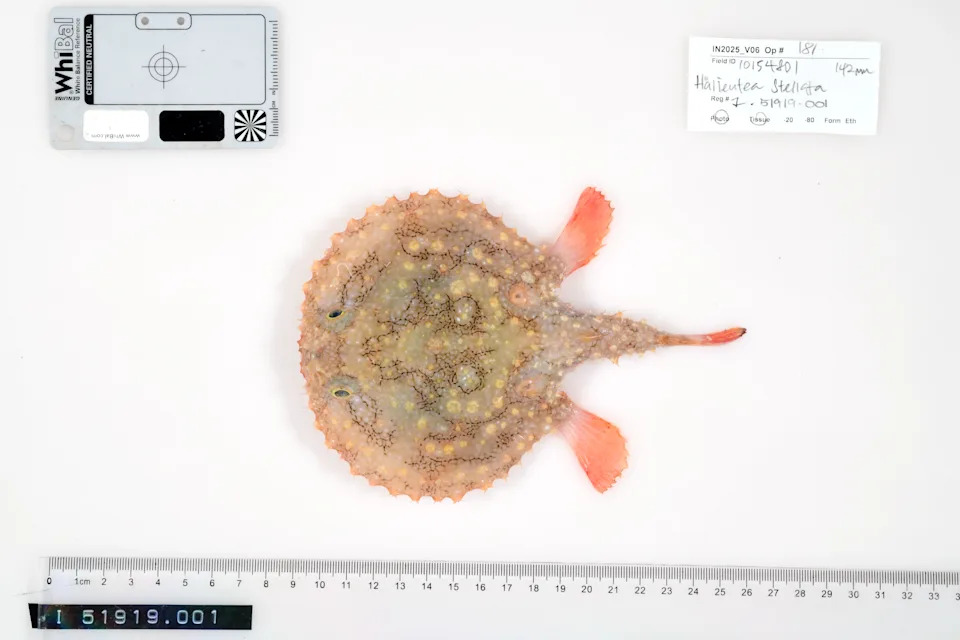
Halieutaea stellata, or starry handfish. Source: CSIRO, Emily Gumina.
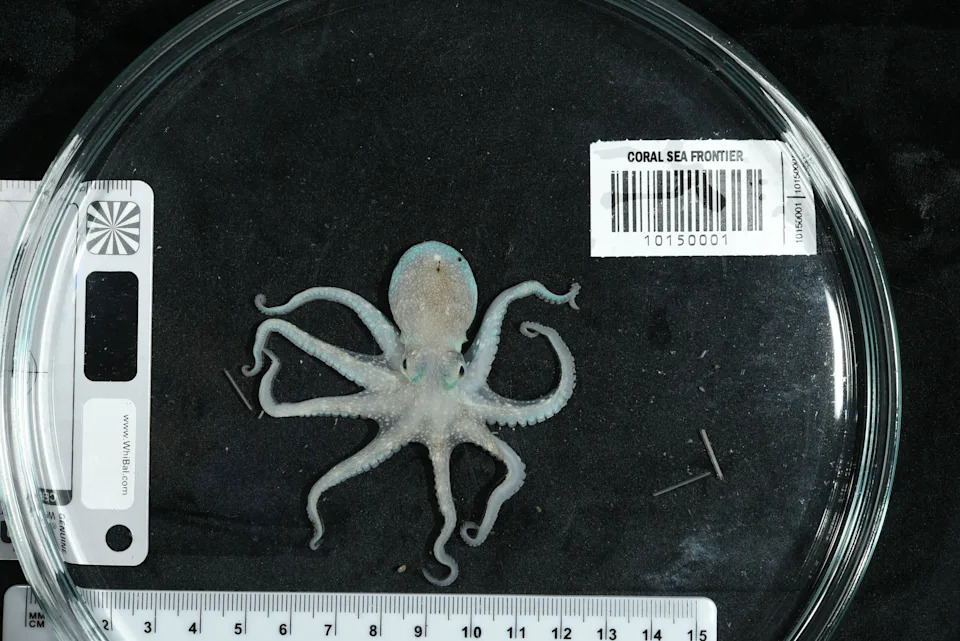
A new octopus identified during the Coral Sea Frontier voyage. Source: CSIRO, Emily Gumina.
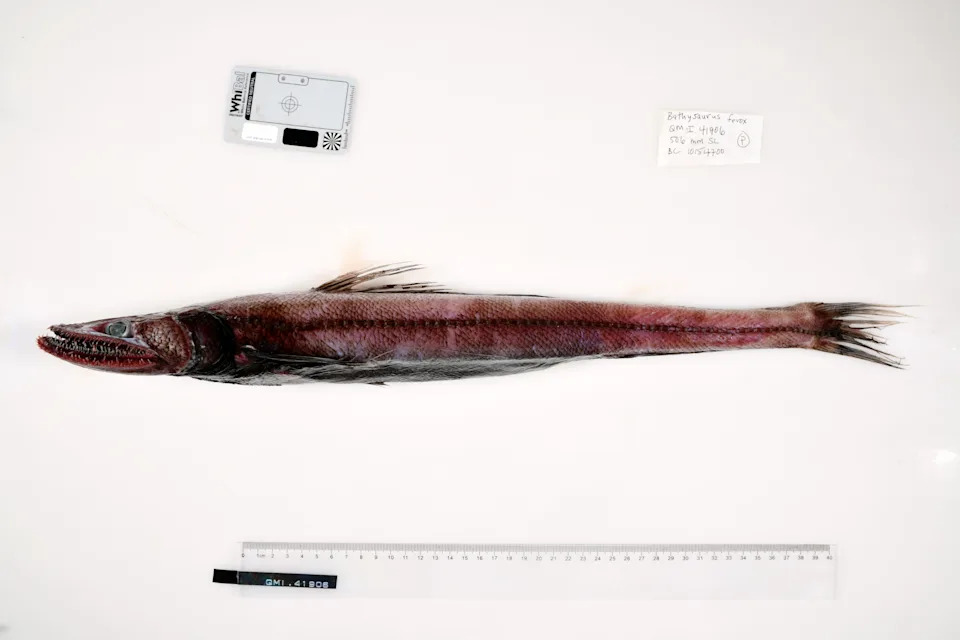
The deep sea lizardfish, (Bathysaurus ferox). Source: CSIRO, Emily Gumina.
Expert teams gather at four locations to examine species
Ordinarily, identifying new species is a slow process because Australia invests so little in scientists who specialise in taxonomy.
Institutions around the country have shelves lined with boxes of unusual creatures that are waiting to be identified, and there are CSIRO deep-sea marine hauls from years ago that are yet to be fully examined.
Incredibly, in this case, CSIRO was able to gather 50 experts to examine the preserved marine life collected during the mission.
Between December to February they painstakingly measured, photographed, and genetically tested the animals at CSIRO offices in Hobart and Brisbane, and museums in Melbourne and Perth.
Many of the animals are described as “cryptic” because they closely resemble other species, and so only scientists with niche expertise are able to decipher which are new.
While Dr White is confident the animals are new species, formally describing their appearance and genetics will take much longer.
“There’s a study that showed that on average it takes 13 years for a new species to be identified,” he said.
“But that’s a bit skewed because some take longer — I’ve worked on a couple that took 120 years to describe.”
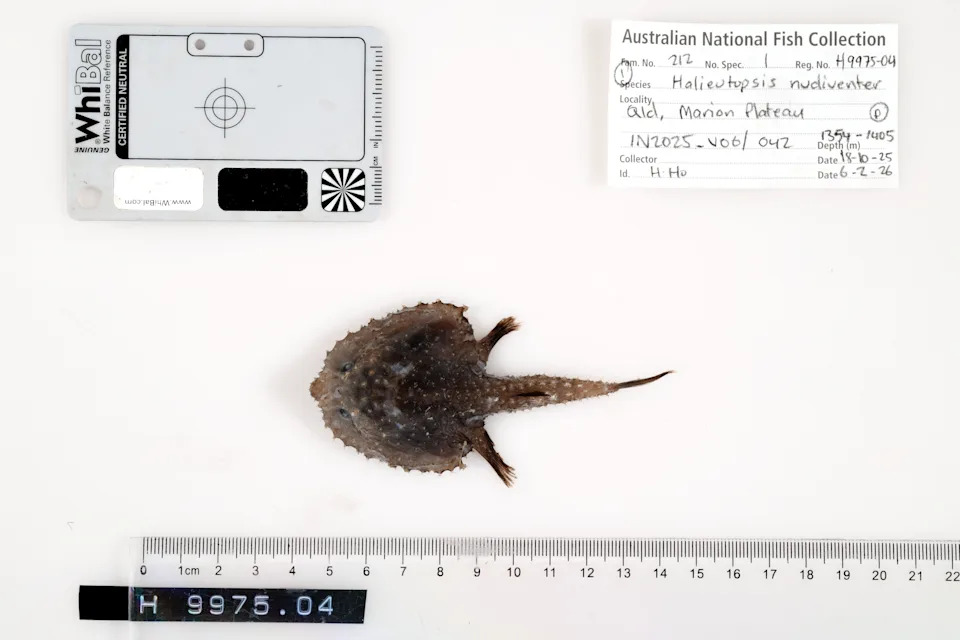
A naked-belly deep-sea batfish. Source: CSIRO, Emily Gumina.
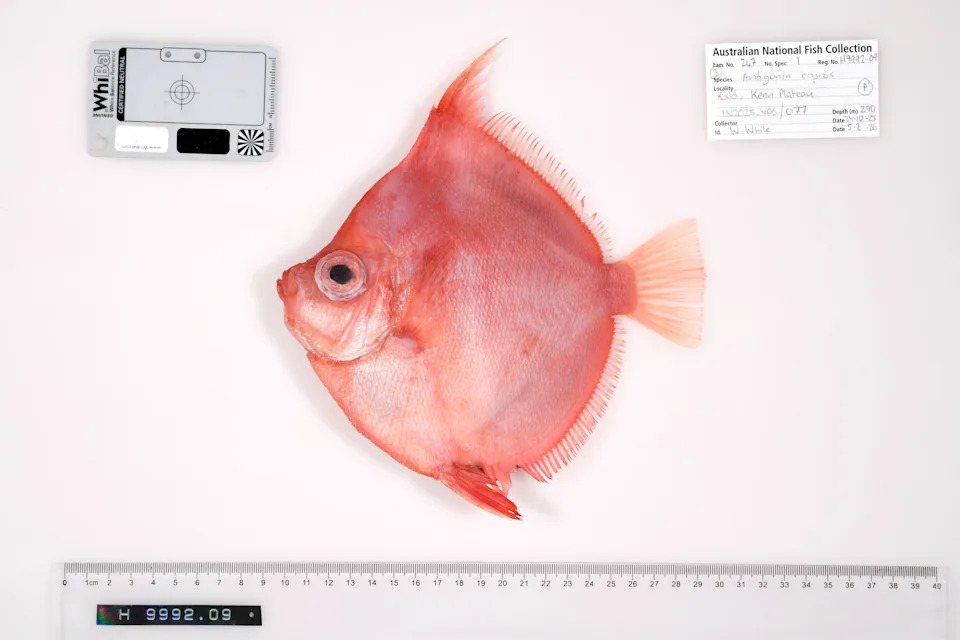
A deep-sea boarfish (Antigonia capros). Source: CSIRO, Emily Gumina.
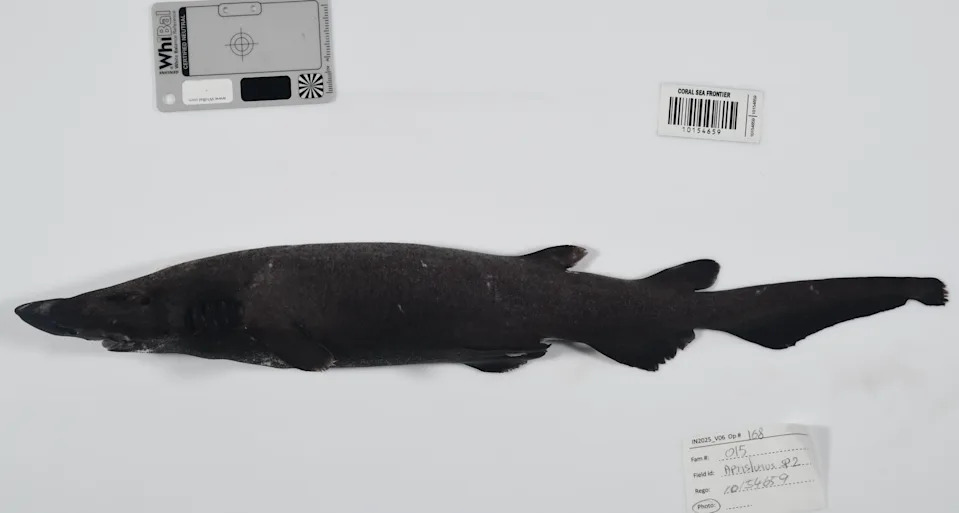
A new type of catshark. Source: CSIRO
Discovery only ‘scratches surface’ of ocean knowledge
The research was a collaboration between CSIRO and the Nippon Foundation-Nekton Ocean Census, a global initiative to discover new marine life and advance conservation.
Information about the new species will be shared with Parks Australia, which manages the marine parks where the sampling occurred.
The government permits some trawling, and the new research will help authorities plan how best to balance commercial pressures with environmental protection.
Understanding what life occurs deep beneath the ocean surface will also become more important as mining companies begin to explore these environments.
The team expects to identify upwards of 200 new species, but Dr White said their new research is only beginning to “scratch the surface”.
Do you have a story tip? Email: newsroomau@yahoonews.com.
You can also follow us on Facebook, Instagram, TikTok, Twitter and YouTube.