
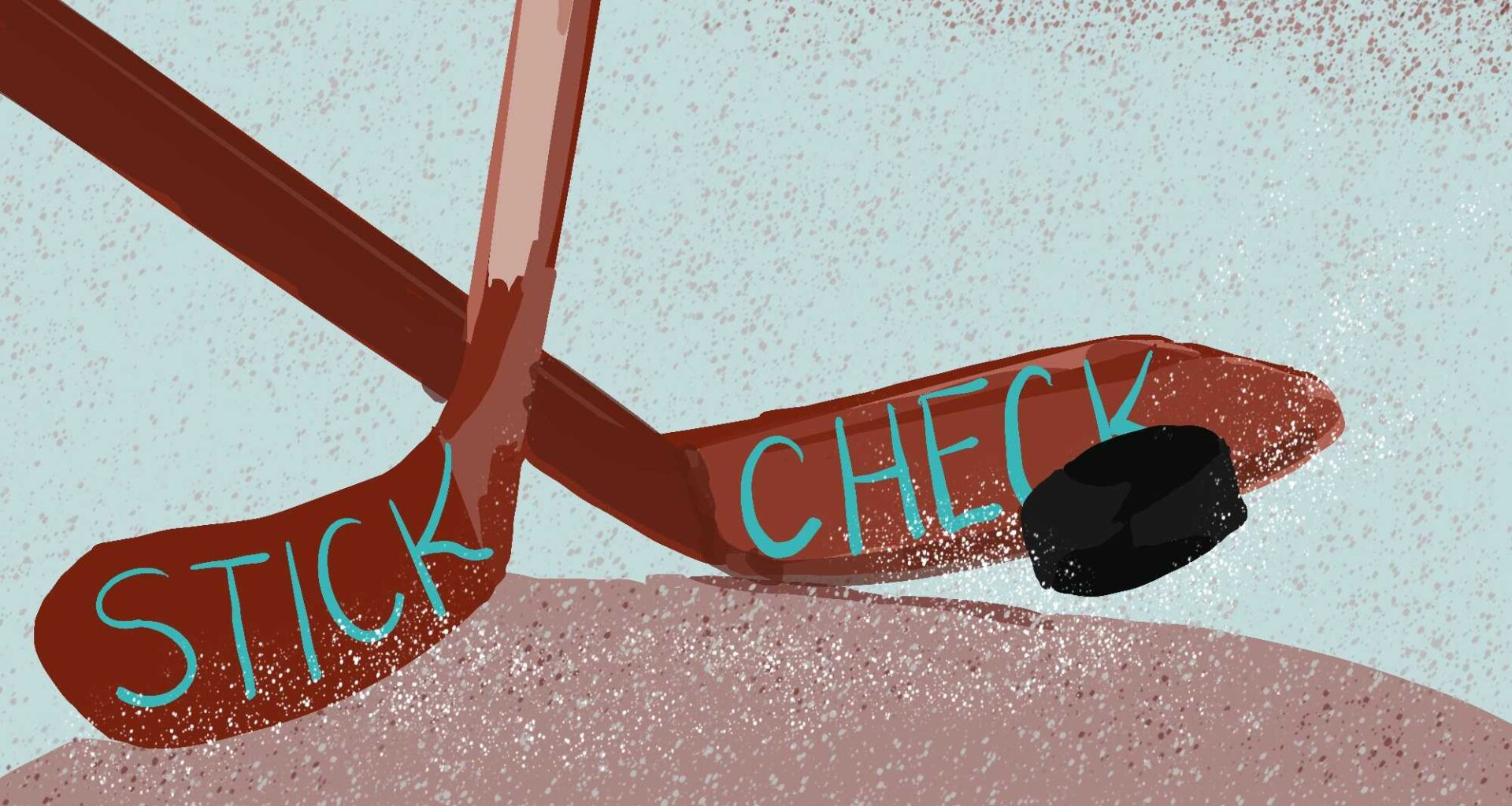
Against all parties’ better judgement, John Tortorella is back in the NHL.
 Lila Baltaxe | Senior Graphic Artist
With eight games left in the regular season, the Vegas Golden Knights made a confounding move, firing Stanley Cup-winning head coach Bruce Cassidy and replacing him with Tortorella on Sunday.
Tortorella is back behind the bench after being fired by the Philadelphia Flyers after a late-season collapse last year.
Why make a coaching switch 74 games into the season? And why switch to Tortorella?
According to NHL.com writer Dan Rosen, the change should not come as a surprise.
“[The Golden Knights] make hard decisions. They remove emotion to make those decisions,” Rosen wrote on X. “They accept finishing first and nothing else. It hasn’t been working and there’s still time to get right.”
Tortorella’s reputation as a fiery, no-nonsense coach definitely suits what Vegas’ front office is asking of him: “Get us a Stanley Cup.” It’s optimistic to assume Tortorella can accomplish this feat with only a few games left to learn the team and establish a system, but not outright impossible.
Tortorella is a polarizing figure in the NHL. Players either love him or hate him. In an interview on the Snipes & Stripes podcast, former Flyer Erik Johnson said Tortorella — or “Torts,” as he’s known around the league — cares about his players and is a great coach to play for.
On the same Flyers squad, tensions flared between Tortorella and rookie Matvei Michkov, resulting in an on-ice argument. And Torts’ decision to bench Flyers captain Sean Couturier wasn’t popular in the locker room.
If I haven’t summed up the legend of Tortorella well enough, look no further than his relationship with the late New York Post columnist Larry Brooks. The two disagreed constantly while Brooks covered Tortorella’s time with the New York Rangers and the Tampa Bay Lightning, culminating in an infamous exchange where Tortorella swore at the reporter.
Vegas general manager Kelly McCrimmon said Cassidy was fired because the Knights “lost our spirit and lost our energy as a team.” A tried and true management tactic deployed once again. Don’t like the way your team plays? Fire the head coach.
If it feels like the NHL is recycling the same coaches, you would be right. Since the 2004-2005 lockout, only 137 unique head coaches have served behind the bench. The average tenure of an NHL coach is 2.3 years, shorter than the typical coaching tenures in the NFL and MLB.
The longest-tenured coach is Jon Cooper, who has coached the Tampa Bay Lightning since 2013. Cooper is an anomaly — an outlier in a system that cycles through coaches faster than teams can rebuild.
Some teams have even hired the same coach twice. Current Buffalo Sabres head coach Lindy Ruff coached the Sabres through two different eras: 1997-2013 and 2024 to the present.
Teams are not sticking with their head coaches. In a league where general managers maintain their roles for years, head coaches have no job security. Why?
Making a coaching change is a “quick fix” to shake up a team. And coaches can be fired for any reason – whether it’s a locker room issue or a reminder to the players that everyone is replaceable. But is everyone replaceable?
It boils down to money and ownership. According to sports broadcaster and author Bruce Dowbiggin, the salary cap forces teams to choose between their players and their coach. With star players taking up significant cap space, players maintain a lot of influence in how the team runs.
Team owners have a vision for their teams. The easiest option without trading players or finagling the salary cap is to get rid of the coach. Coaches are expected to carry out the owners’ singular vision: win a Stanley Cup.
Team owners can’t be fired. GMs are unlikely to be fired midseason and players have contracts and no-movement clauses that protect them. Who’s left to take the fall for a floundering team but the coach?
I imagine it’s a difficult environment to operate in – knowing you could be given the boot at any point in the season. But it doesn’t appear to deter coaches from working — Tortorella himself has been fired from every coaching position he’s ever held and he still came back for more with Vegas.
Getting fired is far from the end of the line for most veteran coaches. History suggests teams are more willing to hire a coach who’s been fired rather than taking a chance on someone with no experience behind the bench.
“Even when you get fired it seems there’s a ready appetite in some other town for a skill set you have just failed at,” Dowbiggin wrote.
So if your team just fired its head coach, don’t think you’ve seen the last of him. It’s entirely possible, and even probable, he’ll be behind the bench of another team next season.