
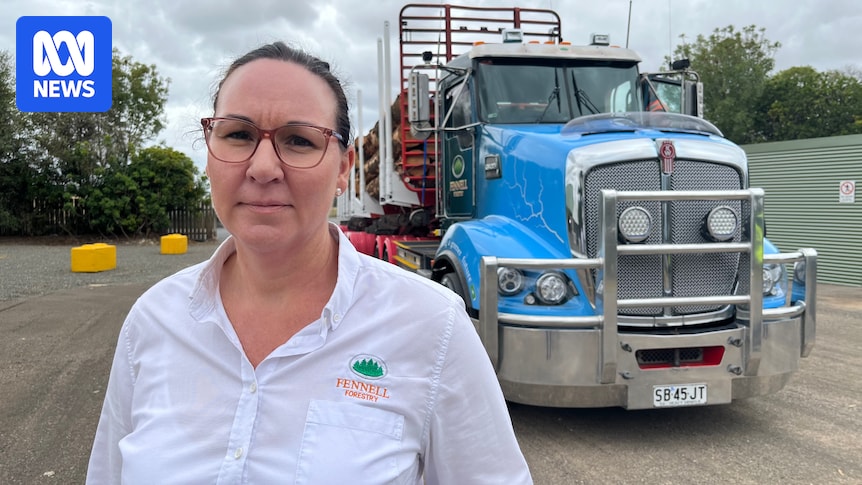
An electric truck trial in South Australia’s south-east has shown the vehicles are fit for some use in the forestry industry, but are not financially viable — even with diesel prices soaring.
Fennell Forestry launched a trial using a truck converted from using diesel to electric power in early 2023, using the vehicle to transport logs from forests to sawmills.
Managing director Wendy Fennell said the vehicle was able to perform the job with enough torque and capacity to tow the large loads.
However, she said there we some issues, particularly with the cost proposition.
Loading…
“The reason why the truck is no longer in operation is it wasn’t financially viable to continue it when you compare it with a like-for-like diesel truck,” Ms Fennell said.
“The costs that impaired that truck was the charging infrastructure costs.
“You don’t have to pay for service stations, you only pay for the diesel.
“The network charges the energy companies would charge because we’re a big user of electricity just impaired the cost comparison.
“That was back when diesel was at a far cheaper rate than it is today.
“But even based on that, the diesel price would need to get north of $4 per litre at the bowser before it becomes comparable with diesel.”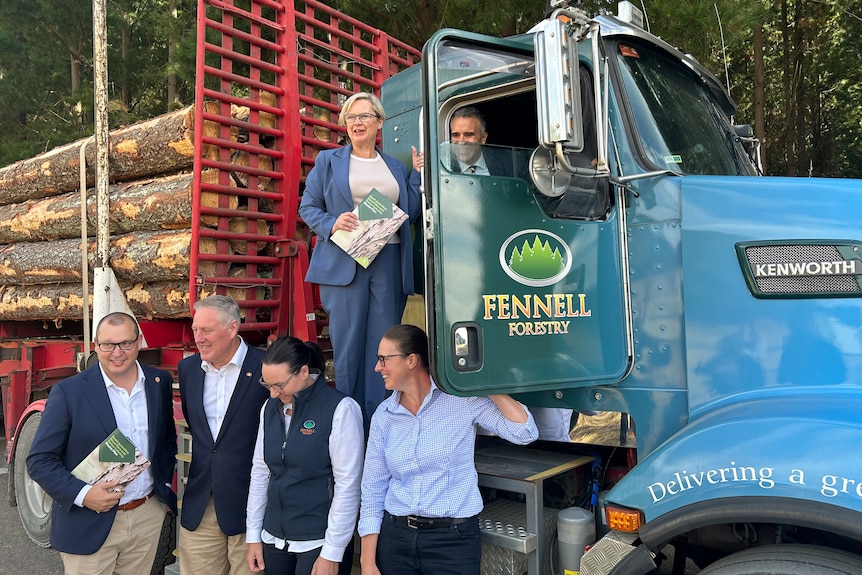
The state government provided some funding towards the trial in 2024. (ABC South East SA: Josh Brine)
Range, infrastructure lacking
While Ms Fennell said the cost was a major drawback, the range of the truck on a full charge was only about 200 kilometres due to the weight of the load.
“That was half of the expected range,” she said.
Electric vehicle logging truck trial underway
“Our transport task is vastly different [to other countries] because of our vast spread over the country, the kilometres that we travel and the loads we carry.
“If you’re using electric vehicles in a smaller rigid truck carrying 4.5 tonnes it’s a different scenario to a B-double that’s carting 70.5 tonnes.”
Swinburne University professor of transport technology and sustainability Hussein Dia agreed EV technology was not yet suitable for long-haul and heavy vehicle transport.
“We see them in some urban delivery contexts, but for long haul they’re not there yet,” he said.
“The technology is not ready in some cases, they’re a bit expensive, there aren’t many varieties available — these are some of the barriers at the moment.”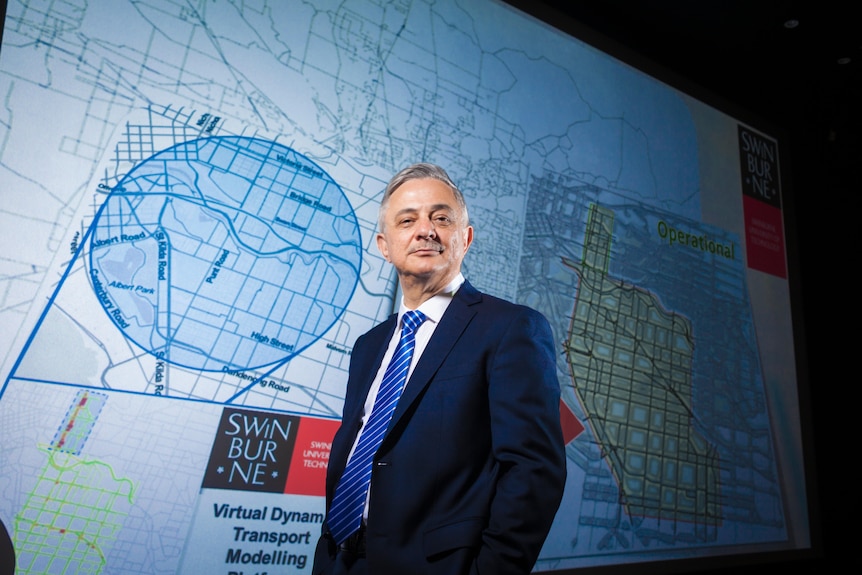
Professor Hussein Dia says Australia still lacks the infrastructure for electric heavy vehicles. (Supplied)
While Professor Dia believed electric trucks were significantly cheaper in the long-term, particularly with the current cost of diesel, the up-front cost was still a barrier for many uses.
“There’s a lot of innovation and ingenuity from the industry but the cost is still a limitation,” he said.
“Governments need to step in and provide some incentives and maybe contribute to some of that up-front cost.”
Professor Dia said while there’s limited availability of larger electric trucks this was starting to change.
“There are some models that are being tested, and they seem to be performing quite well,” he said.
“China is leading this race, and in New Zealand they have started importing some very affordable trucks from China.
“The battery sizes are increasing.
“Now heavy trucks can do 400-500km per charge, and then they need to stop for 30-60 minutes to recharge.”
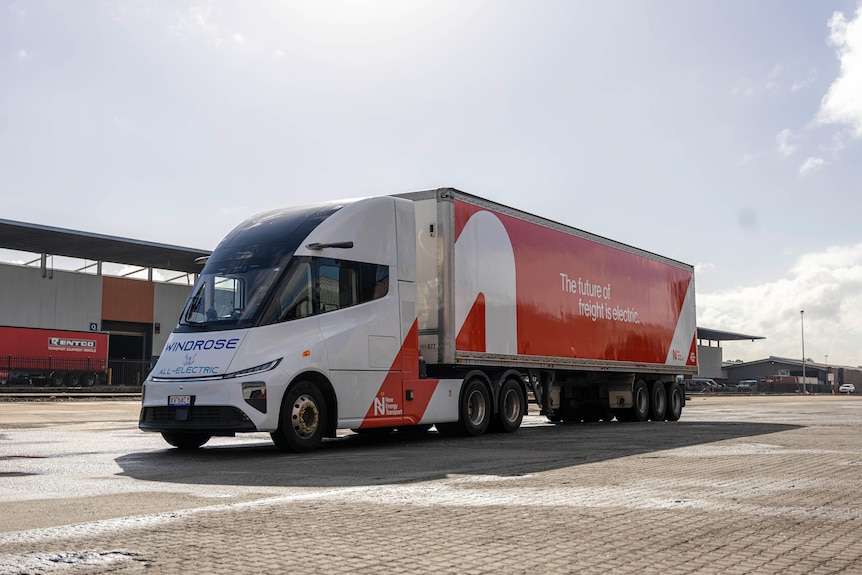
An electric truck recently completed Australia’s first end-to-end fully electric delivery. (Supplied: New Energy Transport)
More support needed for transition
Professor Dia was also concerned infrastructure was not in place to support the electrification.
“Unlike passenger EV charging infrastructure, these require the heavier chargers. These are still limited in availability,” he said.
“The problem becomes, in regional areas, where sometimes you travel for hundreds of kilometres without seeing a charger.
“We are calling for governments to identify what we call electric highways — priority routes where freight vehicles use them everyday — and start installing some of the megawatt charging standard infrastructure.”
Ms Fennell said she believes electrification of heavy vehicles is still “a long way off” and that the federal government would need to do more to incentivise the switch.
“Operationally you can do it but it’s not economically viable,” she said.
“The electric motor works really well, it has great torque capacity.
“But until we have more infrastructure in place, or an economic environment that supports it, I don’t see the shift to electrification coming quickly.”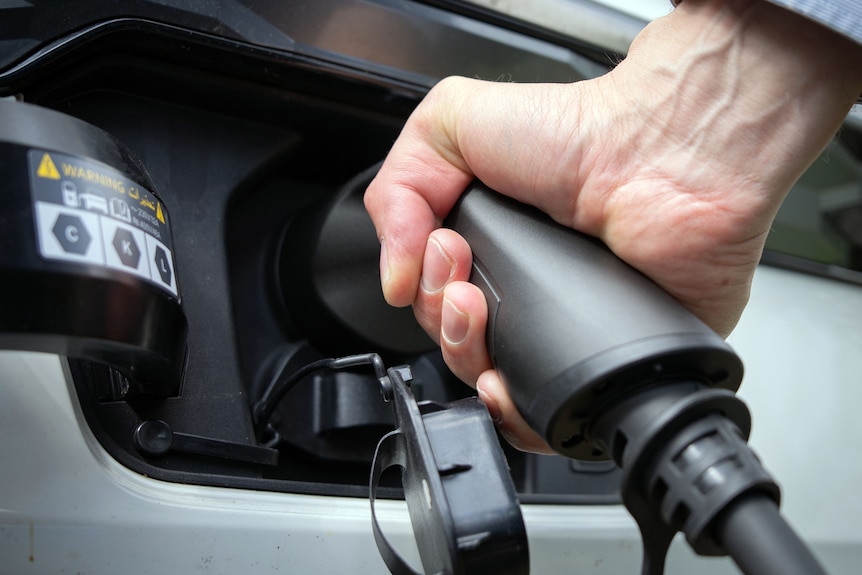
Regular EV chargers are too slow for large trucks. (ABC News: Jess Davis)
Federal Transport Minister Catherine King said heavy vehicle electrification was a key focus for the government’s net zero road map.
“We’re investing $70 million through the Clean Energy Finance Corporation with Volvo Group Australia to help fast-track the electrification of the nation’s trucking fleet,” she said.
“Through the National Competition Policy we are progressing heavy vehicle reforms to boost productivity and increase the uptake of electric heavy vehicles.”
In the meantime, Ms Fennell said the industry could decarbonise in other ways.
“We need to focus on shifting more with less,” she said.
“Running an AB-triple reduces emissions by 60 per cent versus a semi-trailer.
“We can decarbonise by reducing emissions versus just targeting zero.”