
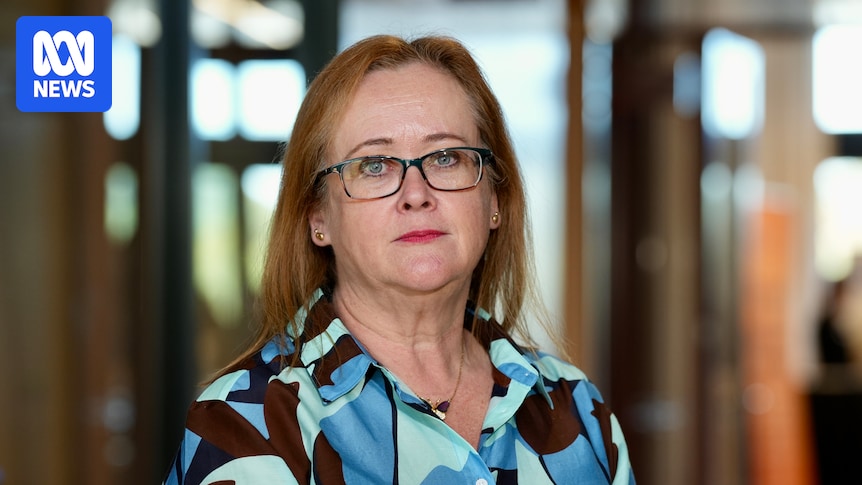
A migration agent has become increasingly horrified by the volume of domestic and family violence (DFV) cases that involve transnational technology-facilitated abuse.
“It’s huge what’s happening in the community,” said Vanessa Burn, who is head of migration law at the Women’s Legal Centre ACT.
“It’s not uncommon for me to regularly hear now that women are living in a home with cameras watching them all the time, including having family members who are overseas watching them when their partner can’t because they’re at work.”
“These women are just trapped. They’ve got no life.”
Ms Burn said about 10 per cent of the Australian population was on temporary visas.
“And around one in three women who are on temporary visas are experiencing domestic and family violence,” she said.
“We’re just beyond capacity at the moment. We’re trying to prioritise what’s urgent. It’s stressful.”
Ms Burn said video equipment installed in some victim-survivors’ homes had also been weaponised to capture footage of them arguing back, with perpetrators aiming to portray the victim-survivors as aggressors, so they were fearful to flee.
“When [the perpetrators] have video, they have evidence to start legal proceedings [against the victim-survivor] back in their home country,” she said.
“They’re caught in these two worlds.”
Ms Burn said many migrant women experiencing DFV were suffering in silence due to isolation and the fear of legal ramifications around visas.
But she said services can help women and children find safety — without their migration status being affected. She said the Department of Home Affairs website had useful information on DFV and visas.
Culture, religion not the problem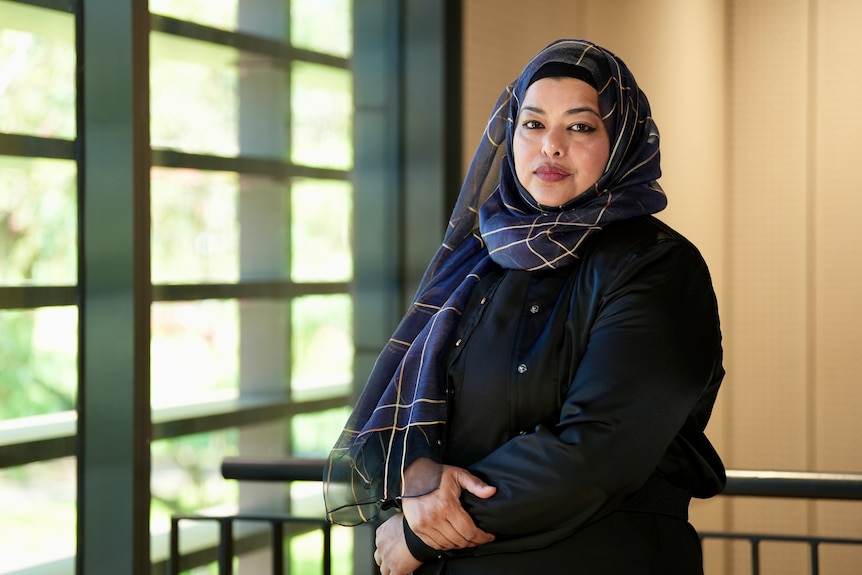
Economist and women’s safety advocate Nazia Ahmed says migrants experiencing domestic and family violence face barriers in seeking help. (ABC News: Callum Flinn)
CEO and founder of the Social Outcomes Lab Nazia Ahmed said religions and cultures were too often blamed.
“What we hear over and over again is that people are scared to use the mainstream services.
[Victim-survivors] are afraid that as soon as they go there they’ll be stigmatised and treated as though it’s their culture or religion that’s creating the problem,” she said.
Ms Ahmed, who is also a board member of the Australian Women’s Muslim Centre for Human Rights, said religion and culture were part of the solution.
Family and domestic violence support services:
“There’s a view that marriage is really precious, and that you should do everything you can to make things work. But if that situation is oppressive, and if we were to take the religious lens of Islam, which is the religion I’m from, it’s actually completely prohibited to oppress yourself.
“So when you have the true cultural or religious teachings, it can be used as a strength.
“And in many cultural communities, it would be unlikely that someone would have to go without a meal … they would get that help.
“But it’s not like that at the moment in the case of [DFV]. That’s where things need to get to.”
Ms Ahmed, who assists DFV victim-survivors daily, said the support sector also severely lacked diverse case workers.
“People use that term culturally and linguistically diverse as though it’s one box, but you know, my background is Bangladesh and my husband is Tunisian. We’re both Muslim but our cultures are completely different.”
She said gaps in multicultural representation had left room for judgement in the sector.
‘We always keep identity confidential’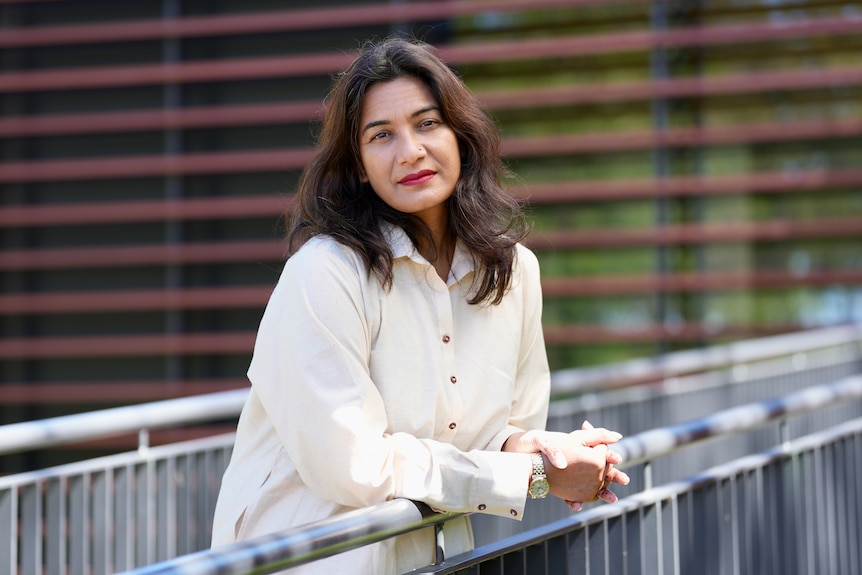
Women’s safety advocate Shamaruh Mirza says domestic and family violence is largely going unchecked in some migrant communities. (ABC News: Callum Flinn)
Shamaruh Mirza leads the women’s empowerment organisation SiTara’s Story and said DFV among migrant communities was drastically under-reported, as it was often kept within families.
“For example, I have seen a family where the partner realises that … what he is doing is not right, but he negotiates with the wife that he is going to fix his behaviour and not be violent … And the wife trusts him but the same thing happens again,” Dr Mirza said.
She said, in that instance, and in many others, the abuse was “dealt with in a family environment, probably in the presence of an uncle or aunt” rather than through formal support services.
Dr Mirza recently facilitated the ACT’s first community symposium on domestic and family violence in migrant families and said awareness was improving, but she also understood the reluctance to seek help.
She said some victim-survivors might not be ready to leave their partners yet or at all. Instead, they might want to query whether what was happening was DFV.
She said it was possible to seek advice safely and anonymously.
“We always keep the identity confidential. We never disclose them. We never want to interfere in a person’s business but we provide proactive advice if we think a person’s in a danger zone,” she said.