
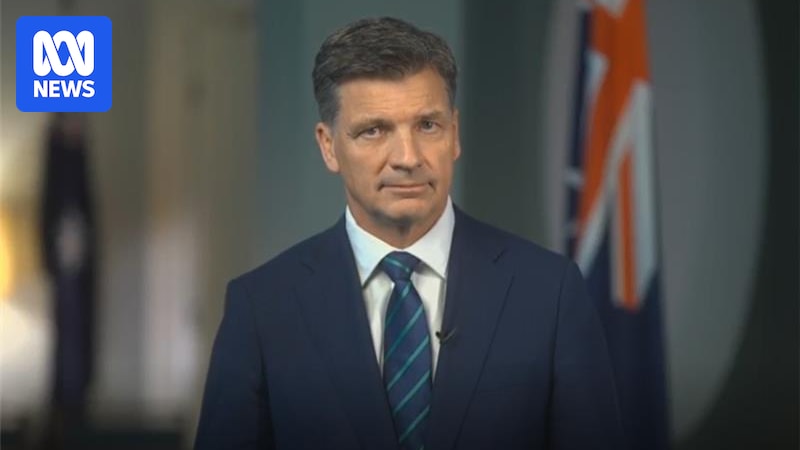
Angus Taylor has issued a return serve to the prime minister’s national address by urging people to “put Australia first” while accusing the government of failing to provide clarity on the ongoing fuel crisis.
Broadcast a day after Anthony Albanese’s speech was played across the country, Angus Taylor has taken up the opportunity for a right of reply.
Iran war live updates: For the latest news on the Middle East conflict, read our blog.
“With inspired leadership, we can rediscover confidence in ourselves — at a time when we must look after ourselves and put Australia first,” he told Australians.
The Liberal leader used his address to accuse the government of acting too slowly in response to the international oil shortage caused by the blockade of the Strait of Hormuz.
States and territories agree to extra fuel excise cut
“Last night, when the prime minister addressed the nation, Australians were expecting answers and details,” Mr Taylor said.
“They received neither.”
Arguing Australians deserved more information as the world grappled with oil shortages, Mr Taylor took credit for the government’s move to cut the fuel excise, which was announced after a meeting of the national cabinet on Monday.
“The government deserves credit for adopting the Coalition’s policy to slash the fuel tax — even if it did so belatedly,” he said.
Loading
Earlier this week national cabinet met to formulate a plan to keep the country moving and economy running as international fuel shortages threaten to hit Australian shores.
As it stands, the government has been careful to point out fuel and oil has continued to arrive in the country, and localised bowser shortages were driven by domestic supply chain failures, or panic buying.
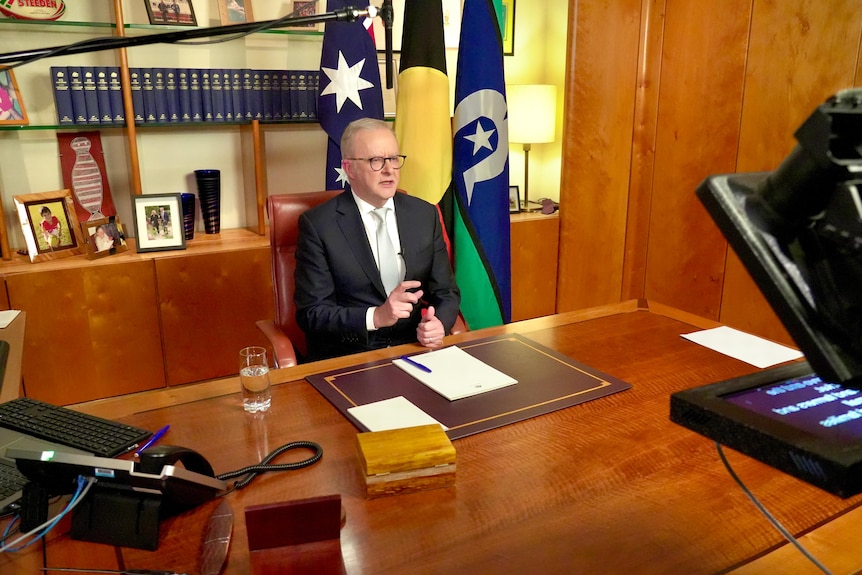
Anthony Albanese used a national address to tell Australians to life life as normal but take public transport where possible in response to international fuel shortages. (ABC News: Simon Beardsell)
“We are working to bring the price of fuel down, to make more fuel here, and to keep it onshore,” Mr Albanese said in his simulcast address on Thursday.
“And get more fuel here, using our strong trading relationships with our region to bring more petrol, diesel and fertiliser to Australia.”
Among the measures being taken to maintain fuel imports has been a move to underwrite shipments above and beyond volumes normally due to arrive.
Mr Taylor earlier described the prime minister’s address as “nothing but hot air” and, during his address, vowed not to talk down to Australians in the way he said Mr Albanese had.
“Almost all Australians will do the right and responsible things in this crisis,” the opposition leader said.
There were three things Mr Taylor suggested needed to happen urgently in an effort to protect the Australian way of life and to restore living standards.
Firstly, he said, the prime minister had to outline how, in the short term, he intended to get fuel to where it was most needed.
Mr Taylor argued for a long-term plan to protect fuel security in case of future disruptions and for the fast-tracking of exploration, mining and extraction projects.
“We need more Australian oil for Australians,” he said.
And finally he called for the upcoming budget to look beyond the current crisis and to “set our country up for the future”.
The Coalition has been critical of a four-level plan, released early this week, which has been sold as a way to protect Australians and the economy against the international fuel crisis, even if shortages bite.
Australia is currently at stage two of that plan, which was agreed to during Monday’s national cabinet meeting.
Australia’s four-step plan to survive fuel crisis
Despite assurances by the prime minister that state, territory and federal leaders were in lock step, some premiers and chief ministers have already made moves to go their own way.
Some states pushed back on plans to forego GST charged on fuel, but have since come to an agreement on that point.
Western Australia has invoked emergency powers to keep fuel flowing by forcing fuel companies to disclose information bout their supply chains.
“The risk ahead of us is a patchwork of different rules across the country that leave Australians uncertain,” Mr Taylor said.
“We do not want to see heavy-handed mandates that restrict people’s freedoms.”
He wrapped up his address with a rallying cry, encouraging people to protect and restore their way of life.
“Decline is not inevitable, damage is not irreparable,” he said.
“Australia is worth fighting for, now more than ever.”
Loading…