
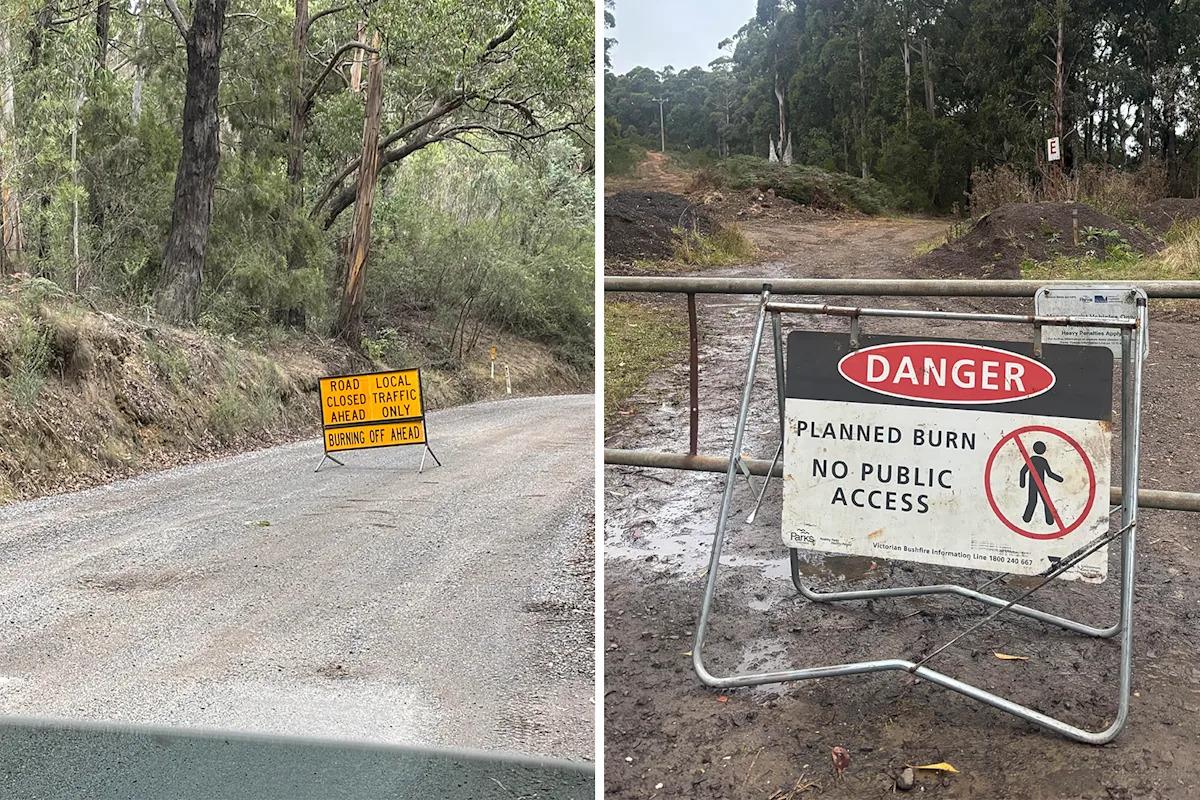
Roads have been blocked around one of Australia’s most beautiful coastal regions, preventing the public from entering the region’s lush forests.
“No one knows what’s going on behind the veil,” one concerned Lorne resident, Chelsea McMillan, told Yahoo News. “It’s worrying,” a second resident, who asked not to be named, said.
Victoria’s Department of Environment (DEECA) is preparing to conduct planned burns on the hills that surround this Otways town, close to the world-famous Great Ocean Road.
But locals and wildlife experts claim there’s been an unacceptable amount of information being made available to the public.
In particular, they’re concerned about DEECA’s ability to protect the habitat of an endangered lizard, the swamp skink (Lissolepis coventryi), which inhabits specific areas of the Otway region.
Ecologist Peter Robertson is one of only three experts on the species, and he is one of two who consulted for DEECA about its recovery after the nearby Carlisle River bushfire scorched over 11,300 hectares in January.
He is the author of Reptiles of Victoria: A Guide to Identification and Ecology, and it was his nomination that led to the species being listed as threatened in the state.
DEECA’s consultation with experts after the bushfire was welcomed as an indication that it takes the swamp skink’s conservation seriously.
But there are concerns that it didn’t reach out to Robertson in relation to planned burns conducted to the southwest of Lorne in March. And with several new fires set to be lit in the coming weeks, it’s unclear whether any experts have been consulted.
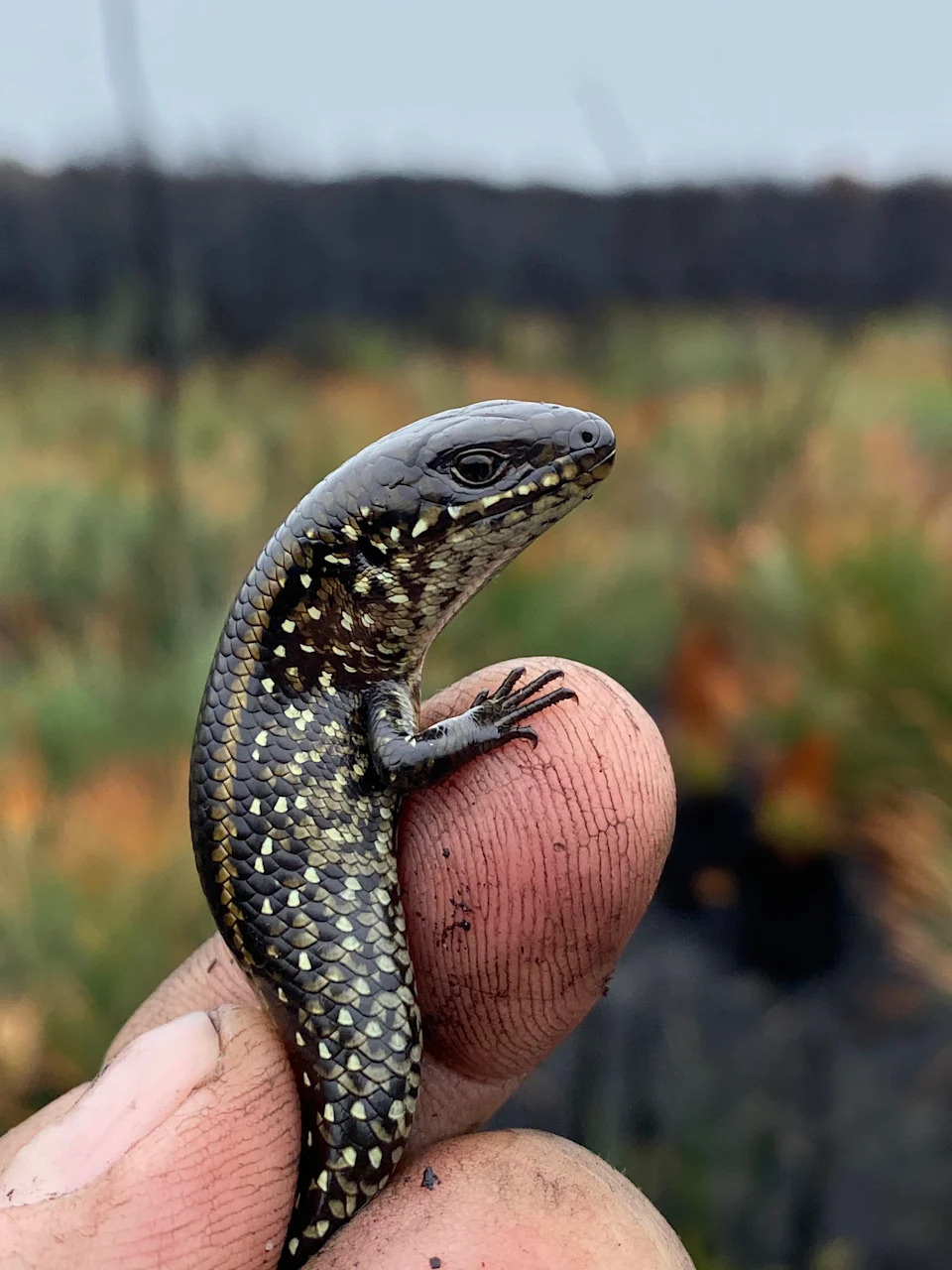
A swamp skink found after the 2019/2020 Black Summer Bushfires. Source: Nick Clemann
Robertson is worried the agency may not have a complete understanding of where it lives, warning that more fire could have a significant impact on the species, as it could further fragment its habitat.
“The swamp skink is a species that is susceptible to fire, and it’s probably been subjected to quite a lot of fire in the Carlisle River area last summer,” he told Yahoo News.
“So it would be important to ensure that as little as possible of its remaining habitat is subjected to fire, and that doesn’t appear to have been the case.”
Agency’s knowledge of swamp skinks in question
Robertson said information made available by DEECA indicates a lack of internal expertise to protect swamp skinks when conducting planned burns.
It has avoided certain habitat types to mitigate impact on the swamp skink, and another endangered species that lives in forests around Lorne, the Otway black snail.
The examples it shared with Yahoo News included avoiding south-facing slopes and higher elevation forests, which Robertson and a second reptile expert said do not fit the current understanding of swamp skink habitat.
“Neither of these is known to be the habitat of the swamp skink,” Robertson said.
Experts have indictated many of the places where swamp skinks occur are not south-facing, few are in higher elevation forests, and wet gullies are unsuitable for the species as they don’t have suitable sun basking sites.
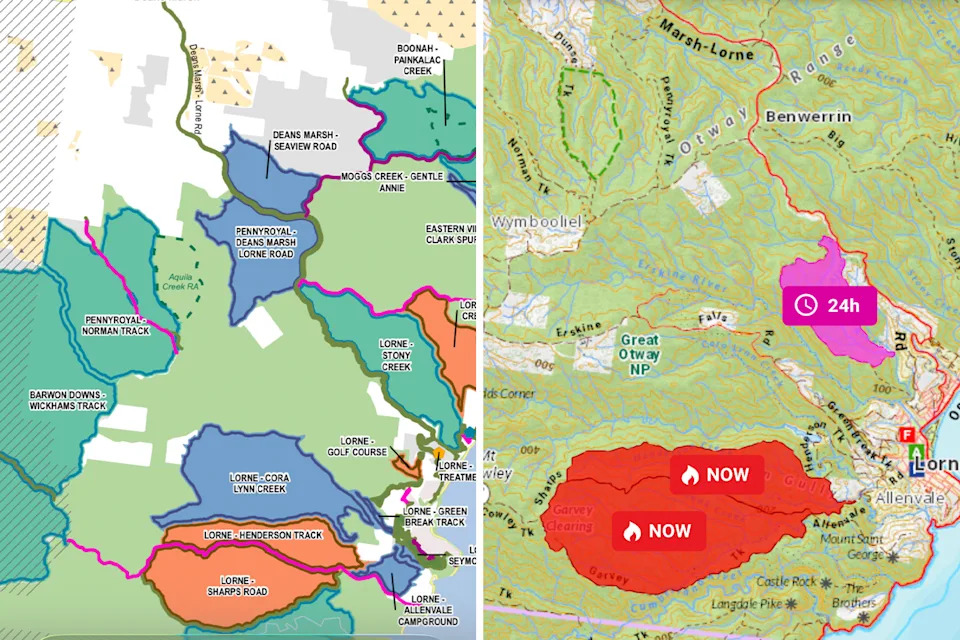
DEECA makes information about the scheduling of planned burns publicly available, but many locals want to know more about its efforts to protect endangered species. Source: FFM-Vic
Call for more clarity about efforts to protect endangered species
DEECA could be ensuring that swamp skinks aren’t being harmed during its operations, but there’s a lack of public information available to allow for expert criticism.
To assess its success in protecting the species’ habitat, Robertson said he would need detailed vegetation maps to overlay against maps of where burns have taken place.
When Yahoo News asked DEECA to produce them for Robertson to assess, it declined. It was also unable to supply a member of its agency, responsible for planned burns, Forest Fire Management Victoria (FFM-Vic), for interview.
It did not respond to questions about whether it used the services of a swamp skink expert prior to completing burns, whether it had conducted species-specific surveys of the forests, or if it thought the fires would have a significant impact on the species.
In a statement, a spokesperson said DEECA does “care greatly” about the plants and animals in the Otways, adding that its fuel management program helps reduce the risk of bushfires like those at Carlisle River.
“To minimise impact on plants and animals while undertaking planned burning, we use protective measures such as setting up planned burning exclusion zones to avoid burning in ecosystems that are sensitive to fire and leaving areas unburnt to provide refuge for animals,” it said.
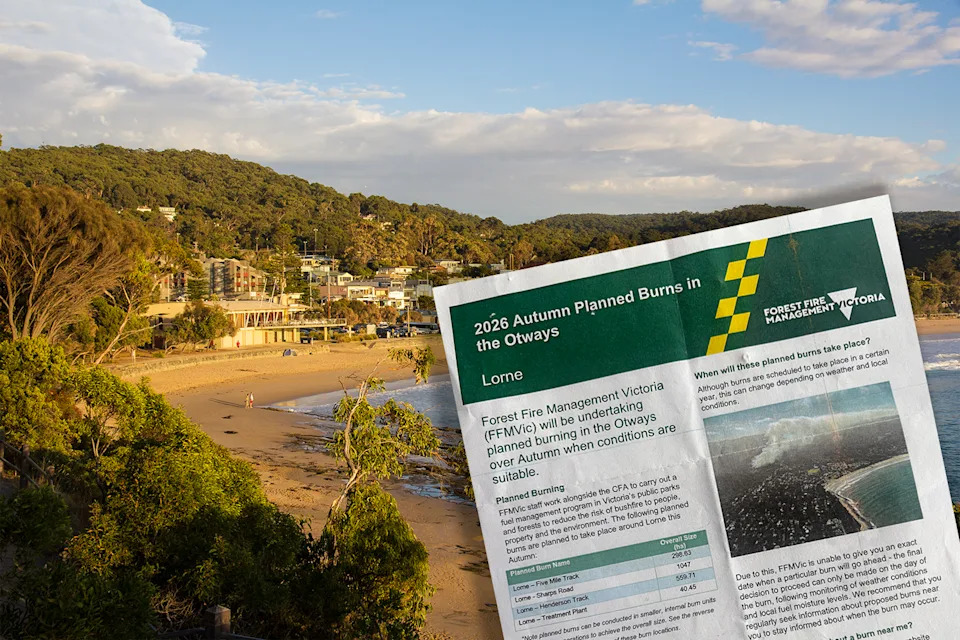
DEECA has informed residents about its plans for burns around Lorne. Source: Getty/FFM-Vic
Mental toll of planned burn on local wildlife rescuer
As a resident of Lorne, McMillan volunteers as a wildlife rescuer and lives on a property surrounded by planned burn sites.
She isn’t arguing against the burns themselves, but argues there should be detailed field studies conducted for threatened species like the swamp skink, southern brown bandicoot, and the gang-gang cockatoo before they occur.
“The environmental impacts aren’t known yet from the January bushfires, and [DEECA] needs to pause and reassess,” she said.
“Looking at the planned burn schedule for Lorne, it brings tears to your eyes — they almost want to burn everything over the next three years.”
With more planned burns imminent, McMillan has been pushing for more information from DEECA about its wildlife assessments.
But the lack of communication she’s received is taking a toll on her mental health.
“It’s been really tough for me personally, as you can probably hear, I’m feeling emotional,” she said.
“Because we’re locked out so far from the burns zone, we won’t see any animals fleeing the fires.”
Do you have a story tip? Email: newsroomau@yahoonews.com.
You can also follow us on Facebook, Instagram, TikTok, Twitter and YouTube.