
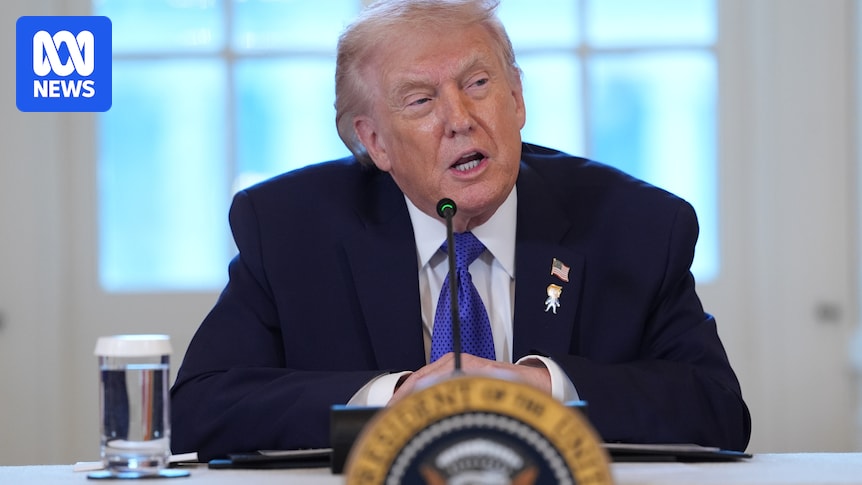
Donald Trump has pulled the trigger on a longstanding threat to impose a 100 per cent tariff on drug imports.
The US president’s latest order shows he remains committed to his aggressive tariff regime despite February’s Supreme Court ruling that invalidated his centrepiece “liberation day” tariffs.
It also reflects anger inside his administration about international pricing systems, including Australia’s Pharmaceutical Benefits Scheme (PBS), which mean Americans often pay much higher prices for medicines than overseas customers.
The newly announced tariff will apply to patented drugs manufactured outside the United States.
But it will be reduced to 20 per cent for companies that move operations to the US.
A senior administration official, who briefed media including the ABC, said companies could also strike deals to lower prices for American buyers and reduce the tariff to zero.
Many countries — including Japan, South Korea, Switzerland, EU nations and the UK — have negotiated exemptions and will instead face lower pharmaceutical tariffs between 10 and 15 per cent.
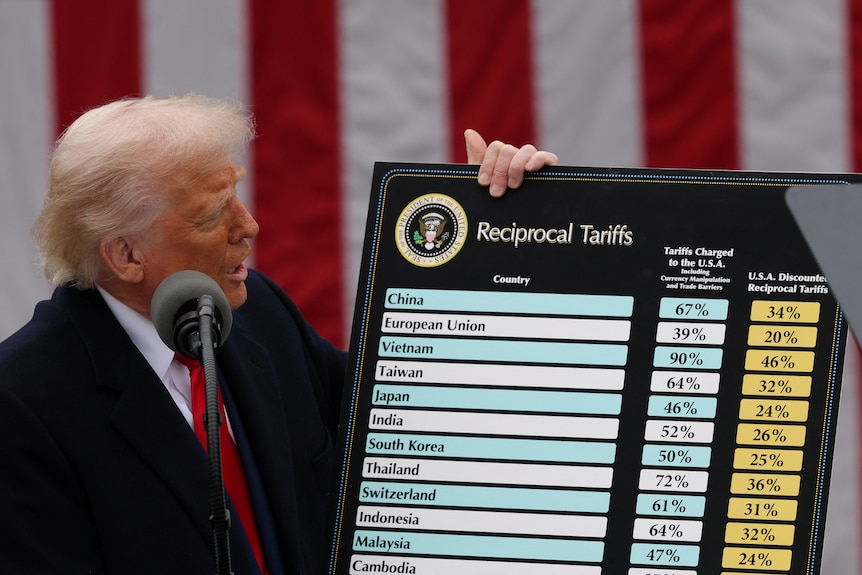
Donald Trump signed the order on the anniversary of “Liberation Day”, when he announced tariffs that were later overturned. (Reuters: Carlos Barria)
Australia’s PBS, seen by some in the US as discriminatory, could make such a deal less likely for Australia.
Asked why a loyal ally like Australia should be subject to a 100 per cent tariff, US Trade Representative Jamieson Greer said other countries and companies had made deals with the US.
“We have spent the past year hammering out deals with a lot of these companies to make sure they’re building in America,” Mr Greer told the ABC at the White House.
US big market for Australian pharma
Pharmaceuticals are among Australia’s top exports to the US, worth about $US1.3 billion ($1.91 billion) last year, according to figures from the UN’s COMTRADE database.
But a large proportion of those exports are produced by Melbourne-based manufacturer CSL. It has been heavily investing in US manufacturing to circumvent the tariff, which the Trump administration had previously flagged and delayed.
Why big US pharma hates Australia
A social media post from Mr Trump in September suggested the tariff would take effect from October last year. At the time, CSL said it did “not expect any material impact” from the tariff’s implementation.
The US’s pharmaceuticals lobby has long been pushing for tariffs on Australian-made drugs, arguing the PBS has created an unfair playing field.
The scheme forces drug companies to negotiate sales with the Australian government, rather than individual buyers, to prevent commercial bidding wars pushing up prices.
‘National security’ tariff
The pharmaceutical tariff is being implemented under a section of trade law designed to protect national security, which means it is unaffected by the Supreme Court decision.
The US argues domestic pharmaceutical production is necessary to ensure it has a secure supply of vital drugs in times of global conflict or emergencies such as a pandemic.
A senior administration official said too many drugs that were “driven by research and development here in America” were now produced abroad.
“While we research and we develop them, and we’re the innovators and we are the patent holders, we’ve allowed other countries to make the drugs — and therefore were beholden to these other countries.”
He said the Trump administration had already negotiated 17 deals that would result in hundreds of billions of dollars worth of manufacturing being moved to the US.
In July last year, Mr Trump said the tariff could be as high as 200 per cent.