
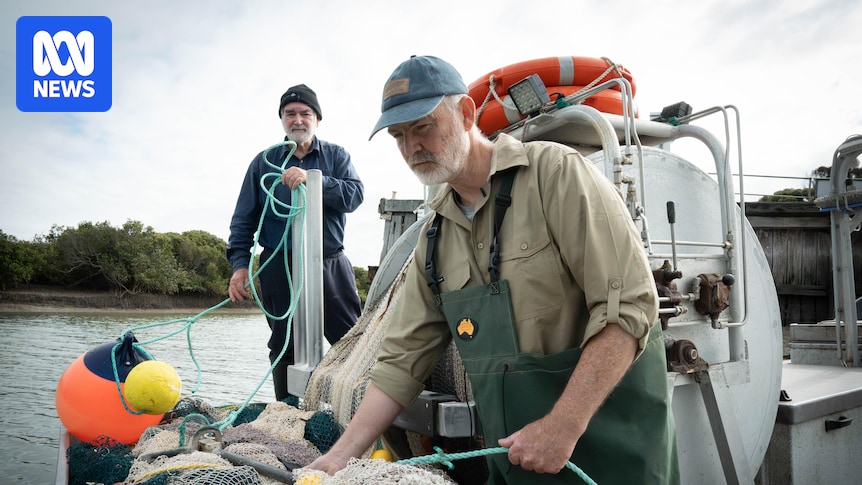
Easter is usually one of the busiest times of the year for South Australian net fisher Bart Butson, but this season he has only put a net in the water for scientific research.
Gulf St Vincent, where Mr Butson’s family has been fishing for three generations, closed to commercial fishing in November amid the state’s devastating algal bloom, which has decimated fish stocks.
“The crustaceans, the cephalopods, have all been very heavily impacted and there’s hardly any fish. There’s almost no squid,” he said.
“It’s quite barren, to be honest. There are no bottom-dwelling fish — there are no rays, sharks, stingrays.”Fishing restrictions announced amid ongoing algal bloom
For the past few months Mr Butson has only taken his boat out to check on fish numbers, as part of a government stock assessment.
“It’s just starting to have a recovery with some of the species — notably the blue crabs and garfish — but the rest of the species, there’s very little,” he said.
The commercial fishing sector has received government support at various points throughout the algal bloom, including in the form of licence fee relief in an initial $500,000 package.
As part of the summer plan unveiled in October, the government announced grants of up to $150,000 for commercial fisheries for resilience projects and to help protect jobs, while grant payments up to $350,000 remain available to “support licence holders significantly impacted by the algal bloom”.
The Gulf St Vincent restricted area, which stretches from Adelaide to Kangaroo Island and the Yorke Peninsula, is set to reopen in July, but Mr Butson and others in the industry have said they want it to remain closed well beyond that point.
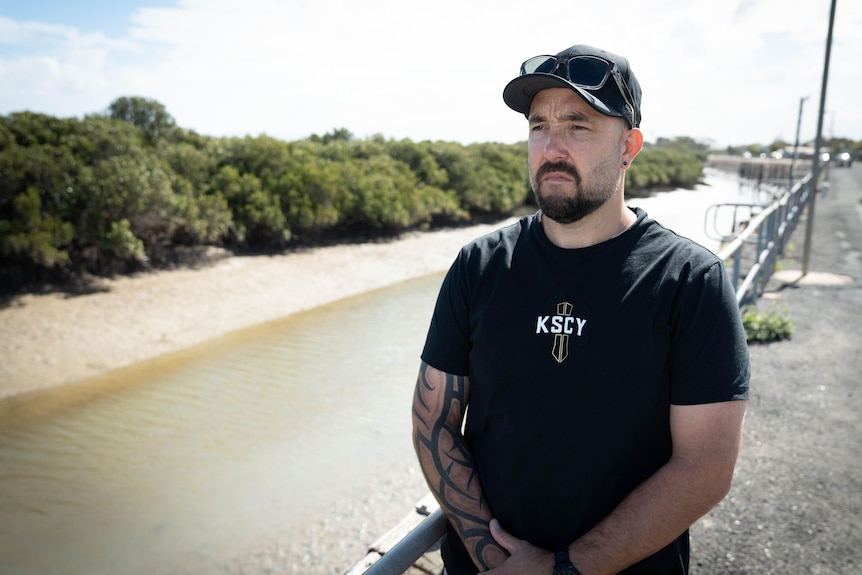
Ardrossan fisher Michael Pennington has been a commercial fisher for more than 15 years. (ABC News: Stephen Opie)
Ardrossan calamari fisher, Michael Pennington, said he believed the very survival of the sector was at stake.
“It would be horrendous to reopen,” he told ABC News.
“All key species in Gulf St Vincent are near non-existent levels.
“[Squid] need to be able to reproduce and unfortunately they’ll just die, but that’s what needs to happen — that’s the only way our fishery can come back sooner rather than later.”
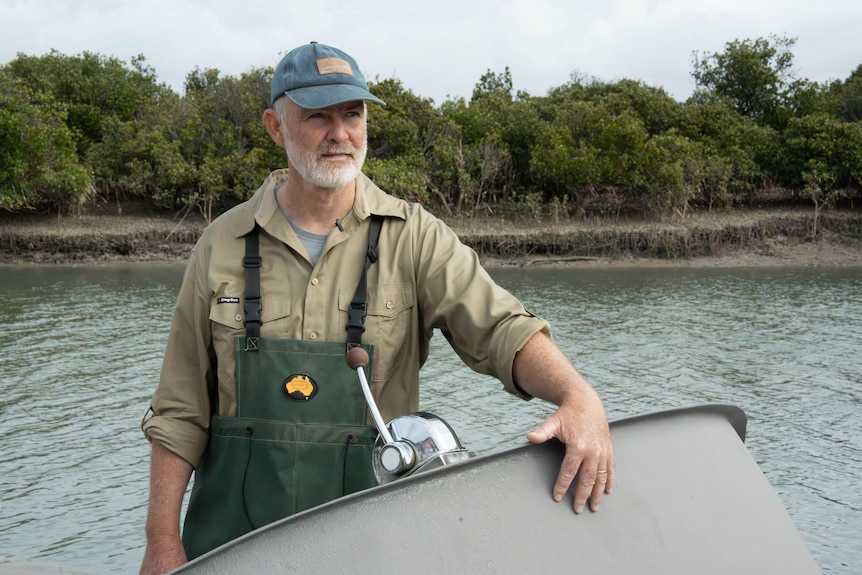
Mr Butson says stocks have been decimated in the gulf. (ABC News: Stephen Opie)
Mr Butson, who operates out of Port Wakefield near the edge of the Yorke Peninsula, believes the zone should remain closed for at least one or two years, and up to five years if needed.
But even allowing for that, he expected some fishers would be forced out.
“They probably will need to consider an exit — a complete exit — because it will be a long recovery,” he said.
“From my operational experience, I don’t think there’s any way we can go back fishing as soon as July — there’s just not enough fish.”
Mr Pennington has written directly to the government urging an immediate closure of the gulf to all fishing.
A source of frustration for him is what he sees as a double-standard between the commercial and recreational sectors, especially when it comes to squid.
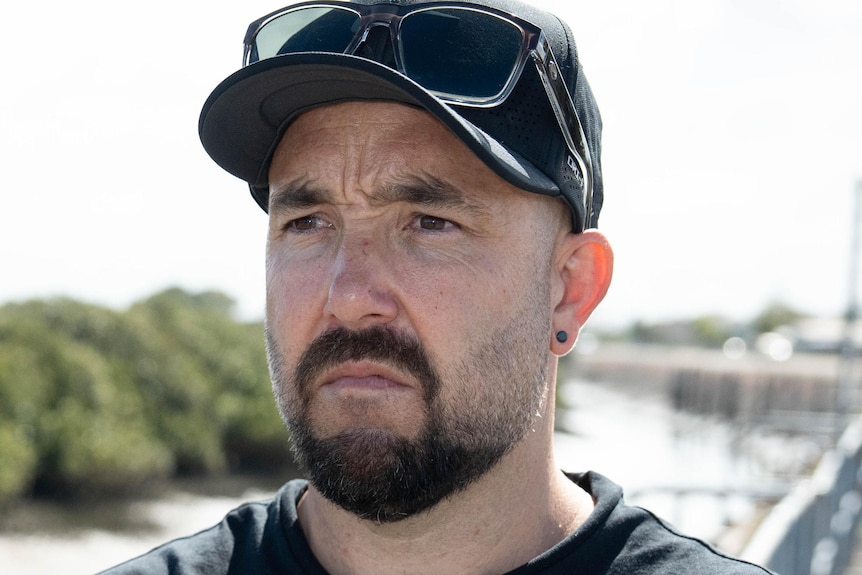
Mr Pennington says stocks are at “near non-existent levels”. (ABC News: Stephen Opie)
He said the commercial sector had only caught 22 individual calamari in Gulf St Vincent since June, and they were released, as part of the stock assessment.
“[I spent] a six-hour day on the water to catch 13 squid between 12 and 15 centimetres, yet there’s recreationals [sic] fishing around me that are allowed to keep them,” Mr Pennington said.
“For the squid we’re probably already looking at a decade to get a sustainable fishery.
“These small squid that could be the only stock to reproduce for Gulf St Vincent — if we keep taking them out now, we’re just putting years and years and years on top of a recovery plan for that species.”From gulf to gulf, the picture remains grim
On the Spencer Gulf, which sits on the other side of the Yorke Peninsula, squid fishers said the decline in stock had reached crisis point.
ABC News has seen recent commercial data which shows the calamari catch had significantly dropped since September 2025, when local fishers said they were noticing fish kills and signs the algal bloom had spread to the Spencer Gulf.
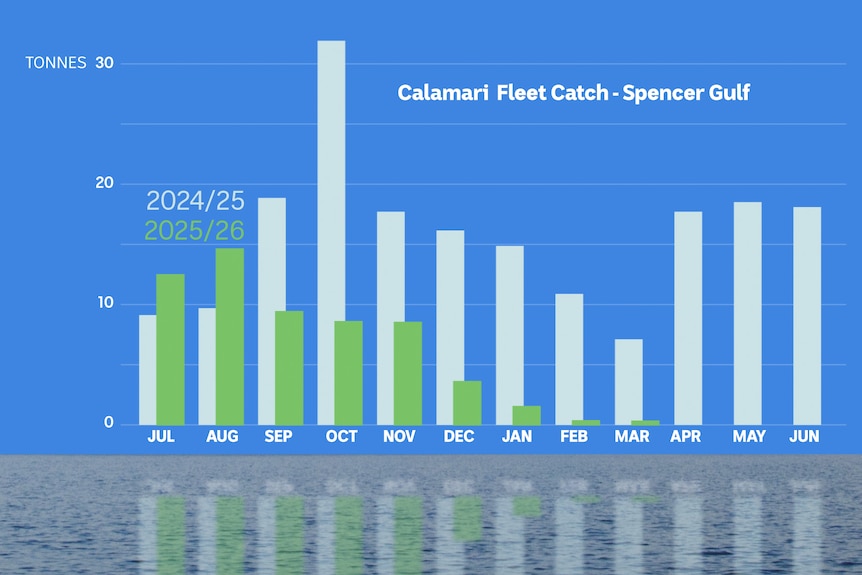
Commercial data seen by the ABC indicates massive falls in calamari catches in Spencer Gulf. (ABC News: Stephan Hammat)
The data indicated that, in the past two months, the commercial calamari catch in the Spencer Gulf was less than 5 per cent of what it was for the same period last year.
“There’s some of us — we’ve probably caught the last commercial squid that we’re ever going to catch,” fisher David Backen said.
Mr Backen said he wanted restrictions urgently imposed to protect the long-term future of the fishery.
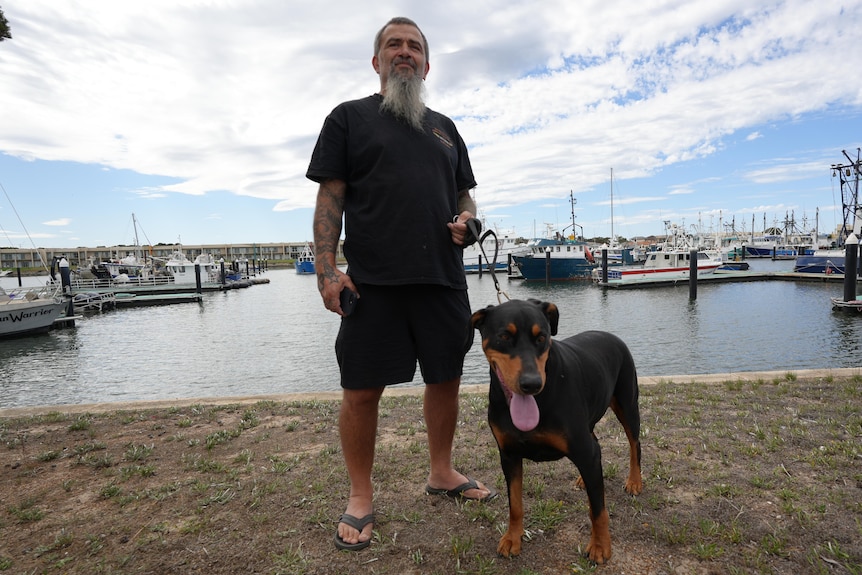
David Backen says he has not caught a commercial quantity of squid since June. (ABC Eyre Peninsula: Duncan Bailey)
“I’ve spoken to a lot of fishermen around the place, and they’re all saying the same thing — there’s less squid here than what there was snapper when they shut the snapper fishery, so we’re all wondering how you can have a fishery in total disarray?” he said.
“You go out and drift around for a few hours catching half a dozen — it’s basically, they’re all done and dusted.
“I haven’t really caught any commercial amount of squid since probably June.”
Port Lincoln fisher Jarrod Day said he had not brought home a commercial-sized calamari catch for eight months.
“I’ve been forced to fish anywhere from 300 to 700 kilometres from home, just to be able to make ends meet,” Mr Day said.
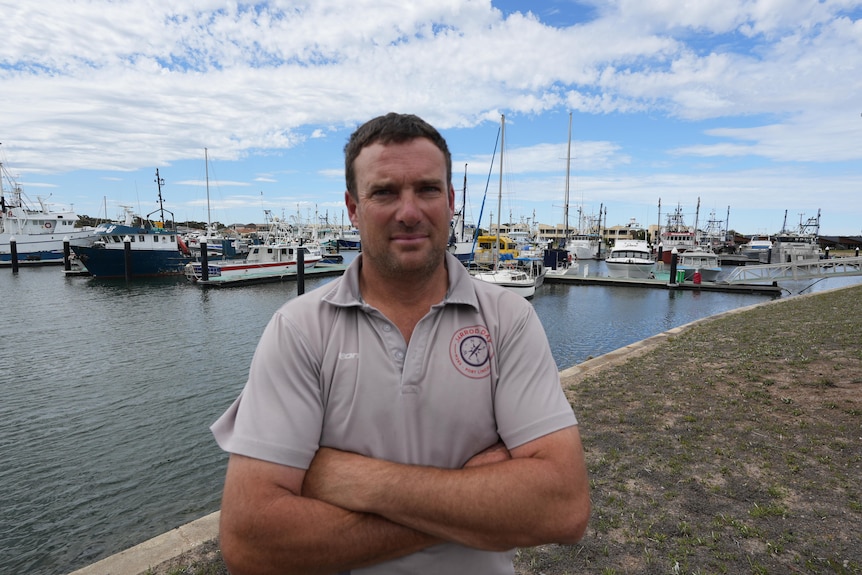
Jarrod Day says calamari stocks are in the “worst state you could possibly imagine”. (ABC Eyre Peninsula: Duncan Bailey)
Mr Day and other Port Lincoln based squid fishers said data showing the downturn in the overall calamari catches in the Spencer Gulf should have alerted authorities that stocks had been depleted.
“They’re in the worst state you could possibly imagine — I think they’re worse than anyone can imagine at the minute,” he said.
“[Squid] live from 12 to 18 months — if you wipe out one generation that’s it, they’re gone. We’ve not seen any egg aggregations the last couple of years.
“It’s time the government actually sat up and actually took notice of what we are saying, and actually did some real action instead of leaving it too late.”
He said he wanted to see immediate restrictions across commercial, charter and recreational fishing.
SA Premier Peter Malinauskas said that of all the stocks affected by the algal bloom, Gulf St Vincent squid were the ones “we’re most concerned about”.
He said the government had faced accusations in the past that it had been too quick to close fisheries, and said any decision to reopen them would be made in consultation with scientists.
“We want to make sure we get a balance right here, not reopening the fishery too quickly but making sure that we also act in accordance with the science without doing unnecessary harm to the rec sector and the economics that sits around that — similarly with commercial fishers,” he said.
“We won’t be reopening any fisheries to rec or commercial, or adjusting that position, until the science supports it. We’ve been very deliberate about that.”
In a statement, Department of Primary Industries and Regions (PIRSA) said the algal bloom had “prompted the need for a more continuous monitoring system”.
“The state government continues to assess scientific evidence and will evaluate the existing temporary restrictions, and consider whether any changes or new restrictions are needed,” a spokesperson said.
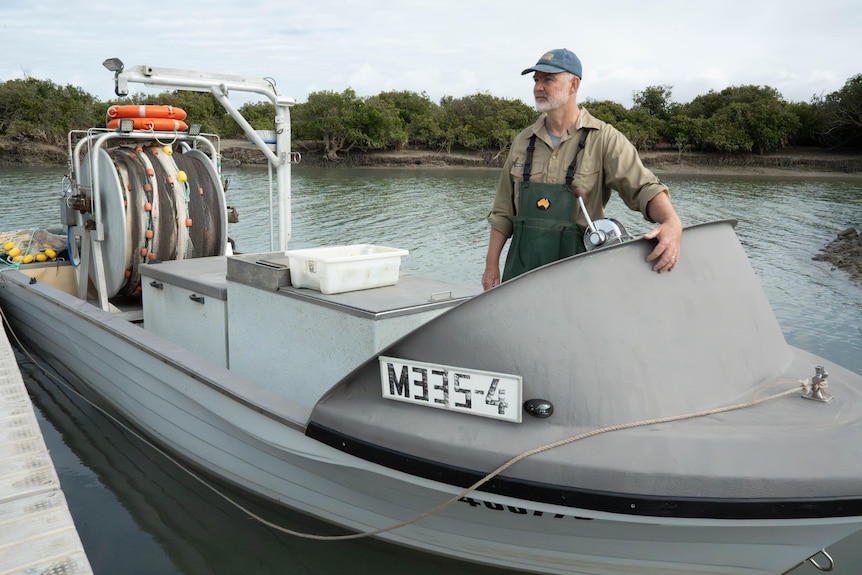
Mr Butson wants the fishery to remain closed. (ABC News: Stephen Opie)
Back at Port Wakefield, Mr Butson believes the wake-up call might come in the form of a price shock for consumers.
“The prices have almost doubled, which is very painful to see for everybody,” he said.
His solution is as simple as it is stark — where stocks are low, “we should completely leave the fish alone”.