
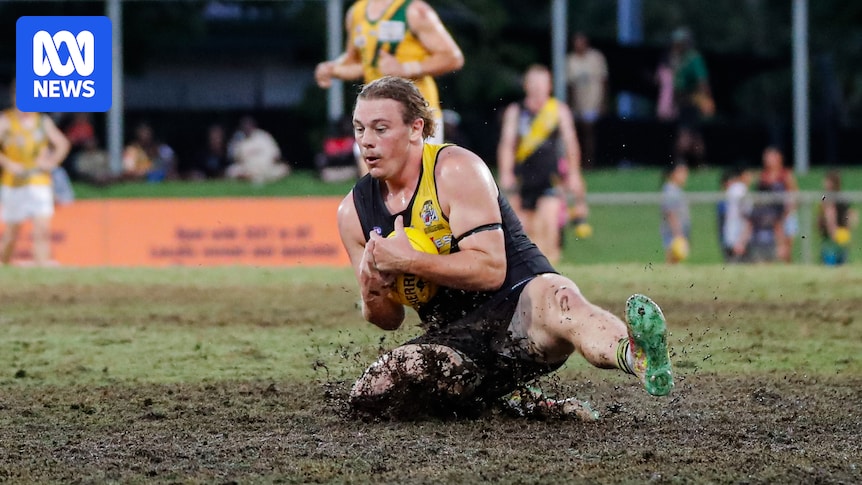
A rare water-borne parasite likely spread on Darwin’s sodden wet season playing fields is behind an outbreak of severe conjunctivitis that has so far affected more than 100 people.
The Northern Territory Centre for Disease Control (CDC) has identified the microscopic parasitic fungus, vittaforma corneaea, as the cause of the recent spike in mystery eye infections linked to the NT Football League (NTFL).
Football eye infections under investigation
The CDC is telling members of the public to stay vigilant and take precautions at a number of Darwin playing fields identified as high risk.
Here’s what we know.
What have the NT’s health authorities said?
An investigation was launched last month after teams in the NTFL raised the alarm about dozens of suspected conjunctivitis cases reported since the start of the wet season, with symptoms ranging from mild to severe.
On Wednesday, the CDC said the number of reported cases of keratoconjunctivitis linked to the NTFL had climbed above 100.

In March, a public health alert was issued over an increase in conjunctivitis cases among Darwin football clubs. (Supplied: NTFL/Celina Whan)
Keratoconjunctivitis is similar to conjunctivitis but more severe, affecting the cornea as well as the lining of the eye and the mucus membrane covering it.
After “extensive” testing and work with a laboratory interstate, the CDC announced the results of its investigation on Wednesday, naming the microsporidia species, vittaforma corneaea, as the cause of the outbreak.
What is vittaforma corneaea — or microsporidia, for that matter?
Microsporidia are tiny, single-cell parasites that are widespread in the environment and can infect both humans and animals, according to the US Centre of Disease Control.
They most commonly cause gastro-like sickness in people with compromised immune systems, with contaminated water or soil considered a major transmission route.
Vittaforma corneaea is a less common sub-type of microsporidia parasite — or as NT Health described it, a “rare”, “specialised parasitic fungus” — in which the parasite’s tiny spores infect the eye.
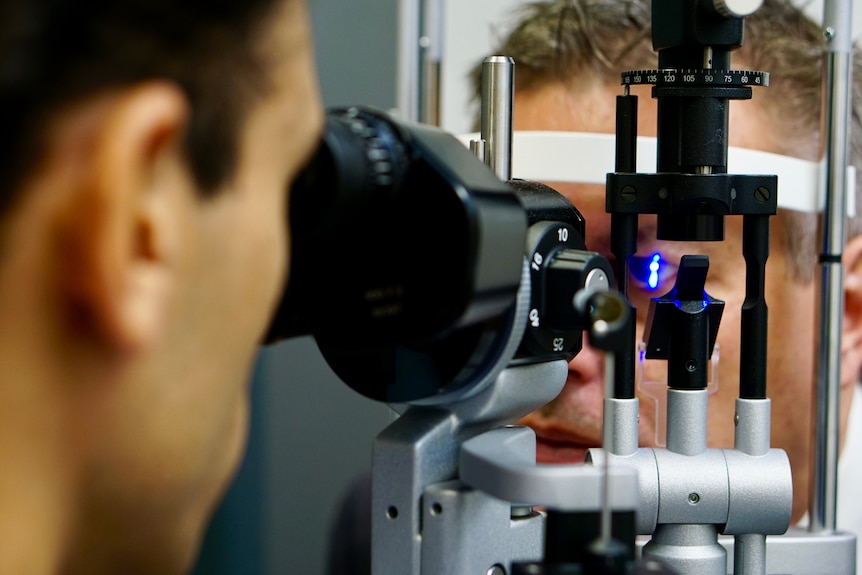
Eye specialists will often diagnose conjunctivitis by using a slit lamp to scrutinise a patient’s eye. (ABC News: David Weber)
NT Health has advised keratoconjunctivitis can cause a range of symptoms in and around the eyes.
Those symptoms include:
Unilateral rednessItchinessPhotosensitivityBlurred visionPain / foreign body sensationHave there been outbreaks before?
According to Darwin optometrist Lance Chin Quan, who has treated dozens of infected footballers, it’s not something that Top End health authorities have seen before.
“This is the first time this particular eye infection has been seen in the Territory, as far as I know,” he said.
“I’ve been practicing here for 43 years and been treating eye disease for 20 [years] and I’ve not seen this before.”
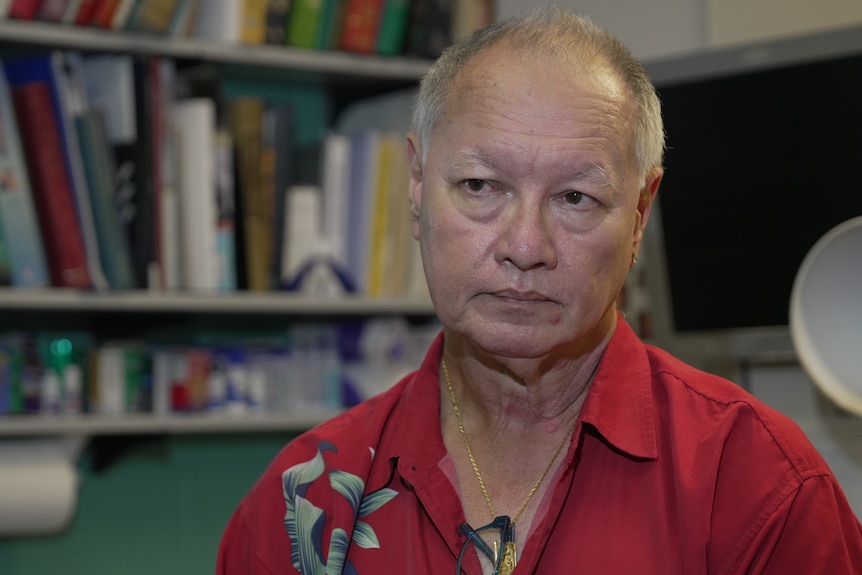
Lance Chin Quan treated more than a dozen football players last month for conjuctivitis related issues. (ABC News: Luisa Santucci)
In recent years, researchers have documented outbreaks of vittaforma corneaea infections at swimming pools in Taiwan, among travellers to South-East Asia and even in Israel’s popular Sea of Galilee.
This month, researchers studying an outbreak among rugby players in Japan wrote in the journal Microorganism that infections were “increasingly recognised” as affecting healthy people as well as those with compromised immune systems.
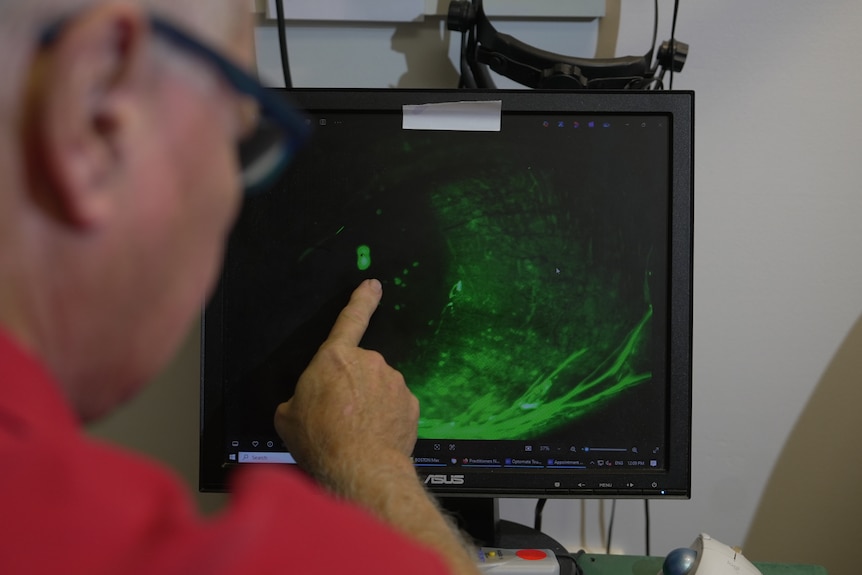
Lance Chin Quan says this is the first time he’s seen mcrosporidial keratoconjunctivitis in the NT. (ABC News: Luisa Santucci)
They also observed the outbreaks occurred following “high temperatures, high humidity and increased rainfall” — which Darwin has had a lot of this wet season.
“However, the molecular links between environmental reservoirs and human diseases remain poorly understood,” the researchers wrote.
“[Our] findings underscore the importance of environmental surveillance in sports fields and other high-contact environments.”
What happens now?
Although the cause of the outbreak is now known, the CDC is still trying to nail down the source.
It has identified several playing fields in Darwin as high-risk areas:
TIO Stadiums 1 and 2DXC Arena (Marrara Cricket Ground 1 and 2)Gardens Oval
NT Health says anyone active in the high-risk areas should wash mud off their face and eyes and shower immediately after on-field activities.
Anyone who has played on those fields since January 1 and experienced symptoms should contact a GP or optometrist.

TIO Stadium in Marrara is one of the locations identified by the CDC as high risk. (ABC News: Che Chorley)
Mr Chin Quan said the good news was that up to 40 of the patients he’s seen have been making good recoveries.
“We’re getting now to the point where the eye infection is resolving,” he said.
“We’re seeing … no more lesions, the corneas are clear, the vision is back.
“We’re … tapering them off the steroids slowly and hopefully they’re going to have a complete healing.”