
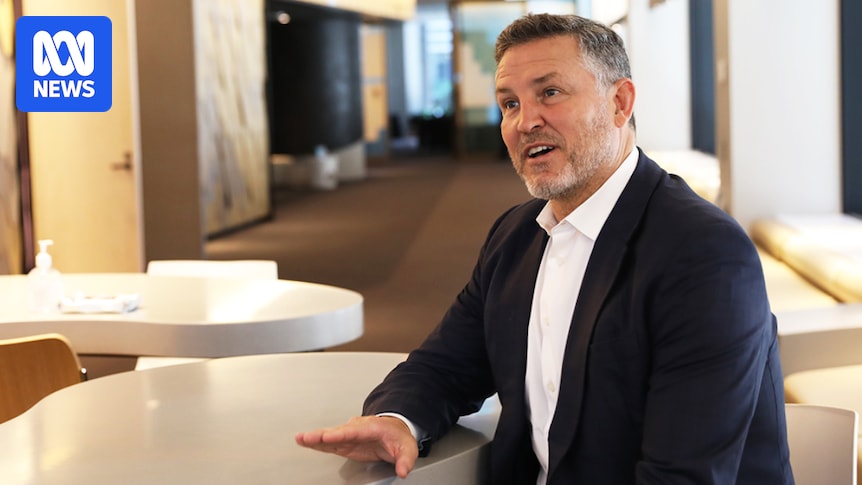
The chief executive of Westpac has warned of the growing risk a recession could be on the horizon for Australia, given growing inflationary pressures and geopolitical tensions.
In an exclusive sit-down interview with the ABC’s Alan Kohler, for the second episode of his That’s Business podcast, Westpac CEO Anthony Miller said “circumstances have changed”, and Australia needs to be prepared.
“I think there’s a chance of a recession; I think we need to acknowledge that,” he said.
“It’s much more complicated today because of events in the Middle East over the last few months than it would otherwise have been, and so I think it puts more pressure on how [the Reserve Bank] can get us through this environment.”
Loading…
As it stands, inflation rose 3.7 per cent in February, down 0.1 per cent from the previous month, but remains above the Reserve Bank’s target band, and does not capture the impact of the global energy crisis, which took hold in March.
Australia has seen two interest rate rises already this year to combat existing domestic inflation pressures, with Mr Miller expecting more could come.
“The Reserve Bank wants to obviously deliver the reduction in demand to … pull back on inflationary challenges for the economy.”
But he said one more rate hike would take Australia back to the position it was in before the RBA started cutting rates last year, when the cash rate was 4.35 per cent.
“Another rate rise would then return us to where we started when there was a rate reduction program, that commenced in 2025, so therefore, it wouldn’t be any worse than what it was last year.”
The interview between the pair took place on Monday, shortly before Westpac’s chief economist Luci Ellis published a note forecasting three more rate hikes by August, a position she explained the next day on The Business.
Loading…
“The reality is the conflict in the Middle East has raised energy prices, and the pass-through of that increase in fuel prices to other prices in the Australian economy has come through quite quickly and in large measure,” she said.
“That’s taken us a little aback as well.”
Many analysts, including those in the Commonwealth Treasury, are warning inflation could top 5 per cent later this year if oil disruptions persist in the Middle East, which is much higher than the RBA’s target of 2.5 per cent.
“That’s just too high for the RBA to be comfortable with, and if they were already raising rates with inflation in the low threes, they’re going to do more if they see it hit 4 per cent,” argued Luci Ellis, who was previously the assistant governor (economic) at the Reserve Bank.
The housing conundrum
Five rate rises over 2026 would, if it transpires, inevitably put further pressure on households and businesses — something Mr Miller said the bank was prepared for.
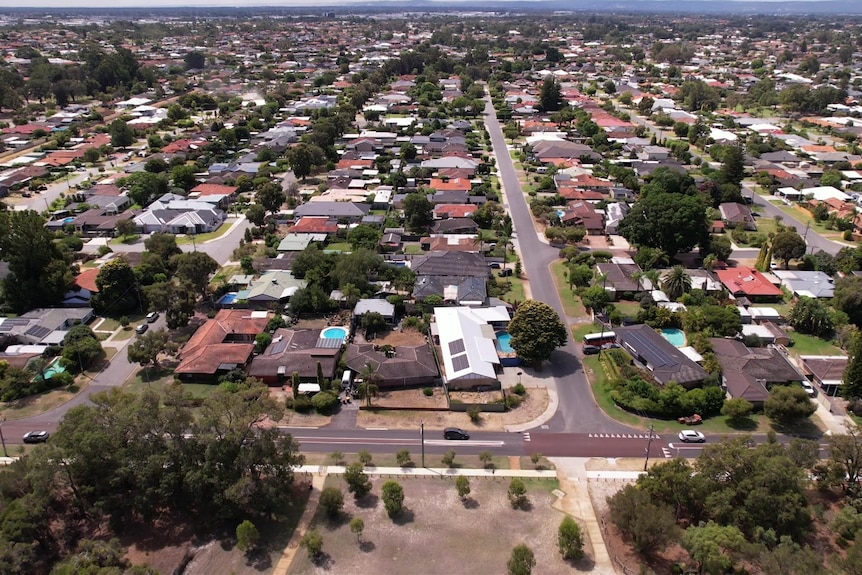
More interest rate hikes could put pressure on already tight household budgets. (ABC News: Mitch Edgar)
“We’ve got a balance sheet that gives us the capacity to support and be far more willing to provide additional liquidity to businesses that are having some working capital challenges,” he said.
“For example, to be much more patient in when and how they might repay their loan because the circumstances have changed.”
When questioned if Westpac has contributed to the problem of high housing costs and financial vulnerability by allowing lenders to borrow loans that were at the very upper end of their capacity to pay, he said no.
“We lend money following the responsible lending guidelines prescribed by the regulator, so we’ve not lent too much money; we’ve lent in accordance with what the regulations require.”
Rather than loose lending boosting home prices, Mr Miller pointed to tax incentives that encourage Australians to invest more in housing.
“We supported people in what they wanted to go after and which they’ve been incentivised to go after, whether it be that cultural phenomenon of owning your own property or that fiscal incentive of the tax relief because you own your own house.”
Mr Miller argued the bigger problem is getting enough supply of homes that fall within the borrowing capacity of an Australian on a typical income.
“Median income of Australians is approximately $90,000-$95,000, and if you therefore put a mortgage over that median income, the maximum you can really purchase is about $600,000-650,000.”
Today, the median house price across the country is $933,137, making it complicated for borrowers, particularly first home buyers, to borrow enough to get a foot in the door.
Australia’s two biggest cities have gone backwards in house prices
“So we’ve got to build more houses in the $600,000 to $700,000 price range, and so what are we doing? And how are we adjusting the way houses are approved, the way construction is allowed, and the productivity in that industry to drive more house or unit production at the right price point,” said Mr Miller.
Mr Miller said facilitating a greater number of Australians moving out of the big cities to regional Australia, where house prices were generally much closer to borrowing capacity, was another way governments could help boost home ownership.
The banking regulator APRA has ordered institutions under its supervision to limit high debt-to-income loans to 20 per cent of all new loans approved in order to head off the prospect of too much risky lending.
Who holds responsibility for scams
On top of managing interest rates, banks and consumers have increasingly had to face the challenges of financial scammers.

Aussies lost billions of dollars to scams in 2025, according to the Australian Competition and Consumer Commission (ACCC). (ABC News)
Australians lost $2.18 billion to scams in 2025, according to the Australian Competition and Consumer Commission (ACCC).
Investment scams were responsible for $837.7 million in losses, and payment redirection scams for $166.8 million.
When questioned about who bears responsibility for financially compensating those affected by scams, Mr Miller said it should not always be the banks.
“Who is responsible or who could have done more to ensure that person was not scammed … the banks, together with the telcos, together with the social media platforms, are one entire ecosystem that need to work collectively together to stop, minimise and deal with scams,” he said.
Loading…
In February this year, the federal government passed the Scams Prevention Framework Act 2025, a world-first, mandatory framework forcing banks, telecommunications, and social media platforms to detect, prevent, and report scams.
Businesses that do not meet their obligations under the Framework can face fines up to $50 million.
Mr Miller said as long as Westpac is following protocol, fines and compensation would not be the bank’s responsibility.
“If we’ve discharged that responsibility, the question is, should that still fall to the bank, that they compensate the customer and our view, and it’s been one which we think everyone is agreed, that doesn’t make sense.
“But of course, if we don’t meet the standard we should have met, we don’t follow the process that we have agreed that we would follow, then that should fall to us in terms of compensating particular customers affected.”