
In the second quarter of the Dallas Mavericks’ Feb. 7 road game against the San Antonio Spurs, Klay Thompson got hot. The future Hall of Fame shooting guard made a 3 from the right corner first and then another 3 from the left wing. He scored 14 points in fewer than four minutes.
Amid that flurry, according to multiple sources inside Frost Bank Center, Thompson turned toward the Spurs’ bench and said, “It doesn’t matter. We’re tanking.”
Entering Friday’s game against the Orlando Magic, the Mavericks (24-52) have lost 26 of their previous 31 contests. They have the sixth-worst record in the NBA. The Mavericks control their own first-round pick in this year’s draft, plus the Oklahoma City Thunder’s first-rounder (either the No. 29 or No. 30 selection). Mavericks brass has insisted since trading Anthony Davis to the Washington Wizards in February and two weeks later announcing injured guard Kyrie Irving wouldn’t play at all this season that they intend to reset — not rebuild — around Cooper Flagg, the No. 1 pick in last year’s draft. Identifying the right players in this year’s draft is critical to that plan, especially because the Mavericks don’t control their own first-round pick again after this summer until 2031.
The Mavericks, however, first need to determine who will be running their draft process. The team’s search for a new lead basketball executive is beginning to ramp up.
Internal candidates Matt Riccardi and Michael Finley — Dallas’ co-interim general managers since Nico Harrison’s firing in November — are under consideration to get the job. But the Mavericks, league sources said, also have ambitions of going big-game hunting. Team governor Patrick Dumont successfully persuaded NBA Hall of Famer Rick Welts to come out of retirement to run the Mavericks’ business side in one of his first major moves in charge of the team. The Athletic has reported since February that Dumont will target experienced, proven talent to run Dallas’ basketball side, as well.
But league insiders wonder if Dumont will be able to lure one of his top targets — and how he might pivot if he’s unsuccessful.
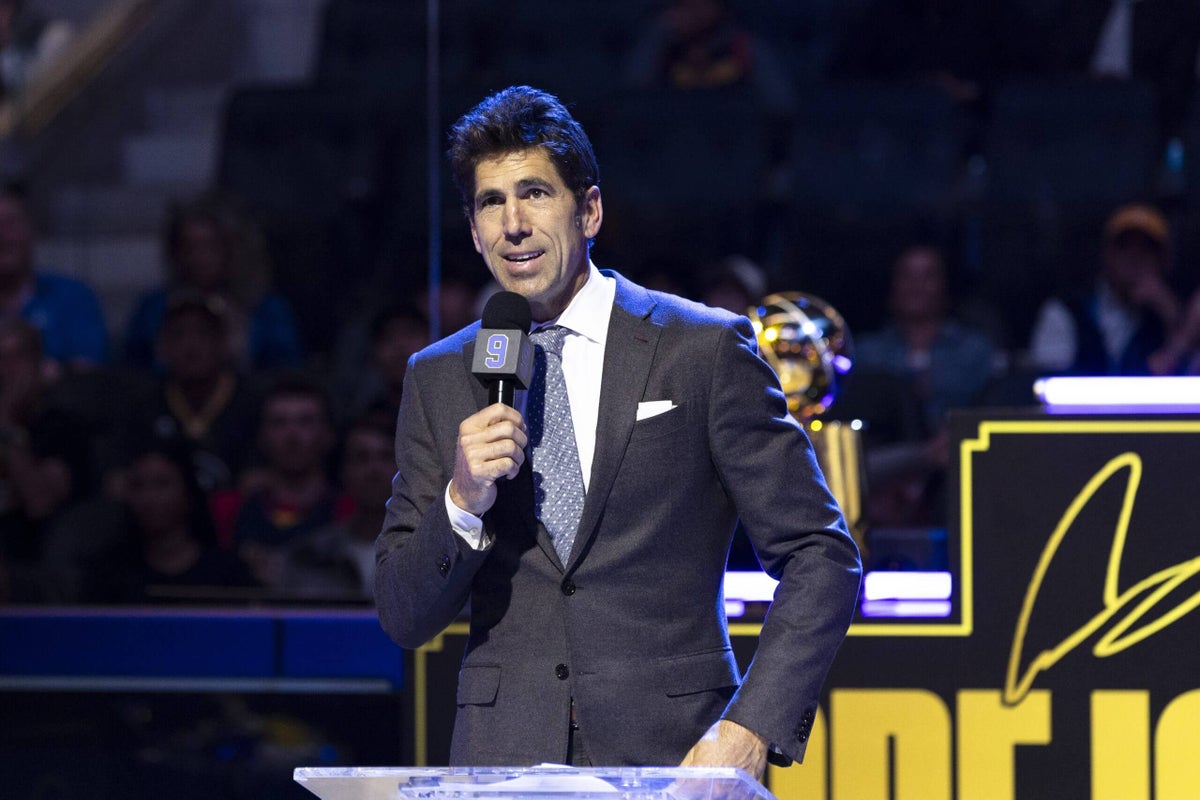
Before coming to Dallas, Welts had a 10-year run with the Golden State Warriors. In Welts’ time in the Bay Area, he worked closely with Warriors president of basketball operations Bob Myers. An agent who went on to win two NBA Executive of the Year awards, Myers is comfortable in front of the camera and is known for his strong interpersonal skills — two qualities important to the Mavericks, team sources said, after watching Harrison struggle in both areas.
Rumors about the Mavericks’ interest in Myers began circulating last summer while Harrison was still employed. The Mavericks, league sources say, would still love to hire him, but there is skepticism that Myers would leave his native California to come to Texas and resign from his post as president of sports for Harris Blitzer Sports & Entertainment, which holds ownership stakes in the Philadelphia 76ers, New Jersey Devils and Crystal Palace F.C.
If Myers is off the board, it’s possible the Mavericks take a look at executives who are with other NBA teams. Sports Illustrated reported Tuesday that Oklahoma City’s Sam Presti, Boston’s Brad Stevens and Minnesota’s Tim Connelly are some of Dumont’s “top targets.” While any of those three would help the Mavericks rebuild credibility with their fan base, the franchise is aware of how fraught pursuing targets who are under contract can be.
Last summer, the Mavericks denied the New York Knicks’ request to interview Jason Kidd for their coaching job. The Knicks initially expressed interest in a host of coaches already under contract — including Minnesota’s Chris Finch and Chicago’s Billy Donovan — but were blocked from pursuing any of them and ultimately wound up hiring Mike Brown, who was then a free agent.
On the heels of blocking Kidd from interviewing with New York, Dallas rewarded him with a contract extension. Kidd will soon wrap up his fifth season as the Mavericks’ coach. All indications are he will be back for a sixth season. The Athletic has previously reported that Mavericks team sources have poured cold water on the possibility of Kidd transitioning into a front-office role.
Earlier this week, in an appearance on the “Intersections” podcast, minority owner Mark Cuban intimated that Kidd played a role in the decision to trade superstar guard Luka Dončić in February 2025.
“That doesn’t justify it for our coach and general manager to stand up and trade our best player,” Cuban said.
In that same podcast, Cuban said he regretted selling his majority stake in the Mavericks to Miriam Adelson and her son-in-law, Dumont.
Those in Dumont’s orbit were baffled that Cuban still can’t seem to move on from a business decision he agreed to more than two years ago. A report from longtime NBA reporter Marc Stein in February that Cuban’s interest in buying back a majority stake of the Mavericks was met with an eye roll.
Dumont is moving forward with plans to build an arena and a surrounding entertainment district, which will open ahead of the 2031-32 season. Welts said this week that in addition to an arena, the project will include a new corporate headquarters, a new practice facility, a hotel and a medical facility. In the meantime, Dumont is making a 10-figure investment in the corporate headquarters that the Mavericks already occupy in Dallas’ Design District.
At the start of this season, Flagg was one of the three No. 1 picks on the Mavericks’ roster, along with Irving, chosen first in 2011, and Davis, selected first in 2012. Davis, whose New Orleans team went 27-55 in his rookie season, predicted in September that Flagg would have a much different experience than he did.
“He doesn’t have to do as much as a normal No. 1 pick has to do,” Davis said then. “We are still going to ask him to be Cooper Flagg, for sure. But the pressure is not going to be on him as much as a usual No. 1 pick who is going to one of the worst teams in the league.”
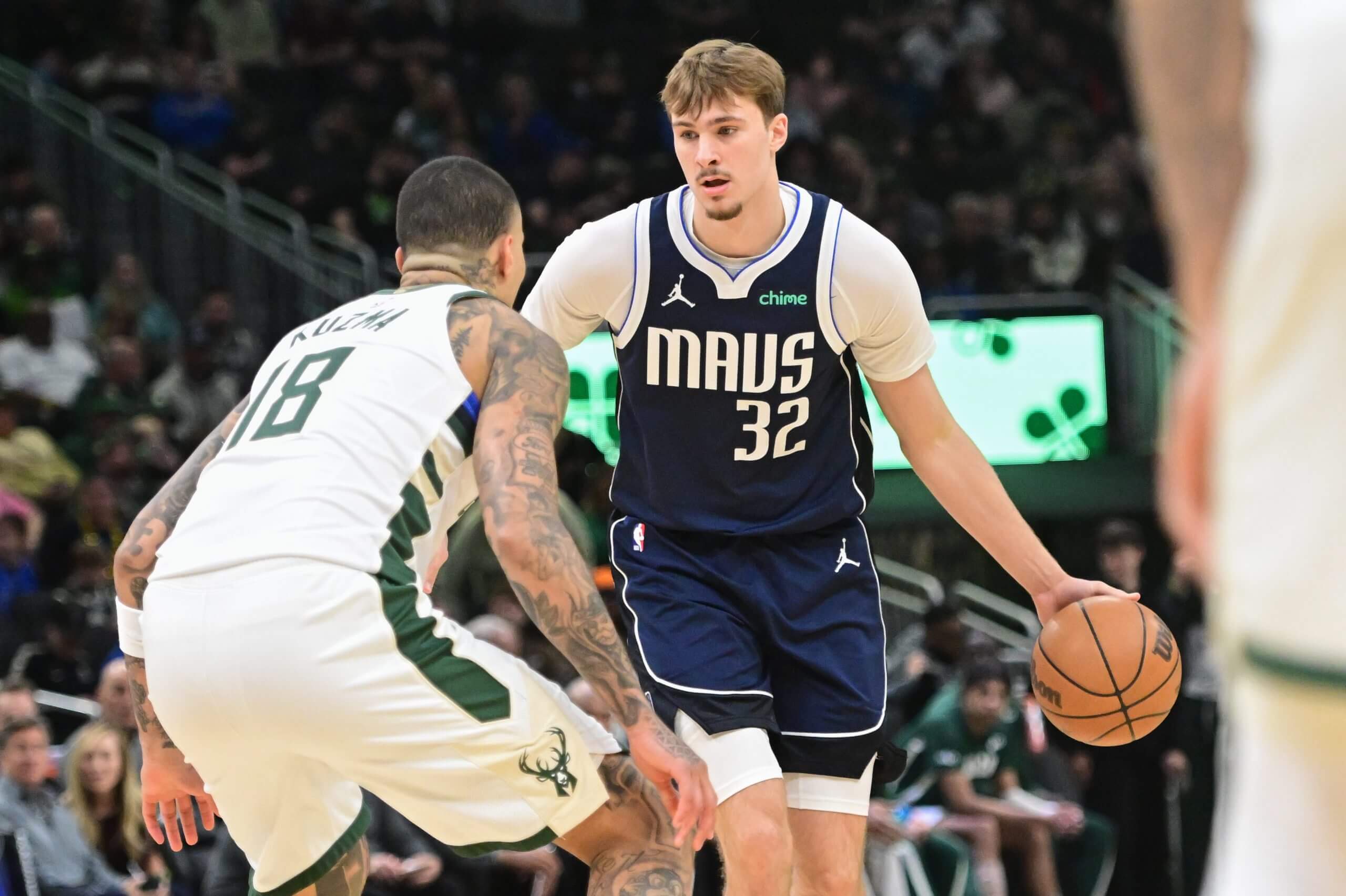
The Mavericks are hoping to build the future of the franchise around their 19-year-old star Cooper Flagg. (Benny Sieu / Imagn Images)
The reality is that Flagg has been asked to do everything for the Mavericks, and that his team will likely finish the season with a worse record than Davis’ team did in 2012-13. Flagg has spent much of his first season playing out of position at point guard. The Mavericks signed D’Angelo Russell to be a stopgap solution at the position with Irving out, but Russell appeared in only 26 games in a Mavericks uniform before he was sent to the Wizards in the Davis trade.
The Mavericks, who owe their top-two protected first-round pick to the Charlotte Hornets in 2027, have no choice but to try to win as many games as possible next season. Kidd is confident getting Irving back in the lineup will be a boost. In March, Kidd called Irving a “born closer” who can be a go-to option late in games. The Mavericks have played an NBA-most 43 “clutch” games this season — games that were within 5 points in the final five minutes — and have a 16-27 record in those contests.
The person Dumont hires as his lead basketball executive will have to make the final call on what to do with both of Dallas’ first-round picks; decide if the Mavericks should use one of their many frontcourt players to try to get more guard help; and weigh whether to extend Dereck Lively II, the team’s talented 22-year-old center who, because of injuries, has played in just 43 games over the past two seasons.
“Whoever they hire has to be able to get Cooper to buy into their vision,” one NBA front-office staffer who was granted anonymity so they could speak freely told The Athletic. “That’s the most important thing.”
The Mavericks will offer their next head of basketball a young star to build around in Flagg, significant financial resources and autonomy. Will that be enough to attract a blue-chip candidate? And what will the Mavericks do if the names the public is most familiar with decide they’re happy where they are? Those are the questions Dumont must answer in the coming months.