
Mining lobby representatives walked the halls of parliament house this week, handing out toy dump trucks with a fake Medicare card superglued to the tray.
The tiny green card included the slogan: “Every Australian benefits from Australian mining.”
Concerned at growing calls from across the parliament for more of the profits from soaring commodity exports to be returned in tax, the Minerals Council of Australia launched a rearguard action to remind MPs and journalists just how much miners already pay.
Unsubtle in the extreme, the campaign – including a schmick website and ads at Canberra airport – contrasts $74bn in taxes and state royalties paid by miners with the total annual price tag for Medicare of about $37bn.
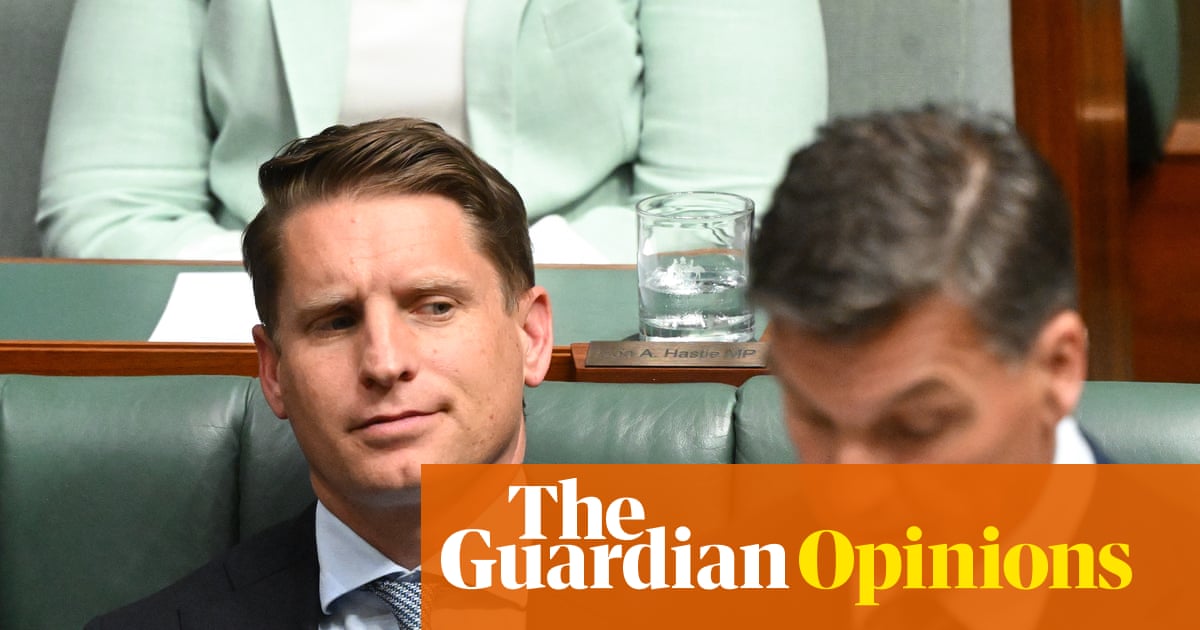
Crossbenchers, the Greens, social services groups and even Commonwealth Bank boss Matt Comyn have all called for gas exporters to pay more as the war in Iran upends global energy markets. The Liberal frontbencher Andrew Hastie told Guardian Australia last week that multinationals had lost their social licence and he was open to tax changes in order to create a sovereign wealth fund.
As Anthony Albanese and Jim Chalmers promise Labor’s most ambitious federal budget yet, tax reform is becoming a credibility test for all. Decisions made in the next few weeks will help determine the outcome of the next election, and the future trajectory for Australia’s structurally unsound budget.
Sign up for the Breaking News Australia email
First to the Coalition, in dire straits and under new management with Angus Taylor and Matt Canavan.
Taylor does not seem keen on tax debate.
Hastie’s interjection – including his openness to changes to the capital gains tax discount and negative gearing – prompted Taylor to call him in to be counselled. The Australian reported the opposition leader’s plans to give Hastie a “gentle reminder” of shadow cabinet rules. Hastie’s crime? He clearly answered straightforward questions about the big challenges facing the budget and the country.
Taylor’s loyal deputy, Canavan, also called for the Coalition to keep an open mind, even though he does not support new taxes.
On Monday, a Liberal, Anne Ruston, called for room in politics for big debates, warning against shying away from tough questions about big issues, including taxation, for political expediency.
“We haven’t had an honest conversation in this country about issues around taxation for a very long time because the conversation always gets shut down,” she told RN Breakfast.
Criticised for the lack of proper policy development before Peter Dutton’s electoral catastrophe last year, Taylor has an issue.
He can’t be a policy-free zone; he needs to build out his political profile and weigh in on issues being debated in parliament and at kitchen tables around the country.
And the result is the opposition leader is increasingly being asked to respond to something one of his likely future leadership rivals has just said.
Taylor’s answers to questions about windfall profits or further changes to the petroleum resource rent tax (PRRT) were glib.
“If you whack a tax on something, you get less of it,” he said.
The logic might be right on basic economic theory, but doesn’t hold much weight when spot gas prices in Asia have doubled to three-year highs due to the Iran war, and as profits are expected to surge in the next three to six months.
Supporters of a new levy of as much as 25% believe the benefit to the budget would be in the order of $17bn. Comyn told The Financial Review a rate of between 15% and 25% was more appropriate, suggesting applying it only to future contracts could help calm the fears of Australia’s biggest customers in the region, including Japan and South Korea.
Taylor wants Australia to dig and drill to prosperity.
Now, to the other lot. Labor is sending mixed signals ahead of the 12 May budget.
Last month the prime minister’s department asked Treasury to model the effects of a flat 25% tax on gas profits, along with possible further changes to the PRRT and corporate income tax. Government ministers haven’t ruled out the changes being included in Labor’s fifth budget, and the extra revenue could come in handy if more household cost-of-living assistance is deemed necessary.
At the National Press Club on Thursday, Albanese said he would “pursue every option” to ensure that increases in coal and gas prices do not flow on to household electricity bills.
Labor this week supported a new Senate inquiry into the gas tax plan, and the former industry minister Ed Husic challenged operators claiming the move would harm the industry to “step aside” for others. If Labor did move, it is unlikely to go as high as 25%.
The PM said on Thursday that advocates of higher taxes “pretend that there isn’t a return to the Australian people” from mining already. In a signal to Japan and Korea, he said there was a critical quid pro quo with partners overseas, who both buy and sell with Australia and whose imports the government is desperate to shore up amid the blockade of the strait of Hormuz. Current expectations inside the government are that the crisis will probably get worse before it gets better.
Albanese is frustrated when challenged over why the government isn’t more ambitious, despite its thumping majority.
If, as Chalmers says, the crisis is a reason to be bolder in the budget, and not less ambitious, taking up the call of unions and members of Labor’s caucus for changes to gas profits is a viable way forward.
Like on climate change and renewable energy, Labor has the opportunity to match voters’ expectations.
There’s an opportunity to make changes to the stage three personal income tax cuts. The government could carefully sell a change in policy and win this debate.
No serious analysis of the tax system could overlook the contribution of one of the country’s biggest industries, but the miners are misguided if they think they’re funding Medicare alone.