
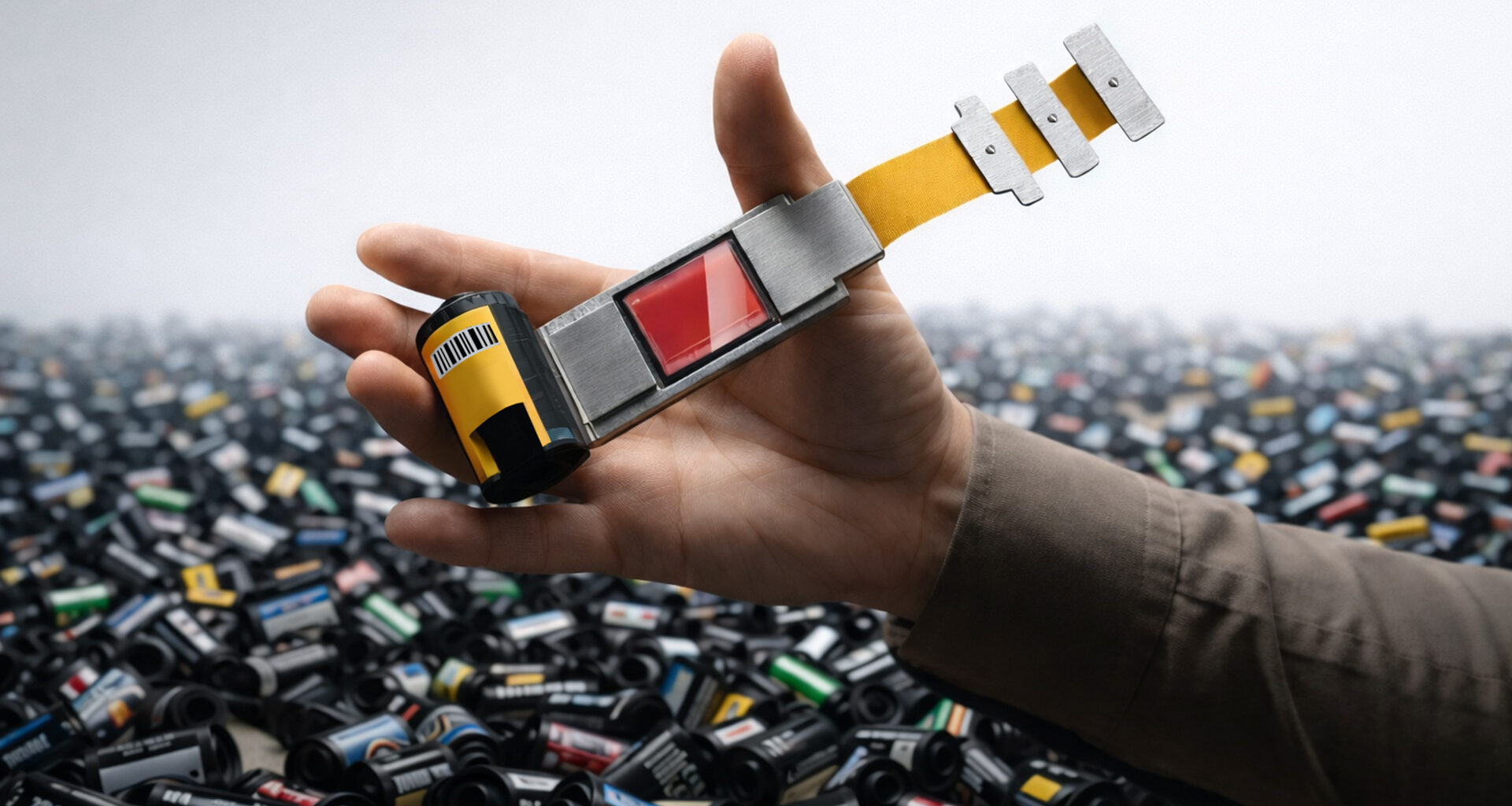
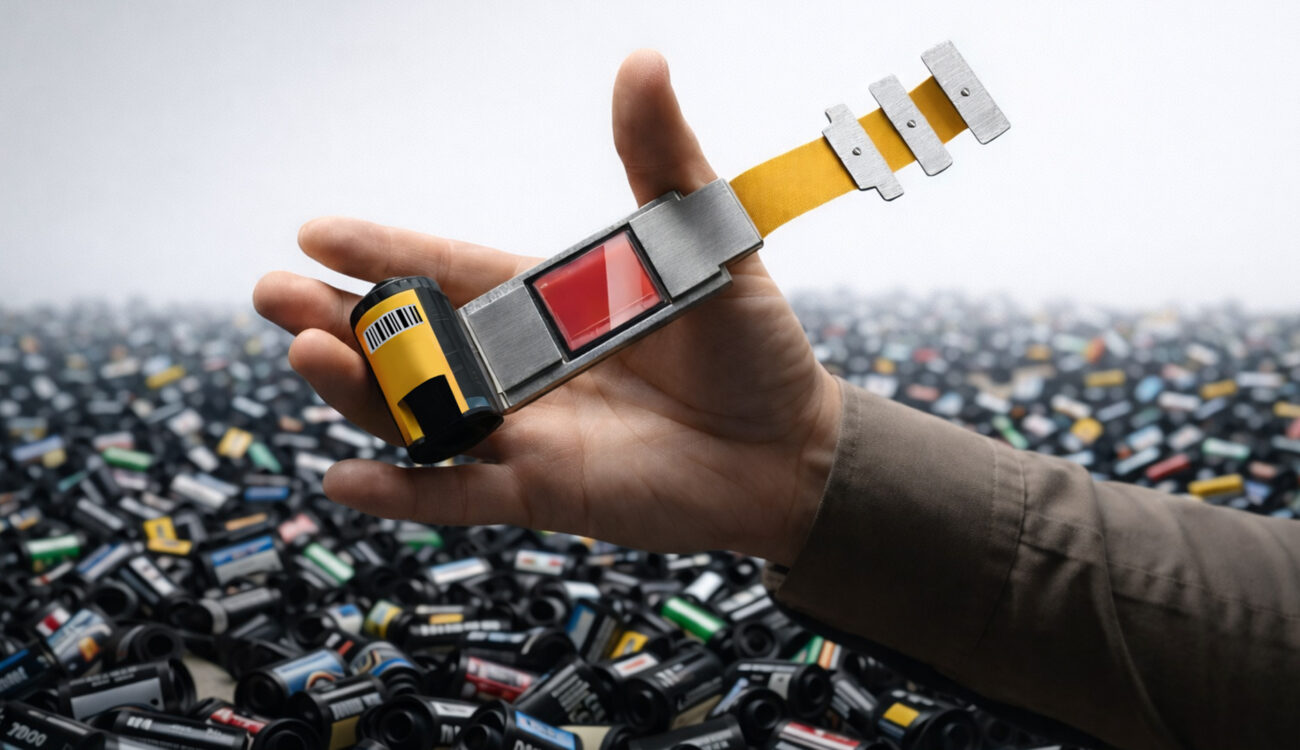
After many years in development, I’m Back has now launched their Kickstarter for the I’m Back Roll APS-C, a digital conversion system that replaces film inside analog cameras with a built-in APS-C sensor positioned at the film plane. Everything sits inside the camera body, with no external modules or cables, and images are stored internally rather than on film. Earlier attempts at this kind of setup often relied on external units, so this more self-contained approach is where it starts to get interesting.
I’m Back has been working on this idea for a while. Earlier versions were bulky and more visible externally, but eventually the design moved into a digital film cartridge-style system that sits inside the film compartment. The new APS-C version builds on that, shifting to a 26 MP APS-C sensor and refining how everything fits within the camera body.
From external modules to an internal system
Earlier versions of this idea relied on external components attached to the camera. Moving everything into the film compartment changes that approach. The sensor sits at the film plane, while the rest of the system occupies the space normally used by the film roll.
In practice, the camera is used as it always was. You advance the lever, cock the shutter, and take the shot. There’s no screen or immediate image review, and files are stored internally and transferred later. That delay shifts the experience closer to shooting film, even though the capture itself is digital.
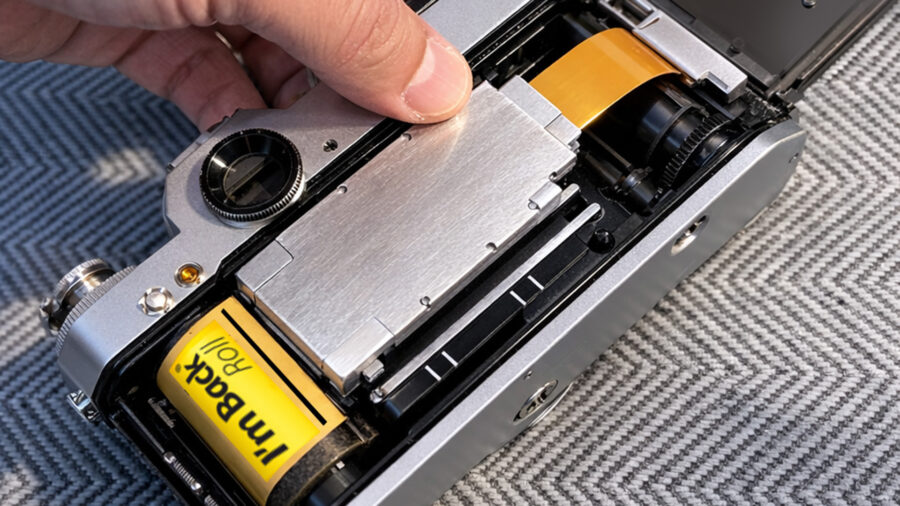 Loading the cartridge. Image credit: I’m BackSensor, storage, and image pipeline
At the center of the system is a 26 MP APS-C Sony IMX571 sensor, a step up from the smaller sensors used in earlier versions. This results in a less pronounced crop and more familiar framing with 35mm lenses.
Images are recorded in RAW or JPEG and stored on an internal 256GB SSD. There’s no screen on the unit itself, so files are transferred later via Wi-Fi or Bluetooth. You’re not checking shots immediately, but reviewing them later, which moves the workflow closer to film than to a typical digital setup.
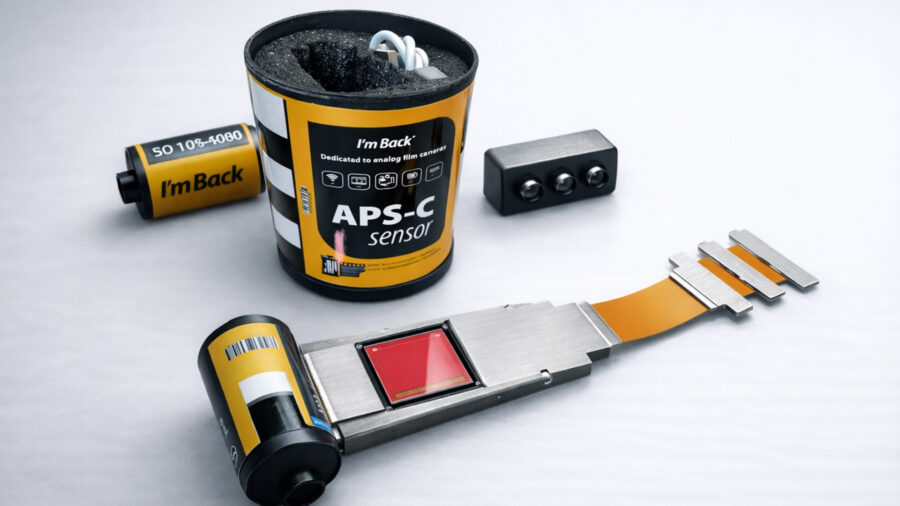 I’m Back APS-C. Image credit: I’m Back
Personally, I would find working with older lenses part of what makes systems like this interesting. Many analog lenses have a distinct rendering that doesn’t translate the same way on modern digital cameras, and pairing them with a setup like this keeps that character in play. At the same time, this doesn’t quite sit alongside either film or digital. It starts to feel like a third category, shaped as much by how you shoot as by the image itself.
 Sample image. Image credit: I’m BackTrade-offs and limitations
It’s clear that working with something like this comes with limitations, but that may also be part of the appeal, and part of what now feels like a different kind of shooting experience.
As with earlier versions, compatibility is likely to be a factor. Not every analog camera will behave the same way, and fit and alignment will influence how well the system works in practice. The absence of a screen also changes the rhythm. There’s no immediate feedback, no quick correction. You take the shot, and only see it later. In a time where most images are reviewed, adjusted, and often generated almost instantly, that delay can feel unusual, and maybe even a little thrilling.
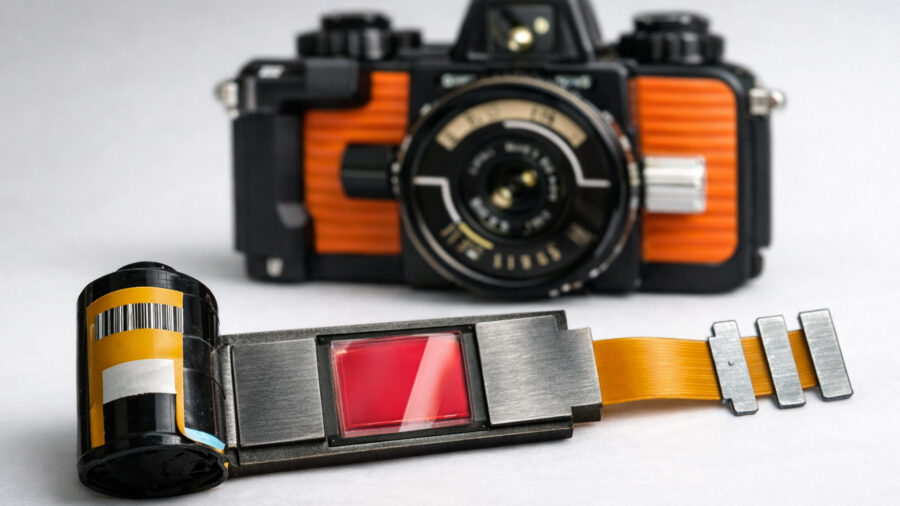 Sony IMX571 APS-C sensor (26 MP). Image credit: I’m BackSpecificationsSensor: Sony IMX571 APS-C sensor (26 MP)Storage: 256 GB internal SSDImage formats: RAW, JPEGConnectivity: Wi-Fi, BluetoothDesign: all-in-one internal systemDisplay: nonePrice and availability
I’m Back Roll APS-C is now on Kickstarter, with delivery to backers currently planned for 2027. The price depends on the Kit, which include the Early Bird at $499/€434, Master Kit at $599/€520, and the Twin Roll Pack at $999/€867.
Final note: The links to Kickstarter are affiliated. And, as we say at the end of every crowdfunding-related article: Be aware of the risks when backing a project on a crowdfunding platform. Please read the platform’s terms of use and keep in mind that there can be significant delays when delivering the product. Some projects might not get delivered at all.
Have you ever considered using a digital system in your analog cameras, or does film remain part of the appeal? Would a setup like this change how you use your older cameras, or does the delayed feedback feel like too much of a shift?