
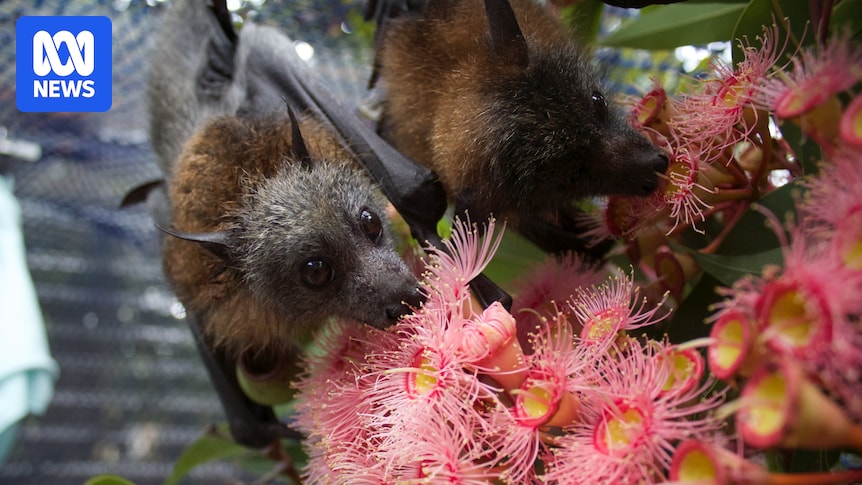
Bats are often thought of as smelly, ugly and noisy, but a study has revealed their poo could be worth hundreds-of-millions of dollars.
Published in Nature’s Scientific Reports journal, author Alfredo Ortega González from The University of Sydney said the research aimed to quantify how flying foxes ecologically influence Australia’s environment through pollination and seed dispersal.
“The population of grey-headed flying foxes that is known in Australia of about half-a-million individuals could potentially contribute a median of around 90 million new trees per year,” he said.
“This basically highlights their incredible role in forest regeneration.”
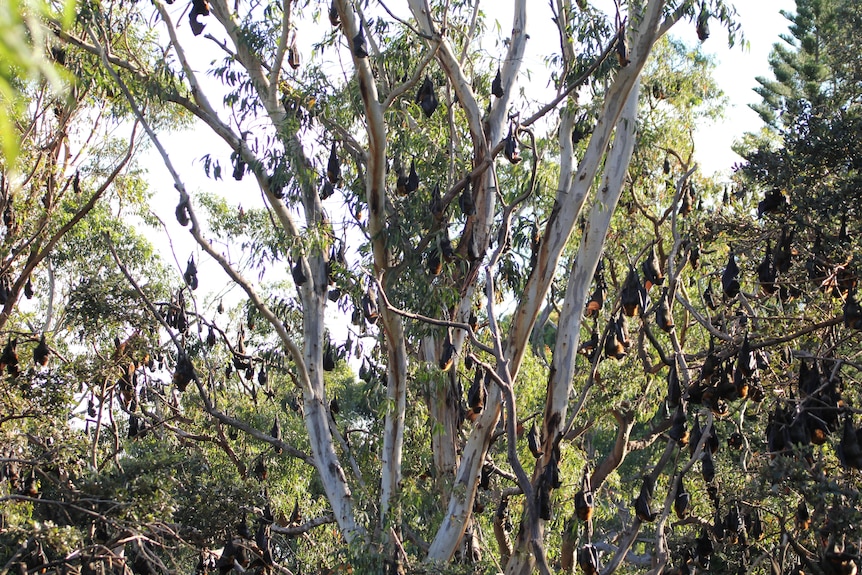
Mr González says there are about half a million grey-headed flying foxes in Australia. (Supplied: Sarah Curran)
The team coined the term ‘Bat Ripple’ to describe the species’ area of influence, which could include native forests and conservation reserves.
He said the estimated potential economic contribution to the Australian eucalypt timber sector was between $217 million and $955 million.
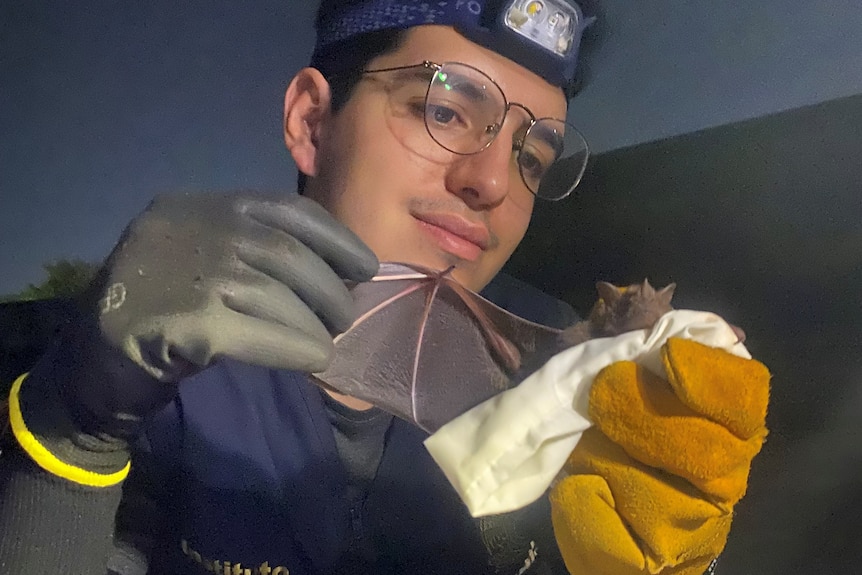
Mr González says bats play an important role in rainforest regeneration. (Supplied: Alfredo Ortega González)
“So basically, all of the ecological effects that they have throughout the landscape and throughout the ecosystems span between 11.6 all the way to 41.4 million hectares,” Mr González said.
“Which would be roughly a quarter of the surface area of Queensland.”
One of the ways bats disperse seeds is by ingesting fruit then defecating the seeds.
Mr González said the dollar amount estimation was “conservative”, but provided the first attempt at quantifying the flying fox’s economic and ecological contributions in Australia.
The team used location data of grey-headed flying fox roosts from the CSIRO’s bat monitoring project, but had to make “assumptions” to come up with the result.
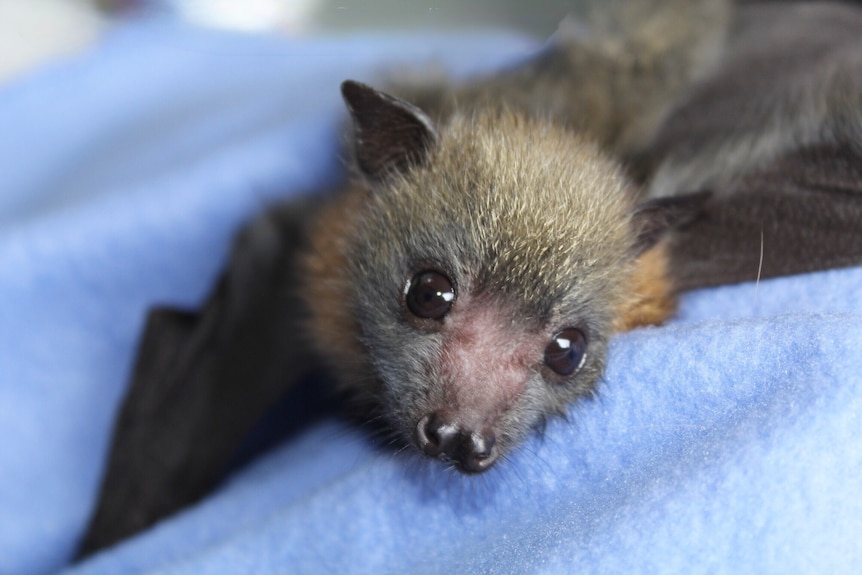
One way bats spread seeds is by ingesting fruit then defecating the remaining pips across the landscape. (Supplied: Sarah Curran)
This included using other bat species and other studies as substitutes, including one from West Africa.
Mr González said bats around the world were generally understudied.
“We would like people to better appreciate them, not as pests, but as keystone species that are of great importance to the ecology of Australian ecosystems and how we benefit from their existence,” he said.’Endearing’ nature of bats in the city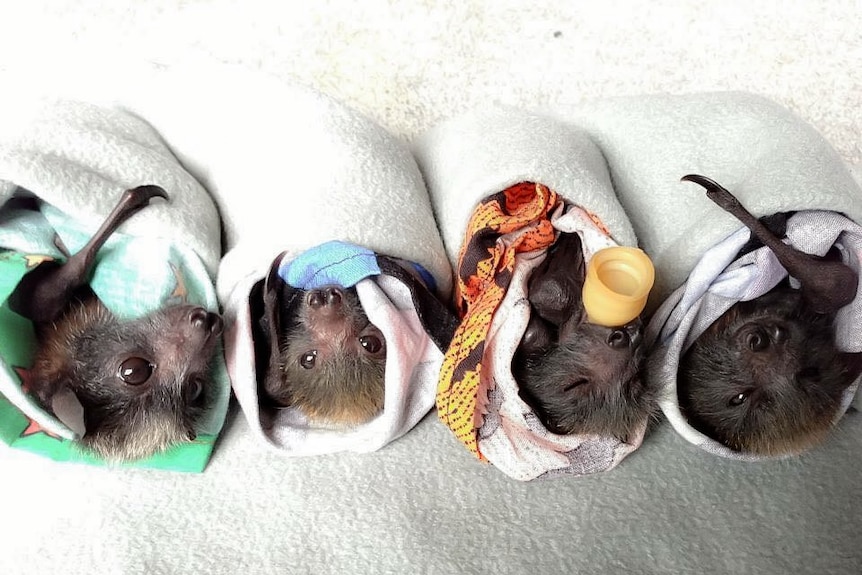
Ms Curran says the main species of bat seen in the Sydney/Greater Sydney area is the grey-headed flying fox. (Supplied: Sarah Curran)
Sydney-based Australasian Bat Society member Sarah Curran has rescued and cared for “thousands” of bats and flying foxes for more than 15 years.
It all began while she was still living with her parents, where she routinely had between 30 and 50 bats.
“I had a nice big aviary there … I sort of had set up sections of the house, various rehab stages for flying foxes or orphan flying foxes or little insectivorous bat all the way through to that medium stage aviary facility,” she said.
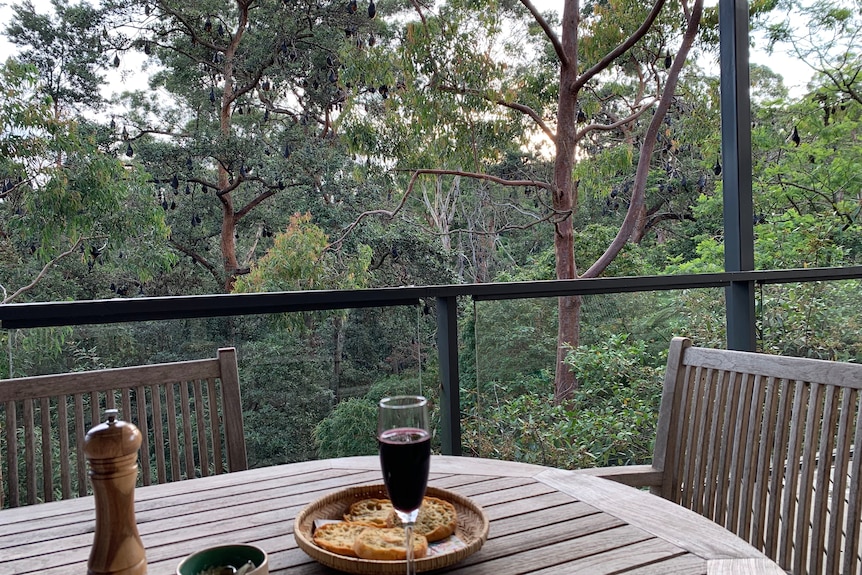
Ms Curran once lived near a camp of bats. (Supplied: Sarah Curran)
She has also lived near a camp where she could enjoy dinner with bats dotting the skyline.
Ms Curran said one of the most striking things she first noticed was how “endearing”, “captivating” and “intelligent” they were.
“Some are naturally shyer than others, and then you have others that are very happy to come down and be quite in your face and quite the extroverts,” she said.
Ms Curran said Australia was home to more than 90 unique species, with more than 20 species in the Sydney/Greater Sydney area alone.
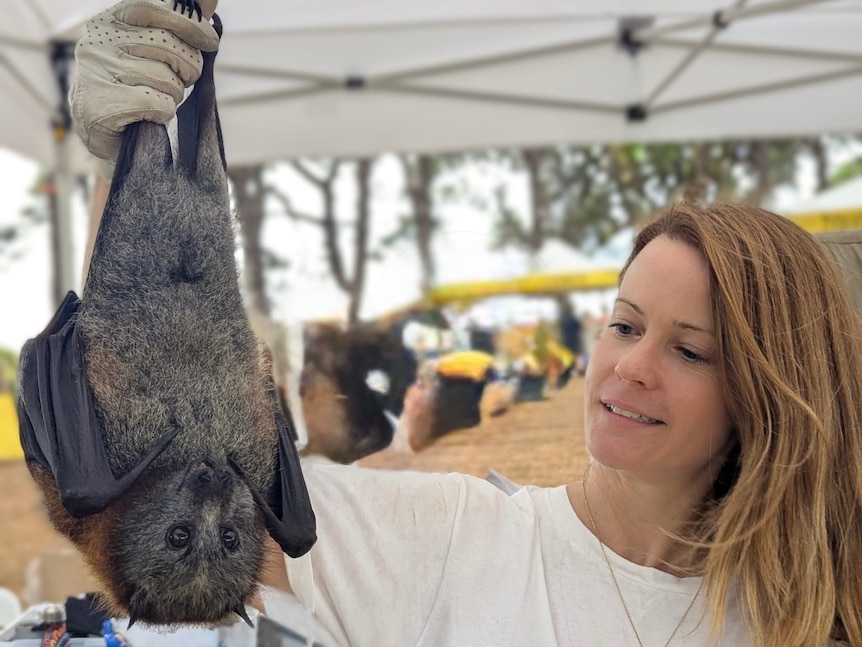
Ms Curran has spent more than 15 years working with bats, including the grey-headed flying fox.
This includes the main species, the grey-headed flying fox, which is the only “truly endemic” species, and the permanent residence of a smaller number of black flying fox.
“The other species that we get from time to time are the little red flying fox, which are the most nomadic species of flying fox in mainland Australia,” Ms Curran said.
“Flying foxes in Australia, they travel so far up and down the whole east coast of Australia as a single population.”
Accessible areas people can view them include the camp in Lachlan Swamp at Centennial Park and the colony in the middle of Parramatta Park.
Flying foxes and regenerationLoading…
Ms Curran said the study showing the economic value of grey-headed flying foxes included information already known, but would aid in the protection of the species.
“I think it’s a great start because … economic value is very important to people when we’re trying to justify why bats, our flying foxes, are so important from a conservation perspective,” she said.
“We know that a grey-headed flying fox has been satellite tracked flying 500 kilometres over 48 hours.”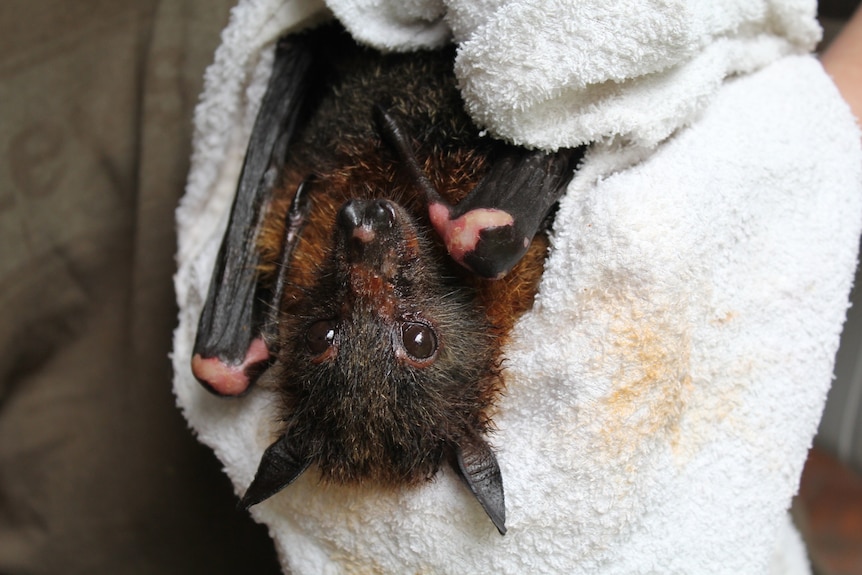
Ms Curran says she has rescued and rehabilitated thousands of bats. (Supplied: Sarah Curran)
Ms Curran said they were vital to the environment, which was constantly being impacted by climate change.
“What the flying foxes are capable of is actually connecting those fragmented landscapes and regenerating areas that we’ve lost to things such as the bushfires,” she said.
“We know that the local pollinators and seed dispersers are just not capable of regenerating such vast distances.”
Bats as pest controllers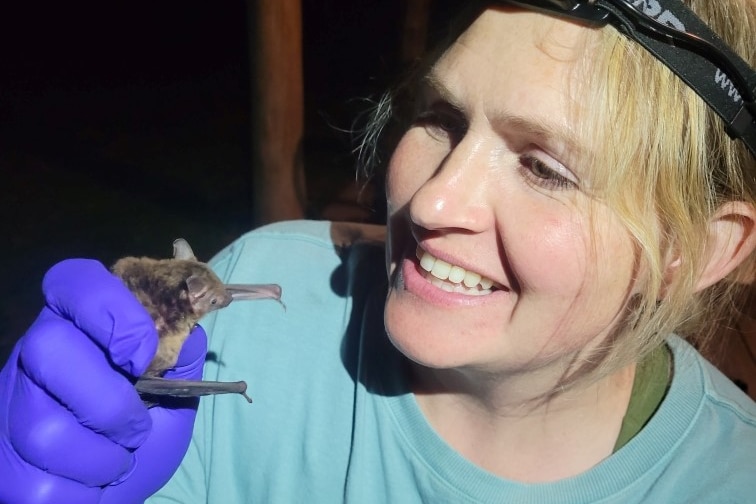
Dr Kolkert says methods implemented in the study are similar to what she applied during her research. (Supplied: Heidi Kolkert)
University of New England senior lecturer in conservation biology, Heidi Kolkert, said the Bat Ripple term coined in the study was “based on a similar system” she used.
Dr Kolkert’s research combined roost locations and foraging habits to put a dollar amount on the free pest management services insectivorous microbats provide cotton growers — which she said was the first of its kind in Australia.
“They love moths, and it just so happens that many moths are pest insects of a lot of crops that we grow in Australia,” she said.
“Foraging every night, a really conservative estimate was that they’re actually eating or helping farmers save about $63 million annually, and that’s just in cotton alone.”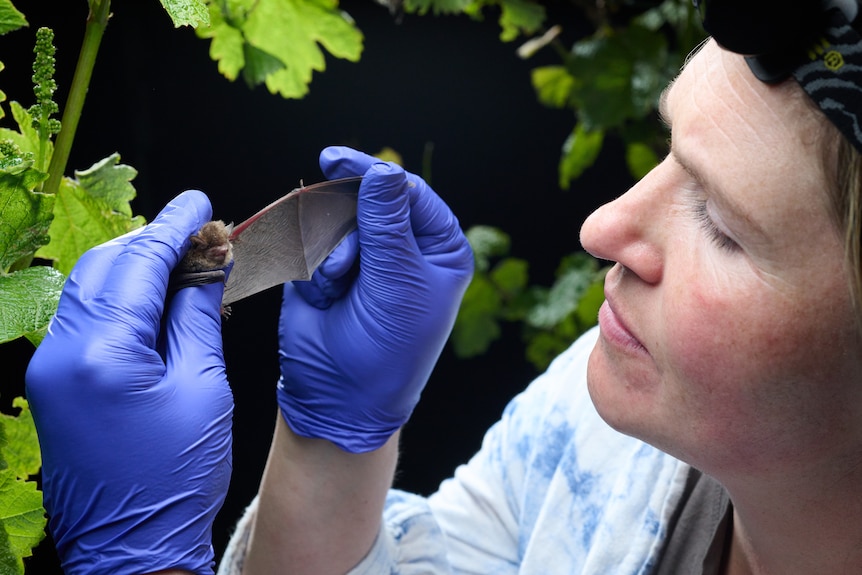
Dr Kolkert has a special interest in bats. (Supplied: Colin Page/Fowles Bats)
She said this sort of research was needed to encourage co-existence with native species in a world “where habitat destruction, deforestation is the way”.
“The economic value of their service definitely offsets or outweighs the nuisance effect, I think, but you know, this is just the beginning of the story,” Dr Kolkert said.