
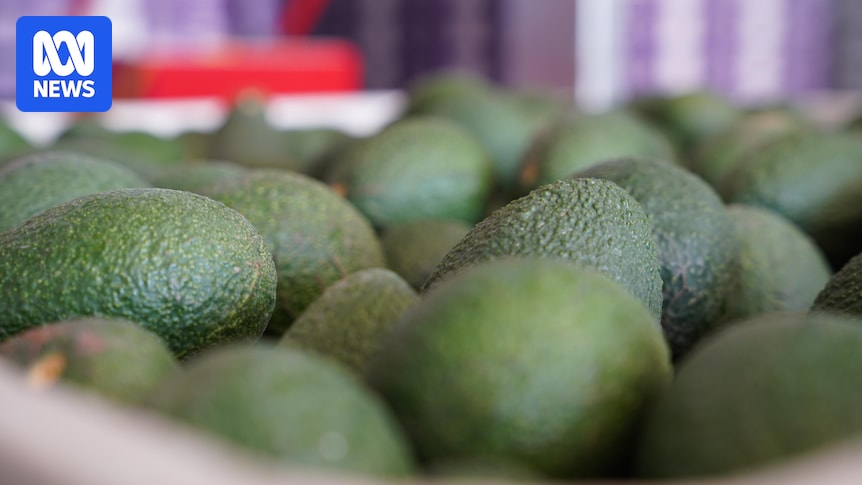
Everyone has felt the irritation of picking out an avocado that looks seemingly perfect, only to get home and find it bruised inside.
That disappointment could soon be in the past, as Australia’s first “avocado ripeness scanner” undergoes a trial.
Developed by Dutch agri-tech company OneThird, one scanner has been placed in a Sydney supermarket as part of the trial.
Avocados Australia chief executive John Tyas said the device could test ripeness “without any damage to the fruit”.
Loading…
He said the device emits “a near infrared wavelength of light” into the fruit.
“When it impacts on certain molecules, it refracts back out. So there are detectors that sense that light coming back out of whatever it’s hit in the fruit,” Mr Tyas said.
“Then over lots and lots of calibrations … where you assess the ripeness in a lab using various pressure devices and things, and you’re correlating that with the data that’s coming out of this machine.”
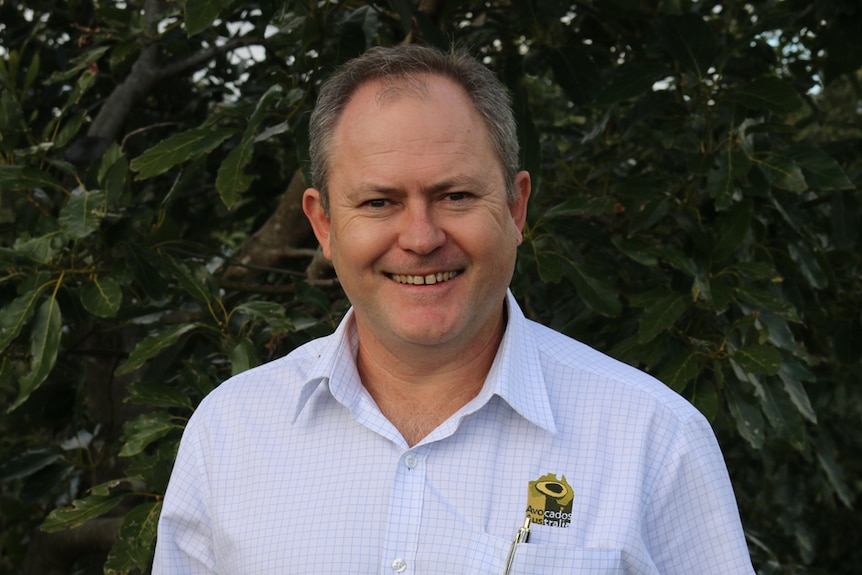
John Tyas says the scanner could be helpful for both consumers and the industry. (Supplied: Kim Honan)
The scanner includes a “customisable ripeness scale” that tells customers when the fruit will be ready to eat.
Mr Tyas said it could prevent one of the most common customer frustrations.
“A lot of people just grab a fruit and they squeeze it,” Mr Tyas said.
“You only need two or three people to handle that one fruit and you’ve got a fruit covered in bruising.
“When you buy a ripe avocado and you open it up and you see all those brown marks under the skin, that’s all from people that have been handling that fruit beforehand.”
To squeeze, or not to squeeze?
Riverland avocado grower Sarah Tucker-Boehm, from Parkes Lane Produce, said there are a few non-tech ways to test an avocado’s ripeness.
“The best way to test an avocado’s ripeness at the moment is to lightly touch the top where the stem is to see if that suppresses a little bit,” she said.
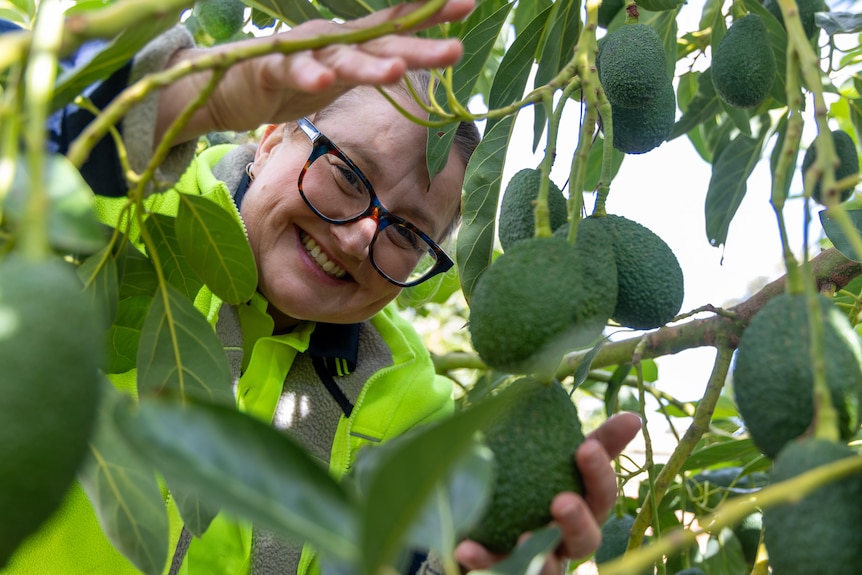
Sarah Tucker-Boehm said she thinks the avocado ripeness scanner is a great idea. (ABC Rural: Jessica Schremmer)
“If you are buying a hass or a lamb hass variety, they change colour. If they’re that purply green colour or more like a darker, close to black colour, that means that they are ripe and ready to eat.”
However, often the fruit is susceptible to damage by the time it reaches the supermarket shelves.
“Within five days of being picked, avocados ripen off of the shelf. Once they’re packed, they’re sent to markets where they’re then distributed to supermarkets,” Ms Tucker-Boehm said.
“The marketer does the ripening, so they spend about a week to two weeks, depending on the time and the season, being ripened.
“When they actually get to the supermarket, they’re already on the edge of being ripe, ready to eat. So in that stage, the skin robustness has reduced.
“Squeezing it at that fragile state actually can damage the flesh inside the avocado and affect how enjoyable it is for you as the consumer when you buy it, or if you put it back, how enjoyable it is for the next person.”Avocados with ‘bumps, lumps and butt cheeks’ causing chuckles
Ms Tucker-Boehm, who is “pretty active on social media”, where she educates the public on all things avocado farming, came across a video of the ripeness scanner online.
“I think it’s a great idea,” she said.
“Let’s be honest, you don’t go to the supermarket every night. So if you’re planning Taco Tuesday and you’re shopping on a Sunday, how great would it be to know the avocado is going to be ready for Taco Tuesdays?”
Waste prevention
Avocados Australia is carrying out modelling to make the scanner work for other varieties as well, and Mr Tyas said there had been “quite a lot of interest” from both major and independent retailers.
If the scanners are rolled out around the country, they could provide more benefit than just knowing when to expect perfect avocado toast.
According to Avocados Australia, nearly 50 per cent of customers squeeze three or more avocados before choosing the one to buy.
This approach contributes to “quite a lot of waste”, Mr Tyas said.
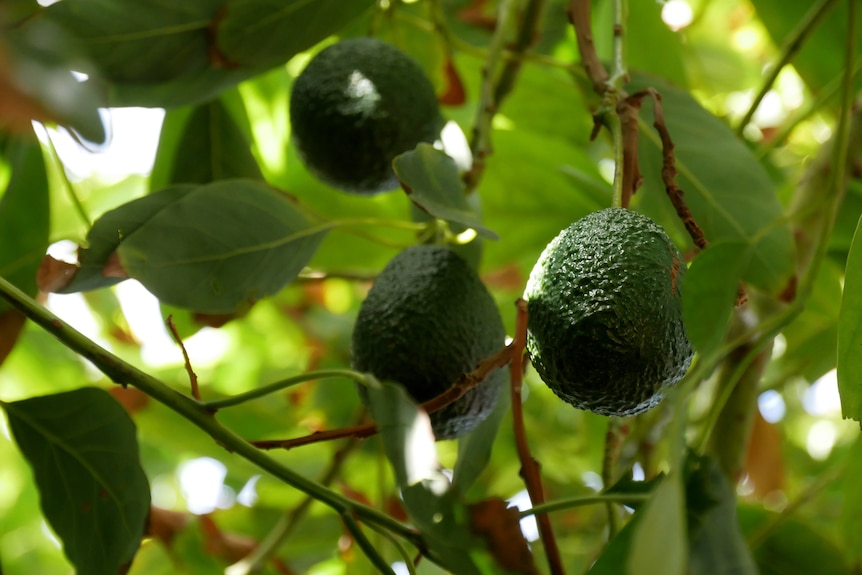
One grower said the scanner could stop avocados from being bruised by the time you get them home. (ABC Riverland: Amelia Walters)
“Unfortunately, some of it ends up in people’s shopping trolleys, but some of it has to be removed off the shelf,” Mr Tyas said.
Like many industries, Australian avocado growers have been feeling the flow-on effects of the war in Iran, but not just in fuel costs.
“We’ve been developing some good markets in the Middle East over the last few years, so obviously that’s been very, very challenging,” Mr Tyas said.
He said a lot of fruit has been directed instead into the “traditional” markets like Singapore, Malaysia, and Hong Kong, with Western Australia supplying to India, Thailiand and Japan.
“One thing that’s really changed in the industry over the last few years is we’ve gone from very much a domestic-focused industry, massive increases in plantings and now really significant increases in exports,” he said.
Bargain avocados come at cost for growers
“We increased exports about sevenfold over a period of three years, and we’re now [exporting] around 15 to 20 per cent of our avocados.”
The industry is also struggling with a “very, very strong supply”.
“Growers aren’t making money at the moment, the returns that they’re getting are below the cost of production,” Mr Tyas said.
“We’re hoping that in a month or so we’ll come out of this period and things will be different for the back half of the year.”