
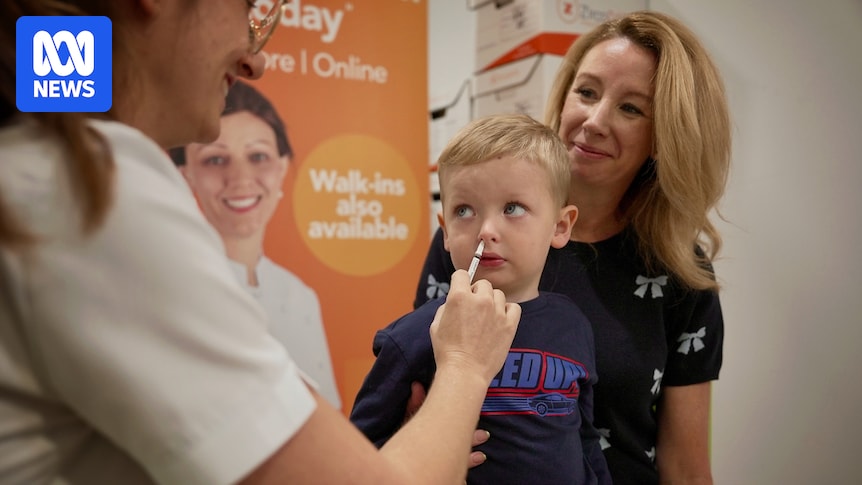
Australia’s 2026 peak flu season will be unlike any other.
For the first time, children and teens aged from two to 17 years old can have a nasal spray vaccine for influenza, rather than an injection.
The flu spray has been available overseas for years — the UK introduced it in 2013. But it was only recently approved for use in Australia because drug companies had not applied earlier.
Some states are offering the spray for free to certain age groups as part of their flu vaccination programs. It is also available to buy privately nationwide.
Last flu season, just one in four Australian children aged under five were vaccinated against influenza. For five to 15-year-olds, the figure was only one in seven, according to the National Centre for Immunisation Research and Surveillance.
Health authorities hope the nasal spray will help boost vaccination rates to prevent severe illness and reduce transmission.
What is the nasal spray vaccine?
Sold in Australia as FluMist, it’s a needle-free vaccination against influenza.
Children are given one spray in each nostril.
Queensland’s Chief Health Officer, Dr Marianne Gale, said the spray contains protection against the same flu strains that are in injectable vaccines.
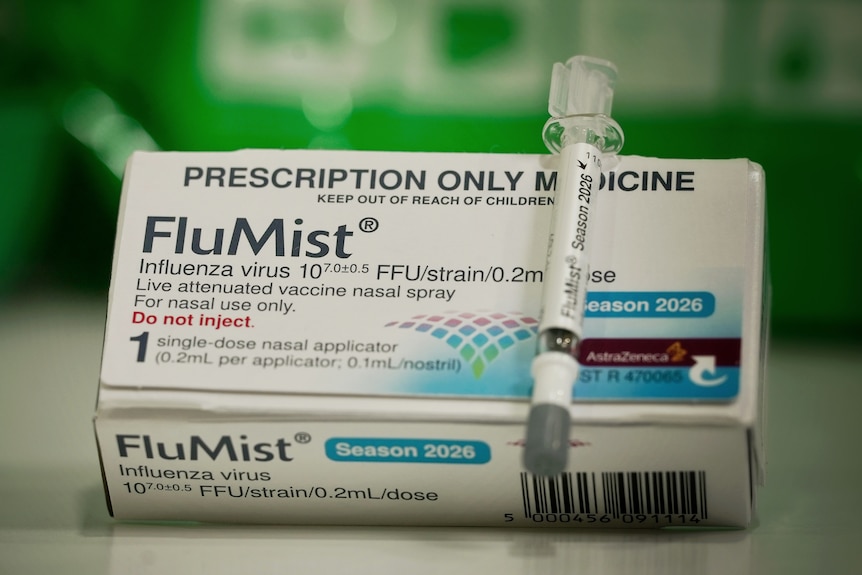
FluMist is approved in Australia for children aged from two to 17 years old. (ABC News: Mark Leonardi)
One difference is that FluMist is a live attenuated influenza vaccine.
“That means it contains tiny amounts of weakened influenza strain and that helps train the body’s immune system to work out how to respond,” Dr Gale said.
“It’s important to note that cannot cause the flu and there have been no documented cases of influenza developing as a result of that particular vaccine.”
Dr Gale said there was “extensive evidence” from overseas showing the nasal spray was as effective as injectable vaccines.
“The nasal spray vaccine has been used for decades in the northern hemisphere, very widely and in millions of children, and it has been used safely and demonstrated equivalent effectiveness,” she said.
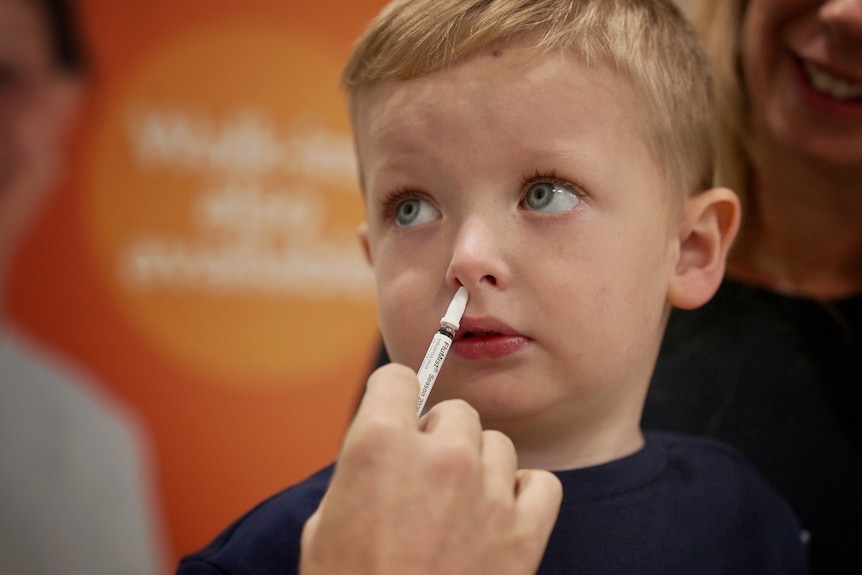
Three-year-old Charlie Chapman had the FluMist vaccination in Brisbane this week. (ABC News: Mark Leonardi)
What about side effects?
Dr Gale said while side effects could occur from the influenza vaccine, “they are, for the large part, mild”.
“It is very rare to have serious adverse events related to influenza vaccine,” she said, adding common mild side effects from the nasal spray might include a few days of feeling sniffly, a bit tired or having a headache.
“It is certainly better than actually having an influenza virus because those side effects of the vaccine are short lived, they are minor, and it provides very important protection for the child.”

Queensland’s Chief Health Officer, Dr Marianne Gale, says younger children are at risk of serious illness from influenza and also drive transmission. (ABC News: Christopher Gillette)
Who can have the spray vaccine?
Australia’s medicines regulator, the Therapeutic Goods Administration, has approved FluMist for people aged from 24 months old to less than 18 years of age.
Adults wanting to avoid a needle will not be able to opt for the spray.
Dr Gale said the injectable flu vaccine was the best option for children with some medical conditions.
“There are some particular health conditions that would be best discussed with a health practitioner to make sure the vaccine the child is getting is the best one,” she said.
Which Australian states are providing FluMist for free?
As of early April, this is what each jurisdiction is offering:
Queensland: Free for children aged two to five years (inclusive). Available privately for others.New South Wales: Free for children aged two to four years (inclusive). Available privately for others.South Australia: Free for children aged two to four years (inclusive). Available privately for others.Western Australia: Free for children aged two to 11 years (inclusive). Available privately for others.Australian Capital Territory: Only available on the private market.Victoria: Only available on the private market.Tasmania: Only available on the private market.Northern Territory: Only available on the private market.
The Royal Australian College of General Practitioners (RACGP) has called on all states and territories to include the nasal spray in their free flu vaccination programs, particularly for younger children.

Michael Wright says Australia had its biggest ever flu outbreak last year. (ABC NEWS: John Gunn)
RACGP president Dr Michael Wright said having a needle was one of the barriers to getting children vaccinated and there needed to be “national consistency” around FluMist access.
“We really need it available all round the country for free because we don’t want kids putting off getting that vaccine,” Dr Wright said.
It’s important to note all children in Australia aged six months to under five years old are eligible for a free standard flu injection through the National Immunisation Program.
So are all Aboriginal and Torres Strait Islander children, children with some medical conditions and other people who are vulnerable to serious illness from influenza.
Can families buy the spray vaccine?
Yes. FluMist can be bought privately in parts of Australia not offering it for free or for children who are too old to qualify for a funded dose.
Chris Owen, from the Pharmacy Guild of Australia, said buying the nasal spray privately would leave families about $40 to $45 out of pocket in Queensland, where the state government contributes the first $25 towards the dose through its wider 2026 flu vaccination program.

Chris Owen says he hopes the nasal spray flu vaccine helps boost childhood immunisation rates. (ABC News: Mark Leonardi)
Clinics and pharmacies across the country will set their own prices for the private purchase of FluMist for under 18s.
Mr Owen said the spray would be widely available from this week.
“Get your vaccine through a GP, through a community health centre or through a pharmacy, they’re all good doors to go through to get that vaccine,” he said.