
In far-western Victoria, down a winding track amid rolling hills and glorious gum trees, something surprisingly beautiful and unexpected is happening.
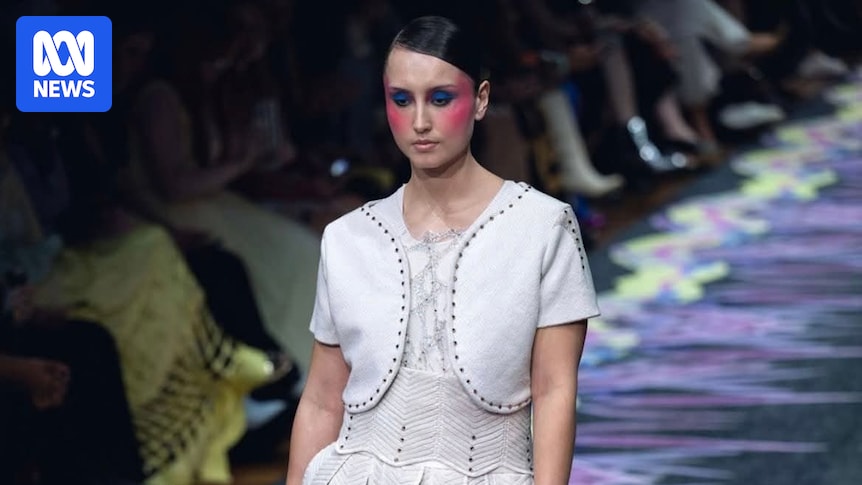
So beautiful, that the creations emerging from an isolated farmhouse in the town of Pigeon Ponds recently graced the catwalk of one of the nation’s premier fashion festivals.
Two-and-a-half years ago, farmer Sue McClure tried knitting scarves and blankets with indigenous art designs she found on the internet, but she “didn’t feel right about it”.
So Ms McClure decided to contact Warrnambool-based indigenous artist Sherry Johnstone, a Keerray Woorroong and Yorta Yorta woman.
The women met and realised they had a shared passion.
“We had a passion for the land and being mindful of our footprint on our environment as such, and caring for country,” Ms Johnstone said.
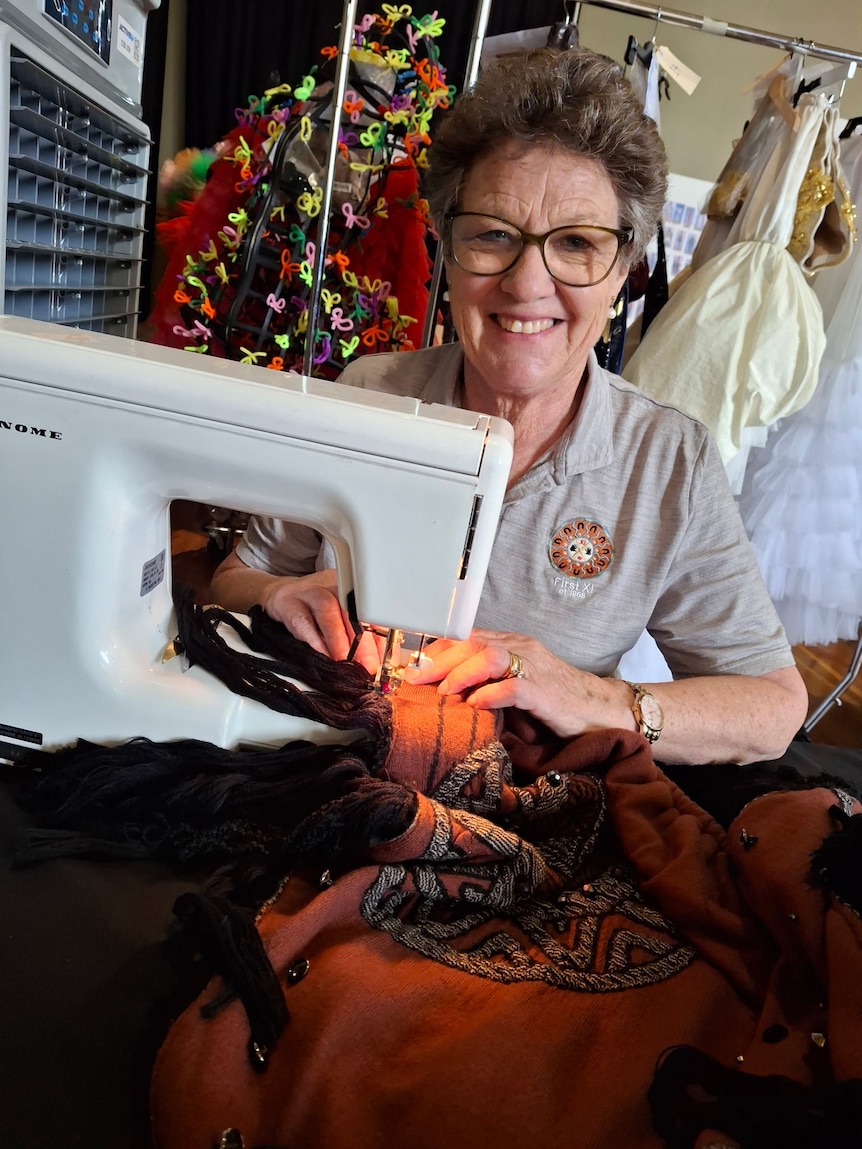
Sue McClure gets to work creating one of the designs. (Supplied: Sue McClure)
“It was just a nice organic partnership that started with a bit of a collaboration and then trying some blankets and scarves with my artwork.”
Ms McClure was immediately struck by Ms Johnstone’s designs.
“She’s a beautiful artist and she does amazing stuff,” Ms McClure said.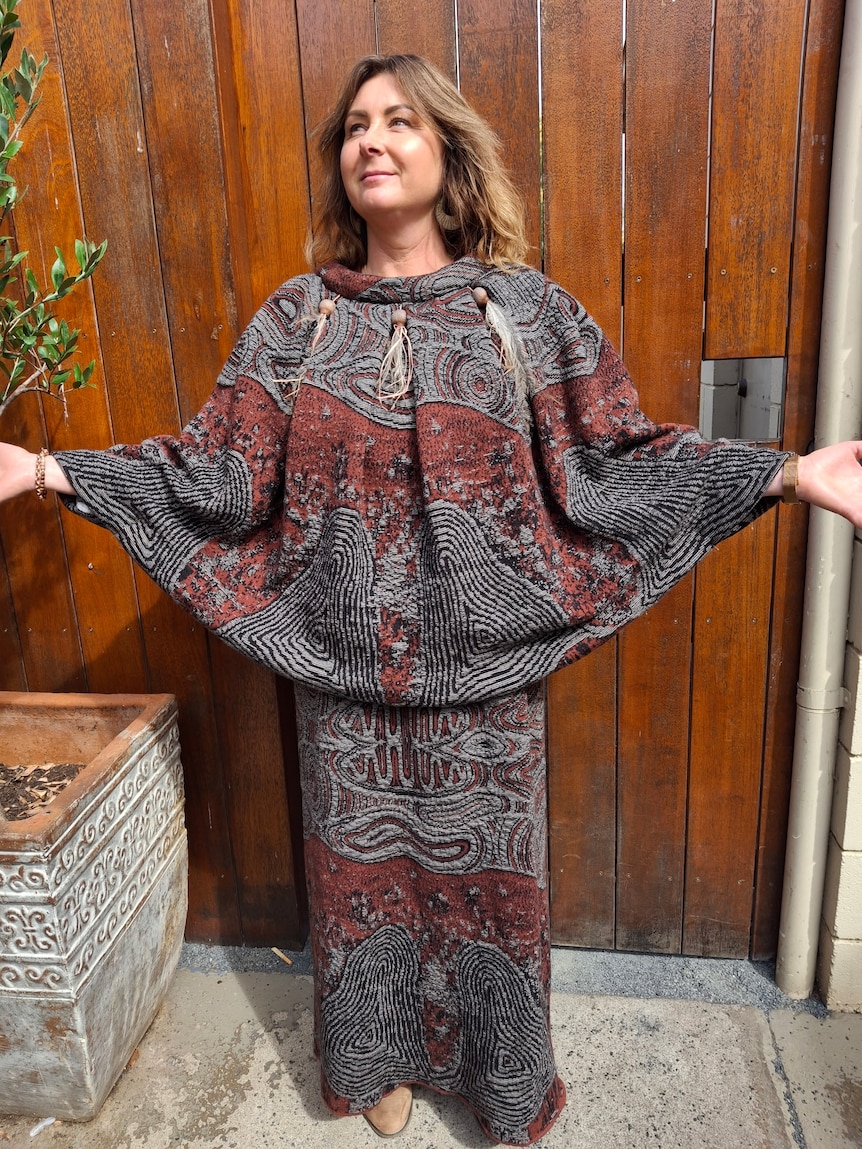
Sherry Johnstone wearing her entry to the National Wool Museum Future in Fibres competition. (Supplied:Sue McClure)
Australian wool is important to both women — they use fine merino wool farmed in Tasmania, which is then sent to Italy for processing before being returned to Australia.
The duo’s first project was to create a blanket shape, which turned into an outfit Ms Johnstone submitted to a National Wool Museum Future in Fibres competition last year.
The contest was an opportunity for new and emerging artists, making sure the principles behind their business were sustainable and part of a circular economy.
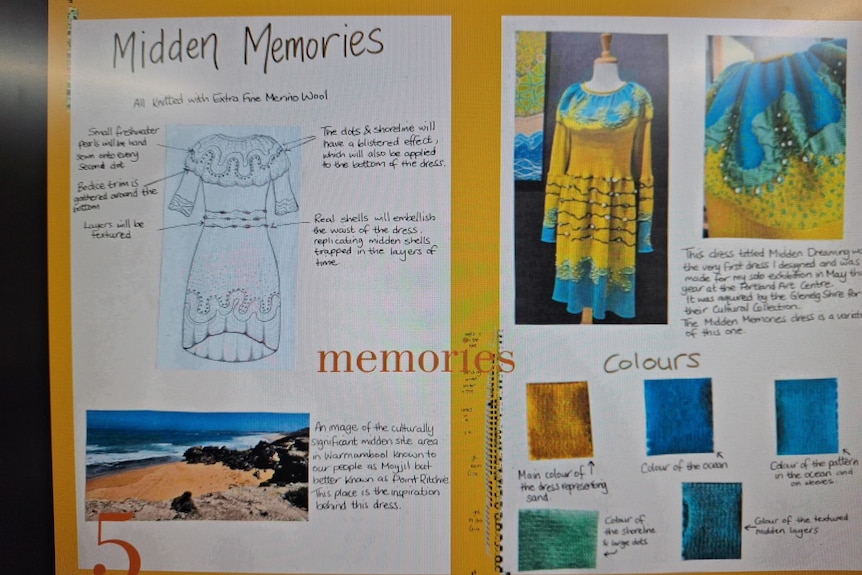
A page from Sherry Johnstone’s ‘lookbook’ which features her designs. (Supplied: Sue McClure)
The competition attracted 150 entries from around the world.
When Ms Johnstone’s outfit won second prize, one of the judges suggested they submit a ‘lookbook’ to the Melbourne Fashion Festival.
Neither of the women knew what a ‘lookbook’ was, so they googled it.
“[Sherry] came up with some brilliant ideas for 10 outfits, all based on her connection to country and her stories from her ancestors,” Ms McClure said.
Ms Johnstone said she spent weeks pulling the designs together.
“I sat down for about two weeks and came up with designs mainly … inspired by lands … things like banksias and flowering gum … even a bit of bark that I found in a paddock,” she said.
The lookbook was submitted in October and accepted into the festival in November.
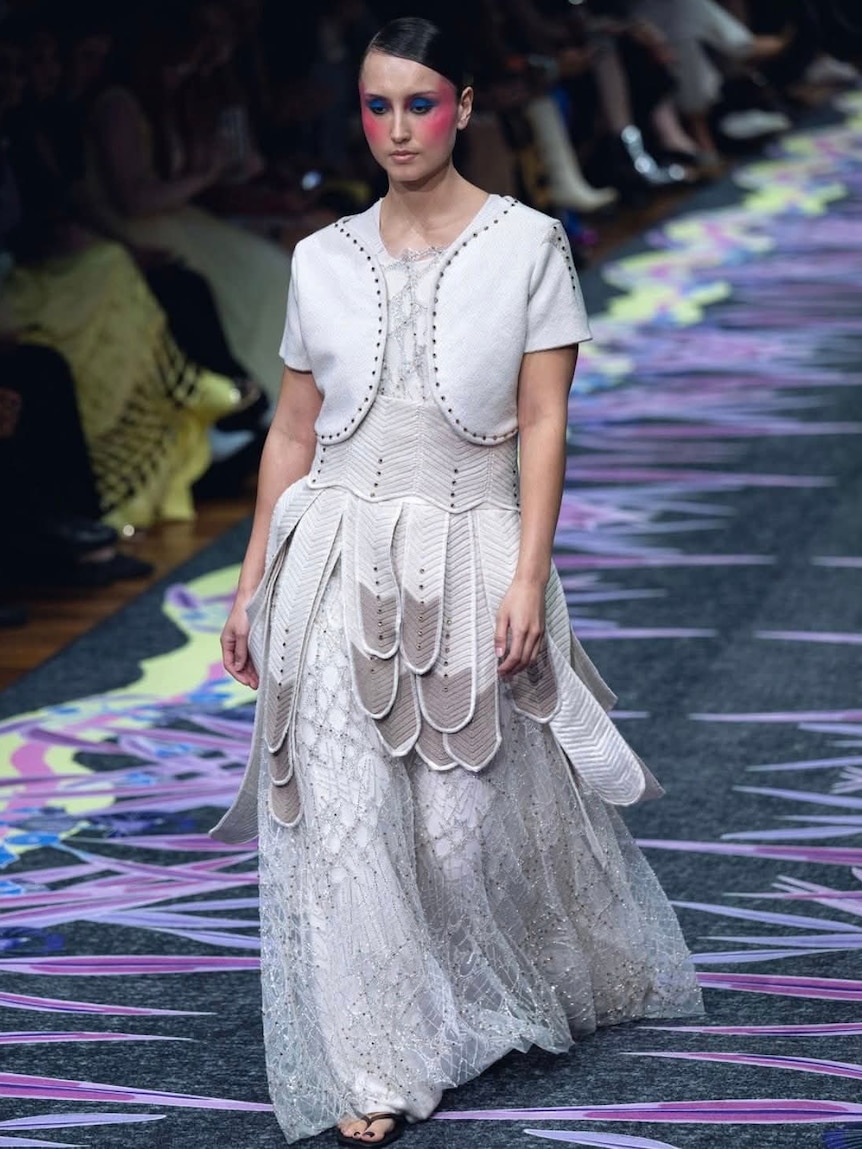
Inspired by a wedge-tailed eagle ‘Oh My Bundjil God’ featured in the Beyond Blak Runway. (Supplied: Melbourne Fashion Festival)
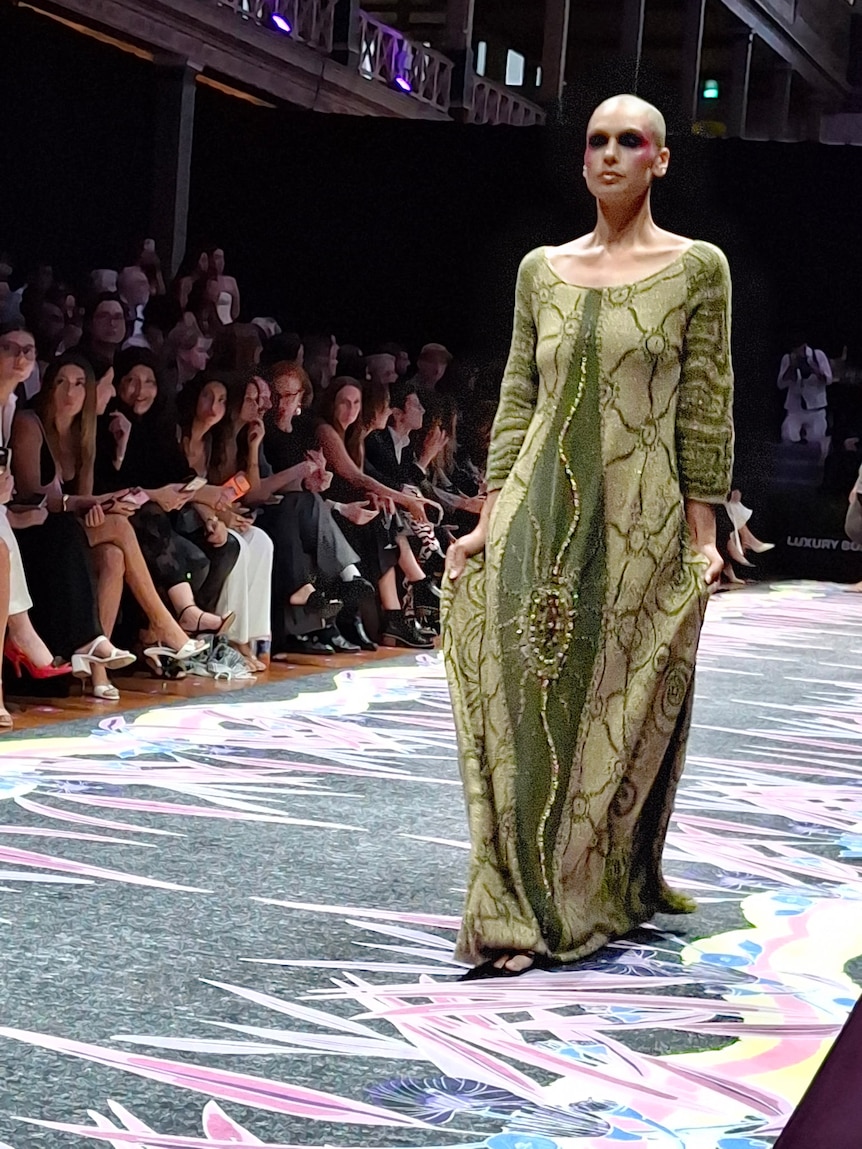
Sherry Johnstone’s Healing Country designs are inspired by the landscape around her. (Supplied: Melbourne Fashion Festival, Event Gallery and Mob In Fashion)
Ms McClure then had to work out how to knit the designs with a machine she had purchased from Japan in 2021.
Measuring 4.5 metres long, 1.5 metres wide and standing around 2 metres tall, the $180,000 knitting machine can produce a whole garment or knit together a piece of fabric that can be cut and sewn together.
Then the work really began, Ms Johnstone said.
“Poor Sue had a bit of pressure on her to actually create the designs for me,” she said.
The pair engaged Rod Murray, a Melbourne expert in knitting software, to program the machine to turn the designs into reality.
Then, it took a week to make samples of the designs and another month to create the clothing for the fashion festival.
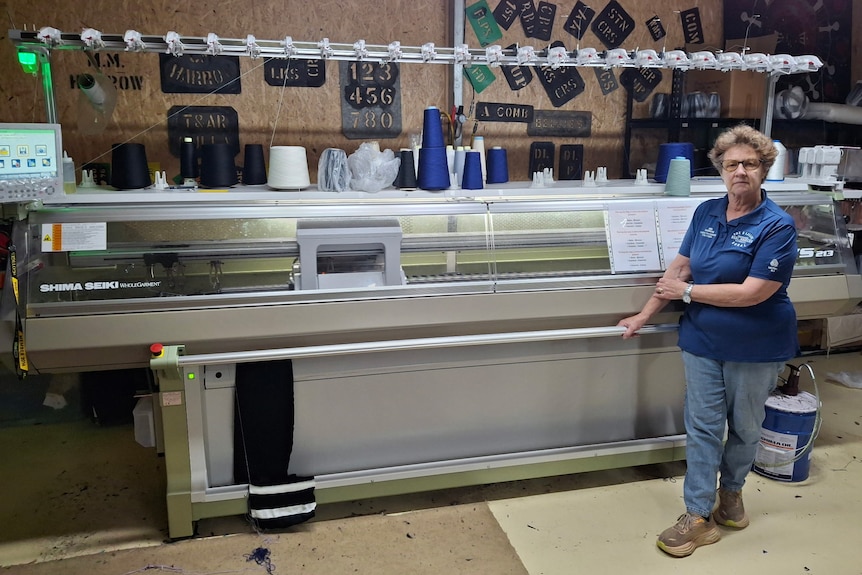
Sue McClure converted a shed to fit her huge knitting machine. (Supplied: Sue McClure)
But a day before the clothes were due in Melbourne, the power went out at the Pigeon Ponds farm, so Ms McClure couldn’t use her sewing machine to stitch the final designs together.
“I had to do the final stitching by hand out on the verandah, in the afternoon light,” Ms McClure said.
“It’s certainly not just, you know, putting a couple of bits of cotton fabric together,” Ms Johnstone said.
The bespoke garments finally hit the Melbourne Fashion Festival catwalk in February, as part of the Beyond Blak Runway.
“You know, we would be happy to reproduce them, if somebody was particularly interested in one,” Ms Johnstone said.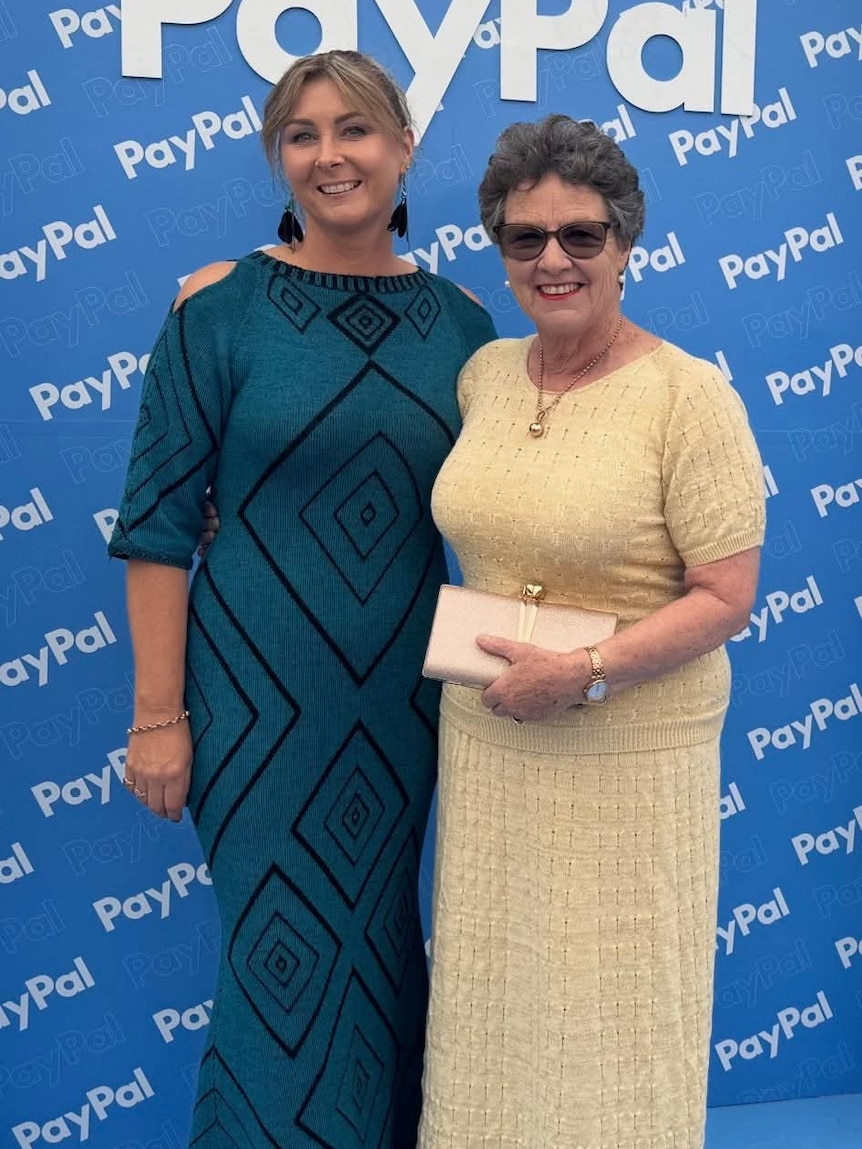
Sherry Johnstone and Sue McClure at the Melbourne Fashion Festival. (Supplied: Sue McClure)
The collaboration between the women has led to a new business venture for Ms Johnstone, who started her own brand, Flash 1A, designing jumpers, hoodies, ponchos and dresses which will be produced on Ms McClure’s farm, on her knitting machine.
“[It’s] a reference to when mobs playfully sort of say, ‘Oh, that’s a Flash 1A’,” Ms Johnstone said.
Ms McClure said she was “overcome with emotion seeing what they both had achieved” when their designs were paraded on the catwalk at Melbourne Exhibition Centre.
But that may be the end of their catwalk career.
Asked if we will see Ms McClure at Paris or London fashion weeks, she laughingly responds: “No, I’m too old for that.”