
Early in “The Drama,” things are still good between Emma (Zendaya) and Charlie (Robert Pattinson). The young happy couple, about a week away from getting married, have enjoyed a whirlwind romance. As this dark comedy’s opening credits roll, they’re blissfully practicing their first dance, laughing and stumbling as they try to get their twirls and steps right.
But the scene’s highlight is the song that plays in the background, airy, gentle and simple. Spare guitar chords give way to a female voice that sounds unpolished but beautiful: “I want to lay with you/ In an open field/ Where yellow flowers are suns of Earth.”
For many viewers, this will be the first time they’ve ever heard “I Want to Lay With You,” one of the most gorgeous love songs of the 1970s. It’s also likely they’ll have no idea who the singer is. Her name is Shira Small, and in 1974, she recorded an incredible album, “The Line of Time and the Plane of Now,” when she was 17. She never recorded another — at least, not yet. Now nearly 70, Small may finally be getting her moment in the spotlight.
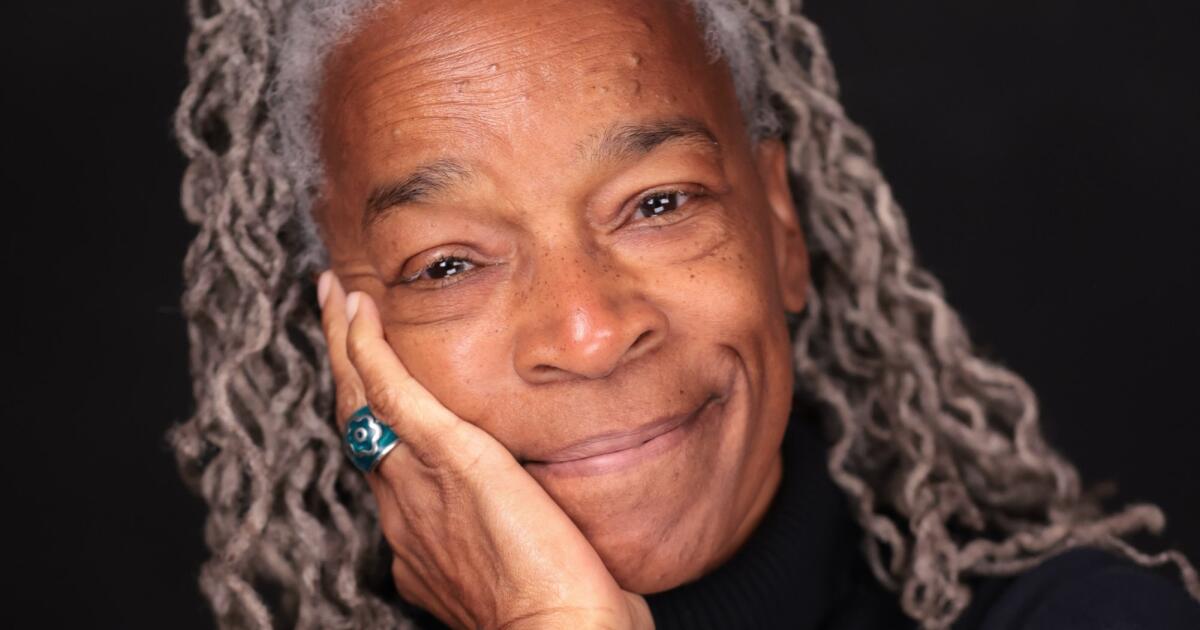
“I’m cracking up,” says Small over Zoom from her Cooperstown, N.Y., home, “because I had no idea whatsoever that that movie was coming out until my dear sister informed me via you.” Flashing a relaxed smile and sporting long gray hair, Small knows little about the controversial “The Drama,” an A24 film with a heavily guarded twist.
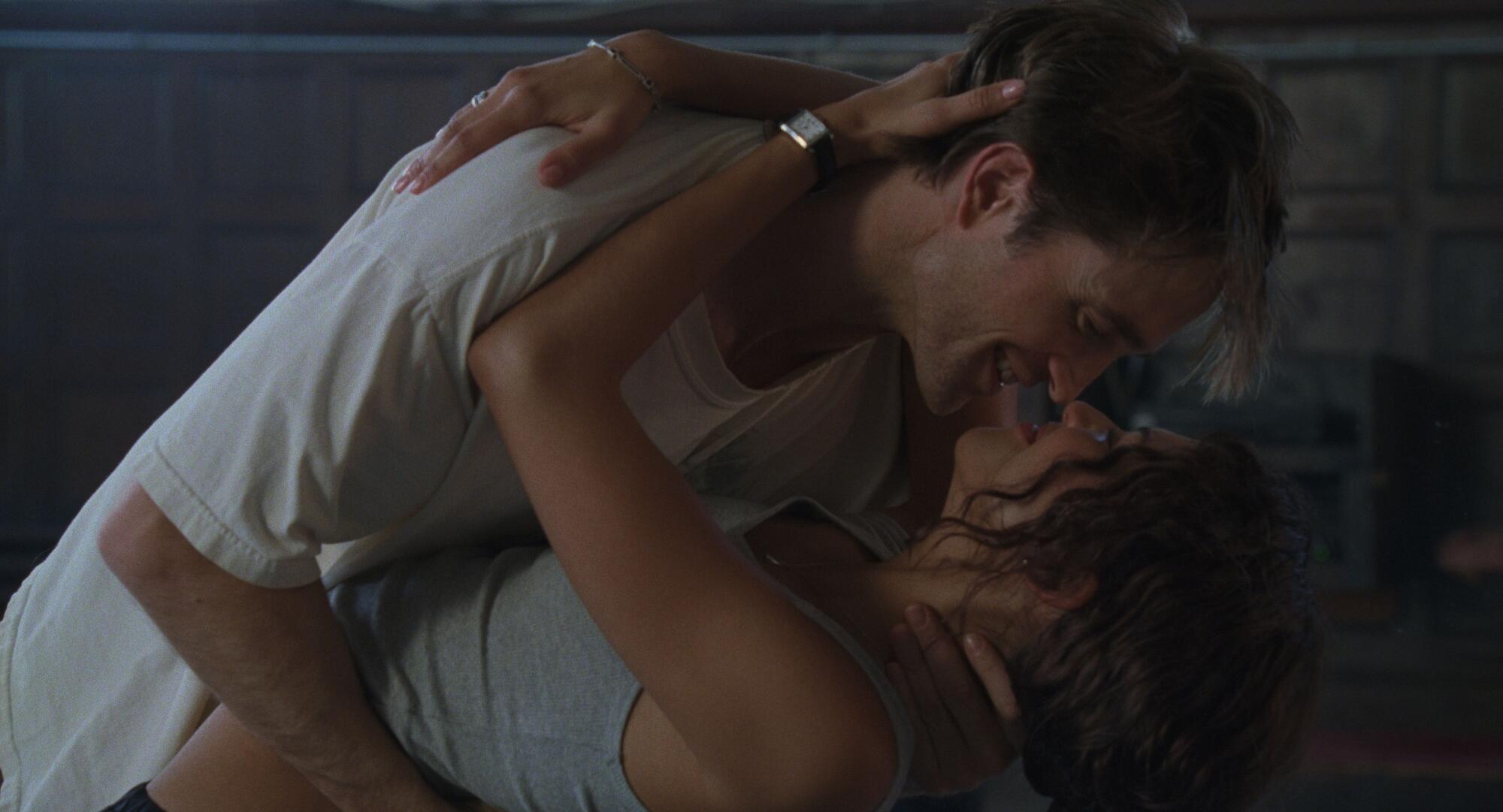
Robert Pattinson and Zendaya in the movie “The Drama.”
(A24)
But it’s becoming a delightfully frequent occurrence that Small learns after the fact that her music is featured prominently in a movie or television show. “The record company does what they do and then they send me royalties and I get it in a statement,” she explains. “I had a song that HBO bought for ‘Pause With Sam Jay.’ They sent me an email that was not even to me — it was this interdepartmental thing. At the bottom, it said, ‘Oh, by the way, it airs tonight.’”
Jemma Burns, music supervisor for “The Drama,” had been a fan of Small’s album, thinking “I Want to Lay With You” would be perfect for this idyllic scene, right before Emma and Charlie’s relationship implodes over a disturbing revelation that turns their dream wedding into a nightmare.
“He was trying to set up the rom-com tone,” says Burns of the movie’s writer-director Kristoffer Borgli, “one that would contrast with the modernity of the setting and where the film goes. He wanted something that was from a bygone era, but also something that felt disarmingly charming. The two lead characters are very switched-on, fashionable, arty. So it felt like something they would’ve had in their record collection.”
The youngest of five siblings, Small always loved singing. But even as an adolescent growing up in Harlem, she felt like an old soul, her thoughts running deeper than the average kid’s.
“My focus was on not understanding war and hatred and bigotry,” she says. “I was seriously into trying to make love happen everywhere.”
Against the backdrop of the war in Vietnam and the Black Power movement, Small was well on her way to becoming a hippie, a transformation amplified by her enrollment in a private Quaker boarding academy, George School, in Newtown, Penn., on a full scholarship. When she arrived at George School, Small recalls, laughing, it was “very rich and very white. But I’ve always been a flotation device. I can walk around like I don’t have a clue about things.”
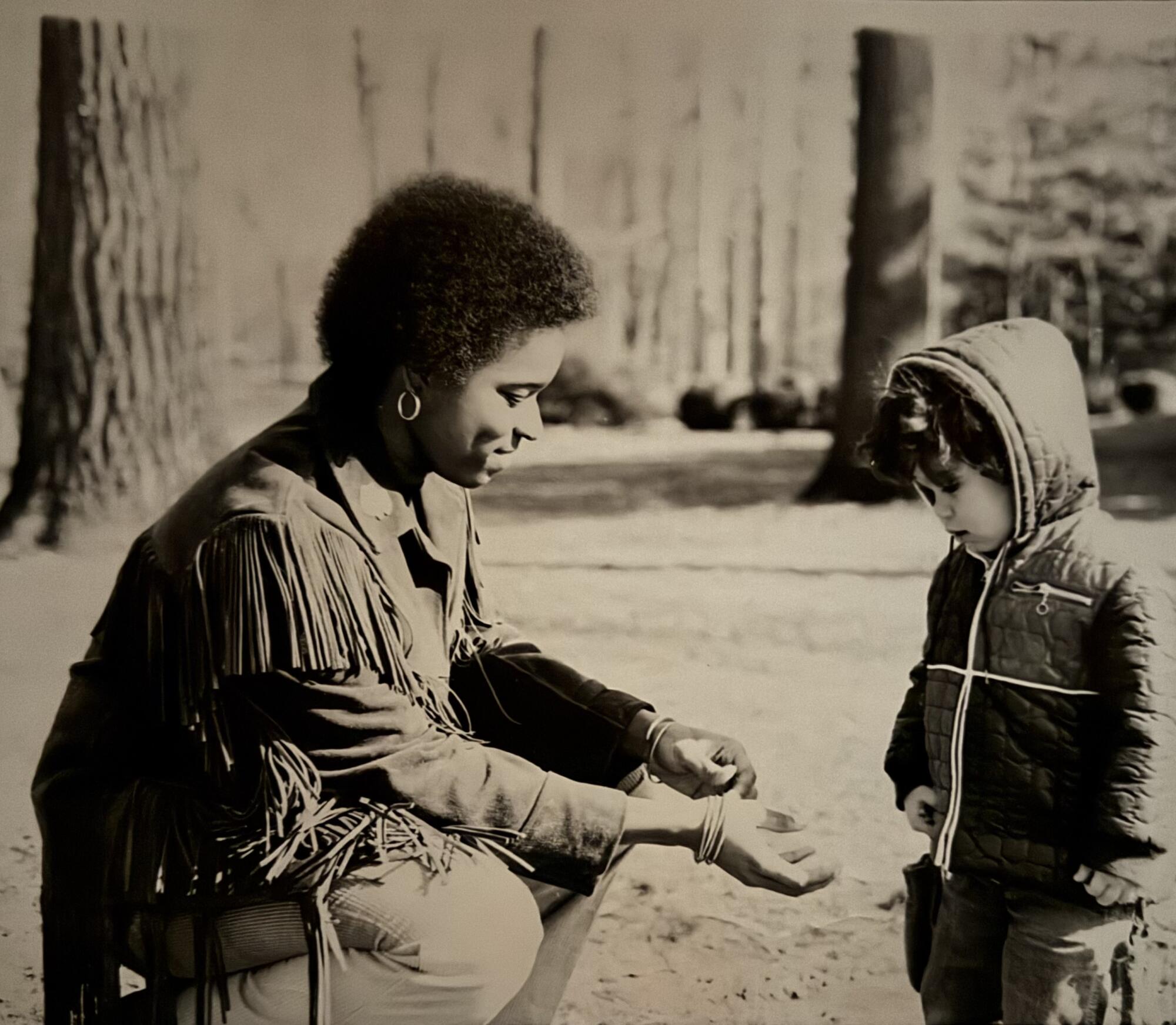
Shira Small, photographed in 1971 at George School in Newtown, Penn.
(Courtesy of Shira Small)
At George School, Small sported an Afro and smoked weed. She was drawn to theater and music, impressing music teacher and classical pianist Lars Clutterham, who saw she had talent. They worked on songs together, with Small coming up with the lyrics and vocal melodies. Every student had to complete a senior project, so Small proposed that hers be an album. Not long after, she and Clutterham drove to a Philadelphia studio for a one-day session.
The 10 songs on “The Line of Time and the Plane of Now” — each recorded in only one take — mix folk, soul and jazz, radiating innocence. The arrangements, awash in old-school analog warmth, are straightforward: guitar or piano supplemented with drums, leaving plenty of space for Small’s lilting voice, which contains both idealism and, even as a teen, traces of real-life sorrow.
Her mother died while she was at George School, inspiring “My Life’s All Right,” a ballad about surviving tough times, which later appeared on the Sam Jay show. “Eternal Life” sprang out of her in one burst, celebrating the power of love to transcend life’s harsh realities. As for the movie’s “I Want to Lay With You,” it was about a boy Small liked. She just can’t remember who anymore.
“It was somebody who was just as much a friend as a person that I had a crush on,” she recalls. “I honestly felt that we could have a life together.”
Small laughs at her adolescent self. “Like I knew what it would be like to have a freaking life together! To be able to wake up with somebody and have a beautiful day and always make them smile.”
According to Small, George School’s parents and students raised money to pay for the album and 300 copies were produced. “It was a joyous time,” she recalls. “I was on my way — to somewhere!” After graduation, though, she struggled to find her footing, eventually graduating summa cum laude from the City University of New York with a theater degree. But then she chose pre-med, becoming a physician assistant.
“When I became pre-med, it was so hard for me that I was just tunnel-visioned,” explains Small about why she said goodbye to music. “I had to devote my whole self to it. It was so all-encompassing that I could think of nothing else.”
But there was another reason she walked away from music. From an early age, Small suffered debilitating stage fright. “It was so bad that it would twist my stomach into a knot,” she recalls. She gutted it out to do plays at George School and, later, record her album. After a while, though, “It just got to be too much.”
Still, didn’t she miss singing? “Constantly,” replies Small, who retired about five years ago from the medical profession. “I sang unconsciously a lot. My patients always picked up on it — they’d be like, ‘Every time you come in, you’re singing.’”
But although Small abandoned music, “The Line of Time and the Plane of Now” never went away. In 2006, the Numero Group, an archival record label, put together a compilation, “Wayfaring Strangers: Ladies From the Canyon,” devoted to under-the-radar female singers from the 1970s. Numero Group co-founder Ken Shipley made sure “Eternal Life” was included.
“I was the first person to ever reach out to Shira,” he says proudly in a separate phone interview. Shipley heard “Eternal Life” on a burned CD of femme-folk artists that was making the industry rounds at the turn of the millennium while he was putting together his “Wayfaring Strangers” lineup. “Shira was a top want for me.”
The Numero Group put “Eternal Life” on Spotify in 2013. But when the label released the full album digitally in 2022, “I don’t know that anybody really cared,” Shipley says. Undeterred, he reissued it on vinyl the following year. Maybe listeners just needed time.
“Music finds a way,” Shipley says. “Music’s like water. It’s going to get down the creek into the river into the ocean. It’s going to find its audience.”
Sure enough, strange serendipitous moments started happening for Small. A future bandmate’s ex had one of her songs on a playlist, having no idea it was Small. She recently started working part-time at a local opera house and one of the opera singers adored “Eternal Life,” unaware that Small was an employee.
And now, royalty checks arrive for the usage of her songs in films like “The Drama.” It still feels unreal to Small that her album generates revenue. “It was never for commercial purposes,” she says. “I can’t believe that I am collecting any royalties on that music and that it just keeps going and going.”
Small’s husband died in 2019 after 34 years of marriage. It sent her spiraling, but then something remarkable happened. “The day I came out of it, the music was gushing out of me so fast that I couldn’t keep up with it,” she says. “I had to walk around with a voice memo. I hadn’t spoken to Lars in more than a decade. I sent him all of these voice memos and he sent me a note: ‘Shira, you still got it.’”
In 2024, she released her first song in 50 years, “Why,” which lays out her fears for the world. Her voice is different, deeper, possessing a lifetime of experience that her teenage self couldn’t have possibly imagined. Small is now plotting out an album and has some shows lined up. Even better, she’s worked through her stage fright.
Eventually, she’ll perform her old songs, but she’s figuring out how to hit that higher register from her youth. “I’ve gone through decades of hormones and cigarettes and all the other things that I did that I’m happy I lived through,” she says, wryly.
“I still have a thing about yellow flowers in open fields,” she admits. “We have these huge sunflower fields here. The whole idea of being in such a beautiful place with yellow flowers that light up a great day is what popped into my head when I wrote that lyric.”
I ask her what she makes of that young woman she hears on “The Line of Time and the Plane of Now” today.
“I know her so well,” replies Small. “You know why? Because she’s still here. I am, at this point, everybody I’ve ever been ever, leading up to this moment.
“I still feel the same way about many things,” she continues. “I’m probably angrier now than I was when I was a child, but I still have this underlying thing about looking at a bigger picture to help me keep my lid on. When I think back on ‘Eternal Life’ and ‘My Life’s All Right,’ that music was born from my core. And my core does not have an age.”