
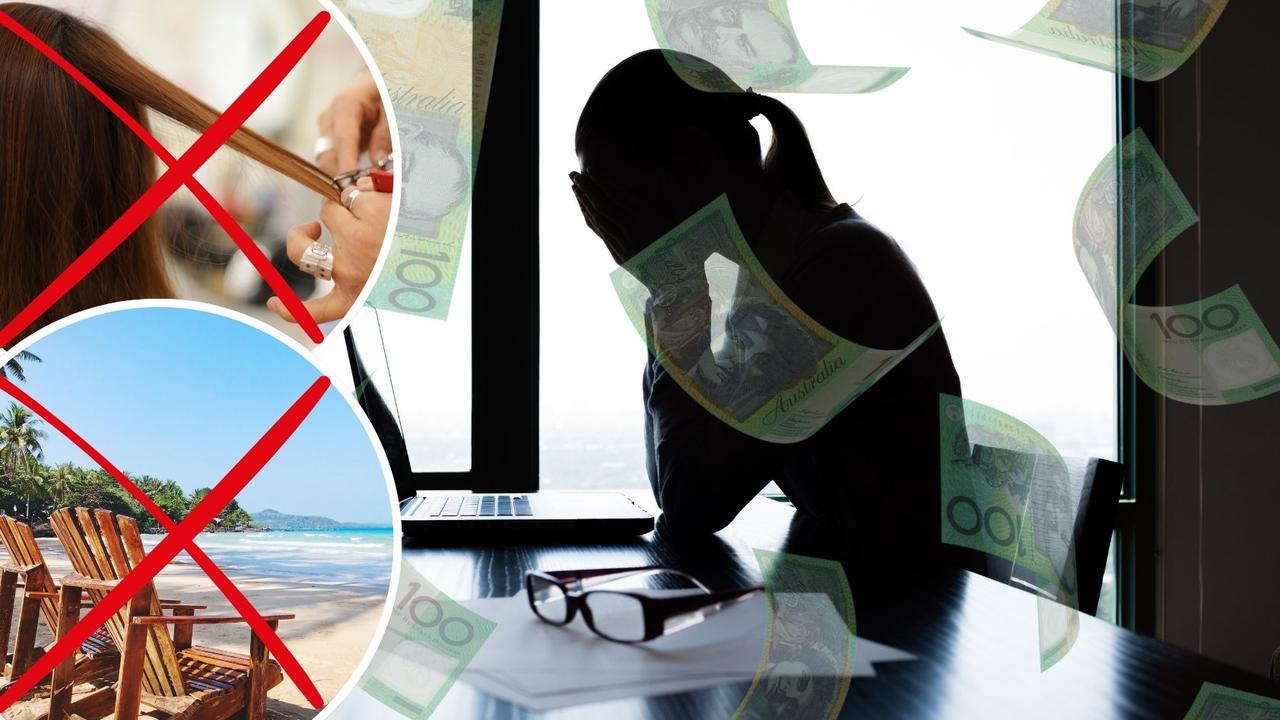
Australians have withdrawn an estimated $85bn in savings just to make ends meet, as soaring living costs force many to cancel holidays, delay basic spending like haircuts, borrow from family, or even move back in with their parents.
Incomes have taken a hit from inflation, the February interest rate rise has started to bite and the petrol supply shock from the US-Israel war on Iran has meant Australians will be paying between $2.50 to $3.00 per litre for unleaded petrol for the foreseeable future.
Households are cutting back wherever they can – not only on discretionary spending including travel, beauty, transport, dining out and retail – but increasingly on essentials such as utilities, groceries, insurance and education, experts say.
Australians are also changing how they live day to day: driving less by working from home or switching to public transport or carpooling, planning meals more carefully, and stretching groceries further by taking leftovers to work and making coffee at home instead of buying it.
More than half (54 per cent) of Australians – or 11.8 million people – say they’ve had to take money out of a designated savings account in the past year for a reason other than what they were saving for, new research from comparison website Finder reveals.
The survey of over 1000 Australians from February found a quarter admit they’ve had to dip into their savings to pay for everyday essentials, while a fifth have withdrawn from their savings to pay for an emergency expense.
Paying off rent and mortgage, debt, school fees and lending to a family member were also regularly cited reasons.
The survey found the average Aussie who had accessed their savings had withdrawn $7274 – equating to a staggering $85bn nationwide.
A lot of Australians feel like they’re constantly shifting money around just to keep their heads above water, personal finance expert at Finder Sarah Megginson told News Corp.
“Before the war began in Iran, petrol prices in Australia were quite stable and relatively affordable, and the reality is that a lot of people were already borrowing from their ‘future selves’ just to make ends meet,” she said.
“It’s frustrating because it feels like you’re working hard just to stand still, so you’re forking over all this extra money without getting ahead.”
Senior lecturer at Griffith’s Business School, Dr Dianne Johnson, said the “lipstick effect” is likely to prevail – where people keep small indulgences such as coffee, lipstick or a new tie or socks, but cut back on larger purchases such as meals out and new outfits.
“Households tend to cut spending related to major life decisions too, by delaying things such as home purchasing, pregnancy, retirement, travel, and renovations,” she said.
“More people are using comparison sites to try to streamline shopping around to try to get a better deal on things like insurance, energy, and bank interest rates and fees.
“Australian households are increasingly adopting cost-saving strategies that minimise lifestyle disruption, such as substituting takeaway for home-cooked meals, switching to cheaper brands, cancelling unused subscriptions, and reducing waste.”
Associate professor in economics at RMIT Dr Meg Elkins said petrol was also on the top of people’s mind right now.
“Because we know the flow-on effects, and we know that we’ve already been hit – in the last five years, prices have already gone up by 25 per cent. That’s so much,” she said.
“We almost have to reframe the way we do mental accounting to know we’ve got no anchor prices at the moment, because what we used to pay is just so not in our field of reference now.”
Dr Elkins said people were also cancelling holidays, causing a flow-on effect for tourism-dependent travel hotspots.
“This is the big time when people actually go away, they don’t go away as much at Christmas as they do at Easter,” she said.
“The fear of this is not the price of petrol. The fear is actually going far away and not being able to get back because of fuel shortages.
“I know from data last year, there was an 8.8 per cent increase in domestic travel. So, the fact that it’s not the thing that we give up. Behaviourally, we don’t give up our holidays.
“The fact that we’re giving up holidays now, to me, is alarm bells.”
People are switching away from monthly donations to charity, to more bespoke campaigns like GoFundMe’s that they feel passionate about, the expert said, and gym goers are swapping premium, boutique experiences for 24-hour cheap gyms.
The $12.4bn Australian beauty industry is also not expecting growth over the next 12 months as consumers cut back, Dr Elkins said.
“With hairdressers, there tends to be a cutback between cuts, most people delay between the next cut,” she said.
“Really interestingly, younger people tend to keep going, whereas older people tend to have it fall away. Behaviourally, it may be that it’s more conditioned (for younger people).”
It comes as new research from YouGov revealed a fifth of Gen Zers had zero savings or less than $1000 in the bank.
One in seven are also carrying personal debts, excluding mortgages, of $10,000 or more, the survey from late last year of nearly 1200 Australians aged 18 to 28 shows.
The crisis has forced the majority (91 per cent) of Gen Z to take financial action, which includes 30 per cent cutting their spending on absolute necessities and 43 per cent cutting back on discretionary items.
To stay afloat, many are turning to debt or becoming dependent on others: 15 per cent are using buy-now-pay-later services, 14 per cent are borrowing money from family, 11 per cent have been forced to move back in with their family, and 10 per cent are taking out credit cards.
Nearly all have concerns about their financial future.
Their biggest worries were meeting the rising cost of essentials like rent and bills, struggling to earn and save enough money, and the fear of never being able to buy a property.
Ms Megginson said cutting back on spending didn’t mean having to sit in the dark to save energy or stop going out with friends, it was about being more strategic and intentional with where the money goes.
“For instance, instead of paying for five streaming services you watch every now and then, cut back to two and rotate services in and out every few months,” she said.
“It might not sound like much, but each service is $10 to $20 a month, so cutting back and rotating could save you around $600 without impacting your lifestyle.”
The expert said the economy was also set-up to encourage buyers to make instant purchases.
“We’re being ‘advertised to’ constantly, all friction has been removed from the buying process and it’s so easy to overspend,” she said.
“So before you buy something you want rather than need, do some research and compare prices – and then sleep on it for 24 to 48 hours.”
Using grocery store rewards and discounts was also encouraged, and moving any money into a high-interest savings account where you can earn at least five per cent per annum.
Dr Elkins also recommended switching to free community services and events for parents paying substantial fees for kids’ sports, moving cleaners from weekly to fortnightly or monthly, and swapping out a $6 daily coffee for one made at home.
Meanwhile Dr Johnson warned there was a “loyalty penalty” for households.
Australia’s consumer watchdog, the ACCC, found that households that have the same electricity plan for more than three years are paying on average $221 per year more than customers on new plans.
Read related topics:Value Vault | Money Saving Tips & Cost of Living News