
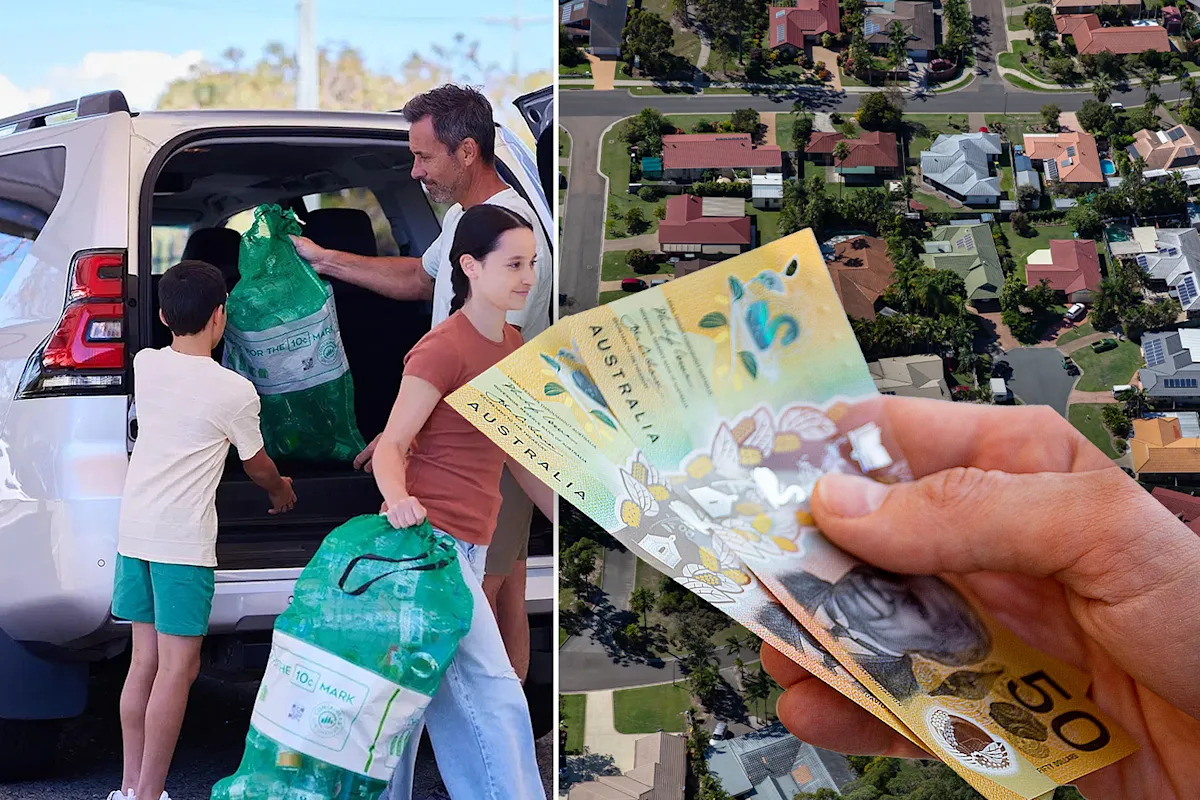
Pressure is mounting on governments across the country to make a small recycling change that industry specialists say will help Aussie battlers pocket more cash. It is seen as a cost-of-living boost, and something that can position us as “a global leader” in the recycling sector.
Australia’s container deposit return rate — where recyclable bottles and cans are returned for cash — sits at just 68 per cent, and a long way behind some European countries, like Germany and Slovakia, which boast rates above 90 per cent.
Campaigners argue that increasing the refund from 10 cents to 20 cents could lift Australia to that level, meaning an extra 2.8 billion containers could be recycled each year.
It’s a bold idea, yet advocates say it has real merit.
Yahoo News Australia spoke to Robert Kelman, Director at Reloop Pacific, who explained how the proposal could benefit both the public and the environment.
Do you have a recycling story? Contact newsroomau@yahoonews.com
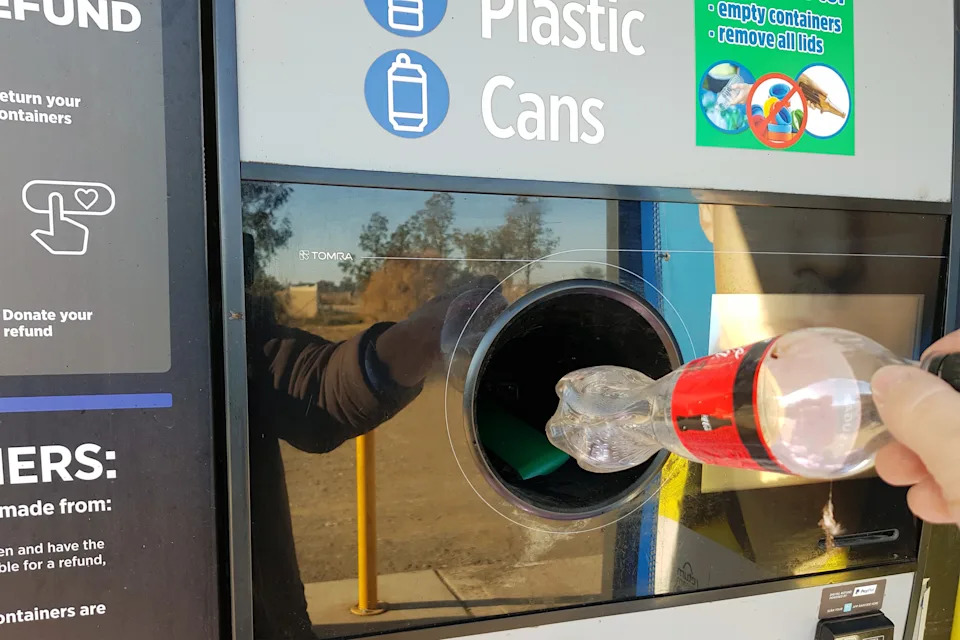
Approximately 4.23 billion valuable containers are still ending up in landfill despite thousands of public deposit points. Source: NSW Government
(Karen McFarland via Getty Images)Why a 10c rise could have a big impact
Kelman said the potential impact could be huge.
“Currently, Australia sees about 12 billion drink containers covered by these schemes annually, but a median return rate of just 68 per cent means approximately 4.23 billion valuable containers are still ending up in landfill or polluting our environment each year,” he said.
“By increasing the refund to 20 cents, it could boost return rates to 90 per cent, aligning Australia with global leaders. This would mean an additional 2.8 billion bottles and cans are recycled annually.”
The benefits extend beyond the environment.
Kelman pointed to research from the strategy group Redbridge, showing that 65 per cent of responders believed a 20-cent refund “would ease financial pressures”, with support soaring to 91 per cent among those “under significant stress”.
“Additionally, this increased refund would provide substantial new funding opportunities for thousands of charities, community groups, and sporting clubs across the country,” he said.
According to the Tasmanian scheme’s impact calculator, recycling an extra 2.8 billion containers would save greenhouse gases equivalent to taking 218,000 cars off the road for a year.
Jeff Angel of Boomerang Alliance said the refund won’t cost consumers anything.
“The consumer price impact will be neutral as it’s a refund. It’s a more meaningful incentive for more Australians to return their containers for recycling and get more money back in their pockets,” he said.
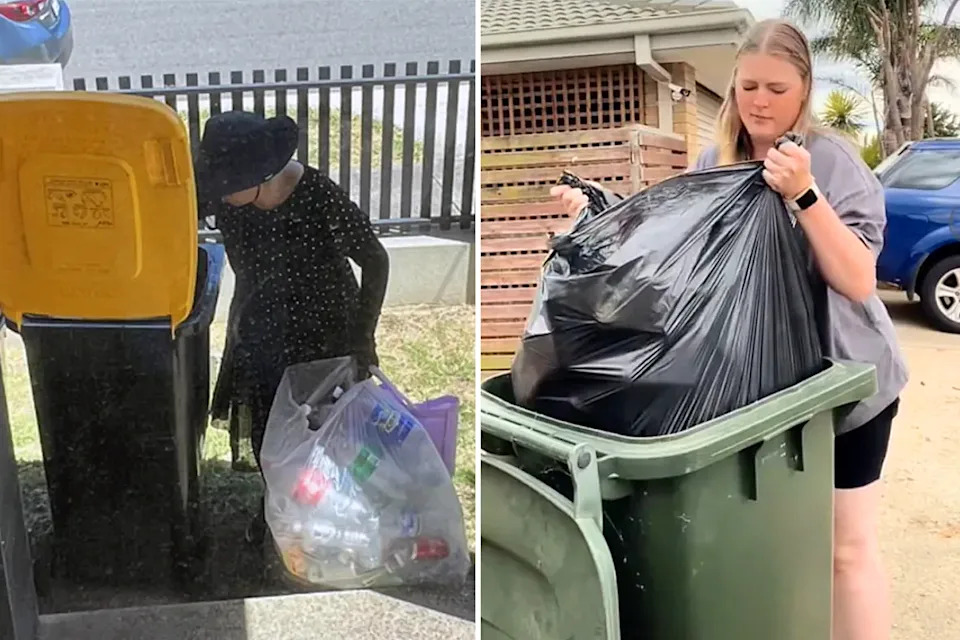
The proposal could mean more money in the pockets of Aussie battlers. Source: Reddit/Supplied
A small change could deliver big returns
But the change isn’t just about emissions and savings, it would also reduce litter, landfill waste, and support a stronger circular economy.
“This is a critical step towards positioning Australia as a global leader in responsible resource management and circular economy,” he said.
How soon the change could happen depends on individual state and territory governments, Kelman explained, and the change will most likely be led by a single state recognising the value of the reform, initiating the change and leading the rest of the states.
The 20 Cents Makes Sense campaign, supported by environmental groups, community organisations and recycling industry leaders, is prepared to engage immediately and constructively with all levels of government to bring about positive change, he added.
The campaign has two clear objectives.
The first is to increase the refund to 20 cents across all schemes, and commit to regular, inflation-linked reviews to ensure the refund retains its value.
Kelman said evidence from overseas shows this approach works.
“A prime example is Connecticut in the US, where an increase from 5 cents to 10 cents led to an impressive 50 per cent jump in return rates,” he said.
“If we see a similar impact here in Australia by moving from 10 cents to 20 cents, it would propel our return rates, easily matching the world-class performance of countries like Germany and Slovakia.”
The proposal already has strong public support, with research showing 85 per cent of adults back a 20-cent refund and 84 per cent saying they would recycle more if the incentive went up.
Do you have a story tip? Email: newsroomau@yahoonews.com.
You can also follow us on Facebook, Instagram, TikTok, Twitter and YouTube.