
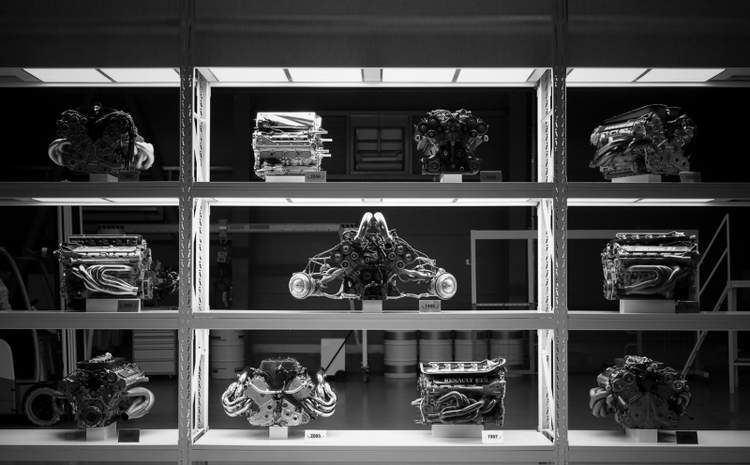
Formula 1’s 2026 regulation crisis has taken another turn, with David Coulthard pointing to the sport’s long-standing manufacturer dependency as a root cause, tracing today’s problems back to the original hybrid shift forced by Renault.Amid growing criticism over energy harvesting, superclipping, and the lack of flat-out racing, Coulthard framed the current situation as the inevitable consequence of decisions made years ago under pressure from manufacturers.The 13-time Grand Prix speaking on the Up To Speed vlog on YouTube, said: “I think, in fairness, just to play devil’s advocate, if we go back to when hybrid first really became a thing in Formula 1, it seems so obvious given there are so many hybrid road cars out there. But it was actually Renault at the time that said, ‘If you don’t go hybrid, FIA, we’re pulling out of Formula 1.’ And they were like, okay, we don’t want to lose the manufacturer, so they did that.
“And I don’t want to be hard on Renault. They gave me my first ever victory, and they were a great provider to Formula 1 for many decades, but it’s fair to say they were not ever considered the best during the hybrid era, and they’ve now closed that production facility down.
“Let’s remind ourselves Alpine are using a Mercedes engine, so that didn’t work for them.
“I think, as you’ve just explained, there was definitely a need to attract new manufacturers. There’s always been the risk that manufacturers come and go. I think it was the late Max Mosley who constantly said that we have to protect against the will and whim of manufacturers to come and go as it suits them.
“So it’s not easy. But these are the best engineers in the world. They must be able to find a solution that resolves some of the frustration and gives the fans what they want. The fans don’t want to see drivers lifting and coasting. They want to imagine they are flat out all the way around the racetrack.”
From flat-out commitment to energy management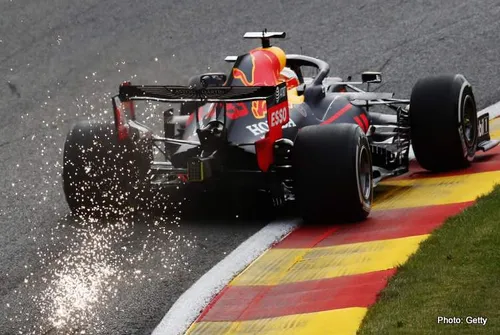
The current generation of cars has been widely criticised by drivers, most notably Max Verstappen, for removing the essence of flat-out racing, particularly at circuits like Suzuka.
Coulthard highlighted how dramatically the driving experience has changed: “Some of the mighty corners that we stood at… I remember being at Eau Rouge as a young, up-and-coming racer in 1990, watching Ayrton Senna and Nigel Mansell go through there in their McLarens and Williams, and going, I just can’t believe what I’m seeing.
“That may be a different story this year because of the need to harvest in those high-energy corners. And I think that’s where his frustration is coming from. So I’m sure part of it is sending a very strong message as one of the champion drivers, and the other part is just pure frustration.”
That frustration has been amplified by a season already overshadowed by safety concerns, including Ollie Bearman’s heavy crash at Suzuka, which exposed the risks of unpredictable speed deltas under the new energy deployment systems.
Despite the dissatisfaction, Coulthard acknowledged the financial reality that keeps drivers in the sport, even as questions over its direction intensify: “I guess the big void between competing in Formula 1 and competing in other championships is the salary. Let’s be frank.
“[IndyCar] is one of the biggest championships in America, and I’m sure they’re well paid at the highest level. But it won’t even scratch the surface of what a Max and a Lewis and Charles and those sort of guys are getting.
“So I wouldn’t see any of them starting out doing it for the money, but aircraft and boats and all the rest of it are expensive items to keep running, so your lifestyle grows into the funds that you’re earning. So that may be a longer conversation than just ‘I’m not enjoying this.’”
A technical fix exists, but it comes at a cost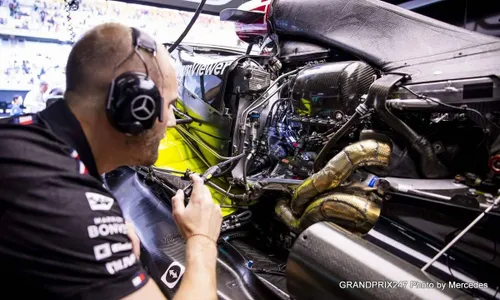
While criticism of the regulations is mounting, Coulthard believes solutions are possible within the existing framework, albeit with trade-offs: “Yeah, well, the hardware is there. So it’s a continuation of what we’ve had over the last few years with the V6 turbo. How they harness energy has obviously changed, and the amount of energy they get each lap has changed. But that can be downgraded.
“That can be downgraded to bring the engine into being a bigger player. The problem with that, of course, is that there isn’t going to be a big gap in lap time between Formula 1 and Formula 2. And what has typically always been a sort of 10-to-8-second gap is a significant step up.
“So it’s obviously frustrating for us all, because we’re fans of the sport. We’re ex-racers. We’ve all been behind the steering wheel. We love competition, we love racing.
“And it actually feels, is it just me, or are the FIA actually being a bit more hand in glove with Formula 1 and the drivers than may have been the case in the past, where it felt quite confrontational? You know, we’re the FIA, you’re the drivers, we have the bigger hammer. So get in line.”
Coulthard also pointed to the deeper structural issue within Formula 1: the constant tension between teams, manufacturers, and governing bodies: “Ron Dennis would say to me, if there was an issue, he’d go, ‘Yeah, refer this to Norbert Haug,’ who was the motorsport boss at that time.
“I don’t recall all of the details, it was a long time ago now, but I suspect Mercedes probably looked at buying into McLaren at one point, and for whatever reason it never happened, which is why they went off and did their own thing.
“Let’s remind ourselves that Honda effectively gave the race team to Ross Brawn, who then won the world championship with Jenson Button and sold it to Mercedes. Where there’s money, there’s politics. Where there’s politics, there’s power play. You will always have people trying to engineer or maintain an advantage. It’s always been the way in Formula 1,” declared Coulthard
Can Formula 1 fix itself?
With a five-week break in April and urgent FIA discussions scheduled, the focus now shifts to whether meaningful changes can be made quickly enough to restore confidence in the sport.
Coulthard remains cautiously optimistic: “I’ve got to believe in the brainpower of the FIA and the teams. There has to be a workable solution, even if they ultimately end up with a little bit less power. I think the fans would understand, because this is still a Formula 1 car.
“They’re still incredibly efficient through the corners. So that gap between Formula 1 and Formula 2 could become a little bit closer, but getting on the ragged edge, being on the edge of adhesion at 180 miles an hour or 200 miles an hour through these monster corners that we revere, that’s what people want to see. That’s the thing we need to address as quickly as possible.”
Coulthard added a final note on the sport’s ability to adapt: “Formula 1 definitely learns very quickly. Whether they want to take away a potential advantage from someone who’s done a better job within these rules, I think that’s unlikely.
“I think it would take a collective agreement between the manufacturers to go to the FIA and say, let’s all do what could be seen as the right thing in the short term to give us more lead time to know what to do in the future.
“We’ve come off the back of a brilliant Formula 1 era where the whole grid was regularly covered by less than a second. We’ve never seen that before. Now there’s a bigger gap again, and that opens up another line of questioning.”
With Formula 1 heading into a critical period, the question is no longer whether changes are needed, but whether the sport can act fast enough to prevent further damage to its soul.