
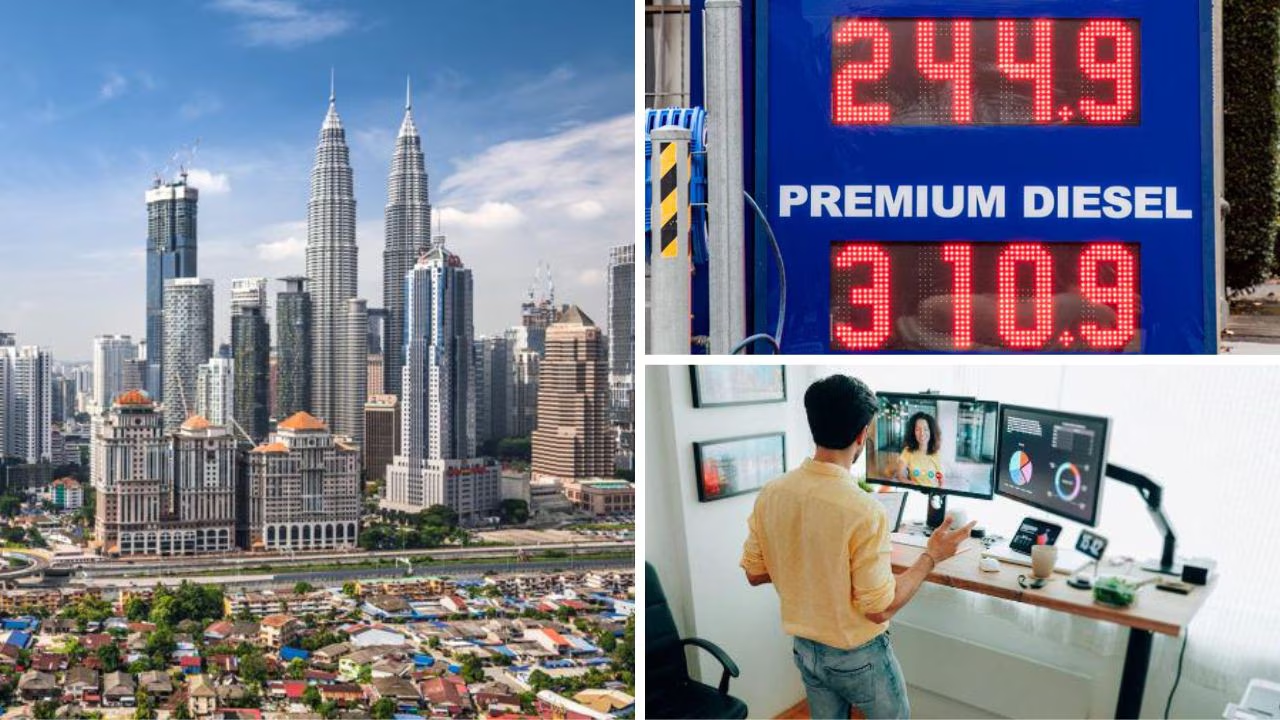
Malaysia has made the decision to join several other nations in adopting stricter crisis-mode tactics amid the Iran war.
Prime Minister Anwar Ibrahim recently announced the introduction of a work-from-home policy for ministries, agencies, statutory bodies and government-linked companies.
Starting on April 15, the policy aims to conserve energy during the ongoing war while maintaining the economy.
“The cabinet has agreed to the work-from-home policy. It aims to reduce fuel consumption and ensure a stable energy supply,” Mr Anwar said during a special briefing.
Without going into details, the Prime Minister said more updates would be announced soon.
Malaysia has heavily subsidised fuel since late 2025, allowing eligible citizens to pay just 1.99 ringgit (AUD $0.71) per litre of unleaded petrol.
But as global crude prices soar and Iran keeps the crucial Strait of Hormuz effectively closed, Mr Anwar said the quota for subsidised fuel would be cut from 300 litres to 200 litres a month.
“The situation will worsen before it can be restored, and it will take a much longer time,” he said.
Mr Anwar said maintaining lower prices was something to be “grateful for, but does not mean (Malaysia) can be complacent”.
The Southeast Asian country is an oil producer, however, according to Malaysian oil company, Petronas, around 40 per cent of the country’s crude oil processed into fuel by refineries is imported.
Foreign Minister Mohamad Hasan last week said tankers belonging to Petronas, Sapura Energy and maritime firm MISC were awaiting clearance to safely navigate the strait.
Transport Minister Anthony Loke added that the vessels would be exempt from any prospective tolls imposed by Iran, a measure Tehran has threatened.
“We are a friendly party. We have a good diplomatic relationship with the Iranian government,” he said, expressing confidence that Iran would allow the ships to pass.
In a televised address last week, Mr Anwar thanked Iranian President Masoud Pezeshkian for permitting Malaysian oil tankers and their crews to continue their voyage.
Many citizens went online to criticise and joke about the Prime Minister’s WFH announcement, arguing it failed to protect those working for private companies.
“Like teamwork won’t suffer when everyone is stuck in traffic, arriving late, leaving late, exhausted and mentally drained,” one Threads post wrote.
Amid the fuel crisis, The International Energy Agency issued 10 recommendations in response to global shortages, which included “work from home where possible at the top of the list”.
A wave of concerned countries have adopted anything from a reduced work week to a QR-based fuel rationing system to combat shortages.
Pakistan has taken considerable measures, having ordered 50 per cent of its public sector employees to work remotely, along with implementing a four-day work week.
Vietnam, Thailand, the Philippines and Sri Lanka have either called people to work from home or implemented a four-day work week.
Here at home in Australia, the government has shown no signs of moving toward a WFH policy yet, even after Energy Minister Chris Bowen said working remotely where possible was a “sensible thing to do”.
In a national address on April 1, Anthony Albanese instead encouraged Australians to “do their bit” by using public transport and refraining from panic buying fuel.
As the Iran War enters its 36th day, the world is watching to see how many more nations will be forced to adopt drastic measures.
– with AFP