
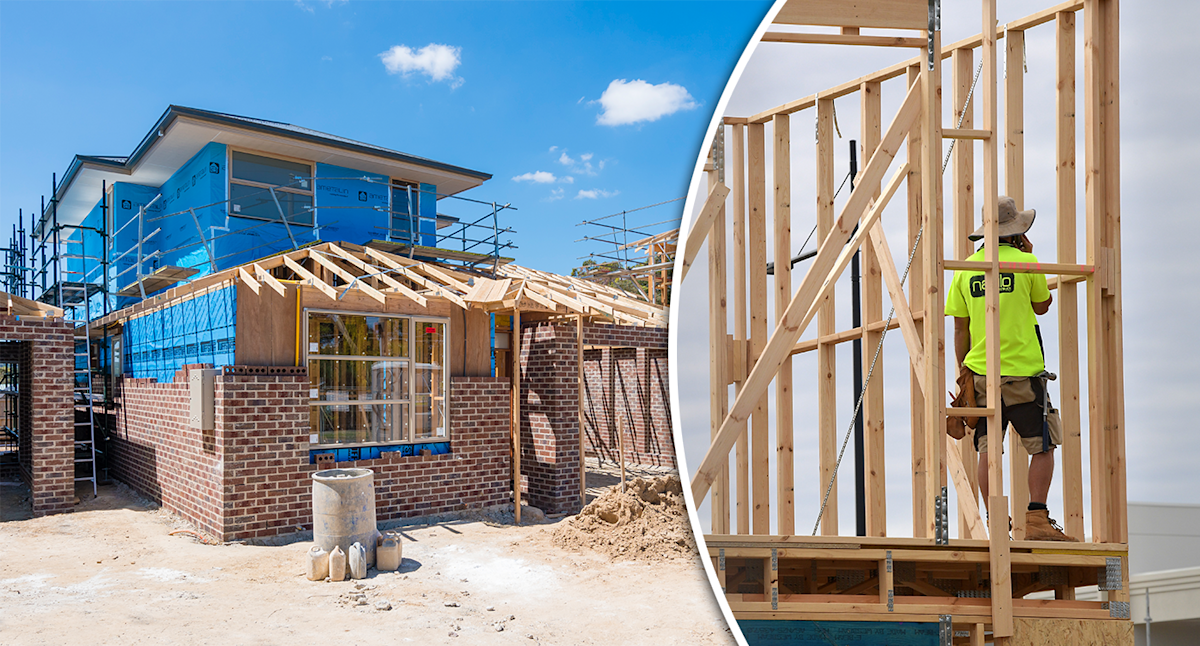
 The Iran war is set to further push up building prices and make it harder to get housing projects underway. (Source: Getty/AAP)
Australia’s fledgling construction recovery could come to a sudden stop as high fuel prices turn new home-building into an expensive trap.
The latest building approvals data came out on Wednesday and they cast back to February, showing a nation with big ambitions. Back then, we planned to build. The trend increase in dwelling approvals was up 13.2 per cent from a year earlier. Australia has a growing population which we need to house, not to mention a government-approved plan to build over a million new homes.
But building approvals are just one step on the path to having the walls and roof put up. And what has happened since February means many of those approvals could remain on paper for a rather long time.
RELATED
“The Iran war is likely to further push up prices,” said Matthew Pollock, Executive Director of Master Builders NSW.
“Which will make it even more difficult to get housing projects underway. The more expensive it becomes to build homes the fewer homes we will likely build.”
Houses are made of many types of products. There are bulky, heavy parts, like concrete. The cost of those is dominated by transport costs. Then there are parts made of metal – the cost of those depends on the cost of energy. Homes also include a lot of plastics, and those are made of petrochemicals, which, as the name implies, come from oil. In short, the ingredients you need to make a building are profoundly affected by the price of fuel.
The machines that flatten the land and lift up the parts? They also run on fuel, especially diesel. Delivering a skip and taking it away? Also mostly about the cost of transport.
So the surging price of crude oil and its refined products (petrol and diesel) means building just became much more difficult and more risky.
In the world of building, there are two main types of contracts. Fixed price, and flexible price. Neither solves the problem of higher-than-expected input costs. They just decide who suffers. In a fixed price contract, that person is usually the builder. They have to finish the job, even if the cost of inputs goes up.
Simon Croft of the Housing Industry Association has been bombarded with information on rising prices from domestic suppliers, with transport providers being first. Imported product inflation is coming next, he warned.
“The builder has to absorb those costs inside the contract,” he warned. “The majority of the contracts in our industry are those fixed price contracts.”
Fixed price contracts are traditionally offered by larger-scale builders rather than the smaller operators who do renovations and boutique builds. But it is those larger builders that you really don’t want going broke! Little builders go broke all the time, but when big builders go belly up, that is really bad for the future of construction.
 Australia housing
Insolvencies among construction firms have been only moderate so far in 2026. They are, in fact, slightly lower than the same time last year – a sign of the market slowly recovering. But the next data release could show a sudden change.
Of course, one way builders can manage the cost surge is by slowing down. That can limit their exposure to higher prices – perhaps fuel will come back down later.
Of course, the client may have recourse if there are delays, which is why lawyers might be the only winners out of surging risk and uncertainty in the construction sector.
Master Builders Australia CEO Denita Wawn says that risk and uncertainty are the last things we need and the government should step in.
“We know that the highest users of petrol and diesel include the building and construction industry, particularly the civil sector. Building and construction must be a priority for decision makers in terms of ensuring supply. If you stop the construction of homes, we’re going to go further backwards than we already are in meeting those housing supply targets,” she said.
“The instability has reaffirmed the need to get the federal budget right as an unprecedented expansion in new home building will be needed to give us any chance of hitting the Housing Accord targets and improving housing affordability.”
Get the latest Yahoo Finance news – follow us on Facebook, LinkedIn and Instagram.