
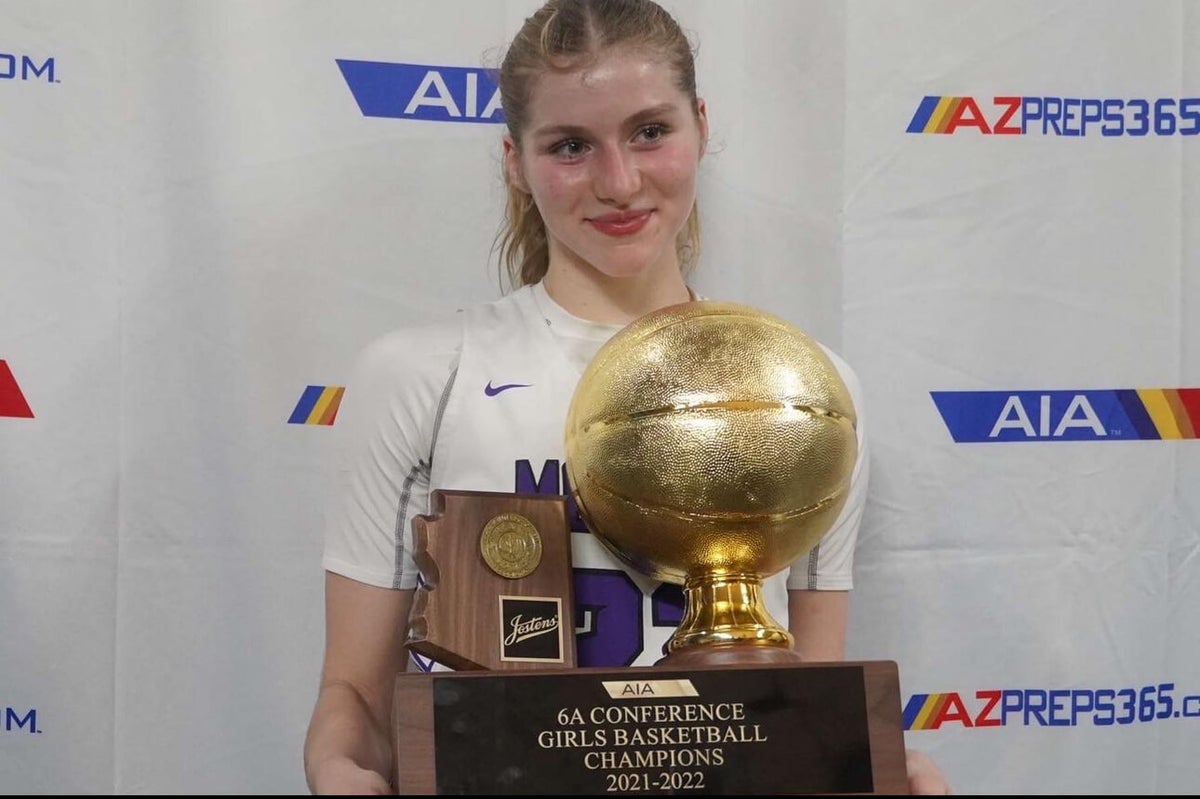
Like many elite athletes growing up, the more Jennah Isai played her sport, the more praise she received. The more she succeeded in basketball, the happier the people around her seemed. The compliments inspired her to work harder, and that hard work led to accolades piling up: Division I offers in eighth grade, Gatorade Player of the Year in Arizona, a top-50 prospect ranking, and eventually a scholarship to play at Oregon.
When Isai introduced herself, “I’m Jennah,” was almost always followed by, “I play basketball.” It was everything in her life.
Basketball became more than a game.
It was a deity controlling her every move. It determined her schedule. Who she could hang out with. What her dreams were. What she could eat.
Then it told her what she couldn’t eat. And when she should throw up.
Bulimia came on slowly. Then, it engulfed her. Isai became one of the many women and girls impacted by eating disorders. According to research by the National Association of Anorexia Nervosa and Associated Disorders, one in five women will develop an eating disorder by the time they turn 40. Some, such as former Buffalo player Hanna Hall and former Iowa State standout Emily Ryan, use sport as a tether, connecting them to the real world. But for Isai, basketball only pushed her further from reality.
And eventually, the disorder nearly killed her.
It’s often assumed that eating disorders are only prevalent in sports such as cross country or gymnastics, where being small is seen as a competitive advantage. But, experts say, eating disorders are more common in sports such as basketball than many assume; they’re just harder to detect. That’s because in order to compete, players must maintain muscle, so they don’t show the common visual cues of eating disorders.
According to research done by Dr. Kendra Becker, the director of psychology for the Mass General Brigham’s Women’s Sports Medicine Program in Cambridge, Mass., up to 42 percent of female athletes suffer from eating disorders, while up to 70 percent of female athletes engage in behaviors that can lead to eating disorders. These behaviors include restricted eating, overexercise and an intense focus on nutrition. The numbers are hard to verify because of stigmas surrounding eating disorders, but at least 6 percent of female athletes actively admit to their disordered eating.
“People assume that if someone has an eating disorder, they’re going to be very, very thin,” said Dr. Melissa Streno, a psychologist who specializes in eating disorders in athletes. “But in reality, somebody’s size and shape and weight — their physical appearance — gives us nothing. So, that makes it more challenging because it’s a hidden secret. … I’ve treated many former or current basketball players.”
Even at the height of her disorder, Isai was still thriving on the basketball court, first in high school and then at Oregon, so few noticed that she was struggling. Part of that was by design. For Isai and many others with eating disorders, secrecy is vital. Those affected need to feel as if they’re in control, even when their behavior shows otherwise.
“Your mind gets itself into this kind of reward program,” Isai said. “Like, if I keep doing this, I’m going to get more compliments, more attention, more success as a basketball player. More everything.”
Isai was not alone in her struggles, but she felt alone. Eating disorders are master tricksters. Like many others, Isai’s affliction made her feel in control, even when she was spiraling. It made her feel isolated.
What started with restrictive eating habits led to binge eating, which led to purging.
The first time Isai made herself throw up was under the guise of car sickness, when she asked a friend to pull over so she could vomit.
“At first, I thought it would help me perform better,” she said. “I started by just wanting to eat healthy, but then, as soon as I ate something bad, like a brownie, then I’d feel like I had to eat the whole tray. And then I had to get it out of me because I didn’t want to feel like s— the next day.”
Isai didn’t fully understand what was happening to her, but she felt ashamed.
Hall, who led Buffalo to the Sweet 16 in 2018, wanted to dispel some of the stigma. In a video posted by Buffalo Athletics in 2019, she detailed her struggles with anorexia, which started with a strict diet to improve her speed and agility on the court. Within hours of posting, she received hundreds of DMs from others who shared her struggles.
“This is something that has so much stigma around it,” Hall said last week. “We are seeing a shift in mental health conversations, but there is a very big gap in eating disorder conversations and the shame that is automatically associated with it.”
The positive responses helped justify Hall’s decision to speak out. But they also confirmed something alarming that she already knew. Under the surface, disordered eating was running rampant in the sport she loves.
“There are absolutely people playing in the NCAA Tournament that are struggling with eating disorders,” Hall said.
Hall’s worries have been heightened in the age of NIL.
“I had people I’d known for ages telling me how good I looked,” Isai said of the beginning of her disorder. “I remember even refs commenting on my body.”
Now that athletes can make money through their NIL rights, which often become monetized through social media, their bodies and looks are arguably more scrutinized. Former Miami basketball players Haley and Hanna Cavinder are twins who were at the forefront of the NIL movement, with millions of online followers and lucrative endorsements. In 2023, they shared a YouTube video about how that contributed to their struggles with eating disorders.
“We are entering another trend of skinny, which is terrifying,” Hall said. “Then you have athletes who, now more than ever, are pressured to make money off of social media. You quite literally have people who are making a living off of how they look.”
That only adds to a problem that has long existed.
Cassie Kerns, who won a national title with UConn in 2009, spent most of her college career fighting eating disorders. She became so weak that she often had to skip practices during her senior season. “When you’re in it, nothing matters except you and food,” Kerns said.
Isai started feeling the weight of her disorder and developed symptoms of anxiety and depression during her junior year of high school. She eventually told her mom she was struggling — not with bulimia — but with depression. It took her longer to tell her mom she was throwing up three or four times a day.
“I couldn’t bring myself to say it because, well, it’s almost like, disgusting,” Isai said. “Like, I’m making myself throw up. Everyone is going to think I’m gross.”
Other disorders often coincide with anorexia and bulimia because of changes in brain function, research shows. “You have less ways to deal with other mental-health issues,” Becker said, “so the eating disorder itself becomes the coping mechanism.”
Isai’s mom, Shelley, said that her daughter found a counselor and thought basketball would be a positive outlet. Isai continued to excel in the sport and earned Division I scholarship offers.
When she committed to Oregon, Jennah and her family were open with the Ducks’ coaching staff about her disorder. She also wanted to get proper care during college.
At first, things improved. But during a team retreat, Isai noticed familiar, troubling behaviors returning. She immediately told her coaches, and she said they set her up with a therapist. Isai said the therapist wasn’t eating-disorder certified and didn’t have the tools to help her. (Oregon did not return a request for comment.)
“There aren’t enough resources for student-athletes,” Becker said. “And I’m not pointing fingers at colleges, saying they aren’t doing enough. There just isn’t enough understanding or knowledge.”
To start the 2024-25 season, Iowa State’s Ryan spoke out about her eating disorder, saying that she became “fixated on her diet” as she attempted to find an edge on the court. Eventually, Ryan’s body broke down and she missed nine games to start the 2023-24 season. After receiving treatment, Ryan returned for her senior season. But for Isai, that wasn’t possible.
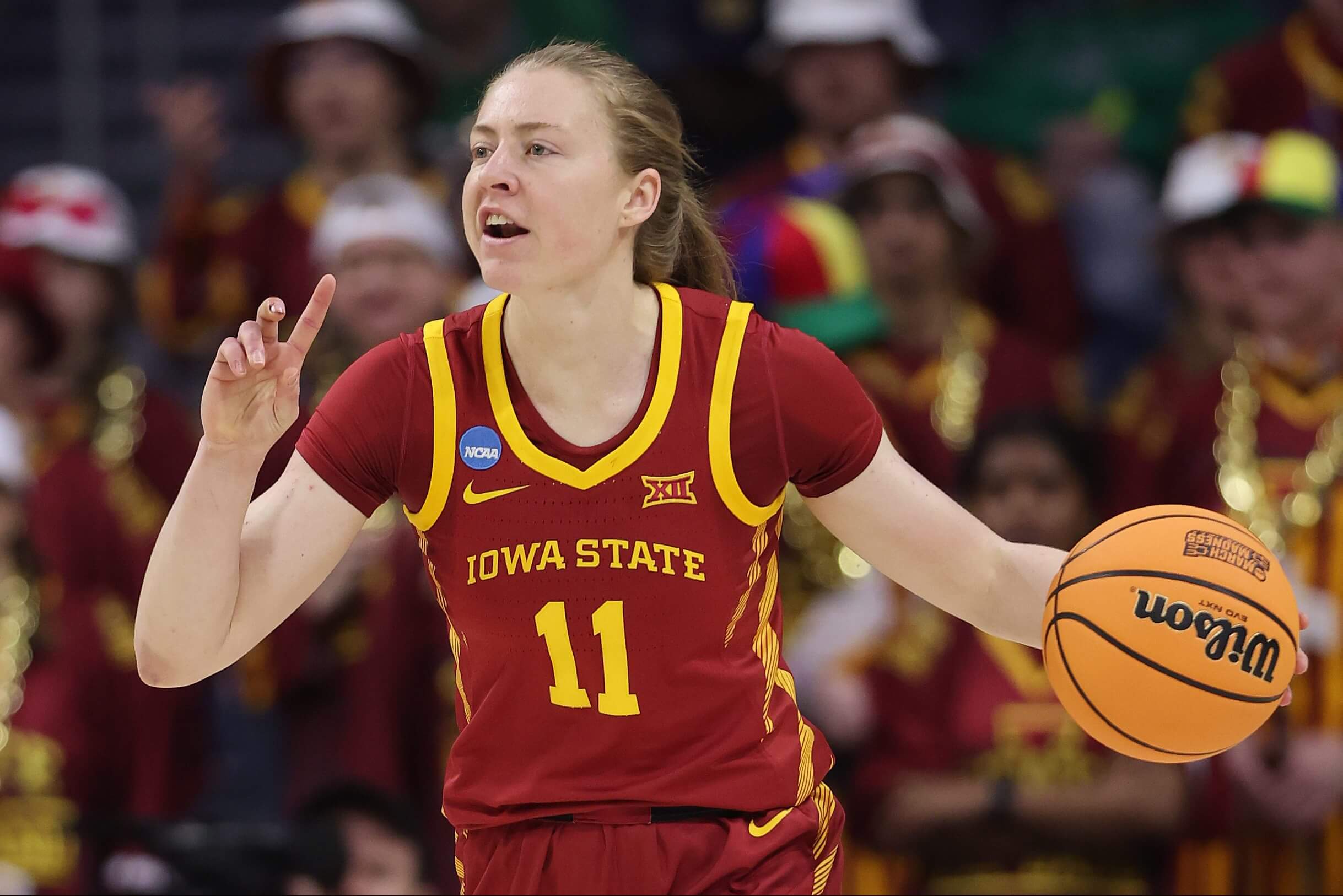
Former Iowa State player Emily Ryan received treatment for an eating disorder in college. (Michael Reaves / Getty Images)
As her body weakened due to bulimia, Isai struggled to control her emotions. At one point, she was so overwhelmed that she ran off the court in the middle of a game. Isai said she made a plan to take her own life, but changed her mind at the last minute and called her mom.
Isai left Oregon midseason and checked into an eating-disorder treatment facility in Scottsdale, Ariz. After treatment, Isai transferred to BYU to play alongside her friend Amari Whiting and then-coach Amber Whiting.
“What recovery looks like and feels like is not always the same,” Streno said. “You can’t put a definitive date or time on it.”
One of BYU’s athletic trainers advised Shelley to keep Jennah away from basketball for longer, but Shelley thought being back in a routine would be best for her daughter — one of the many regrets Shelley now harbors.
Isai lived alone, and she often felt it was hard to acclimate to BYU because of her Muslim faith. BYU is a Latter-day Saints school. Isai said she attempted suicide in 2023 by overdosing on the sedative hydroxyzine.
According to the National Institutes of Health, suicidal ideations, attempts and self-harm increase when anorexia or bulimia are present. That, Isai says, mixed with her desire to excel at basketball, pushed her to a breaking point.
“As a basketball player, the higher level you play, the more your identity becomes mixed up with your sport,” she said.
Isai thought about playing at another school or competing overseas. But she realized that, like her eating disorder, basketball had become another ill-advised coping mechanism, so she stepped away for good in the summer of 2023. Without the pressures of returning to the court, Isai could finally heal physically and mentally. She was diagnosed with borderline personality disorder and entered treatment again, this time for both bulimia and BPD.
At first, the prospect of “finding herself” was daunting. How could she craft a life outside of basketball when basketball had always been central to her identity?
Now 22, Isai is exploring new interests. She runs and dabbles in golf. She improved her relationships with her parents. She became a certified lash technician and enrolled in cosmetology school.
“I’m grateful for everything in a way,” Isai said. “Because, especially with my dad, we only connected through basketball. But now we are much closer in a real way. And my mom and I, we talk about everything.”
There was a time when Isai wanted to play in March Madness and dreamed of battling in the Final Four, which concludes this weekend in Phoenix, a quick drive from her hometown of Surprise, Ariz.
She would have been a senior this year. Maybe she would have led Oregon to the Final Four, or maybe BYU. Or maybe she would have picked a different school. But that version of Jennah Isai — the basketball player — would have given anything to get there.
Now, she won’t even watch it on TV.
“I don’t miss it,” she said. “I used to be so involved in basketball that I was in an athlete box, and every question I was ever asked related to playing. But now, I actually get asked about myself.”
Still, twice a week, Isai laces up her sneakers and plays pickup at a local gym. Though she felt herself falling into old habits — getting angry about a missed shot, feeling anxious about teammates judging her — she has learned to just have fun on the court.
For the first time in her life, Isai knows herself. She feels powerful. And nothing — certainly not a game — can take that from her.
“I never liked myself before. Never in my life,” she said. “But I really do now.”