
Welcome to Monday’s edition of the RaceFans round-up.
Social media and links
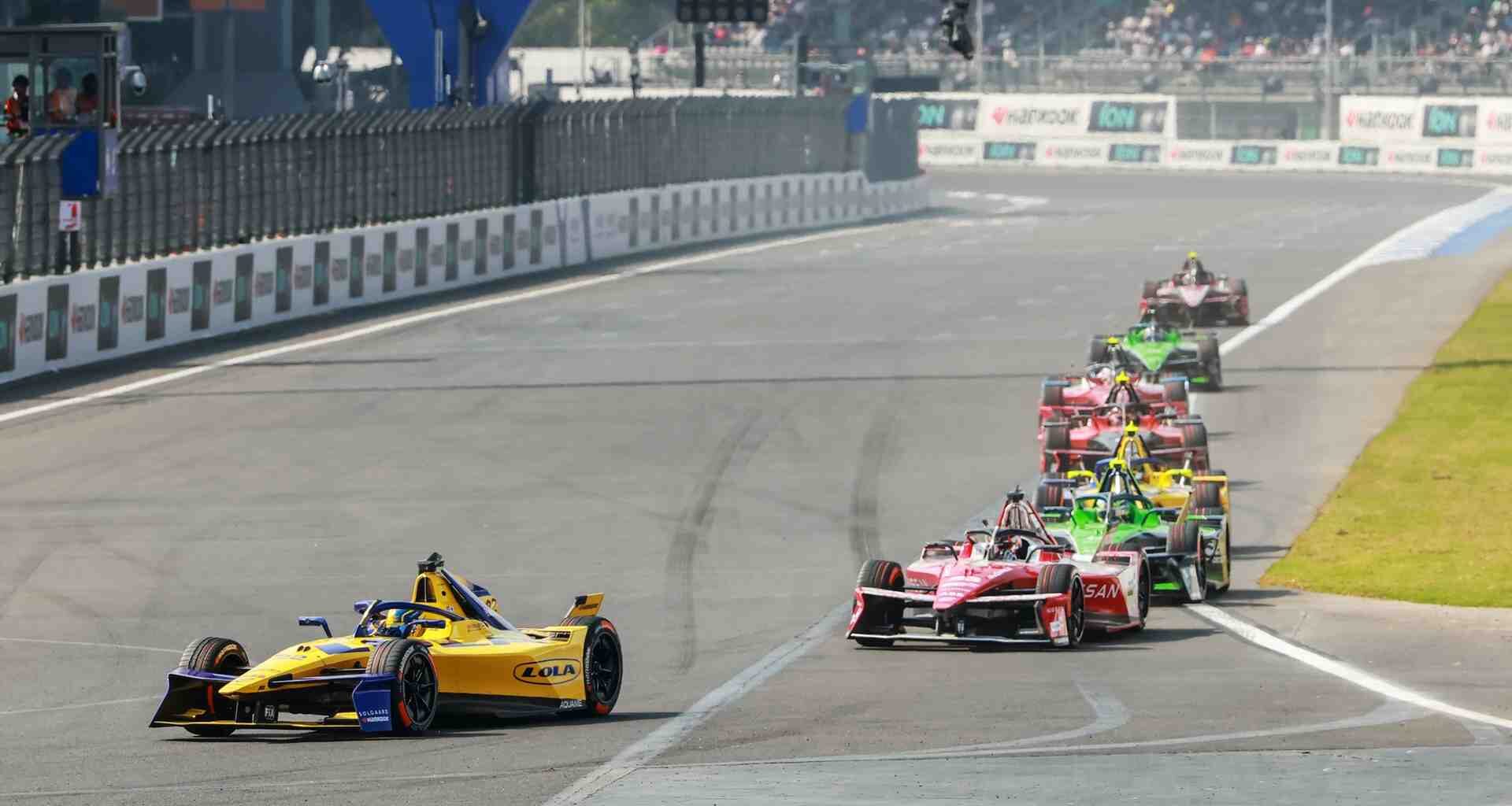
‘The most efficient combustion engine in the world is a Formula 1 engine and I would imagine it’s in the 40-percents of efficiency which means over half of the energy created is lost into the atmosphere, which is why you hear that big growling sound, that visceral noise that people love. Ours are operating in the 97% efficiency mark. So absolutely our cars, in time, are going to be faster than Formula 1 cars. And that’s not because we’re really clever. It’s because of the physics of the technology that underpins our cars. So I think we’re on this really interesting journey where over the next two, three, four, five, six years, the cars are going to be faster than Formula 1 cars and we’re going to continue hopefully to grow our fan base and build a compelling global TV audience.’
‘For a high-speed corner, everything is flat. For a medium speed corner, a little bit of overlap, a little bit of brake and then I just smash the brake for the slow speed corners, turn, smash the power and I’m gone. Surprisingly, I am not someone who likes a lot of oversteer. I think there’s a fine line, like everyone says the car has to be oversteery.’
From Werner to Antonelli – Two historic Mercedes victories 125 years apart (Mercedes)
‘As Kimi crossed the finish line at Suzuka, he claimed his second Grand Prix victory, and the 125th for the modern Mercedes-Benz F1 team. One hundred and twenty five wins by the Silver Arrows from Brackley and Brixworth, while proudly carrying the three-pointed star, the history and the expectation of Stuttgart. A significant achievement, on a significant date – for Sunday 29th March marked the 125th anniversary of Mercedes’ first motorsport victory.’
How we maximised out potential in Japan and why doing so wasn’t straightforward (McLaren)
‘An element that we’ve noticed across our three 2026 outings is a relatively chaotic sequence of laps at the start of races, with drivers still fine-tuning their energy strategies, followed by periods becoming increasingly ‘normal’ as the drivers and their engineers figure out what works best, and also what their rivals are doing. The situation never becomes entirely stable, however, because the energy use of the cars is a dynamic state, changing as fuel loads fall, grip levels increase, and lap times decrease. Superclipping starts to happen at different points on track, requiring a response in the driving style… and this happens in addition to – rather than instead of – the usual strategy dilemmas.’
Super Formula Motegi race one highlights (Super Formula)
Super Formula Motegi race two highlights (Super Formula)
RaceFans always endeavours to credit original sources. Want to share a relevant motorsport link with us? Send it in via the contact form.
Advert | Become a RaceFans supporter and go ad-free
Happy birthday!
Happy birthday to LAK!