
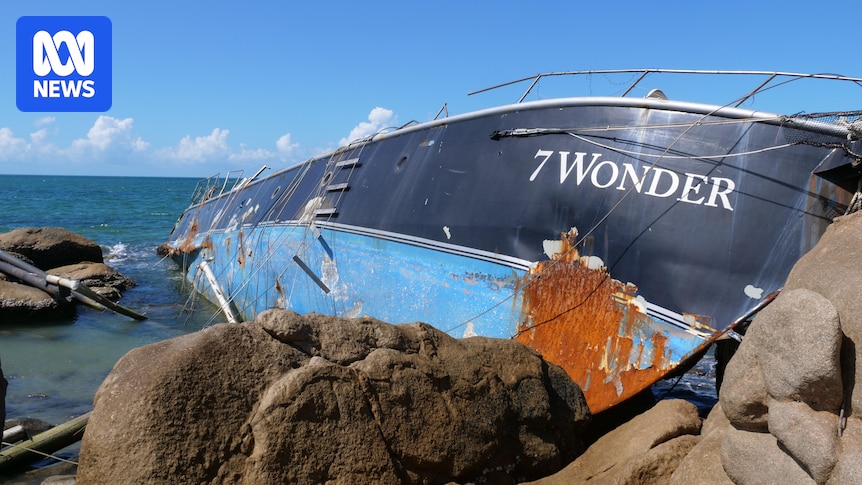
Maritime authorities have promised that a boat wrecked on rocks by Cyclone Koji in North Queensland more than two months ago will be cleaned up “soon”.
The vessel, 7 Wonder, was wrecked on the rocks surrounding Rose Bay, in Bowen’s north, on January 11.
It was one of 25 boats Maritime Safety Queensland (MSQ) recorded as either wrecked or damaged following the cyclone’s crossing between Bowen and the southern Whitsunday coast.
Rose Bay local Stuart Fisher said the boat should have been prioritised for removal rather than being left to deteriorate.
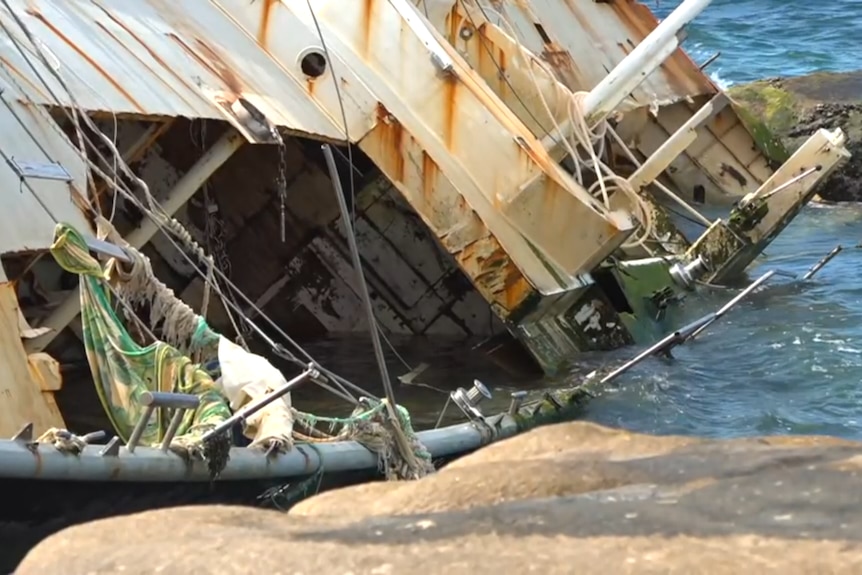
The deck of the boat has gradually rusted away. (ABC Tropical North: Liam O’Connell)
He said he and his neighbours had to spend hours each day cleaning up the debris along the rocks and washing up along the shoreline.
“Upon impact, it was a lot of chemicals, drums half full of diesel and anti-fouling,” he said.
“As the weeks went by it was mainly larger debris like plywood.
“But as the top deck has rusted right through and peeled away, [the boat] has spewed its entire contents out all over the reef.”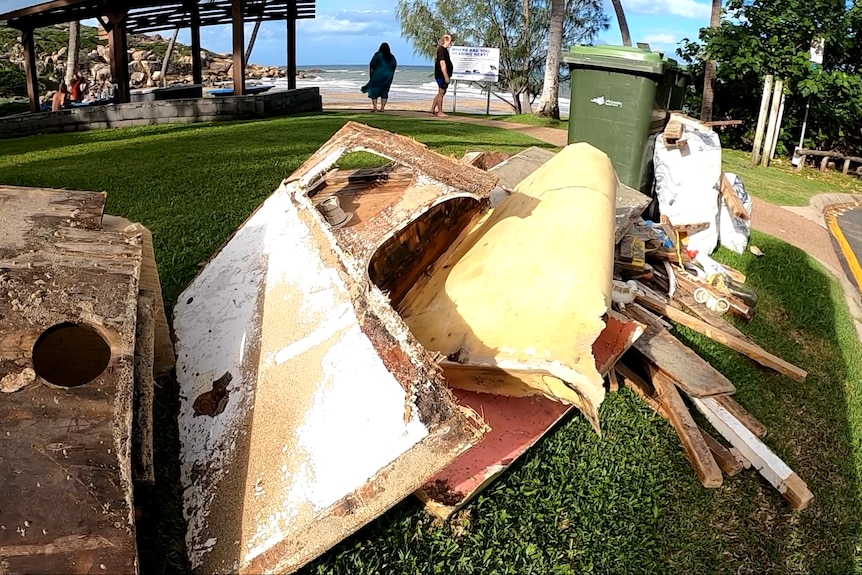
Residents spent weeks collecting rubbish from the vessel that had washed up on the beach. (Supplied: Stuart Fisher)
Under Queensland law the owners of a wrecked boat are responsible for its clean-up and removal, typically via a contractor.
In this case MSQ directed the owners to remove the vessel by February 13, after which the agency began arranging removal itself.
MSQ general manager Kell Dillon said the job then went out to tender, which was a weeks-long process.
“The vessel in itself weighed about 70 tonnes,” Mr Dillon said.
“We had to get a specialist contractor because that vessel is wedged heavily between rocks in an exposed shoreline.”
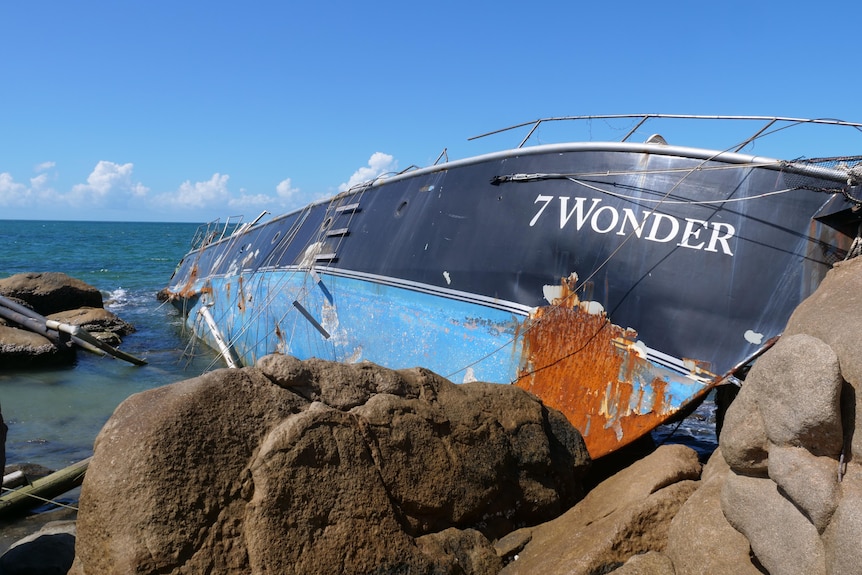
7 Wonder was wrecked at Rose Bay on January 11. (ABC Tropical North: Liam McNally)
He said contractors in the region were spread thin, weather conditions had not been favourable, and getting specialist equipment into a remote, regional location had also proved challenging.
“The costs are quite extreme and we do reserve the right to recoup those costs through the courts if required,” Mr Dillon said.
Mr Fisher said he felt that despite repeated messages and calls to MSQ, he and his neighbours were not taken seriously about the severity of the pollution at Rose Bay.
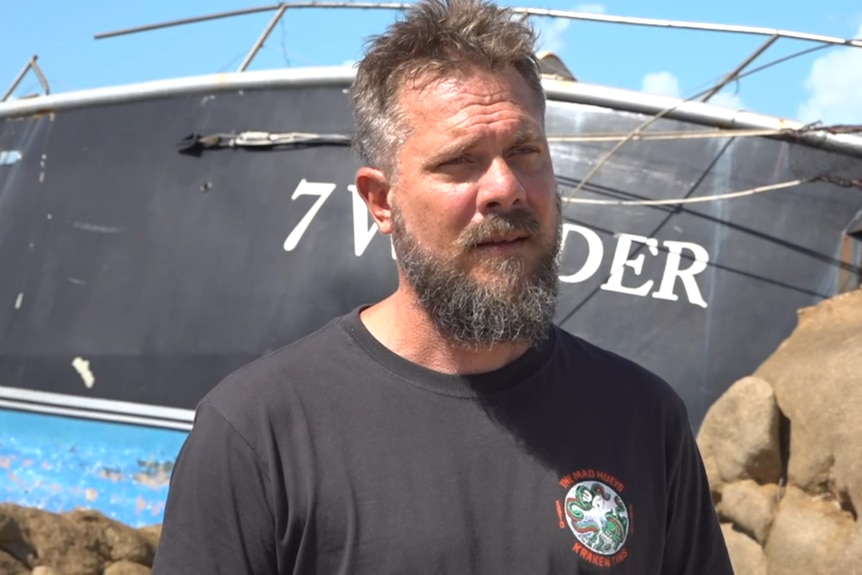
Stuart Fisher says he and his neighbours feel marine authorities haven’t prioritised salvaging the wreck. (ABC Tropical North: Liam O’Connell)
“We’ve basically taken care of business ourselves,” he said.
“Long-term, the styrofoam is nearly impossible to get out at this point.”Wrecks everywhere
Further south at Airlie Beach and surrounding areas, several wrecks washed up during Koji’s crossing.
Eco Barge Clean Seas founder Libby Edge said she and her team had been called on to provide a rapid response, removing 11 tonnes of waste after the event.
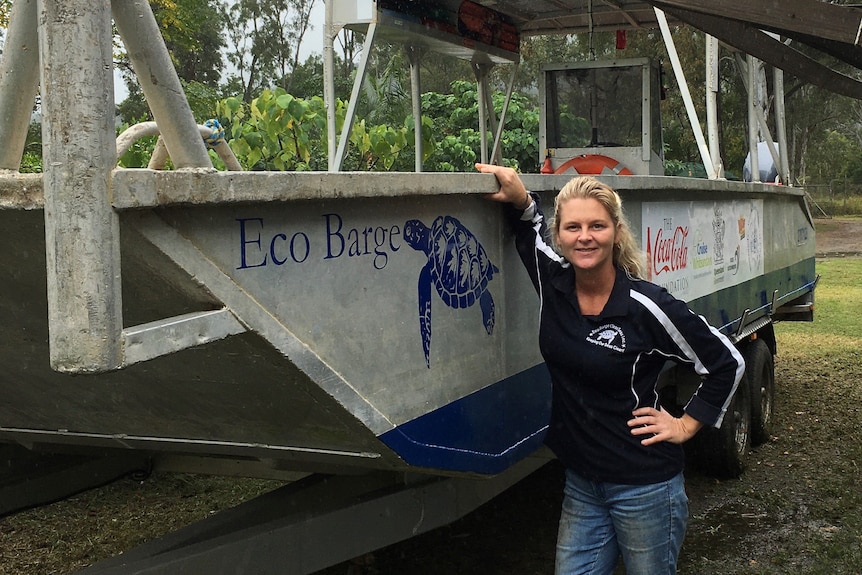
Libby Edge says better coordination is needed to prevent long-term damage to the reef. (Supplied: Whitsunday Turtle Rescue Centre)
“We wanted to get to it before the next high tide because once that high tide hits the top of a rock wall, [the debris] washes out to sea with our south-east trade winds,” she said.
“There’s still lot of it out there.”
Ms Edge said more needed to be done by vessel owners to protect their boats before cyclones and by authorities to coordinate salvages and clean-ups.
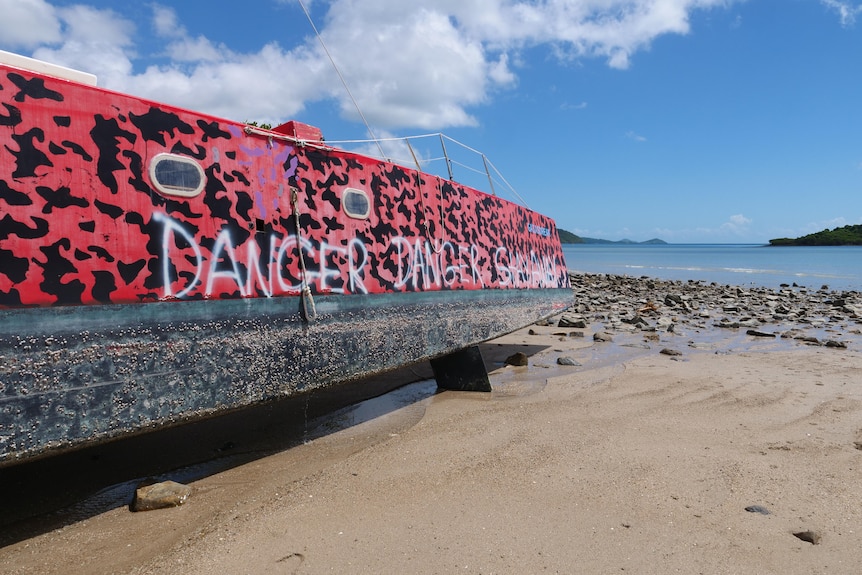
Some boat owners are trying to keep tourists away from their wrecked vessels. (ABC Tropical North: Liam McNally)
“They break up, and if they’re not insured then it becomes the community’s problem or MSQ’s problem,” Ms Edge said.
“Each time we have an event like this, the community really goes up in arms. It’s a very slow process to actually salvage those vessels.”
Next to Airlie Beach, the shallow Cannonvale Beach is home to turtles and dugongs attracted by its seagrass meadows.
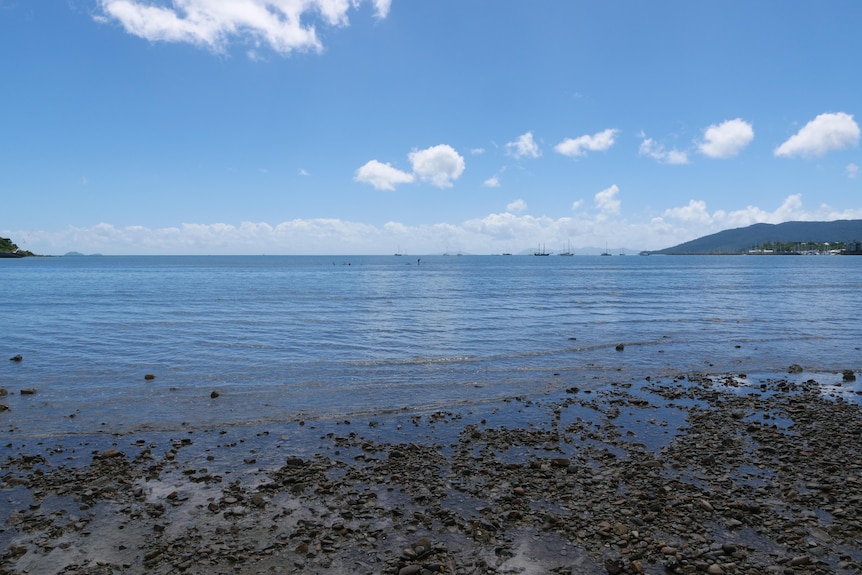
The seagrass meadows at Cannonvale Beach have been “scarred” by stranded boats. (ABC Tropical North: Liam McNally)
Reef Catchments Great Barrier Reef project officer Alexandra Williams ran a program to restore the meadows after they were damaged extensively by Cyclone Debbie in 2017.
She said post-Koji, the meadows had been scarred by boats and debris being dragged in and out with the tides.
“It’s very sad to be honest,” Ms Williams said.
“But we’ll get there. These ecosystems are pretty resilient, they do tend to bounce back.”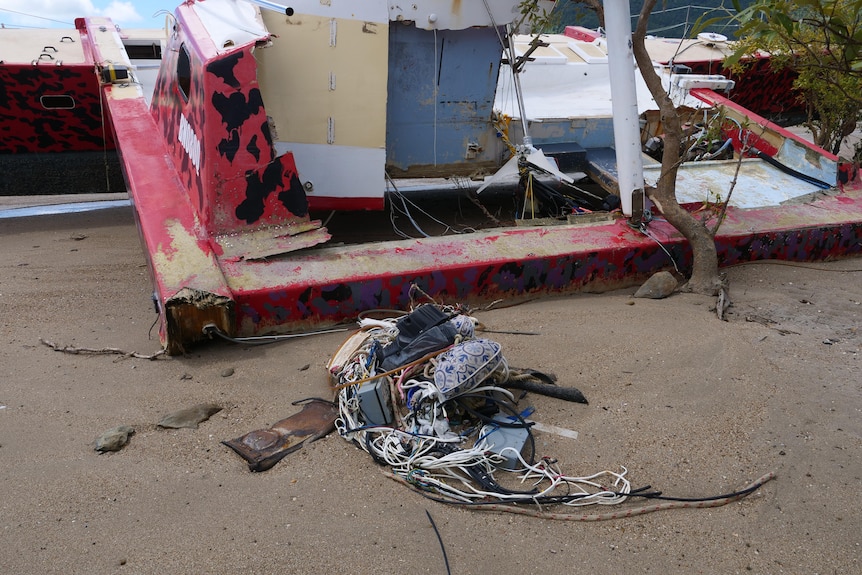
Large tides have forced some boat owners to take possessions off their boats and leave them on higher ground. (ABC Tropical North: Liam McNally)
How slow is too slow?
Mr Dillon said MSQ was forced to intervene in about half of all salvages along Queensland’s coast, which had run into the “hundreds” in the past 12 months.
He said the cost of salvaging a small boat ranged from $20,000 to $40,000, but the agency had previously had to pay “upwards of $600,000”.
“If we have to get contractors involved to remove pollutants, they have to be disposed of safely as well and that can drive the cost up considerably,” Mr Dillon said.
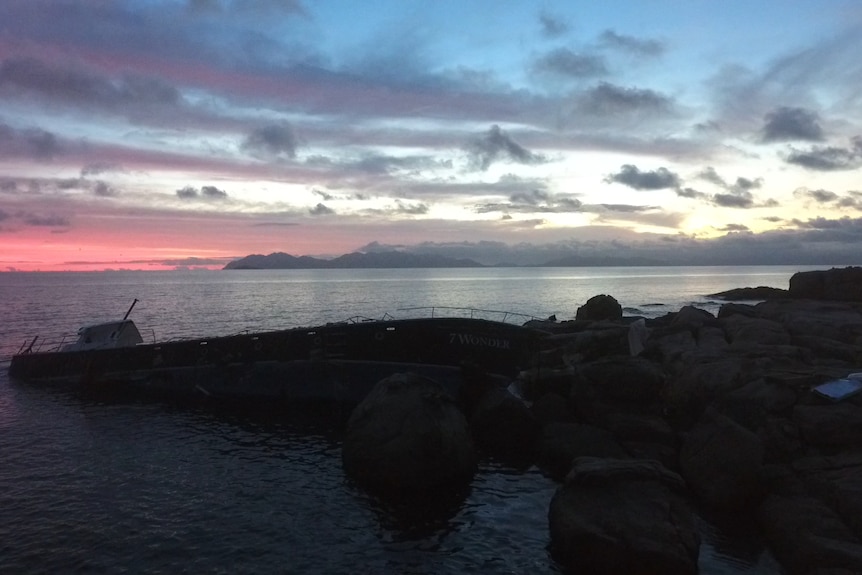
Maritime Safety Queensland says it has three boats left to recover in the region, with 7 Wonder among them. (Supplied: Stuart Fisher)
He said the availability of specialist contractors had also blown out salvage times, but vessels posing a higher environmental risk were prioritised.
“There’s a wide spectrum of considerations and we were very appreciative of the public being patient with the removal of those vessels,” Mr Dillon said.