
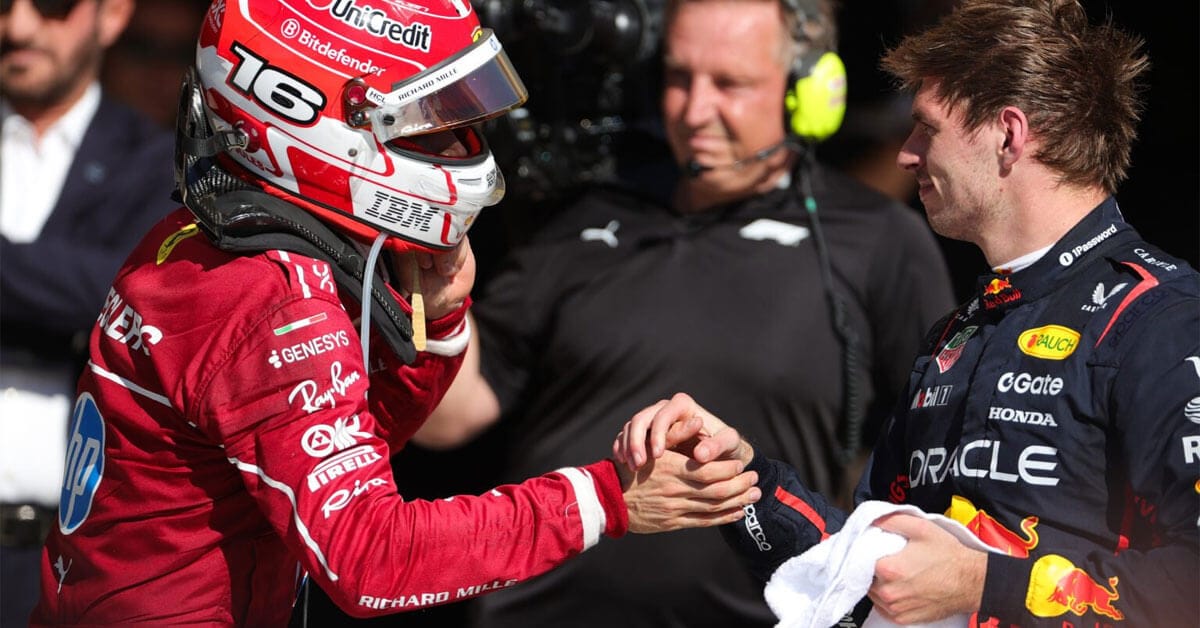
Red Bull has entered the 2026 Formula 1 season struggling with performance issues. Max Verstappen’s race pace is currently one second slower than Mercedes, a gap that initially seemed plausible given the relative youth of their powertrain department. The Anglo-Austro-Thai team is debuting with a fully in-house engine, yet after three races the unit is already showing potential to challenge the top engines on the grid. As Pierre Hadjar confirmed, “The engine is fine, we have a terrible chassis.”
What went wrong in Milton Keynes?
The 2025 championship saw Max Verstappen put heavy pressure on Lando Norris and Oscar Piastri. After the summer break, the Australian fell into a spiral of mistakes and has struggled to recover, while Norris had opportunities to take the lead. Red Bull knew that their world championship chances justified deploying resources even at the expense of 2026 development, yet this doesn’t fully explain how disappointing their car has been at the start of the season.
Is half a second of delay only about weight?
It’s no secret that the RB22 suffers from a weight problem. Sources suggest the car may only reach its minimum weight limit with a new chassis in 2027, but in the meantime, some new components could save at least 5 kg, potentially as early as the Silverstone Grand Prix. The additional weight explains some of the deficit, but questions remain about overall car performance.
Is Pierre Wachè really the problem?
Some fans are pointing fingers at Red Bull’s French technical director Pierre Wachè. During Red Bull’s dominant Auto-Venturi era, he was considered a ‘mastermind’ of the multiple championship-winning platform, second only to Adrian Newey. It’s unlikely that the talented engineer from Auchel suddenly became less capable of overseeing a high-level Formula 1 car after eight years as head of the technical office and managing three different aerodynamic regulations successfully.
Adrian Newey left Red Bull while the team’s infrastructure lagged, and it seems the correlation with the old wind tunnel worsened over time. Without accurate correlation, it’s impossible to build a winning car from scratch. Even when adapting new ideas to reality, the simulation tools must deliver realistic numbers. The closer these values are to real-world performance, the more simulation cycles produce tangible on-track improvements.
Rivals are ahead
Direct competitors have gained a clear advantage. McLaren and Aston Martin have moved to state-of-the-art wind tunnels, while Ferrari upgraded their infrastructure about a year and a half ago. Judging by appearances, Mercedes likely improved their simulation capabilities as well after recent ground effect struggles. Red Bull is lagging behind in this technical race, which partially explains the RB22’s shortcomings.
Could this be the right time to make a move?
At one point, Frédéric Vasseur tried to recruit Wachè along with his colleague Loic Serra (the two have been friends since their Michelin days), but there wasn’t an opportunity to negotiate a move. The respected 51-year-old had already accepted a long-term promotion to maintain stability while Newey transitioned from Stroll. With the current instability and Verstappen uncertain about his future, the timing might now be right to reconsider.
 Red Bull’s urgency with Verstappen
Unlike the era when Sebastian Vettel left for Ferrari, Red Bull cannot risk losing Max Verstappen while his contract runs until 2028, especially without a clear replacement. Losing him would signal downsizing to fans, shareholders, and investors. Discussions about his future are approaching, traditionally coinciding with the Monaco Grand Prix.
Project status and competition
Two years ago, Aston Martin, supported by strategic partners, attempted to recruit both Adrian Newey and Max Verstappen. Today, the state of their project is not convincing. Ferrari has produced a car superior to Red Bull’s while waiting for their new engine, and Mercedes still has arguably the best overall car. Currently, Ferrari’s SF-26 is far ahead of the RB22 in chassis and aerodynamic performance, likely by 8–9 tenths, while Red Bull’s internal combustion engine is weaker than expected. Aston Martin appears unlikely to achieve major success in the next two seasons.
Charles Leclerc: the hungry contender
With three world champions on the grid, Charles Leclerc remains determined to claim the title soon. Aston Martin approached him, but the Monegasque quickly backed off upon sensing potential risks. Naturally, this is an important year for Charles, who, as widely known, is unlikely to leave Ferrari easily. Nevertheless, he has subtly stated that he wants to clearly assess how this technical cycle unfolds.
It’s fair to say that today Charles Leclerc is the only viable alternative for any team that cannot secure Verstappen. Former Ferrari Sporting Director Laurent Mekies knows the 28-year-old intimately and is aware of the need to secure the Monegasque if Verstappen departs. Charles wants to be not just central, but the undisputed core of Ferrari’s project, which implies negotiating a more definitive contract extension focused on future conditions rather than purely financial terms. After all, why would a team not listen to a driver who wants to be at the center of everything?
Apr 6, 2026Elena Rossi
Let other Scuderia Fans know about us


