
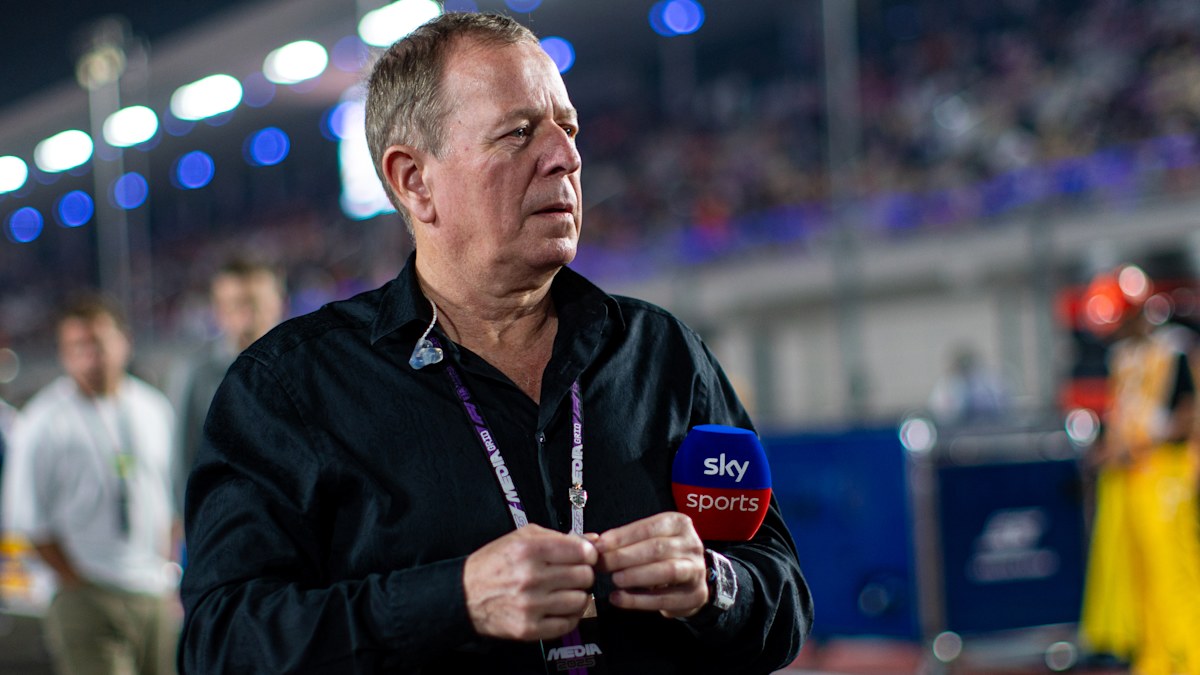
F1 pundit Martin Brundle has shared his thoughts on the 2026 engines after Ollie Bearman’s crash in Suzuka, saying the automation of the power unit is cause for concern.
Brundle admitted that the increasing risk of safety concerns in the paddock is due to driver admissions of behaviours in the power unit that seem automated and out of the driver’s control.
“I think the problem the drivers have got and one thing that really worried me was Lando Norris saying, ‘I didn’t want to overtake Lewis Hamilton, but my battery decided it did and then I had nothing to defend with’,” he admitted on Sky Sports F1 Show.
READ MORE: Reborn NRL star making a mockery of former coach
READ MORE: Tigers youngster banned for act after horror injury
READ MORE: Aussie grills ‘selfish’ Tiger Woods act amid ‘addiction’ battle
“Now, there’s a regulation in Formula 1. It’s been around forever.
“It’s very simple and far-reaching. The driver must drive the car alone and unaided. The driver shouldn’t have any surprises by a self-learning car.
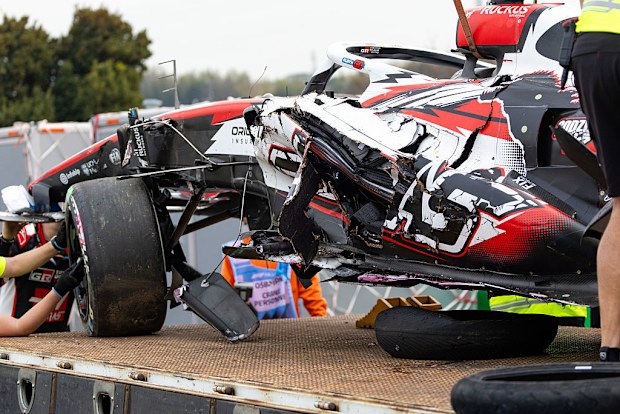
The damage to Ollie Bearman’s Haas VF-26 following his crash during the F1 Grand Prix of Japan. Getty
“They’ve got to get rid of that.
“I’m sure it’s not the work of the moment, but the power delivery must be proportional to what the driver is doing with the throttle. That’s a fundamental. It has to be linear, as I said.”
Brundle admitted that the problem is one that stretches further than just the drivers, encompassing track workers and paddock members in the FIA discussions set for a number of dates in April.
“It’s a big issue for the FIA because its driver safety is sacrosanct. I think they’re fourth in line in terms of priorities.
“The top priority is the fans because they’re paying to be there. They haven’t bought into any element of risk, and they have to be protected.
“Next up are the marshals, the corner workers, because they’re not being paid to be there, but they assume an element of risk because they’re trackside.
“Next up, for me, are the pitstop crew in terms of priorities. And finally, the drivers. The cars are pretty safe. Everybody’s health and safety is sacrosanct, but the FIA will now have to make a change for Miami because the drivers have voiced this. It’s very much out there.
“I would be pretty certain they’ve put that in writing through the Grand Prix Drivers’ Association as well. So, if a car flies into the crowd now and they haven’t done something, shown some due diligence on this, then the FIA will be in for the high jump.
“So, they will now have to do something and listen to the drivers. But we’re hamstrung. We’ve got a motor that turns out three times its electrical power compared to last year, and the battery depletes in any given decent straight.
“We’re between a rock and a hard place really on this because the hardware is just not up to it. And we’ve talked about this for three years now. We knew it was going to be like this.
“This is fundamentally flawed, but I think they should be able to smooth some of these elements out.”
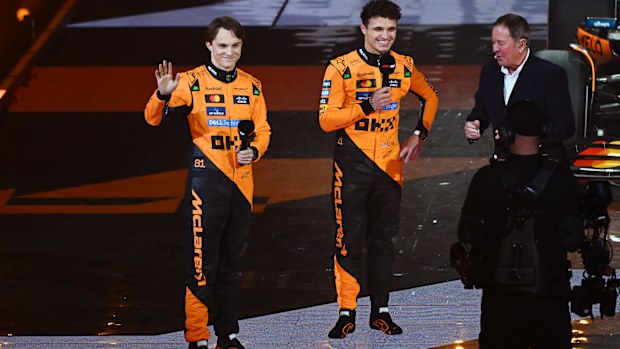
Oscar Piastri and Lando Norris are interviewed by Martin Brundle. Formula 1 via Getty Images
He also pointed to Bearman’s 50G crash and Franco Colapinto’s helpless position on the track as one that needed to be discussed in terms of driver safety.
He emphasised that Colapinto was a victim in the situation, his car having slowed significantly at the wrong place due to superclipping on the long chicane at Spoon.
The buzzword of the F1 season, superclipping is when the new hybrid engines quickly decide to harvest energy on straights, leaving drivers with a profound loss of speed, even if they haven’t lifted off the throttle.
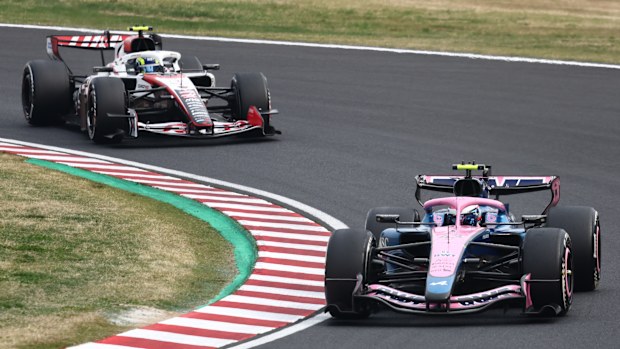
Franco Colapinto and Oliver Bearman at Suzuka Circuit. NurPhoto via Getty Images
“Well, it was high closing speeds. I think Franco Colapinto, I don’t think there was any malice in there,” Brundle said.
“He could have given him a bit more space. I suspect he was looking down at his steering wheel, trying to work out what was going on with a gutless racing car underneath him that wasn’t accelerating.
“Ollie’s obviously on full beans and coming at him. And they just met in the middle on a very long flat-out curve.”
“It’s always been an issue. It’s been an issue at Le Mans. It’s been an issue in Formula 1, cars slowing down in front of you with engine problems or whatever,” he further explained.
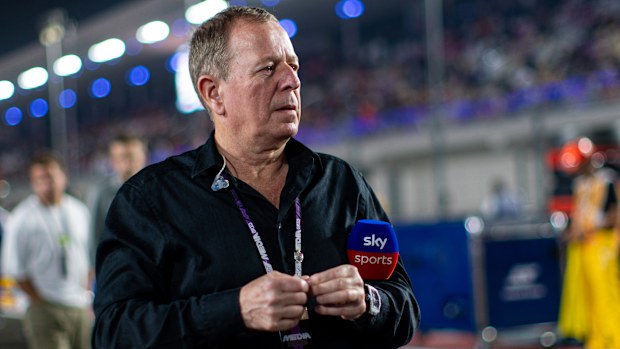
Sky Sports presenter Martin Brundle on the grid. Getty
“But back in the day, we probably had some clues that was going to happen. You could smell the oil burning, see some smoke, or hear an engine misfire.
“If a driver in front of you missed a gear when we had manual gearboxes, that happened a lot. So, you’re always ready for it.”
Drivers and teams have until May 2 to change and tweak their power units before the sport descends on Miami.