
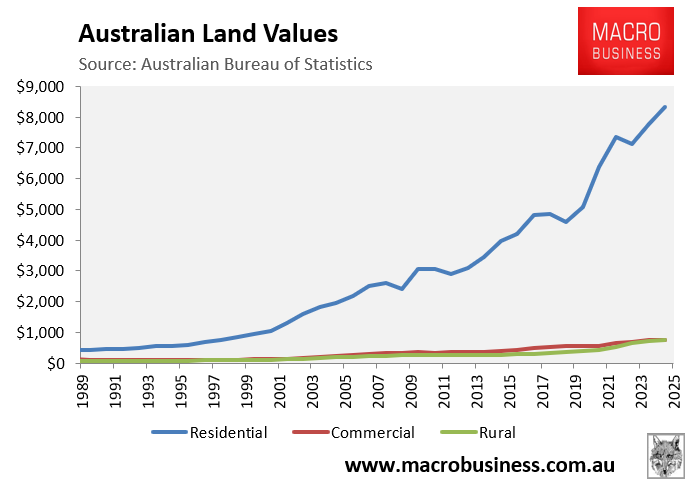
According to the Australian Bureau of Statistics’ (ABS) annual national accounts for 2024–25, the total value of residential land rose by 7.0% over the financial year to an all-time high of $8.3 trillion.
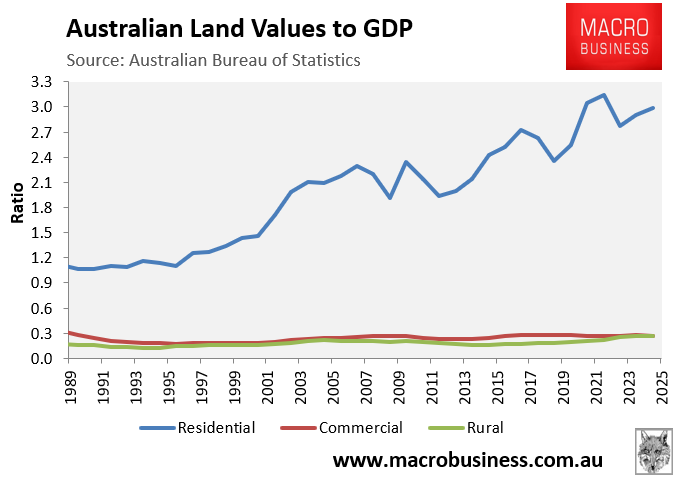
In 1989, the total value of residential land in Australia was 1.1 times GDP. By 2024–25, it had increased to 3.0 times GDP.
Advertisement
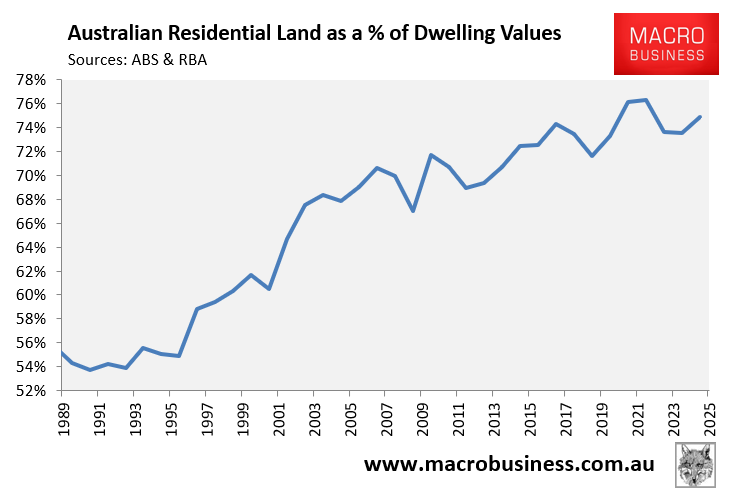
Land now makes up 75% of the value of Australia’s housing stock, up from 54% in 1990–91.
The HIA-Cotality Residential Land Report for the September 2025 quarter was released in February. It showed that land values have continued to climb, fueling the housing affordability crisis and restricting new home building.
Advertisement
According to HIA-Cotality, the median lot price in Australia increased by 46.2% since September 2019 and by an astounding 514% since September 2000:
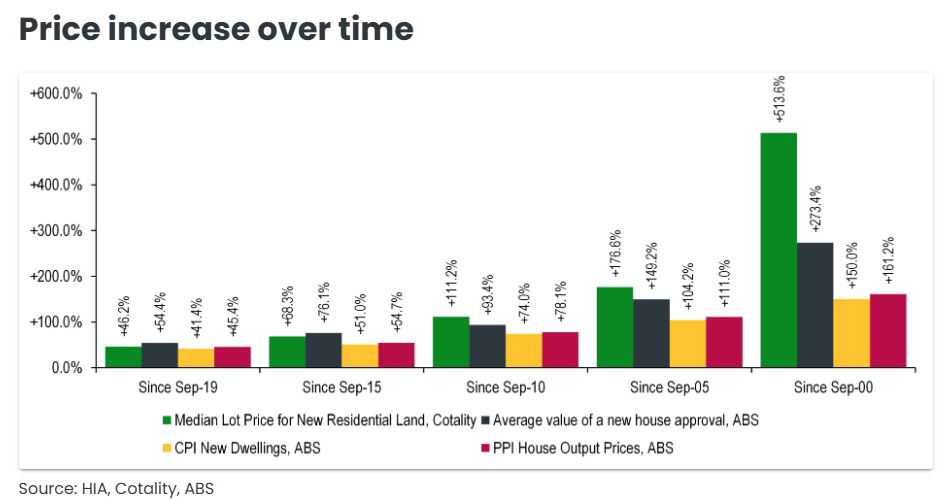
Over the same 25-year period, construction costs and the price of skilled labour increased by around 150%, according to HIA-Cotality.
Advertisement
The median lot values in all capital cities have experienced a significant increase over the decade leading up to September 2025, as demonstrated below:
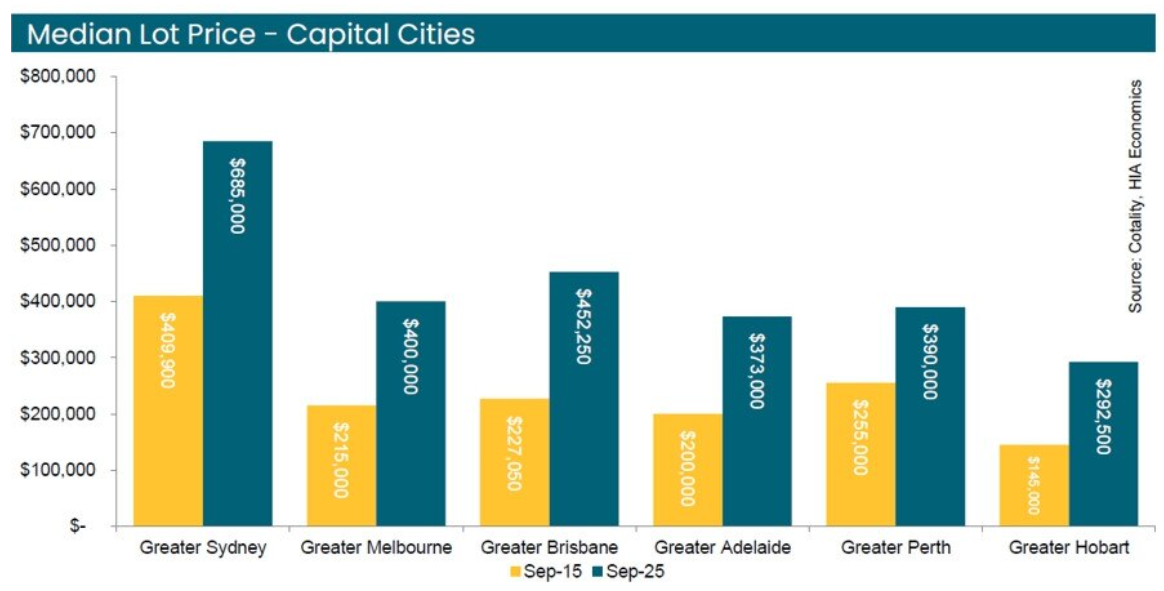
The following are the increases in lot prices across the six state capitals over the decade to September 2025:
Advertisement
Greater Sydney increased by $275,100 (67%). Greater Melbourne saw an increase of $185,000 (86%). Greater Brisbane: an increase of $225,200 (99%). Greater Adelaide saw a rise of $173,000 (87%). Greater Perth: a gain of $135,000 (53%). Greater Hobart: a rise of $147,500 (101%).
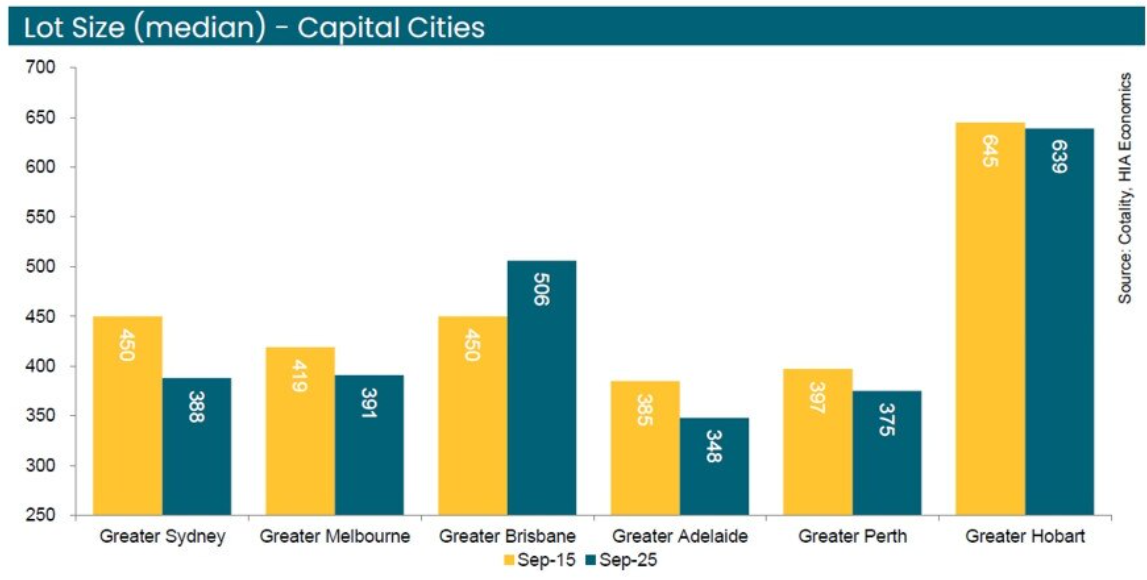
Over the same 10-year period, median lot sizes declined in all capitals except Brisbane:
Advertisement
As a result, lot prices per square metre rose even more aggressively across the capitals:
Greater Sydney: a rise of $1019 (102%). Greater Melbourne: a rise of $551 (106%). Greater Brisbane: a rise of $514 (102%). Greater Adelaide: a rise of $525 (97%). Greater Perth: a rise of $389 (57%). Greater Hobart: a rise of $225 (104%). 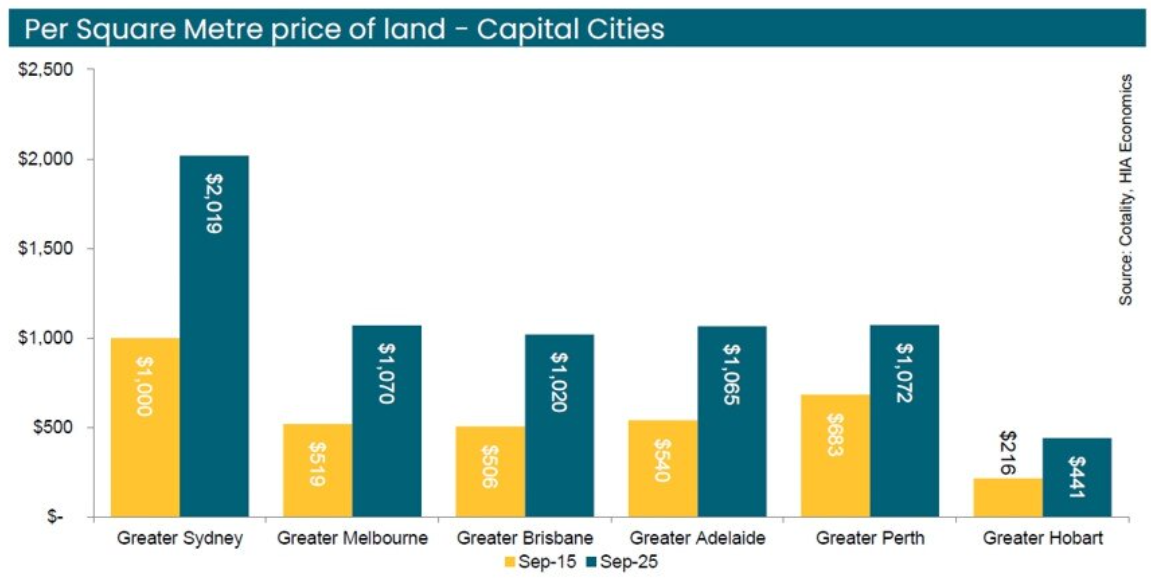
Advertisement
Last week, the Guardian’s Greg Jericho reported that nearly half (49%) of the rise in Australia’s household wealth in 2025 was driven by the appreciation of residential land values.
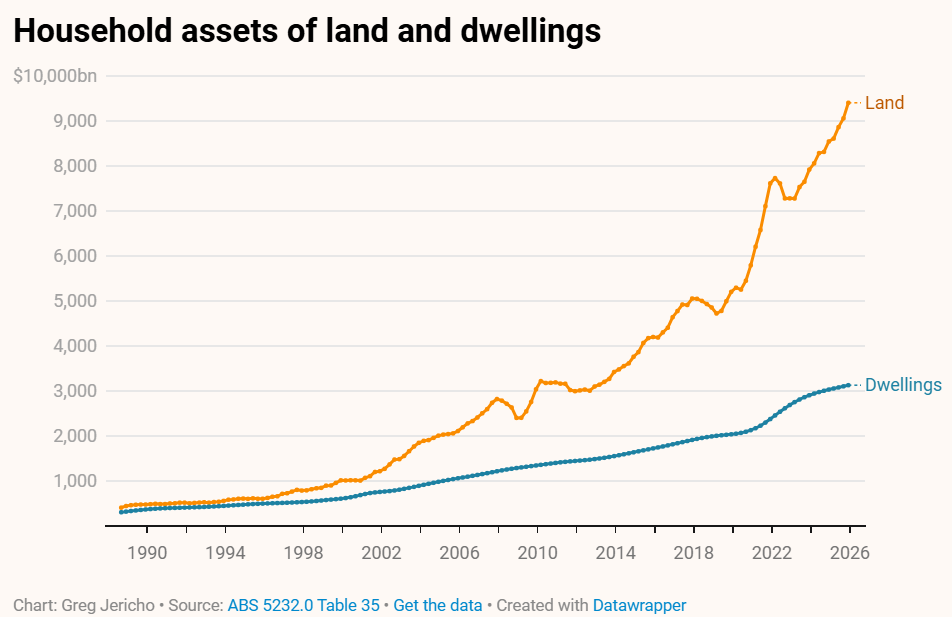
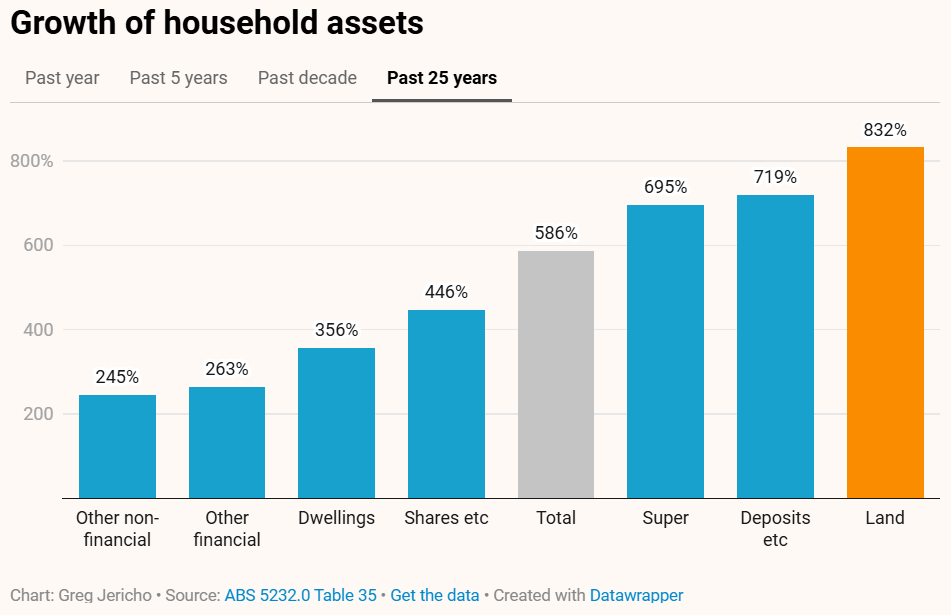
Jericho also showed that over the past 25 years, residential land has been the fastest-growing component of household assets, growing by 832%:
Advertisement
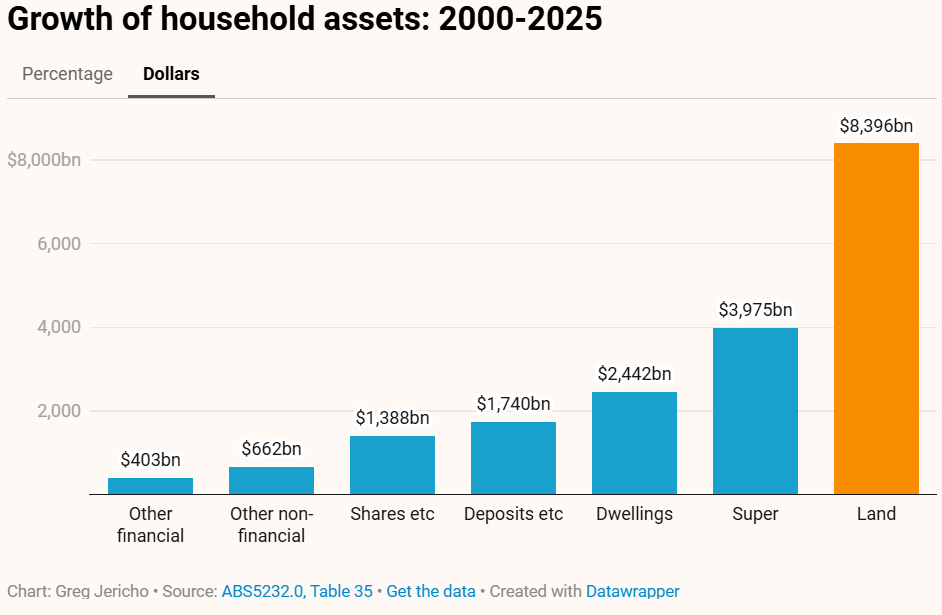
In dollar terms, residential land values have increased by nearly $8.4 trillion, easily exceeding every other asset class:
Advertisement
“The great Australian dream might be to own a home, but really it is the land on which your home is built that is of real value”, Jericho wrote.
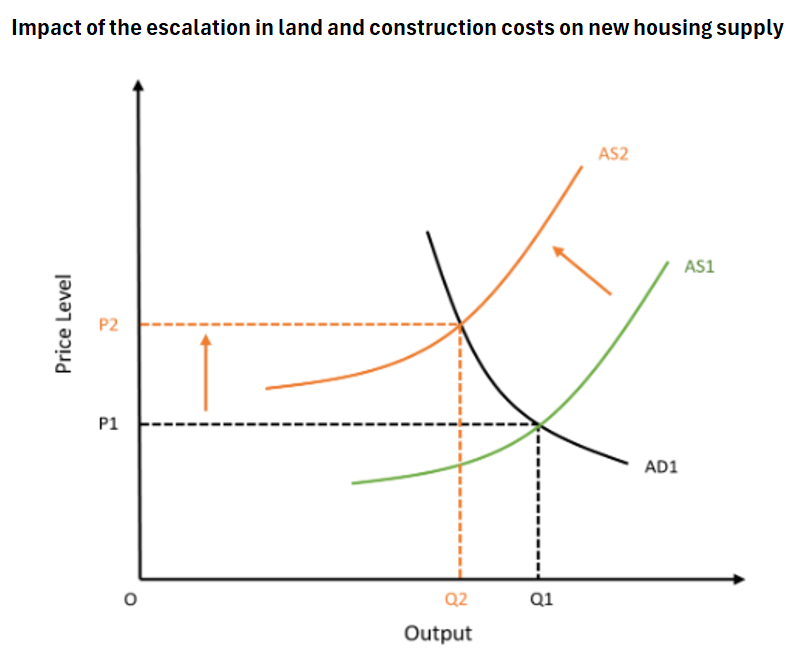
Strongly rising land prices, alongside higher material costs and labour shortages, present major roadblocks to building homes for Australia’s rapidly growing population.
Advertisement
The supply curve for housing construction has shifted leftward, reducing the number of homes that can be built at each price point.
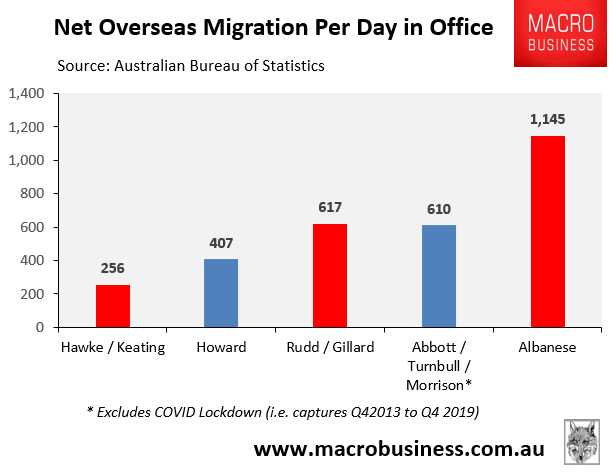
The federal government should have responded by lowering immigration to reduce demand. Instead, it chose to run the largest migrant intake in Australia’s history.
Advertisement
Accordingly, Australia’s housing market is suffering from chronic housing shortages, which the National Housing Supply and Affordability Council and KPMG forecast will worsen.
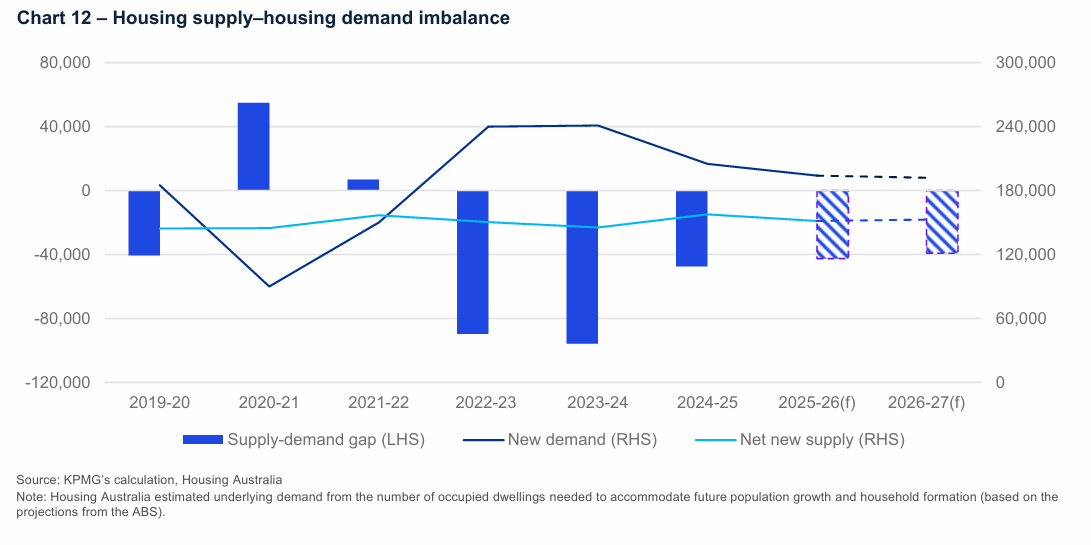
Chart by KPMG
The only realistic solution to Australia’s housing shortage is to emulate Canada by aggressively cutting immigration so that population demand matches supply.
Advertisement