
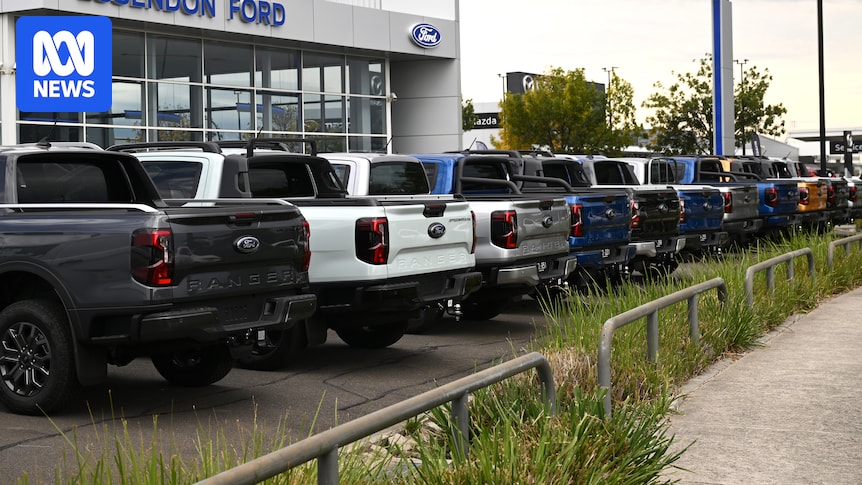
The cost of filling up Australia’s most popular car has jumped more than $100 since the war began.
According to RACV, in 2025, 56,555 Ford Rangers were sold, making it the most popular car that year.
The base model has an 80-litre tank capacity and a diesel engine with an efficiency of 7.2L/100km.
In February this year, based on the national average diesel price, the ute would have cost $144.16 to fill up and $12.97 to travel 100km.
Iran war live updates: For the latest news on the Middle East crisis, read our blog
In comparison, the week ending March 29, the same tank cost $248 to fill up, and it would have cost $22.32 to travel 100km.
Of the top 10 most popular cars sold in 2025, five of them were diesel tanks, three petrol, one hybrid and one electric vehicle.
According to Australian Institute of Petroleum (AIP) data, the average national price of diesel has increased by 129.8 cents per litre since the week ending February 22.
The average national price of unleaded 91 has increased 82.4 cents per litre in the same period.
On April 1, the federal government halved the fuel excise on petrol and diesel, reducing the cost by 26.3 cents per litre.
However, the average price still remains significantly higher than in February.
Of the most popular cars, the Toyota RAV4 is the most fuel-efficient due to it being a petrol hybrid.
The GX model has a fuel efficiency rating of 4.7L/100km according to Green Vehicle Guide.
The least efficient is the Mitsubishi Outlander with a rating of 8.1L/100km for the 4WD Aspire model.
‘Gone up about $100’
Sam Yarwood purchased his HiLux in 2025. (Supplied)
Locum pharmacist Sam Yarwood purchased a second-hand HiLux in 2025 in search of a reliable car he could use for camping and four-wheel driving.
“At the time, diesel and unleaded fuel were basically the same price, so the price of diesel didn’t factor in much,” he said.
He recently filled up before a drive from Rockhampton to Toowoomba, paying $192 for 60L of diesel.
“The cost of a tank has gone up by about $100,” he said.
“When I do have to travel for work and drive a long distance, despite the fact I am paid 99 cents per kilometre as a travel allowance, it really eats into that now.
“Before the war started, I was probably paying a $1.84 a litre of diesel, and now it’s up above $3.20 some places.”
[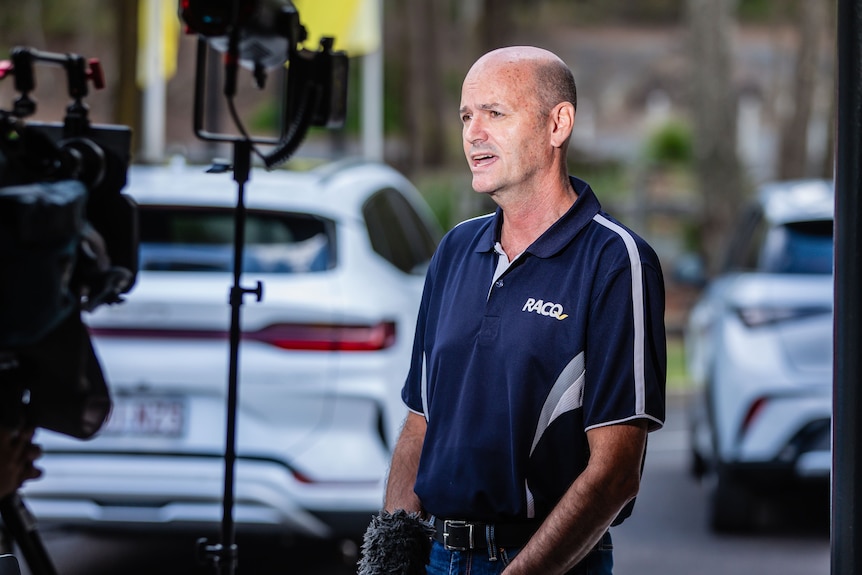
Andrew Kirk said hybrids and EVs were gaining in popularity. (Supplied: RACQ)
RACQ’s principal technical researcher, Andrew Kirk, said many Australians preferred diesel vehicles because they are typically more fuel efficient than the petrol equivalent.
“The reason that people buy those [larger vehicles] is primarily because they have loads to tow, be it a caravan or boat, or they like to go off-road and four-wheel driving,” Mr Kirk said.
However, he said the rising cost of fuel meant hybrids and EVs were becoming increasingly popular.
“The cost of fuel is starting to bite and people are starting to realise that this high initial purchase price of the EV is going to get paid back relatively quickly now because the prices of EVs have come right down,” he said.
However, Mr Kirk acknowledged that for many regional and rural Australians 4WDs and utes were a necessity.
RACQ fuel saving tips: Watch the road ahead and drive smoothly.Brake and accelerate gently.Maintain tyre pressure – keep your tyres at the maximum recommended inflation.Remove excess weight and reduce aerodynamic drag.Use the right gear for the conditions.Maintain a steady cruising speed on highways and use cruise control where appropriate.
Mr Yarwood said he was fortunate to be able to absorb increased cost for now but said during a cost-of-living crisis, any increase to regular expenses would have flow-on effects for everyone, even people without cars.
“There are going to be a lot of flow-on increased prices due to logistics in the supply chain,” he said.
“Ultimately, we have to remember, we’re in a very lucky country. And if the worst part of this whole war is that we’re paying a bit more at the pumps, then we’ve still got off pretty easy.”
Loading…