
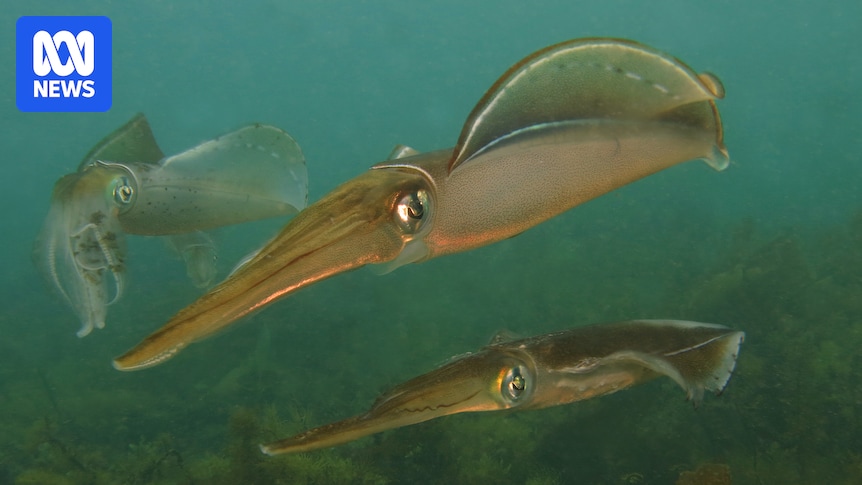
The sighting of a large squid off Kangaroo Island and smaller squid at Port Elliot has given rise to hope after the species’ localised decimation last year.
Southern calamari were among species that disappeared from parts of South Australia’s coastline when the harmful algal bloom erupted in early 2025 and killed countless marine animals.
The Gulf of Saint Vincent and waters off the Fleurieu Peninsula, Kangaroo Island, the South-East and Yorke Peninsula were among those affected the worst.
Research and Discovery Coastal Tours Kangaroo Island on Easter Sunday posted on social media that they had spotted their first large squid in nearly a year.
“Nature is resilient,” it said.
SA fishers demand urgent action to protect stocks
Port Elliot’s Andy Alford told 891 ABC Adelaide that fishers had seen squid return to Encounter Bay — albeit in very small sizes — over the past four weeks.
“It’s actually taken them a long time to come back here from other areas and I’d suggest it’s because most of our area was completely decimated,” he said.
He wanted authorities to consider a 12-month ban on fishing for squid to help the population properly recover.
“I’m sure it wouldn’t hurt anybody to go another year to get a few, just to help the ecosystem out,” Mr Alford said.
Fishers last week called for the temporary Gulf of St Vincent and Kangaroo Island bag limit restrictions for recreational fishers to remain in place well past its set end date of July.
Calamari fishers in particular have warned that any lifting of the restrictions in mid-2026 would be a threat to the sector’s survival.
RecFish SA executive director Asher Dezsery said their network of 300,000 people in SA and tackle shops had largely suggested giving squid “a break”.
He said there were reports of only small numbers of squid in the Spencer Gulf.
“They’re certainly in strife in the Gulf of St Vincent, so we want to do what we can to look after them,” Mr Dezsery said.
“We are seeing limited eggs being reported through the last breeding season, and some fish turning up, but we really need to start the conversation of how we can help these recover and what recovery looks like moving forward.”
‘Rock stars of the ocean’
SA Research and Development Institute (SARDI) executive director Mike Steer described southern calamari as the “rock stars of the ocean” because they “live fast and die young”.
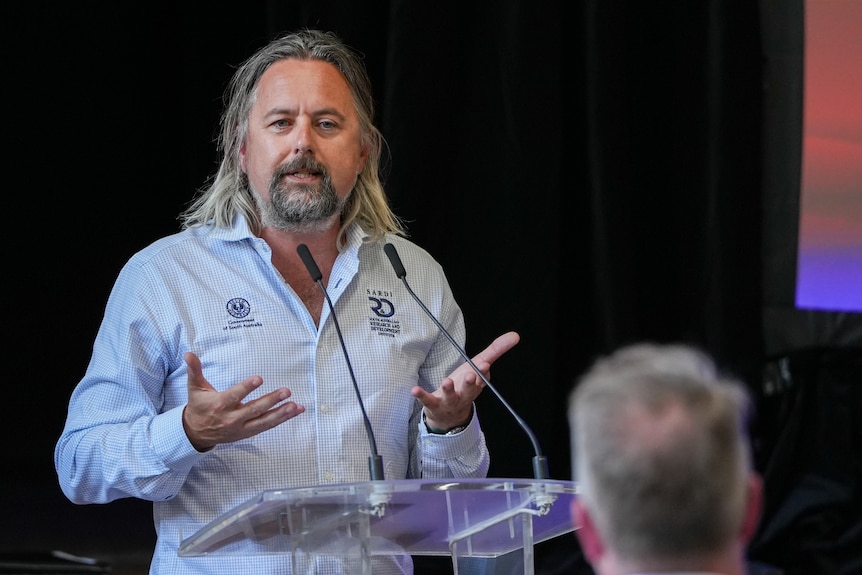
Mike Steer says squid grow and reproduce quickly. (ABC News: Daniel Taylor)
“[This] means they can reproduce really quickly over short timeframes and respond quickly,” Professor Steer said.
He said their life span was about 12 to 18 months and they grew exponentially.
“They’re really fast growers and then, towards the end of their life cycle, they prolifically reproduce, so the squid you buy in the seafood shops are anywhere from six to 12 months old,” Professor Steer said.
“Calamari will spawn throughout the year and they’ll just move around the gulf, anywhere the clear water is, so it’s not like we’ve got to wait for a particular season to pass.”
Fears for stingray populations as algal bloom moves north
Professor Steer said SARDI drew its numbers from commercial sampling and bycatch, or they contracted commercial fishers to do target surveys or sent divers underwater looking for eggs.
“We can still see in the Gulf of St Vincent that calamari are heavily impacted and of our main concern,” he said.
He said that while the bloom had diminished significantly, there remained “a little patch hanging around on the western side of Yorke Peninsula around Moonta Bay, Port Hughes and Port Victoria”.
Professor Steer said SARDI was monitoring squid numbers in the Spencer Gulf.
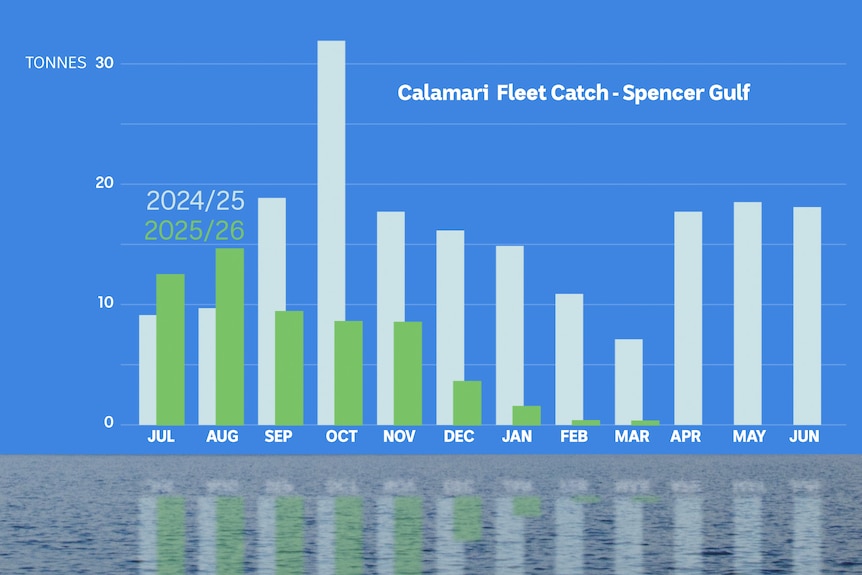
A graph showing the calamari catch, in tonnes, in Spencer Gulf before and after the start of the SA algal bloom. (ABC News: Stephan Hammat)
Commercial data seen by the ABC shows the catch has dropped since September 2025.
“When we pull all the information together, we match it against a road map that we’ve got [PIRSA’s Algal Bloom Fish Recovery plan], a series of decision rules that are publicly available, and that will enact a management response where a change in management is needed,” Professor Steer said.
“We’ll provide that information to decision-makers and they’ll make a decision on the basis of those numbers.”
He said the blue swimmer crab was another species, based on anecdotal information, that was showing positive signs of recovery.