
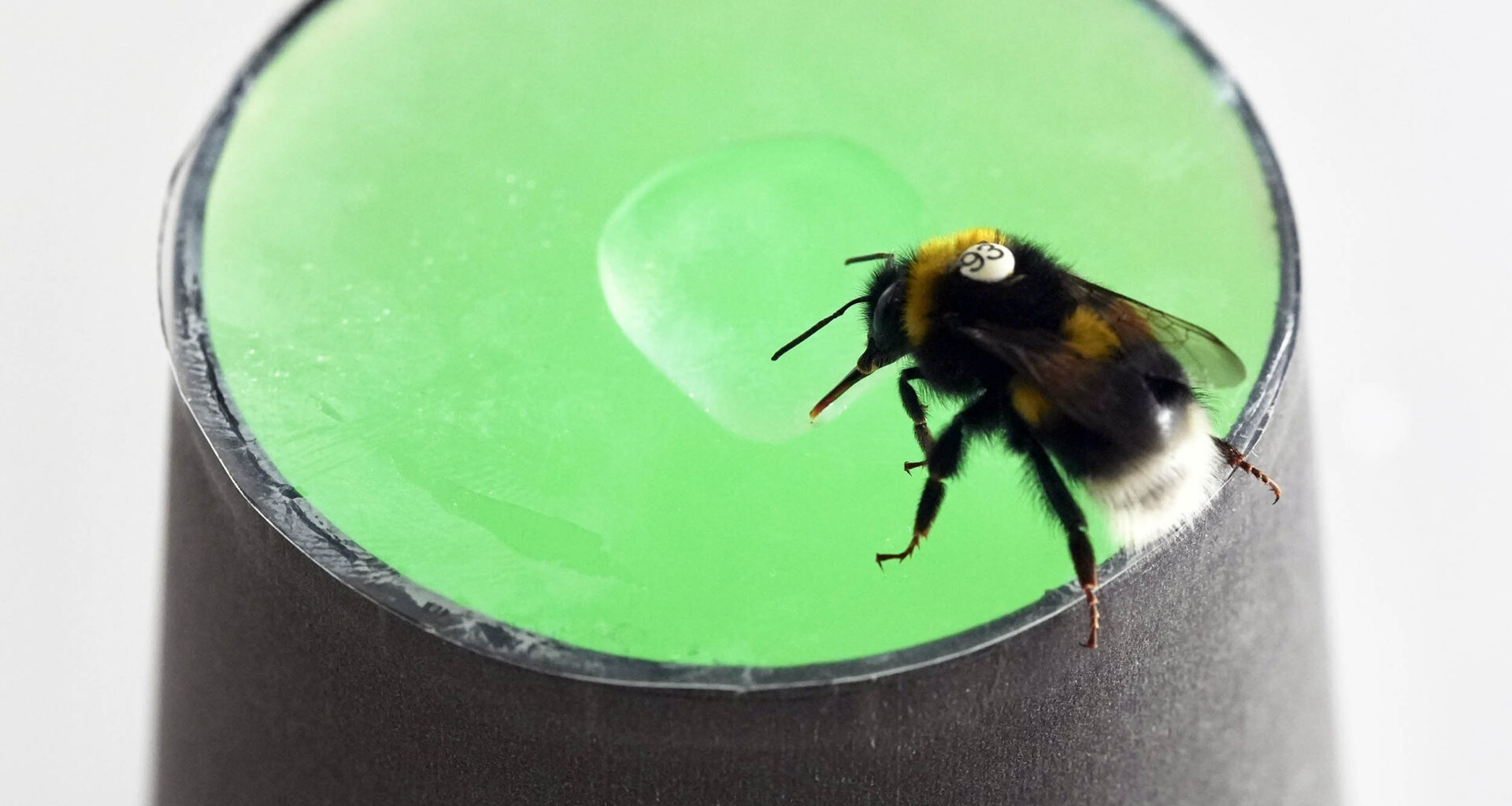
A tiny insect with a fuzzy body might seem simple at first glance, but bumblebees continue to surprise scientists with their hidden abilities.
Recent research shows that bumblebees can understand rhythm in a way that was once thought possible only for larger animals.

This discovery opens a new window into how even small brains can perform complex tasks.
How bumblebees pick up on rhythm
Bumblebees are not known for elegance, and their buzzing flight often looks clumsy. Yet, scientists have found that these insects can detect patterns in rhythm.
Even more impressive, bees can recognize the same rhythm when the speed changes. This ability is called flexible rhythm perception.
Until now, only a few mammals and birds have shown this skill, which makes the discovery even more exciting.
The bumblebee brain “did something very sophisticated – and that’s like, wow!” said Peter Cook, a behavioral neuroscientist at New College of Florida who was not involved in the research.
Why this ability matters
Many insects can copy simple, repeating patterns. For example, crickets chirp in steady rhythms, and fireflies flash in sync.
But recognizing a pattern when its speed changes is much harder. Scientists once believed that only animals with large brains could do this. This belief is now changing.
A team led by Zijie Zeng from Southern Medical University decided to test bees because of their known intelligence.
Bees have already demonstrated skills like simple tool use and social learning. These abilities suggest that bees might also handle rhythm in a more advanced way.
Blinking lights revealed everything
The research team designed a clever experiment. Bees entered a small box with two upside-down cups.
Each cup had a green light that blinked in a pattern. One pattern led to a reward – sugar water – while the other offered nothing.
The bees learned to tell the difference between the two patterns. After some practice, they started choosing the correct cup more often.
Even when the sugar water was removed, bees still followed the rhythm that once gave a reward. This shows that they were not guessing – they were using memory and pattern recognition.
Rhythm at different speeds
The most interesting part came next. Scientists changed the speed of the blinking lights. Some patterns became faster, while others slowed down. Even with these changes, bees still picked the correct rhythm.
“Imagine you’re listening to a song, and it’s slowed down or sped up, but you can still recognize it,” said study co-author Cwyn Solv.
“That’s not because you’ve memorized one single detail, but because you’ve grasped the whole structure.”
This shows that bees understand the overall pattern, not just a fixed version of it. This level of thinking is quite advanced for such a small brain.
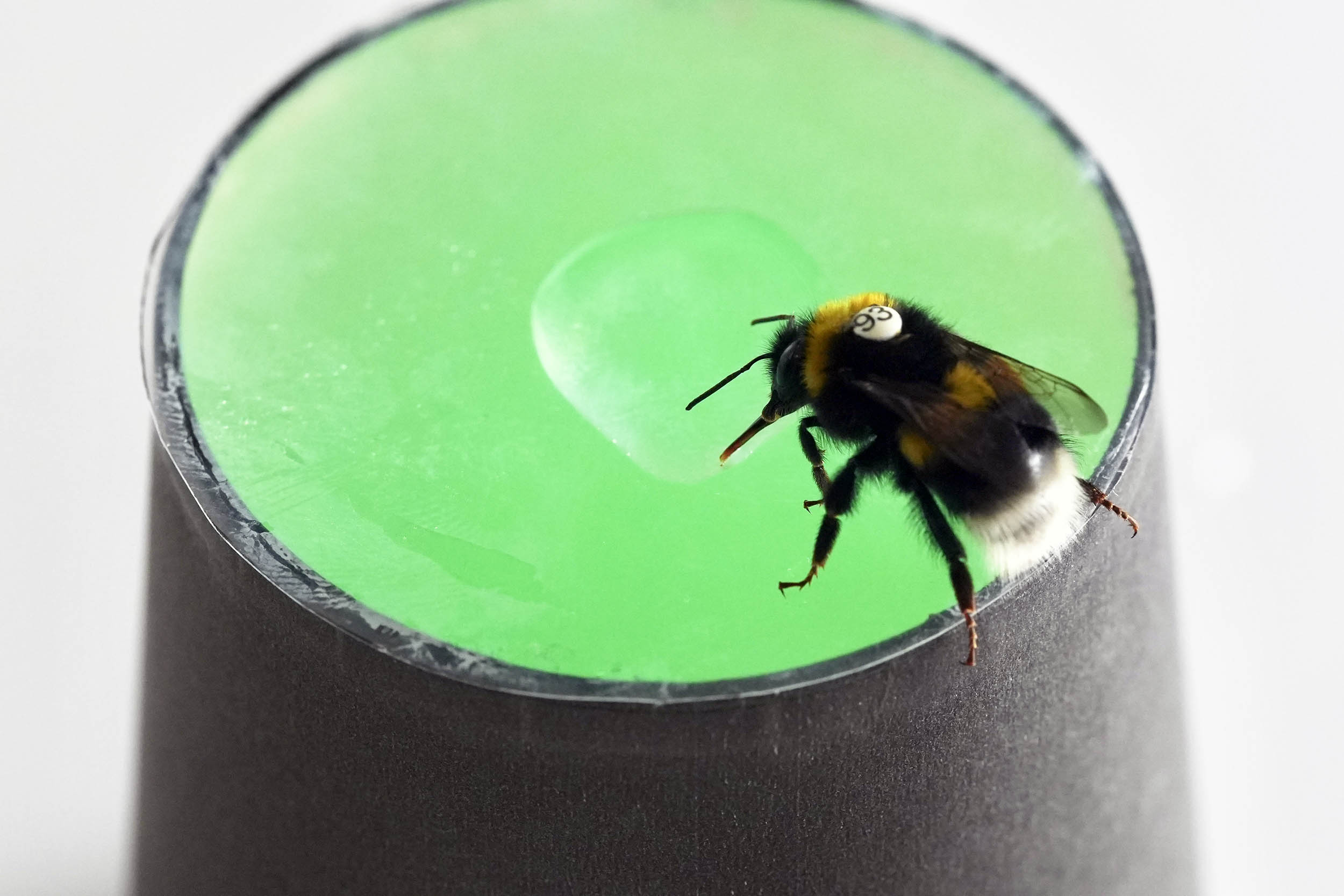 A bee sitting on an artificial flower used in the research experiments. Credit: Bee lab at Southern Medical University. Click image to enlarge.Rethinking animal intelligence
This discovery adds to growing research on animal musicality. In the past, scientists believed that rhythm skills were linked to language or vocal learning, limiting such abilities to humans and some birds and mammals.
However, new findings challenge this view. For example, a sea lion named Ronan can move in time with different beats.
Now, bees join this list, suggesting that rhythm perception may serve a deeper purpose in nature.
Rhythm in a bumblebee’s daily life
Scientists still do not fully understand why bees have this ability. Andrew Barron from Macquarie University offers one possible explanation.
Bees live in complex social groups and interact with a busy environment. Recognizing patterns may help them survive and communicate.
“Rhythms are everywhere in a bee’s natural world, and so much of interacting with the world is about pulling out repeating patterns,” said Barron.
Flowers bloom in cycles, daylight changes regularly, and hive activities follow routines. A strong sense of rhythm could help bees make better decisions in such environments.
Tiny brains, complex thinking
This study changes how people think about intelligence in insects. A tiny brain does not always mean simple behavior.
Bumblebees show that even small creatures can process information including rhythm in smart ways.
This discovery also raises new questions. What other hidden abilities do insects have? How do these skills develop? Scientists will continue to explore these ideas.
For now, one thing is clear. The next time a bumblebee buzzes past, it may not just be flying randomly. It might be following patterns and rhythms in ways that humans are only beginning to understand.
The study is published in the journal Science.
—–
Like what you read? Subscribe to our newsletter for engaging articles, exclusive content, and the latest updates.
Check us out on EarthSnap, a free app brought to you by Eric Ralls and Earth.com.
—–