
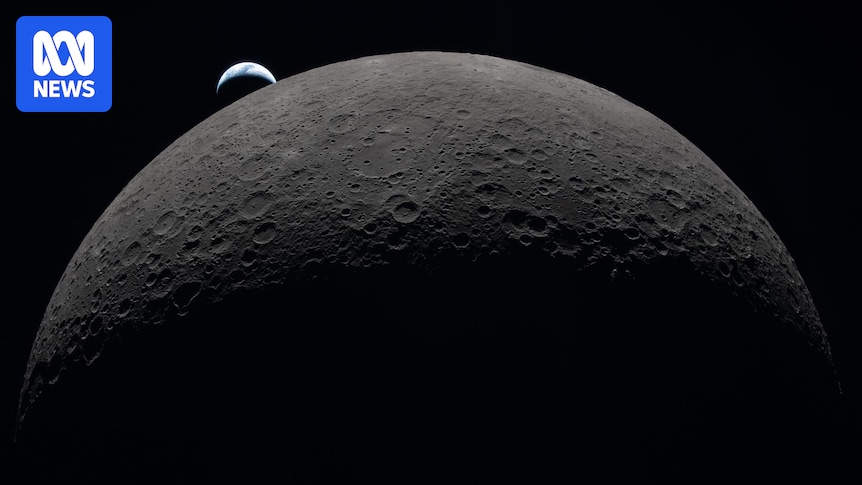
A record-breaking voyage, an earthset in silence, and a total solar eclipse — astronauts on the Artemis II mission experienced sights no human has witnessed in half a century.
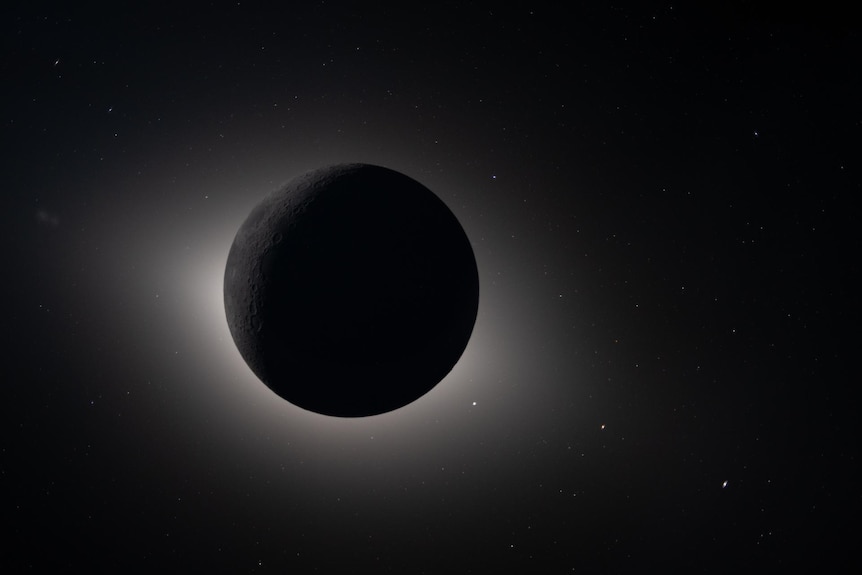 The Moon fully eclipsing the Sun, creating nearly 54 minutes of totality.(Supplied: NASA)
“After all the amazing sights that we saw earlier, we just went sci-fi,” astronaut Victor Glover said, watching the Sun slip behind a Moon aglow with Earth’s reflected light.
The Moon fully eclipsing the Sun, creating nearly 54 minutes of totality.(Supplied: NASA)
“It just looks unreal. You can see the surface of the Moon from the earthshine… you can actually see a majority of the Moon. It is the strangest-looking thing.”
Those were the words of the pilot on humanity’s first mission to the Moon in more than half a century — a journey that has carried humans farther into space than ever before.
On Tuesday, the Artemis II crew — which includes commander Reid Wiseman and mission specialists Christina Koch and Jeremy Hansen — swept around the far side of the Moon in a high-stakes dress rehearsal for the landing missions to come.
In a single, breathtaking arc, they vanished behind the Moon, gazed upon terrain no human eyes had ever seen in full, and witnessed a total solar eclipse from deep space — before using the Moon’s gravity to sling themselves back toward Earth.
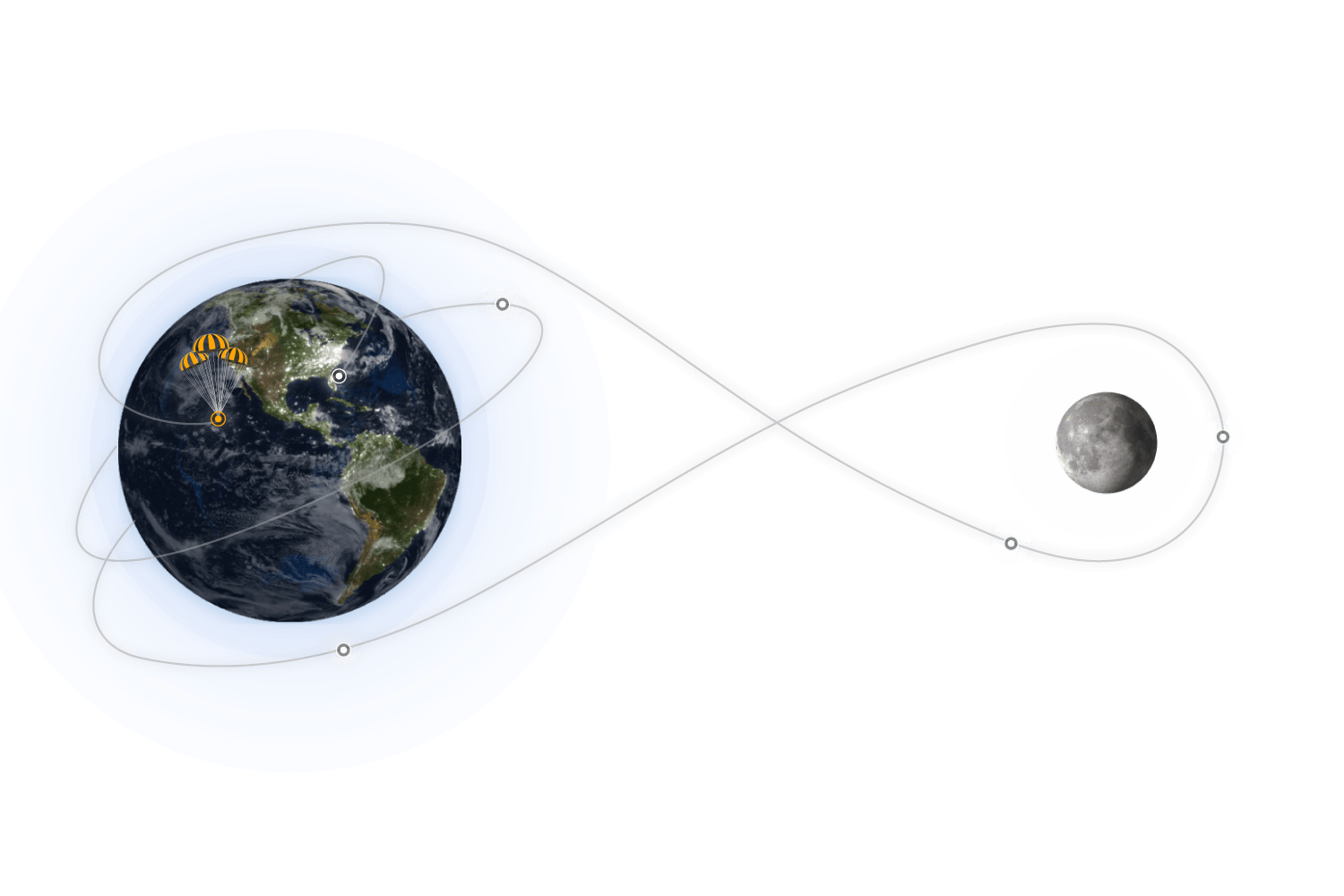 The path the Orion spacecraft has followed on its 10-day mission in deep space.(ABC News: StoryLab)
It was a day steeped in history and in data.
More than 50 gigabytes of images and information were beamed back from 32 cameras and devices aboard the Orion spacecraft, capturing details that will help guide the next generation of lunar explorers.
The seven-hour journey began with a voice from the past.
“Welcome to my old neighbourhood,” Apollo 13 commander Jim Lovell said in a message recorded just months before his death last year.
“It’s a historic day. I know how busy you’ll be, but don’t forget to enjoy the view. Good luck, and Godspeed.”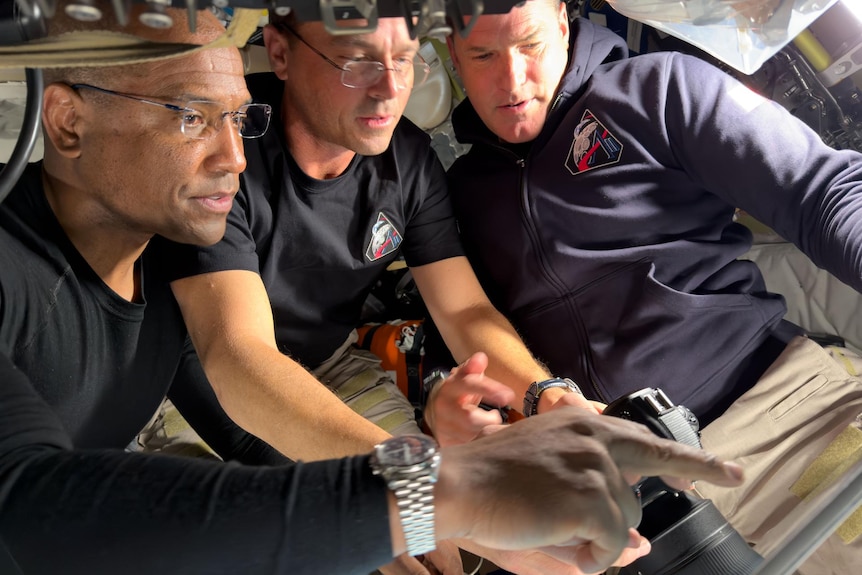 Victor Glover, Reid Wiseman and Jeremy Hansen prepare for their journey around the far side of the Moon.(Supplied: NASA)
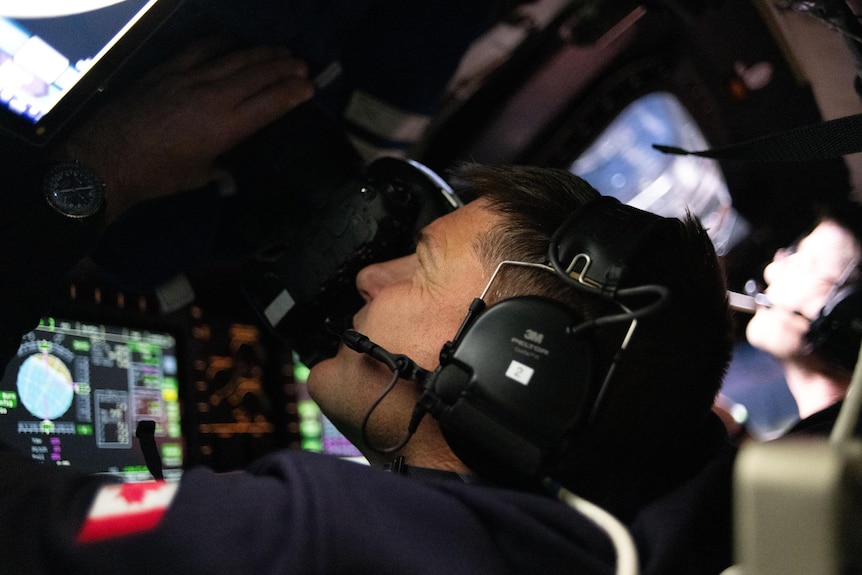 Jeremy Hansen peers through his camera viewfinder, pointing it through the cabin window.(Supplied: NASA)
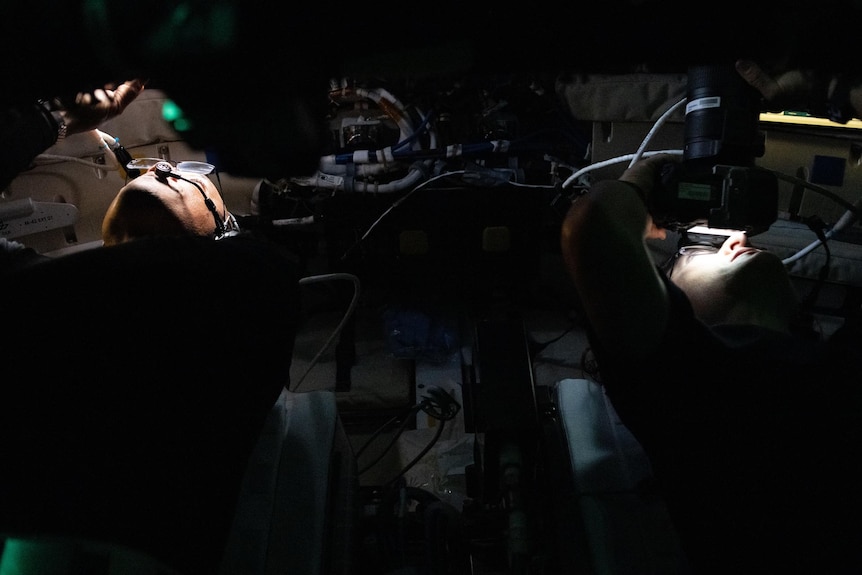 Victor Glover and Christina Koch gather images and observations of the lunar surface to share with the world.(Supplied: NASA)Going the distance
Moments later, the Artemis crew surpassed the distance record set by Apollo 13 in 1970 — flying beyond 400,171 kilometres from Earth.
“We will continue our journey even further into space before Mother Earth succeeds in pulling us back to everything that we hold dear,” Colonel Hansen said.
“But we choose this moment to challenge this generation and the next to make sure this record is not long-lived.”
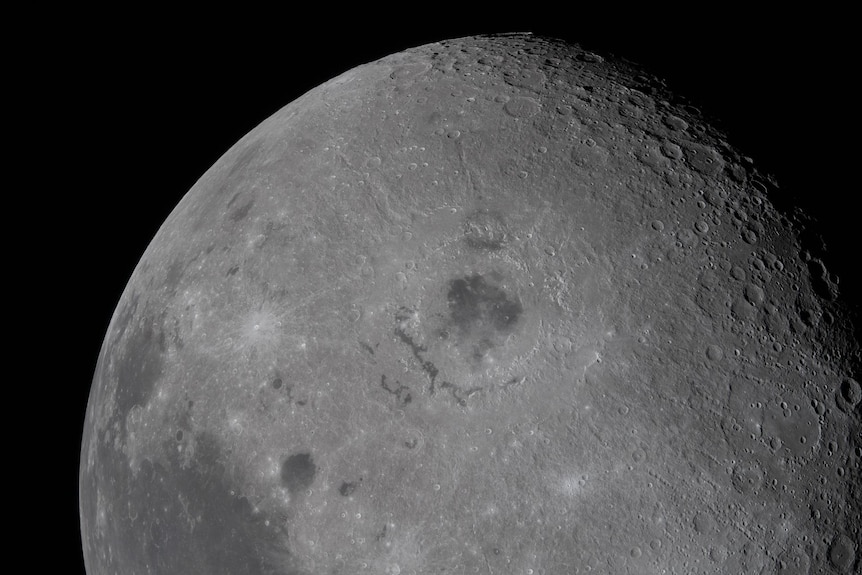 Orientale basin is visible in the centre.(Supplied: NASA)
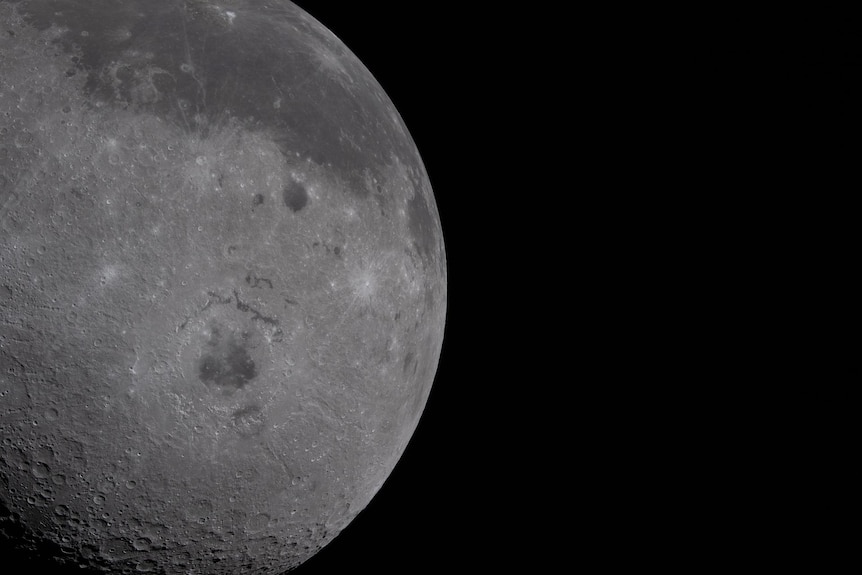 The near side of the moon, characterised by the dark patches of ancient lava, is visible on the top third of the lunar disk.(Supplied: NASA)
To mark the milestone, the crew suggested names for two newly observed lunar craters — one for their spacecraft, named Integrity, and another for the mission commander’s late wife, Carroll.
“There’s a feature in a really neat place on the Moon … a bright spot,” Captain Wiseman said, his voice breaking.
“We would like to call it Carroll.”
For a moment, grief and wonder shared the same orbit.
“Such a majestic view out here,” he added, composing himself as he returned to photographing the surface below.
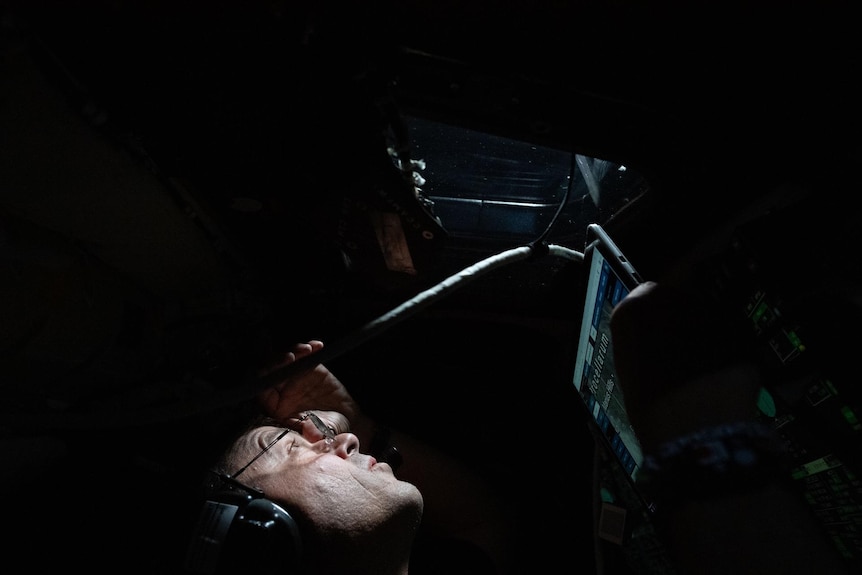 Reid Wiseman peers out the window of the Orion spacecraft.(Supplied: NASA)Mapping the Moon
While the world watched in awe, the crew got to work.
From their unique trajectory, they captured detailed imagery to support future missions, from landing site selection to navigation planning.
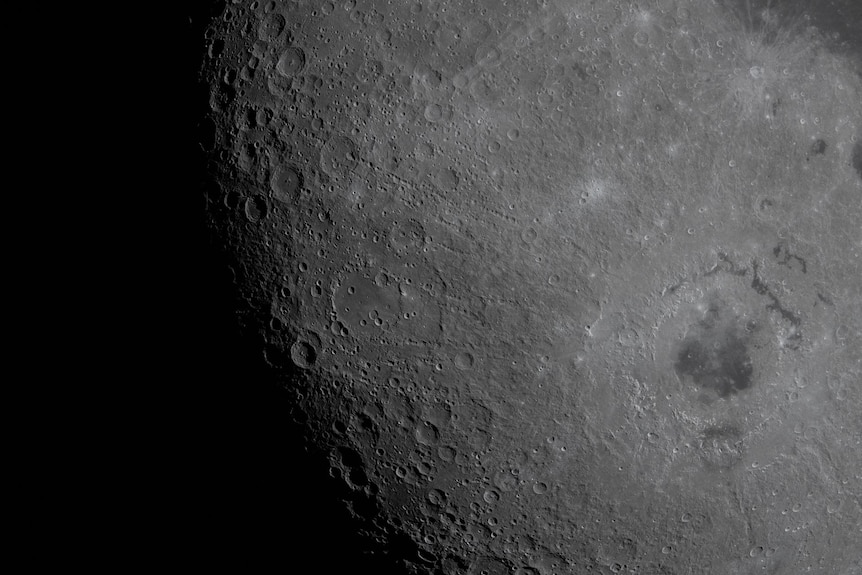 The rings of the Orientale basin, one of the Moon’s youngest and best-preserved large impact craters.(Supplied: NASA)
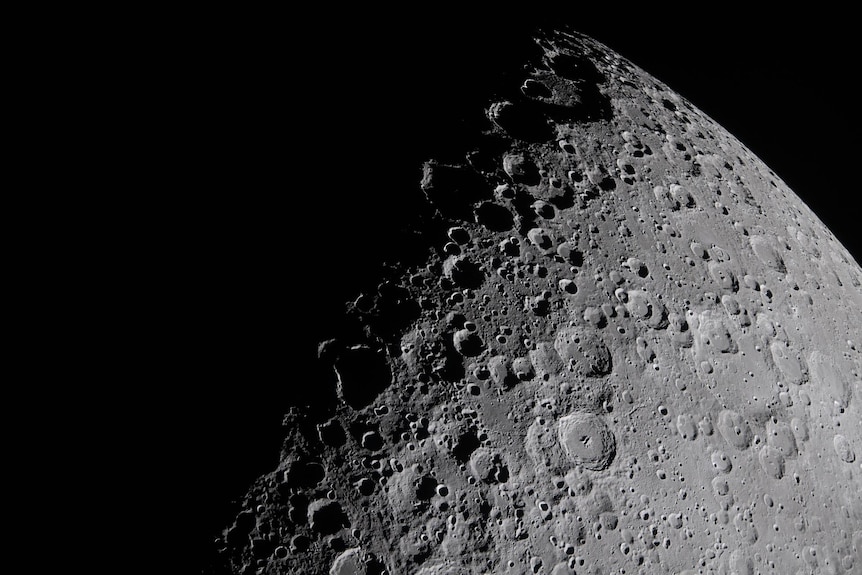 A portion of the Moon comes into view along the terminator – the boundary between lunar day and night.(Supplied: NASA)
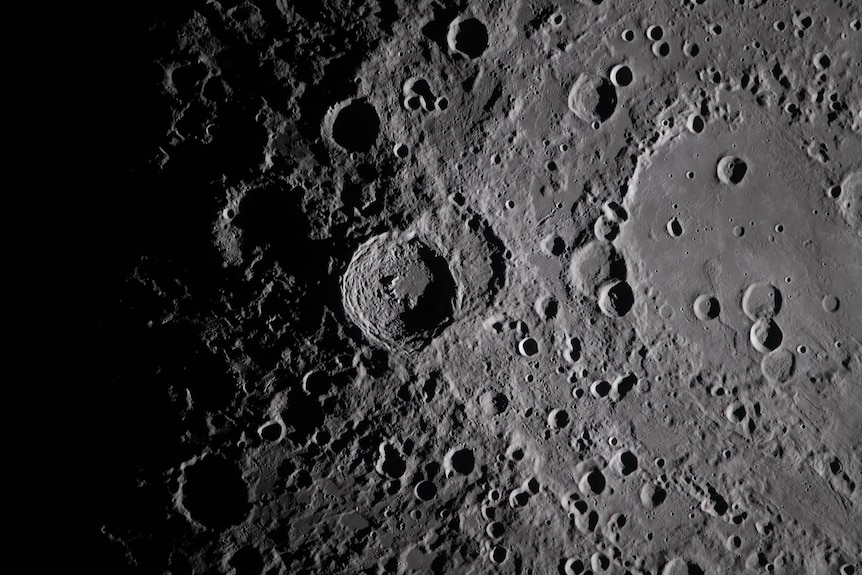 Vavilov Crater on the rim of the older and larger Hertzsprung basin.(Supplied: NASA)
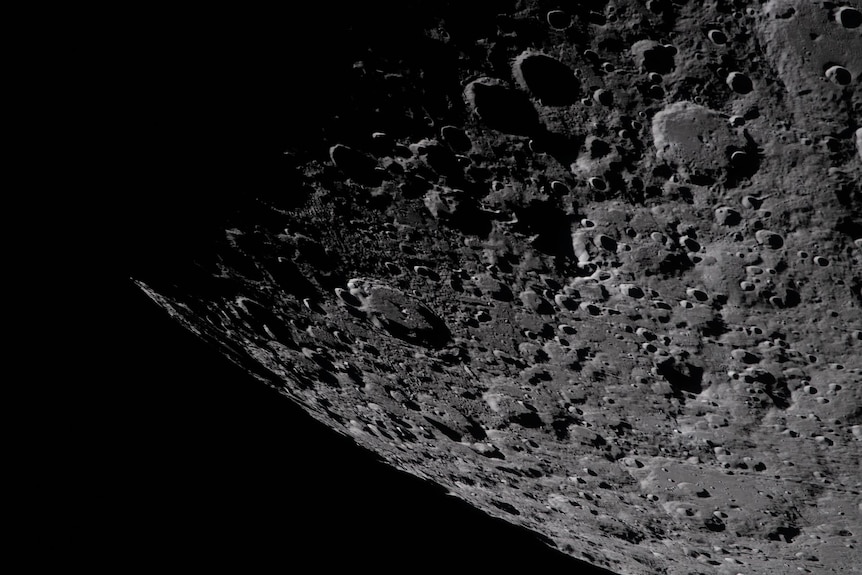 The heavily cratered terrain of the eastern edge of the South Pole-Aitken.(Supplied: NASA)
Using shadows cast along the terminator — the line between lunar day and night — they described cliffs, ridges and canyons in striking detail.
“The terminator looks almost alien,” said NASA geologist Kelsey Young.
“There is so much texture in there that we are not used to seeing.”
The astronauts reported subtle brown and green hues across the surface, which NASA says could reveal clues about the Moon’s mineral composition and even its age.
Every frame added to a growing blueprint for humanity’s return.
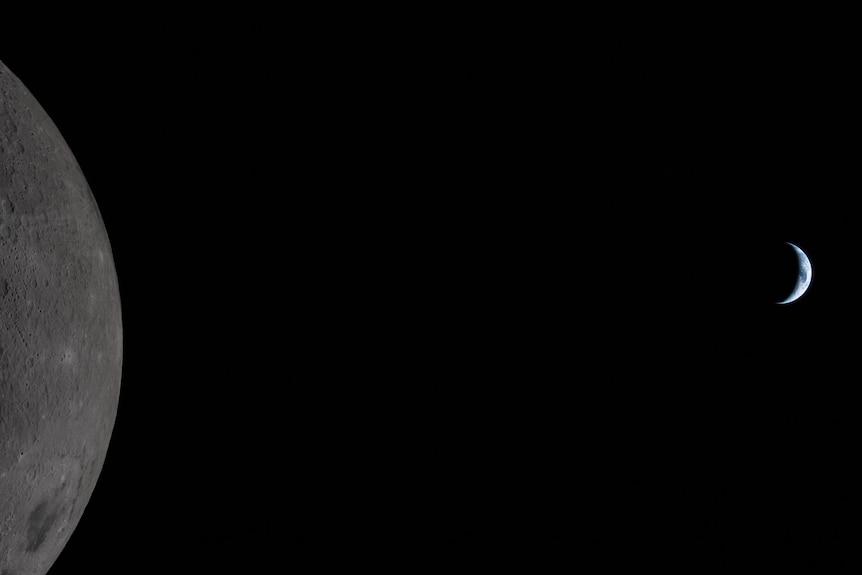 Earth appears tiny as the Moon looms large 36 minutes before earthset.(Supplied: NASA)
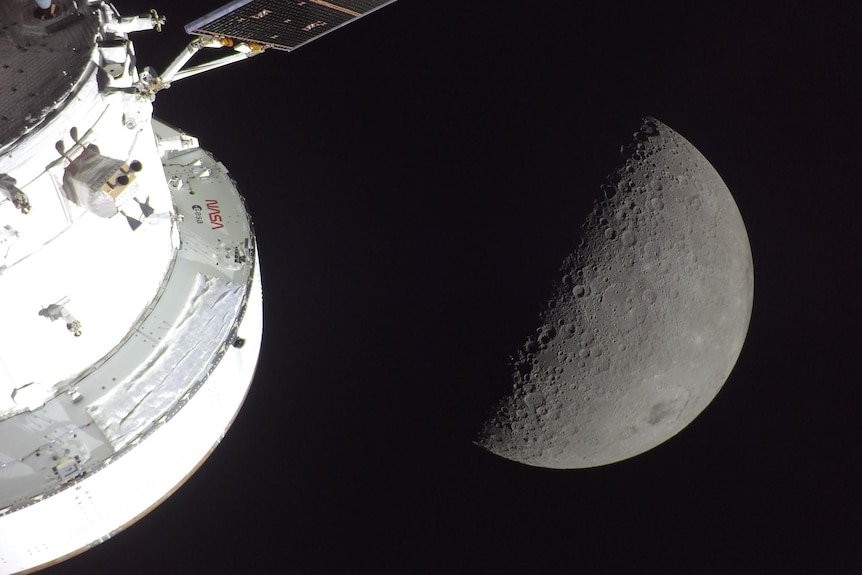 NASA’s Orion spacecraft is seen in the foreground, lit up by the Sun.(Supplied: NASA)
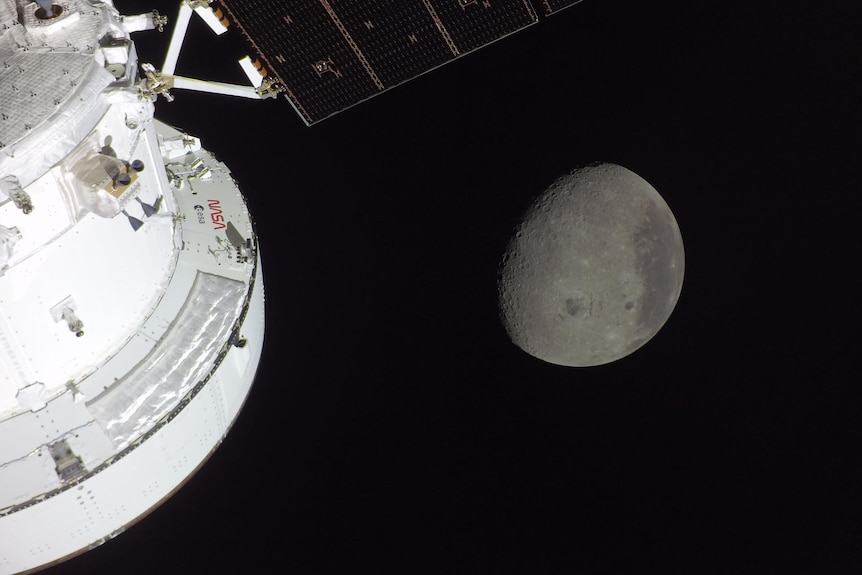 The Orion spacecraft lit up by the Sun, flanked by a waxing gibbous Moon.(Supplied: NASA)
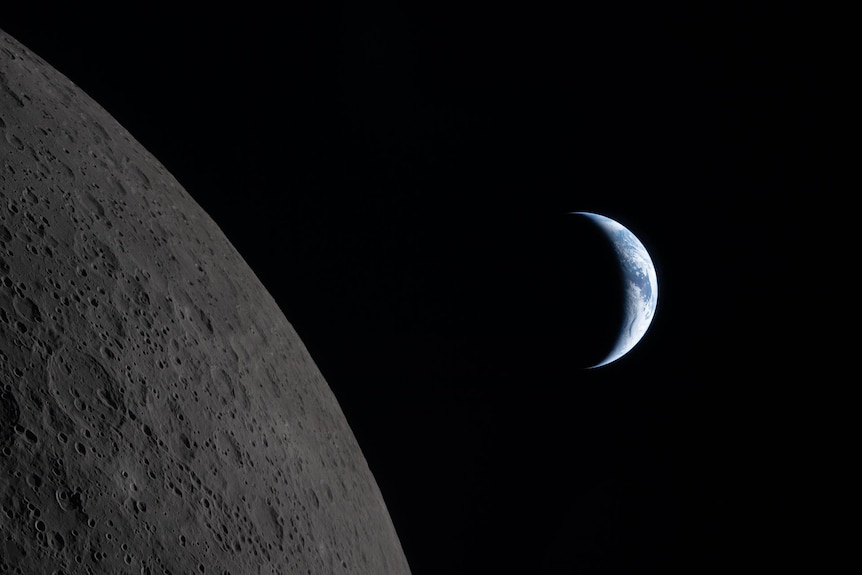 Our planet draws closer to passing behind the Moon, a phenomenon called earthset.(Supplied: NASA)The far side: closest approach
At just 6,545 kilometres above the lunar surface, the astronauts passed over the Moon’s far side — a rugged, cratered landscape hidden from Earth.
The familiar lunar face disappeared, replaced by an ancient and meteor-battered terrain few humans have seen directly.
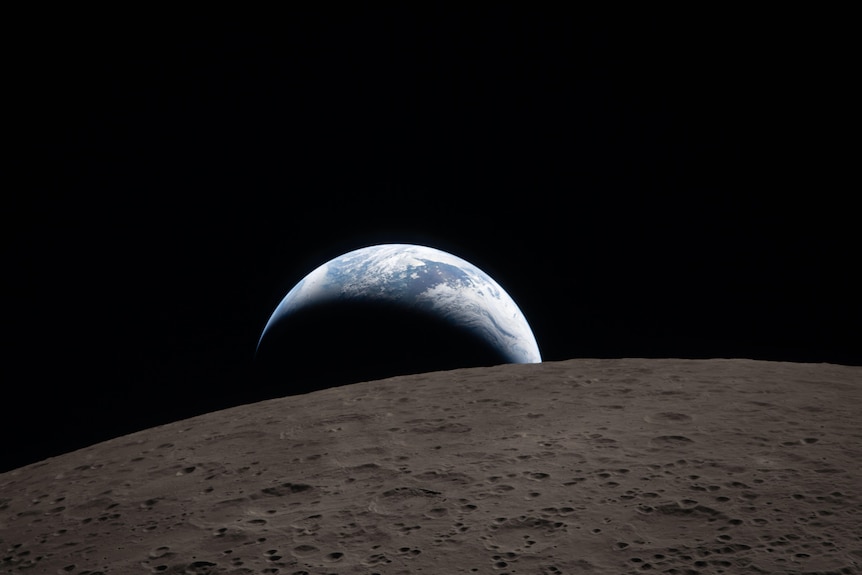 The Moon’s Ohm crater, with its terraced edges and flat floor, is interrupted by central peaks.(Supplied: NASA)
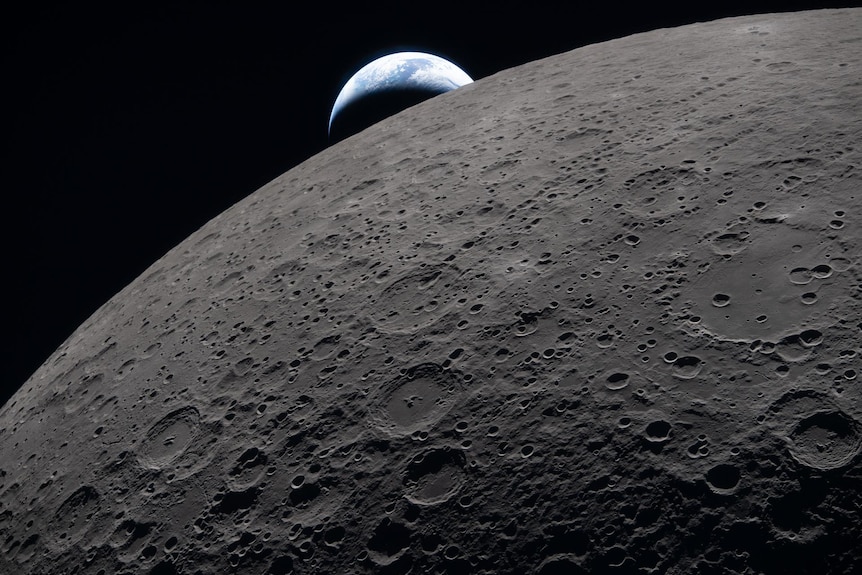 This image was captured just three minutes before the Orion spacecraft and its crew slipped behind the Moon.(Supplied: NASA)
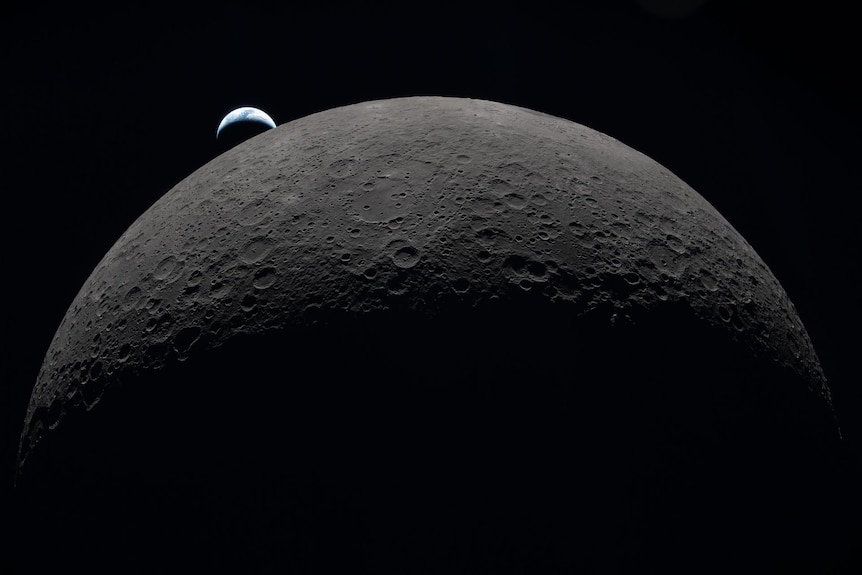 Earth sets over the Moon’s curved limb. The dark portion of Earth is experiencing night-time.(Supplied: NASA)
Among the features the astronauts observed: the vast Mare Orientale basin — often dubbed the Moon’s “Grand Canyon” — along with the Ohm, Pierazzo and Glushko craters.
They are the first humans to take in a complete view of this region — areas that were too dark or difficult for past Apollo crews to fully observe.
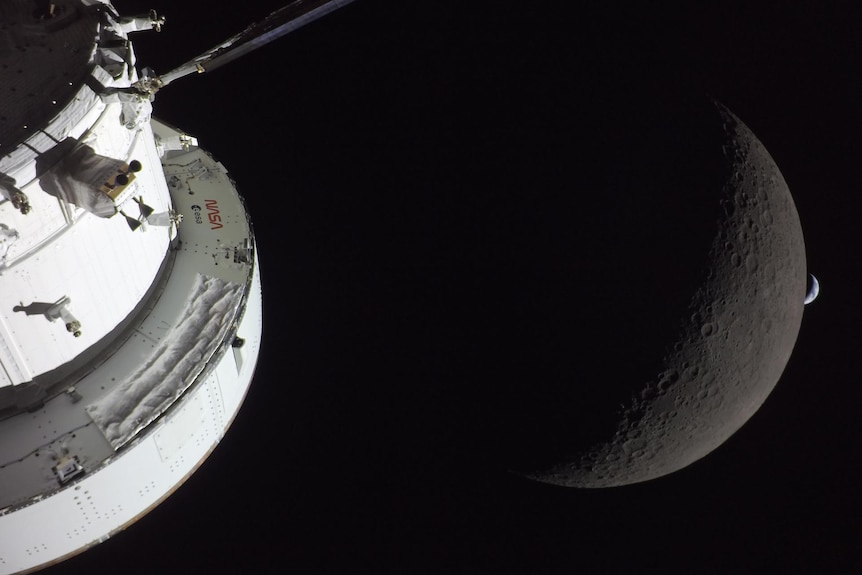 The right side of NASA’s Orion spacecraft lit up by the Sun, with a waxing crescent Moon behind it.(Supplied: NASA)
As Orion slipped behind the Moon, Earth vanished below the horizon, a phenomenon known as earthset.
“We will see you on the other side,” Captain Glover said.
Then, silence.

For 40 minutes, the crew was cut off from mission control, alone on the far side as the Moon blocked all radio signals.
During that time, they reached a maximum distance of 406,771 kilometres from Earth, setting a new record for human spaceflight.
Contact resumed as the spacecraft emerged on the other side of the Moon, revealing an earthrise glowing against the darkness.
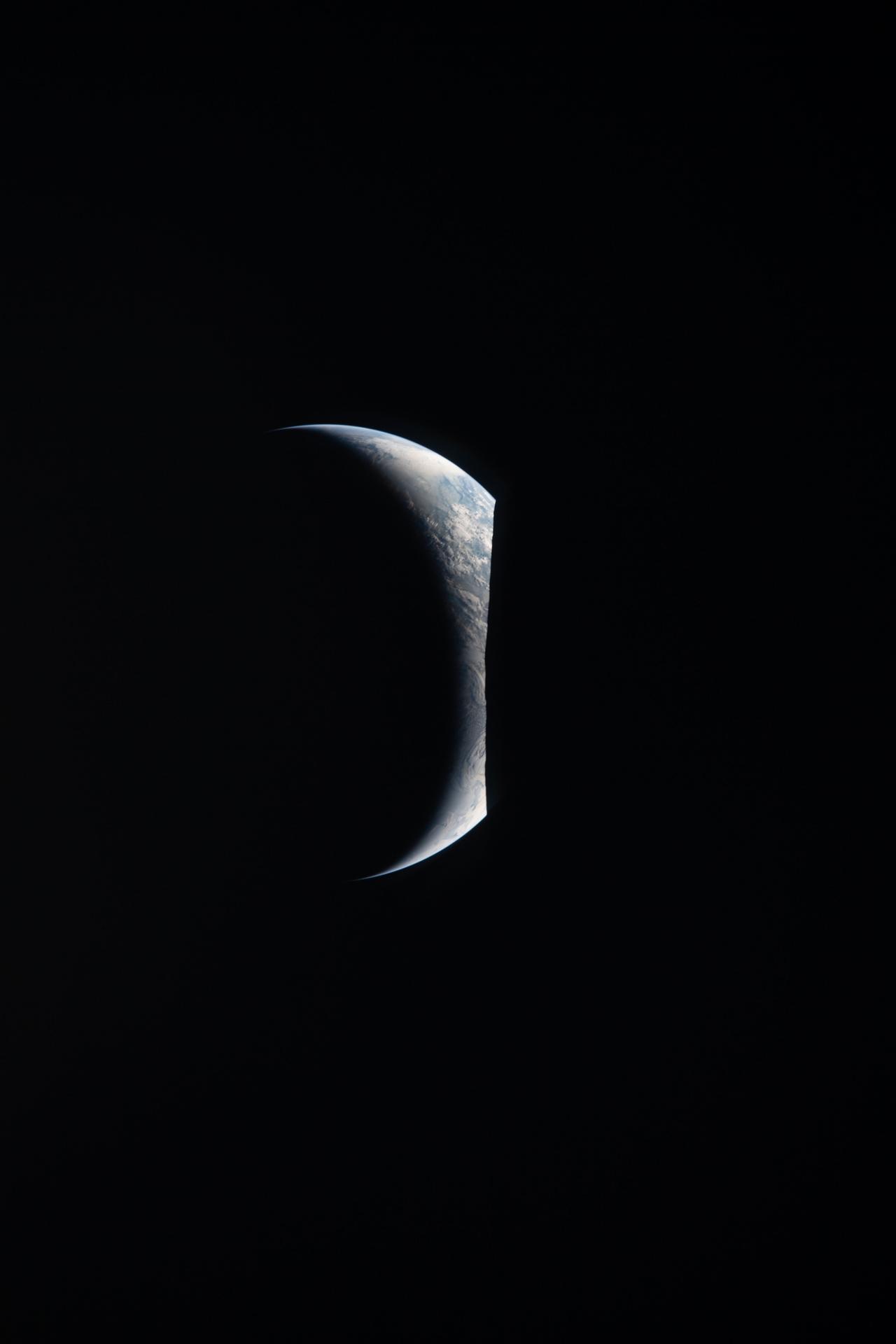 Earthrise captured during the Artemis II crew’s fly-by of the Moon’s far side.(Supplied: NASA)
“It is great to hear from Earth again,” Koch said.
Earthrise captured during the Artemis II crew’s fly-by of the Moon’s far side.(Supplied: NASA)
“From Asia to Africa to Oceania, we are looking back at you. We see you too.”
A solar eclipse like no other
Then came one of the mission’s most extraordinary moments.
From deep space, the astronauts watched as the Sun disappeared behind the Moon — a total solar eclipse unlike any seen from Earth.
The Moon fully eclipsing the Sun, creating nearly 54 minutes of totality.(Supplied: NASA)
This time, the darkness fell against a star-filled sky, with Earth shining faintly in the distance — a small, luminous reminder of home.
They could also make out the Sun’s corona, along with bright Venus, a reddish Mars, and even Saturn tinged with orange.
“Humans probably have not evolved to see what we’re seeing,” Captain Glover said.
“It is truly hard to describe. It is amazing.”
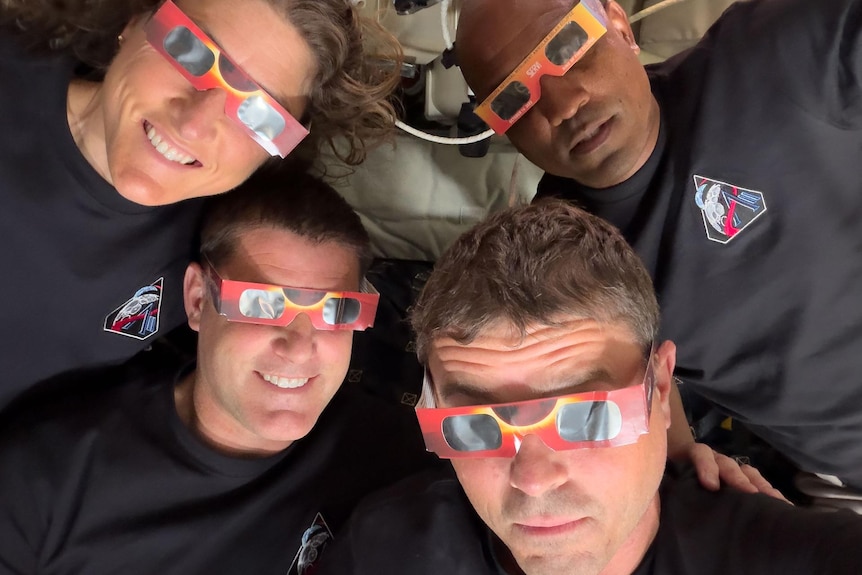 Christina Koch (top left), Jeremy Hansen (bottom left), Reid Wiseman (bottom right), and Victor Glover don their eclipse viewers.(Supplied: NASA)
Captain Wiseman agreed.
“It’s indescribable. No matter how long we look at this, our brains are not processing this image … it is absolutely spectacular.”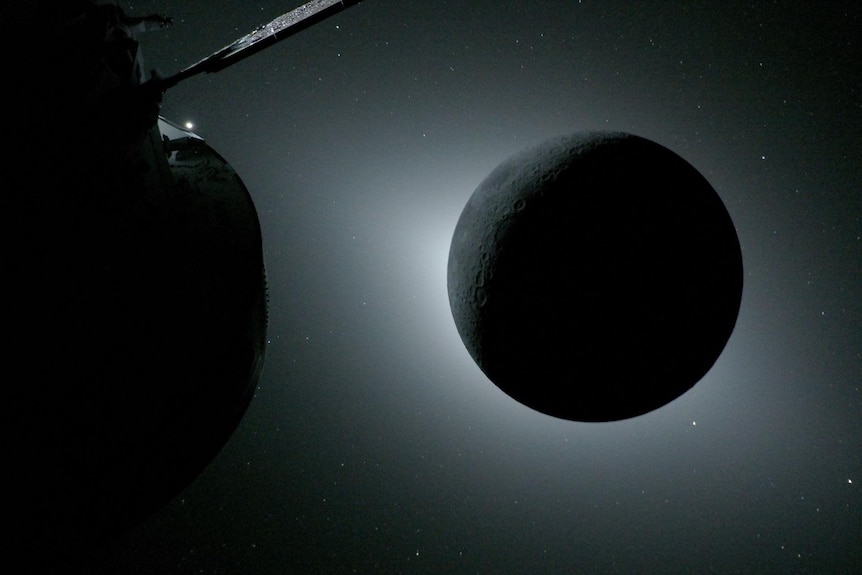 The Moon, backlit by the Sun during a solar eclipse.(Supplied: NASA)
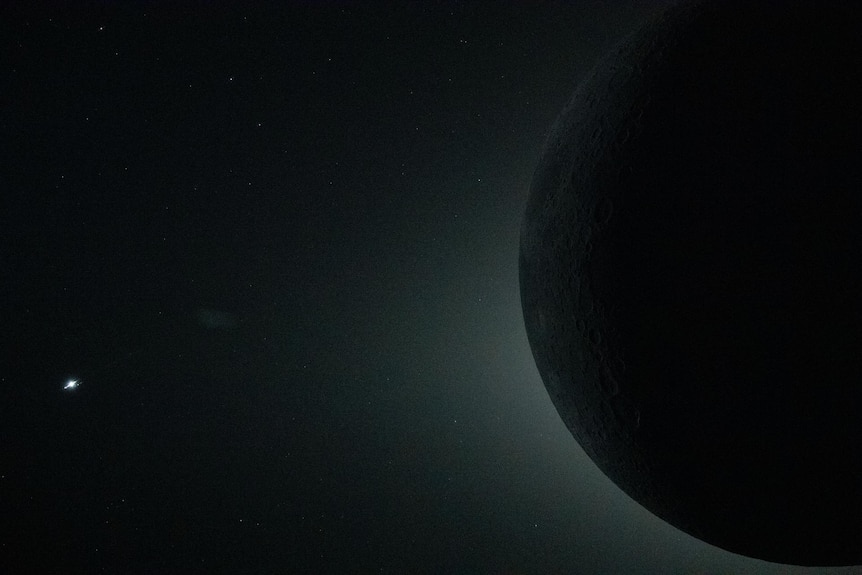 Total solar eclipse, with only part of the Moon visible in the frame as it fully obscures the Sun.(Supplied: NASA)
Over the course of the eclipse, they also spotted at least four impact flashes, which are brief bursts of light from meteoroids striking the lunar surface.
“That was an absolutely spectacular, magnificent experience,” Captain Wiseman said.
“If you could give me about 20 new superlatives … it would help my vocabulary out a bit.”
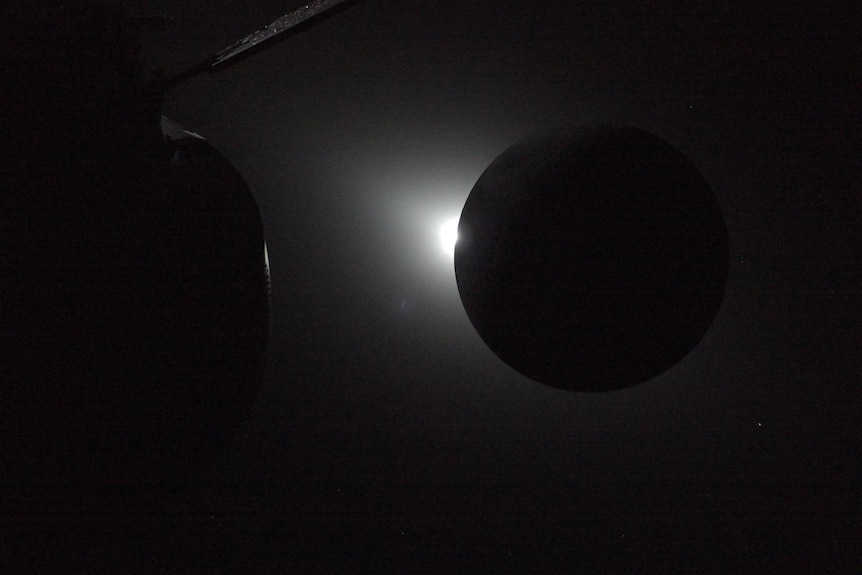 The Sun rising at the edge of the Moon, ending a nearly one-hour total solar eclipse. (Supplied: NASA)
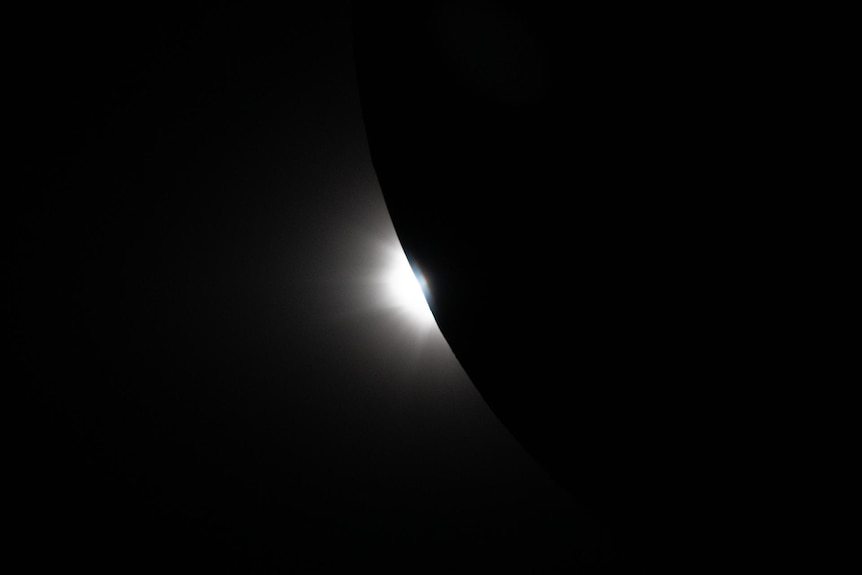 The Sun beginning to peek out from behind the Moon as the eclipse transitions out of totality. (Supplied: NASA)
The fly-by ended with a Q&A between the crew and Earth, though not everyone was ready for it to end.
“I’m not ready to go home,” Koch said.
“I can’t believe something this cramped of quarters can still be fun every single minute.”
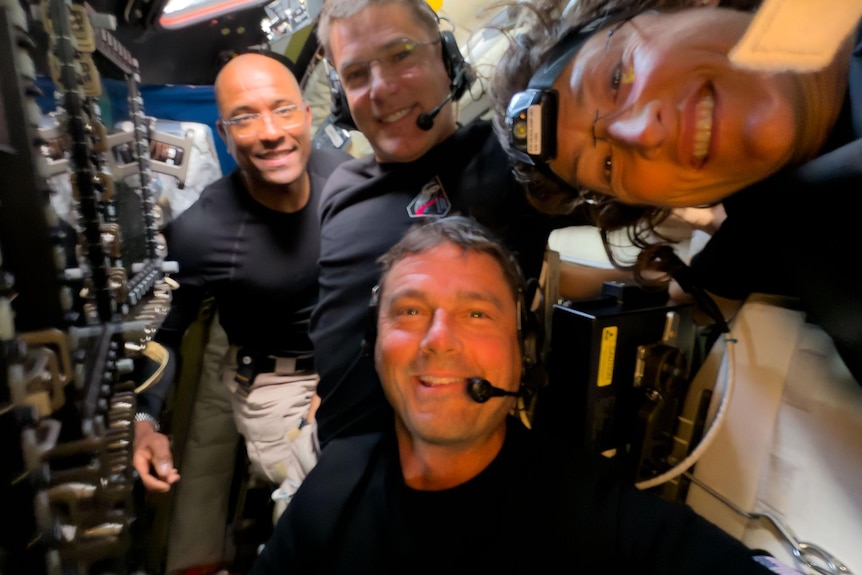 Reid Wiseman, Victor Glover, Christina Koch and Jeremy Hansen pause for a selfie inside the Orion spacecraft.(Supplied: NASA)