
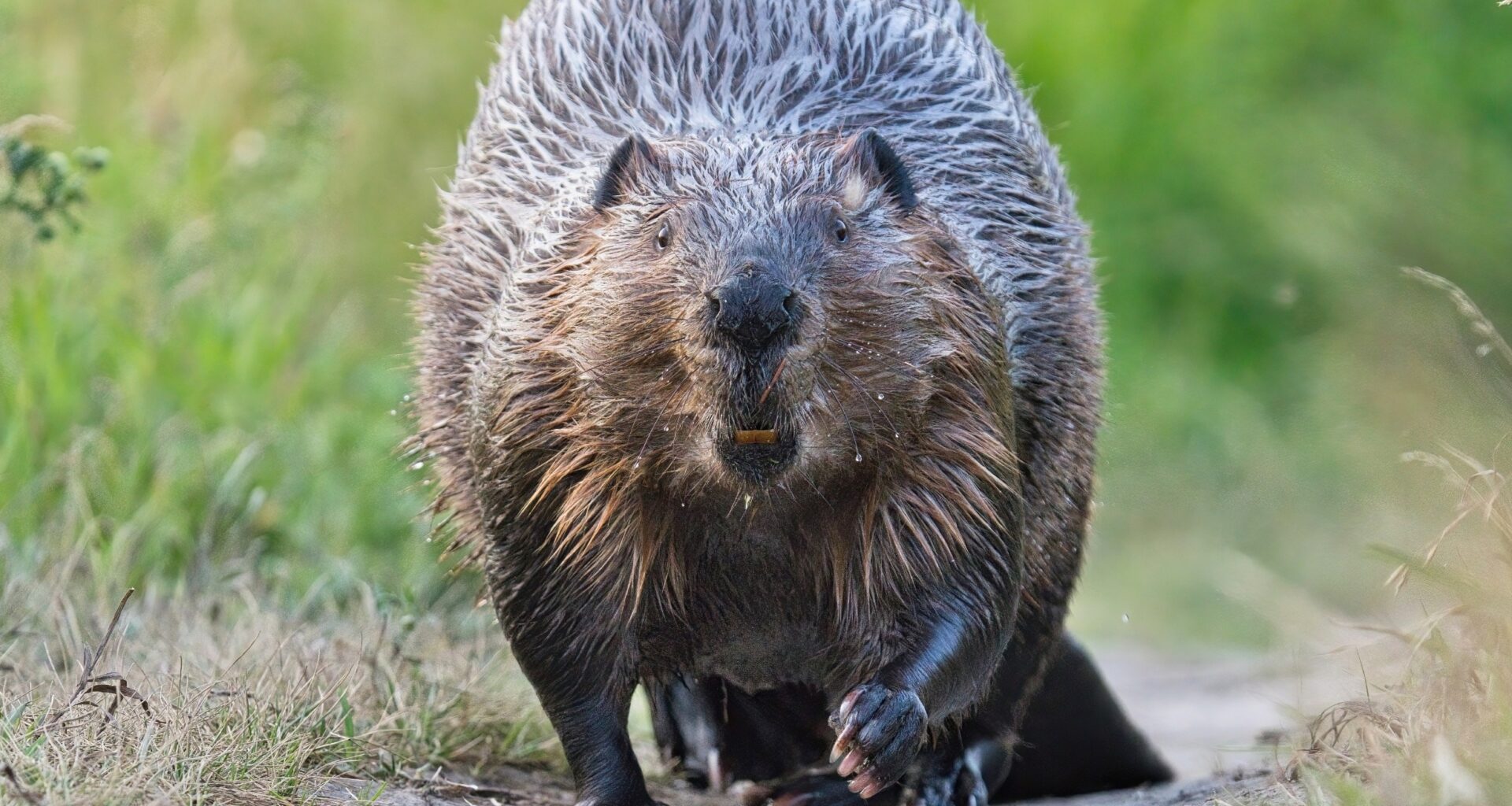
International Beaver Day, celebrated each year on April 7, honors one of nature’s most influential engineers while recognizing the long effort to protect it.
The day was established in 2009 by the Beaver Institute to coincide with the birthday of Dorothy Richards, a pioneering advocate who spent decades studying and defending beavers at her sanctuary in New York.
Ecological significance of beavers

Beavers are quietly reshaping rivers, wildlife, and climate systems. Beavers don’t just build dams – they rebuild entire ecosystems.
Once hunted to near extinction, these animals are making a quiet comeback across many regions. And as they return, scientists are discovering that their impact goes far beyond ponds and streams.
From cooling rivers to supporting pollinators and storing carbon, beavers are emerging as one of nature’s most powerful environmental engineers.
On International Beaver Day, three recent studies reveal just how much these animals are doing – often in ways that even modern engineering struggles to match.
Beaver dams help protect rivers
In many places, real beavers haven’t fully returned. So scientists and land managers are stepping in to mimic their work.
A recent study from Washington State University Vancouver shows that artificial beaver dams – built using sticks, mud, and natural materials – can help rivers cope with climate change.
These structures, known as “beaver dam analogs,” slow the flow of water, allowing it to spread across floodplains and soak into the ground.
This helps streams retain water longer into the summer. That’s exactly when rising temperatures and shrinking snowpack leave rivers most vulnerable.
By holding water in place, the dams help lower stream temperatures, restore wetlands, and create better habitat for fish and other wildlife.
Artificial dams are not a perfect substitute for real beavers. However, they still provide a low-cost, nature-based way to strengthen climate resilience in areas where beavers are still absent.
Beaver wetlands are pollinator hotspots
A study from the University of Stirling reveals that beavers don’t just reshape rivers – they transform entire food webs.
When beavers build dams, they create wetlands filled with still water, rich vegetation, and diverse microhabitats. These environments turn out to be prime real estate for pollinators like bees, butterflies, and other insects.
The research team found that beaver-created wetlands can act as biodiversity hotspots, supporting a much wider variety of pollinators than surrounding landscapes.
These insects are drawn to the abundance of flowering plants that thrive in the wetter conditions.
This matters far beyond the wetlands themselves. Pollinators play a critical role in ecosystems and agriculture, and their global decline has raised major concerns.
By creating habitat naturally, beavers may help counter some of that loss – without any human intervention.
Beavers turn rivers into carbon sinks
Perhaps the most surprising discovery is what beavers are doing for the climate.
A recent study shows that beaver activity can transform rivers into powerful carbon sinks – ecosystems that absorb more carbon dioxide than they release.
The research was conducted by experts at the University of Birmingham, Wageningen University, and the University of Bern.
By slowing water, trapping sediment, and expanding wetlands, beavers fundamentally change how carbon moves through a landscape.
Instead of being washed downstream or released into the atmosphere, carbon becomes trapped in mud and sediment, stored in plant biomass, and buried within wetland soils.
Researchers describe this as a significant shift in the carbon cycle, with beavers effectively turning streams into long-term carbon storage systems.
This finding positions beavers as an unexpected ally in the fight against climate change – a natural solution that works continuously.
A small animal with an outsized impact
Beavers are often called “ecosystem engineers,” and these studies show why. With nothing more than teeth, wood, and mud, they store water during drought, support pollinators and biodiversity, and capture and lock away carbon.
In a world searching for solutions to climate change and biodiversity loss, beavers offer something rare: a system that fixes multiple problems at once – simply by behaving as they always have.
Yet despite all they contribute, beavers continue to face mounting threats across much of their range.
Habitat loss, expanding development, and river modification projects often remove the slow-moving waterways and floodplains they depend on.
In many regions, beavers are still viewed as a nuisance because their dams can flood roads, farmland, and infrastructure, leading to trapping or removal before their ecological benefits are fully realized.
Climate change adds another layer of pressure, altering water availability and disrupting the very systems beavers help stabilize. Ironically, the landscapes that need them most are often the ones where they struggle to persist.
Protecting and restoring beaver populations may be one of the simplest ways to rebuild healthier ecosystems – but it requires a shift in how we value and coexist with these remarkable animals.
—–
Like what you read? Subscribe to our newsletter for engaging articles, exclusive content, and the latest updates.
Check us out on EarthSnap, a free app brought to you by Eric Ralls and Earth.com.
—–