
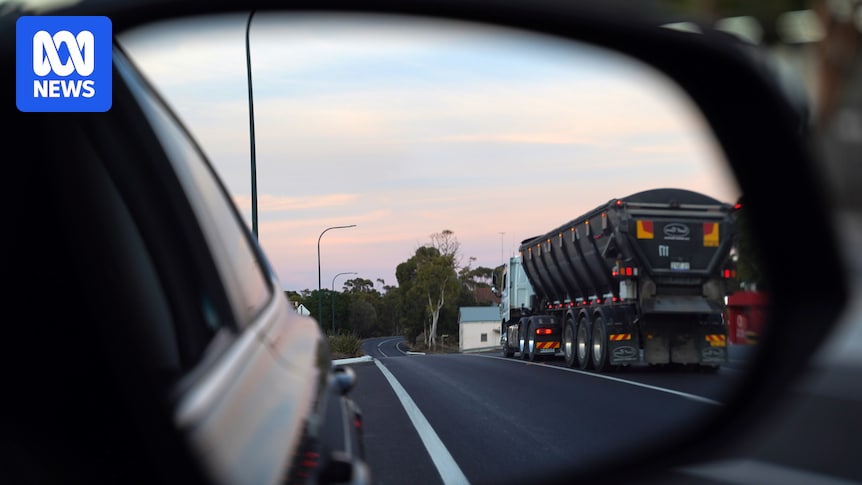
Trucks will soon get longer and heavier on South Australian roads in a bid by the state government to ease the pressure of the growing fuel crisis.
Reforms to heavy vehicle limits, which were fast-tracked by the government, came into effect this week.
‘The whole industry will fall over’: Transport leaders call for urgent action
The government said the reforms would mean fewer trucks were needed and could reduce fuel usage by up to 18 per cent, in addition to unlocking another 100 road networks in rural and remote areas for freight transport.
Trucking industry bodies have welcomed the move, saying raising the maximum vehicle weight limits and allowing tri-drive rigid trucks and prime movers on more roads will better align South Australia’s trucking rules with other states and territories.
However, some in the sector said the new reforms would have no meaningful impact on their bottom line.
Robin Hughes, who owns and operates a business freighting quarry material in Booleroo Centre in SA’s Mid North, was unsure whether businesses like his would benefit.
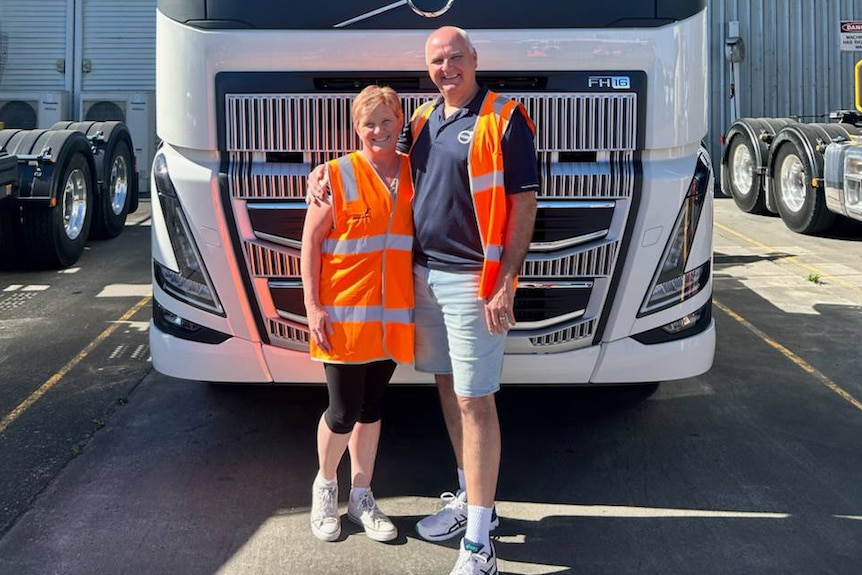
Robin Hughes and his wife, Leah, with their truck. (Supplied)
“Unless organisations already have these trailers in their fleet [that can carry additional weight] and they can optimise those trailers, they can’t take advantage of it,” Mr Hughes said.
“For people like myself, who own all our gear, we would have to invest and wait for trailers to be built with different axel configurations. [That’s] just too much outlay for what little gain I think you can get out of it.”
Before the fuel crisis, filling his truck with diesel every second day would cost about $2,000. That has risen to nearly $5,000.
Mr Hughes said he was also worried that, even if he were to take more tonnage, it would end in only negligible savings.
“Generally speaking, when you put a heavier load on a truck, the truck uses more fuel,” he said.
“Is that worth it? As we know, the transport industry is cutthroat.”
However, trucking industry groups welcomed the move as the sector suffered amid rising fuel and operational costs linked to the conflict in the Middle East.
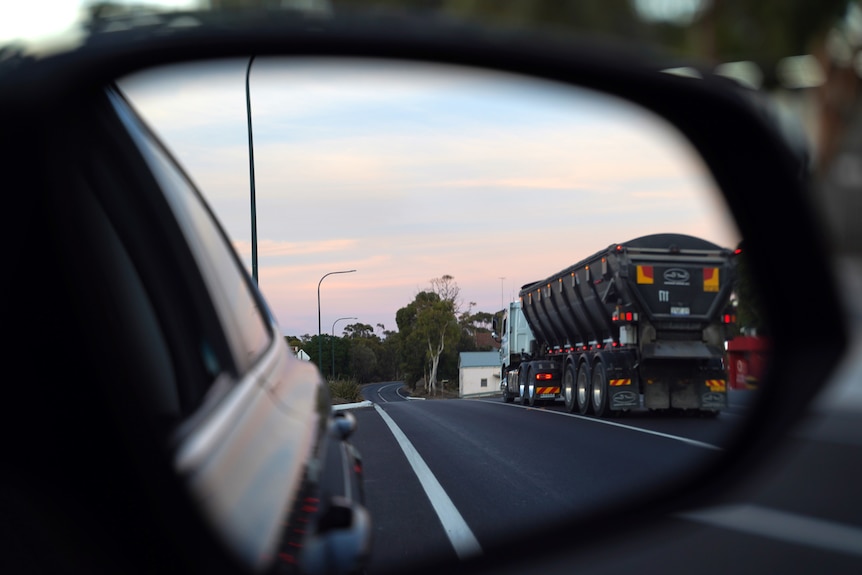
The trucking industry supports the changes. (ABC Riverland: Will Hunter)
“Road transport operators can put more in their trucks [and] use bigger trucks to get more efficient movement of goods around the state,” Motor Trade Association SA/NT general manager Kaes Cillessen said.
“At a time when demand for fuel is high and prices are also high, that will do its part to help the situation.”
The reforms come after recent federal cuts to the fuel excise and the heavy vehicle road user charge that were expected to save operators 32.4 cents per litre over the next three months.
Mr Cillessen said the changes were similar to those previously made in other states.
“The industry have told us that harmonisation is really important,” he said.
However, he said differing rules between jurisdictions would still be a challenge for operators.
“I think for any operator running routes across the country, they would prefer to work to the same rules and frameworks,” Mr Cillessen said.
Broader benefits
The state government said the reforms also removed red tape around road use permits.
“Rather than having an arduous system and scheme by notice and administrative measures … we now will be defaulting to allow all safe, secure, well-engineered trucks to access these routes,” Transport Minister Joe Szakacs told the ABC’s SA Regional Drive’s Narelle Graham.
The South Australian Road Transport Association said livestock haulers would see a benefit.
“It’s not just about the mass limits; it’s also about the routes that are allowed to be used,” chief executive Steve Shearer said.
“Livestock trucks have always had a more limited network that they’re able to go on.”
Different types of livestock will be able to be transported on the same truck too, keeping costs down.
Broken Hill livestock agent Ben Finch said the changes made sense.
“The reality is, the technology around some of these truck configurations, the fact that they’re so heavily regulated in how those configurations run already, plus their fatigue management … it just makes sense as a natural progression that more and more roads have been opened up,” he said.
“[It] hopefully puts stuff on our shelves at a good and reasonable rate.”
Ben Finch says heavier trucks will have more wheels to bear the load of more freight. (ABC Riverland: Will Hunter)
But what about roads?
Another concern raised after the reform announcement was the potential wear on roads that would carry heavier trucks than before.
Mr Cillessen said while there would be an increased impact on roads, he said the effects would be marginal.
Mr Shearer said having fewer trucks on the road could ease the wear on roads.
“What a lot of people don’t understand … what wears out the road is not the weight down through the axels … it’s the number of movements across it,” he said.
The RAA said its safety experts would be monitoring the condition of the state’s roads after consulting on the reforms.
More news from regional SALoading…