
 Save
Save
You have reached your maximum number of saved items.
Remove items from your saved list to add more.
Save this article for later
Add articles to your saved list and come back to them anytime.
Got it
AAA
Australia’s fuel stocks have been guaranteed almost to June and Prime Minister Anthony Albanese has urged Israel to abide by a fragile ceasefire in a Middle East conflict that has roiled global oil markets, as he jets to Singapore to further bolster the nation’s fuel supplies.
Opposition frontbencher James Paterson suggested Labor was at odds with the US over the terms of a ceasefire deal that had raised hopes of the return of shipping through the Strait of Hormuz.
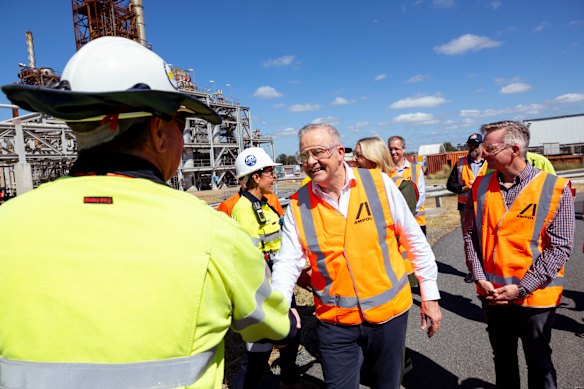 Prime Minister Anthony Albanese greeting a Queensland oil refinery worker on Thursday morning.Dominic Lorrimer
After heavy Israeli fire into Lebanon following the announcement of the deal, US Vice President JD Vance said on Thursday (AEST) that Israel’s campaign against Iran’s proxy in Lebanon, Hezbollah, was not part of the agreement.
The dispute put the truce in flux and added urgency to the government’s upcoming blitz of Asian oil exporters that has upended Albanese’s schedule in the weeks leading up to an important federal budget.
“It is a fragile peace,” Albanese said at the Lytton oil refinery in Brisbane on Thursday.
“The Australian government also firmly believes that this has to apply to Lebanon as well … many Australians are concerned about the events that are occurring in Lebanon.”
Albanese’s opposition to Israel’s heavy bombing campaign, and its civilian toll, builds on its recognition of a Palestinian state last year, and increasingly sharp criticisms of Israel’s military action in Gaza.
The prime minister, usually reluctant to comment on Donald Trump’s actions, on Wednesday described the US president’s threats to wipe out the Iranian civilisation as “inappropriate”.
As Opposition Leader Angus Taylor demands more transparency on local fuel outages, Albanese and his ministers have overhauled the government’s agenda to be seen to be doing everything possible to lock in fuel supply.
Energy Minister Chris Bowen said on Thursday that supply was now guaranteed “several weeks” into May.
Diesel, critical to many sectors of the economy, is a particular worry among government officials because Australia produces more petrol than diesel. Petrol stations are out of diesel more commonly than petrol, though the overall number of shortages is falling.
The government’s $2 billion in emergency finance has been opened up to Australia’s last two oil refineries, run by Ampol and Viva Energy, to allow them to buy expensive cargoes on the spot market.
Standing with the prime minister, Bowen faced scrutiny over whether Labor’s anti-pollution policies were hindering fuel and energy security. Toughening anti-pollution standards to meet its green energy targets was “not at the top of my to-do list right now”, Bowen said.
Related Article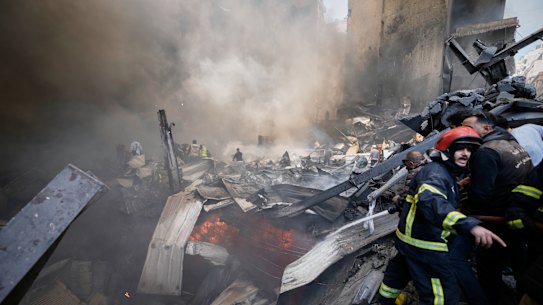
The stakes are high for the prime minister as he heads to Singapore, an Asian oil superpower with the third-highest production of transport fuel in the world.
When he decided to make a national televised address to the nation last week, Albanese staked his authority on steering Australia through what the International Energy Agency has described as the worst oil crisis in modern history.
Albanese downplayed the prospect of a binding agreement on fuel supply with Singapore before his meeting with Prime Minister Lawrence Wong on Friday. Late last month, Australia signed an in-principle agreement with Singapore to keep trading as a supply crunch loomed.
“Success looks like us going to Singapore,” Albanese said. “The fact that we have been welcomed at relatively short notice to Singapore speaks about the strength of the relationship.”
It’s likely that Albanese and Wong will emphasise the nations’ reliance on one another: Australia imports more than half its petrol from Singapore, while Singapore imports a third of its LNG from Australia.
Albanese hopes Singapore’s need for gas to power its electricity grid will mean Australia is prioritised if and when Singaporean firms are forced to cut off certain countries due to a drop in supply.
Refineries in Victoria and Queensland, and those in Singapore, have scrambled to find fuel from America and Africa instead of the Middle East.
The prime minister will visit Jurong Island in Singapore on Friday before meeting with Wong. Jurong is the prosperous island city’s refining hub, which Singapore has built up over decades to take advantage of its geographic position along the busy Strait of Malacca and its world-class shipping infrastructure that has attracted major energy firms.
Related Article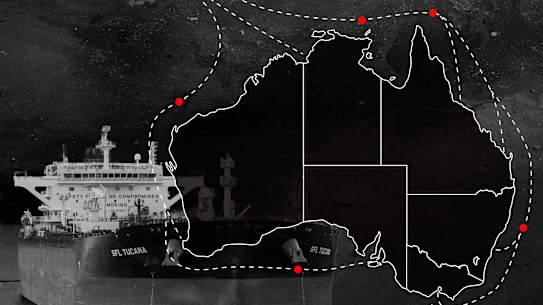
In a video message on April 2, Wong said he wanted to work more closely with Australia on energy security.
LNG importers – including Japan – have raised concerns about the prospect of a new Australian tax on gas firms’ profits. Albanese dodged a question on the proposed levy, but government sources told this masthead last week such a tax was unlikely to be pursued.
Opposition frontbencher Andrew Hastie said a ceasefire would not translate to instantaneous relief at petrol stations.
“I just want Australians to … just to be cautious, not to rush into thinking that everything’s going to be OK in the next couple of weeks,” he told radio station 2GB.
“There’s been a lot of oil and gas infrastructure in the Gulf that’s been damaged … there’s a lot of fertiliser still caught in the Gulf. And if those ships start moving, they’re going to move very slowly.”
Cut through the noise of federal politics with news, views and expert analysis. Subscribers can sign up to our weekly Inside Politics newsletter.
Save
You have reached your maximum number of saved items.
Remove items from your saved list to add more.
 Paul Sakkal is Chief Political Correspondent. He previously covered Victorian politics and won a Walkley award and the 2025 Press Gallery Journalist of the Year. Contact him securely on Signal @paulsakkal.14.Connect via X or email.From our partners