
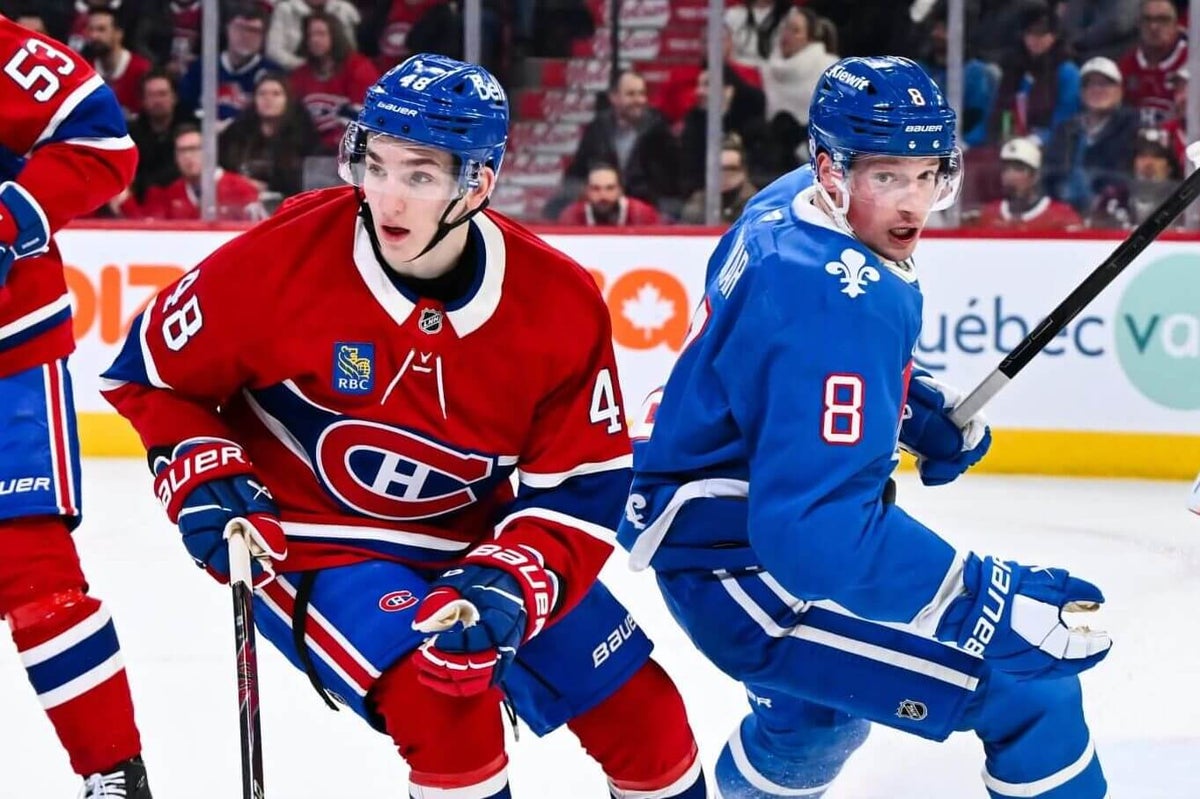
Who is the best all-around defenseman in the NHL? There are a lot of contenders for that title this year.
Unlike last year, there isn’t one favorite running away with the honors. This is the deepest Norris Trophy field in years, with a special group of defensmen performing with MVP-caliber play.
The Norris Trophy tends to spark a lot of debate. The meaning of the best “all-around ability” usually has a few different interpretations among voters, and this year, there are defensemen in the mix for all points of view — elite scorers who are solid enough defensively, shutdown defenders who bring an offensive spark and true two-way threats. Even within those designations, there are still some hurdles such as measuring defense, because in 2026, there are more methods than just looking at a player’s ice time, plus-minus and blocks, or relying on reputation alone.
So awards talk for the Norris isn’t just about who should win, but how to figure it out. And this year, the competition is incredibly steep.
No matter who you ask or what they think the award should be about, offense tends to lead that discussion.
“Production’s super important; I don’t think there’s been a guy who’s won the Norris and hasn’t put up the big numbers,” Canadiens defenseman Noah Dobson said.
“I just think it’s going to go to the highest-scoring, most dominant defenseman,” Bruins defenseman Hampus Lindholm said. “It’s just the way it is.”
Last year’s winner, Cale Makar, led defensemen with 92 points. So did Quinn Hughes in 2024 and Erik Karlsson in 2023.
With that line of thinking, players such as Evan Bouchard, Zach Werenski, Makar, Lane Hutson, Hughes and Rasmus Dahlin all jump to the forefront with 70-plus point seasons so far.
That group isn’t just propped up by power-play production, though: They’re some of the best at scoring chance generations at five-on-five among the position. That’s important because voters can get blinded by point totals when a player’s impact goes deeper. It should be about how they drive play from the back end to facilitate their teams’ success.
“You can’t discount the offensive contribution of those players; how difficult that is. You think about how hard it is to produce in the NHL, let alone as a defenseman,” Jets defenseman Josh Morrissey said.
Bouchard doesn’t just lead all defensemen this season with a plus-21.9 Offensive Rating; he’s fourth in the league overall, behind only Nikita Kucherov, Connor McDavid and Nathan MacKinnon. Bouchard has a bomb of a shot that can beat goalies or just get the cycle going. That, paired with his ability to set up scoring chances, helps facilitate the Oilers’ overwhelming offense, on the power play and at even strength.
One of the key differences between how Makar and Bouchard generate offense is where their impact generally starts; Bouchard isn’t as active a puck-mover, while Makar retrieves pucks from his own zone and transitions up the ice to bring Colorado into the offensive zone. He is one of the league’s best defensemen at generating scoring chances off the rush and helps the Avalanche sustain offensive-zone time from there.
What Makar does with the puck to drive play is particularly important because it helps highlight his all-around impact. The knock against players such as Bouchard and Makar is their surroundings, and having the help of some of the best forwards in the world. Makar is unquestionably elevated by MacKinnon and is a better player in his minutes, but what he does without MacKinnon is stronger than last year.
The drop in Bouchard’s play without either McDavid or Leon Draisaitl is more pronounced; the team isn’t in control of the puck as much, with his xG slipping to just above break-even, and the team has been outscored 15-12 at five-on-five in that time. But the context of those minutes matters too, considering how much Edmonton’s forward depth drops when the bottom-six is deployed.
“Do you penalize, say, Bouchard because he plays with McDavid and Draisaitl?” Morrissey said. “All of those different elements come into play, and I don’t think it’s really fair to say, for any one player, that their circumstances are why they should or shouldn’t win.”
That alone can’t decide who belongs in the race, but it does build the case for the players who do create more with less around them.
Such as Hughes, who is a one-man breakout machine. Hughes never stops moving his feet, which fuels his next-level transition game and how he quarterbacks play in the offensive zone. That has always been a clear strength in his game, but it’s shone a lot brighter since moving from the chaos of Vancouver to the Wild, who craved a defenseman with his dynamic skill set.
Werenski has made a career of being a rover in Columbus, but he has kicked that level up over the past couple of seasons. That high-caliber play has been the driver behind the Blue Jackets’ turnaround. Werenski’s one of the best at driving play out of his own zone and up the ice; he’s a volume shooter who can kickstart play from the point, or from driving right to the scoring areas.
Like Werenski, Dahlin has a pretty strong MVP case, as one of the core reasons his team is headed to the playoffs. He’s somewhat of a jack of all trades offensively; he can skate his team out of danger with control, rush up the ice to generate his own looks, or set up dangerous chances with his playmaking.
That transition game is a common thread for most of these Norris contenders. It’s a core strength for Hutson, whose vision and escapability help Montreal in all three zones. Few defensemen create as many scoring chances as Hutson, who has one of the best relative impacts on his team’s xG generation of any defenseman this season.
“There’s a lot of great D-men in this league nowadays with great offensive instincts, great offensive skill, and when you see that, it’s hard to look past that,” Islanders defenseman Ryan Pulock said.
That being said, Pulock pointed to how there needs to be “a little more stock in all-around ground” and having a “complete package.”
This year, there are true contenders from that perspective as well — defenders who move the needle offensively, without flashy scoring, while calming play down in their own zone. Moritz Seider is the prime example of that, since his 55 points don’t reach that top-tier echelon, and neither does his puck-moving. But Seider still helps facilitate his team’s offense, boosting the Red Wings’ xG by 0.33 per 60, and their scoring by an even stronger degree. His 10.6 Offensive Rating may not stack up to Bouchard’s or Hughes’s, but his secret weapon is being top-15 among defenseman while boasting the best Defensive Rating (plus-10.5) in the league.
That balanced approach is what makes Jake Sanderson a great No. 1 in Ottawa. Unlike Seider, his puck-moving is his bread and butter, and a key part of his in-zone defense. But he doesn’t have that same relative impact on the Senators’ five-on-five offense, which could be a deal-breaker for some.

“I think it’s more about a two-way defenseman. Back in the day, when (Nicklas) Lidstrom won it, he obviously put up big numbers. But it made it easy to vote for him to get the Norris because he was so good defensively,” Lindholm said. “Nowadays, the league’s changed. So you have some guys that are super offensive, almost like forwards playing D.”
So where is the balance?
The easy solution is to split the Norris Trophy into two awards: one for the top offensive threat and another trophy for the best shutdown defenseman. There is unquestionably a lot of merit to that argument, especially since forwards have multiple awards, and defensemen are generally limited to only the Norris. This year’s crowded field strains things further; Miro Heiskanen, Morrissey and Matthew Schaefer aren’t fixtures in the race despite having strong enough seasons to win the award in years past. The threshold is getting higher, so why not just expand the field to properly reward the position?
But even with the challenges of a crowded field, there is still value in measuring the best all-around defenseman and balancing all of the elements that go into that, because offense and defense are so intrinsically linked in today’s NHL.
As easy as it is to discount possession-heavy styles because it’s so associated with offense, it translates on the other end of the ice, too. The best defense is a good offense, and that’s a more proactive way to think about it. At the end of the day, the entire concept is based on the idea of stopping something from happening in the first place.
So, how players defend can be thought of in a few ways, such as stopping play from ever reaching the defensive zone, whether it’s by holding the blue line, pinching up the wall to push play deeper in the offensive end or regrouping in possession in the neutral zone.
Or, just not turning the puck over much at all, which players such as Hughes and Makar rarely do.
Then, in the more traditional sense, defense can be defined as how players work their magic in their own end: From zone entry defense and gap control, stick checks to break up plays, smart positioning to close passing or shooting lanes, and blocks. Who limits risk back in their own zone and makes the fewest mistakes?
Seider may be the defenseman who encompasses all of these traits best, and represents the most traditional option in the field, between how he uses his stick to break up plays, denies entry with his positioning and gets right in passing and shot lanes to kill plays. He has one of the best impacts in limiting scoring chances against in the entire league, with Detroit coughing up 0.37 per 60 fewer expected and actual goals against. Without him, the Red Wings are a completely different team defensively, and have been outscored 102-66 at five-on-five.
Dahlin’s an aggressive defender at the blue line. Hutson’s denial rate is pretty low, but he doesn’t allow many scoring chances against off entries. Neither do Sanderson, Werenski or Makar.
Bouchard, interestingly enough, does deny entry pretty well, and doesn’t face a ton of rushes against, either. The problem is, his mistakes tend to be that much more glaring than the rest of the field because any chances against have a higher percentage chance of ending up in the back of the net with the Oilers’ goaltending situation. And those plays are more memorable than mistakes that end up in a key save.
What also works against Bouchard is how he gets caught in his own zone after some failed retrievals and exits. It’s one reason why he is one of a couple of defenders in this field who are on for more scoring chances and goals against relative to his teammates. Makar is the other, with the Avs allowing a slightly higher rate of xG against.
What these two do with the puck may outweigh all of that, especially for the voters who prioritize offense above all else.
But in this deep of a field, it may come down to the nitty-gritty — and those details extend to puck retrievals and exits, which are important details for most workhorse defensemen. Hughes, Werenski and Makar all do. Sanderson is next level, per All Three Zones tracking. Dahlin’s a solid retriever, with a little more risk behind it. Hutson has also taken massive strides to measure up to the rest of the field.
Then comes the next wave of detail: context and usage. It’s the element most defensemen asked about award consideration brought up, besides scoring.
“To me, to be a No. 1 D, you’ve got to play in all situations,” Morrissey said. “Power play, five-on-five minutes, penalty kill, last minute of the game — offensively or defensively.”
Just how much someone plays in short-handed situations has come up in Norris conversations in recent years. It was part of the conversation around Makar in 2021, Roman Josi in 2022, along with Heiskanen and Hughes in 2024. And this year, it could be what holds back a Dahlin, who doesn’t kill a ton, or Hutson, who barely plays short-handed.
That lack of short-handed time, plus Hutson’s workload at even strength, could be two strikes that keep him lower on ballots or off altogether. In Montreal, Dobson is counted on to play against top lines more often and start more often in the defensive zone. Hughes, like Hutson, still gets reps against the opponents’ best from time to time, but isn’t consistently leaned on in that capacity. Makar, Seider, Dahlin, Werenski and Bouchard, to compare, generally shoulder that workload for their teams.
A player’s deployment can be tricky because usage isn’t necessarily an indictment of a player’s skill or limitations — coaching decisions, or roster strength elsewhere, could be what ultimately decides how to deploy a player and maximize their skill sets. There’s give and take in each player’s case, with that context in mind.
The definition of the Norris Trophy has never changed, just the interpretation of it.
With defensemen raising their levels in an evolving game, the application is only getting more and more challenging each year. Who is the true engine of their team? It all comes down to who you ask, and this year, there are even more answers than usual in a uniquely deep field.
Data via Evolving-Hockey, HockeyViz, HockeyStatCards, All Three Zones, Dom Luszczyszyn, and Natural Stat Trick. This story relies on shot-based metrics; here is a primer on these numbers.
— Murat Ates, Arpon Basu, Fluto Shinzawa, Vincent Z. Mercogliano and Max Bultman contributed to this story.