
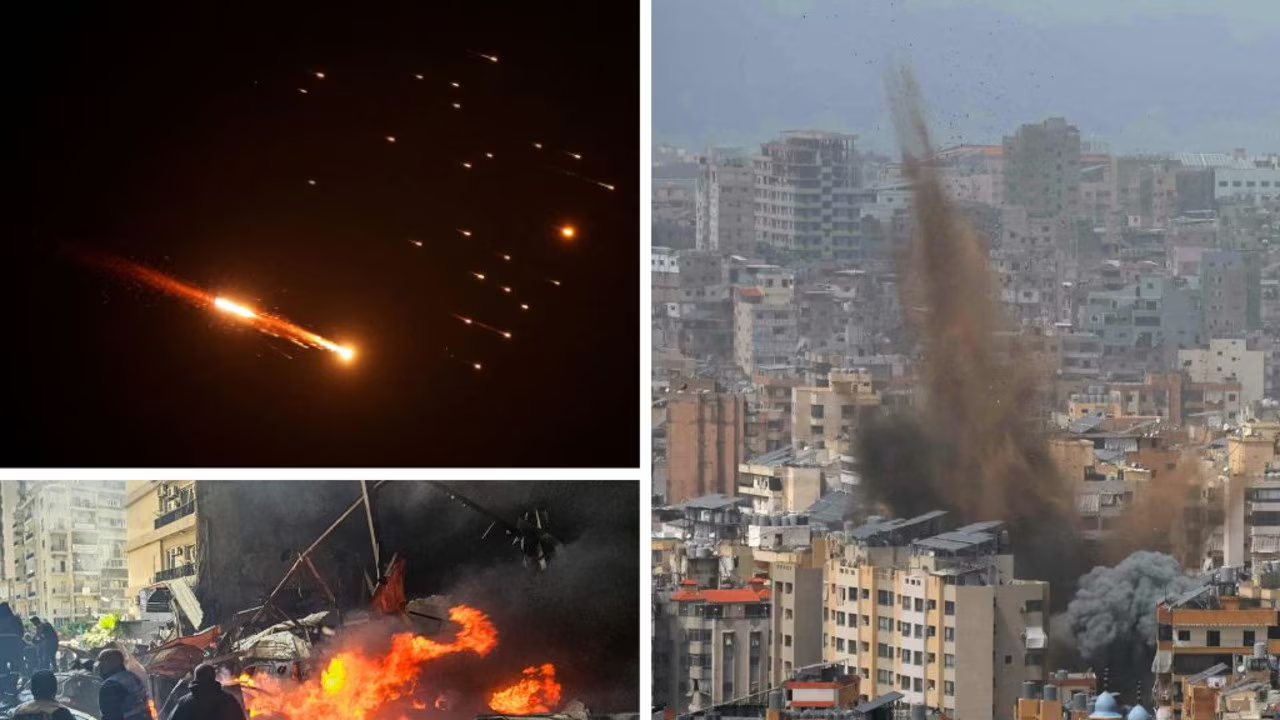
Iran’s parliament speaker has doubled down on claims that Lebanon was a key part of the two-week ceasefire with the US, warning that violations would bring severe consequences, following massive Israeli strikes on its ally.
This article includes updates from Thursday’s events in the Middle East. For Friday’s live blog please click here.
Israel on Wednesday unleashed what it said was its “largest co-ordinated strike” on Lebanon since the war began, killing more than 200 people and wounding over 1000, according to Lebanon’s health ministry.
Iran claims the attacks are a breach of the ceasefire between the US and Iran agreed on Tuesday but Israel has said Lebanon is not included in the deal.
“The world sees the massacres in Lebanon,” Iran’s Minister of Foreign Affairs Abbas Araghchi said in a post on X.
“The ball is in the US court, and the world is watching whether it will act on its commitments.”

Want the news delivered to your inbox every morning? Sign-up to our daily newsletter
Meanwhile, there has been no “uptick” in traffic through the Strait of Hormuz since US President Donald Trump announced his two-weak ceasefire with Iran, contrary to claims from the White House, according to an expert analysis.
“We expect that the strait will be opened immediately,” White House Press Secretary Karoline Leavitt said today, in her first briefing since the ceasefire started.
“We have seen an uptick in traffic in the strait, and it’s something that we are monitoring minute by minute, hour by hour as the days go on.”
However the maritime analysis company Windward says just 11 ships have traversed the Strait of Hormuz in the day since the ceasefire was announced.
That’s no increase at all on the day before.
“Hormuz transit traffic is unchanged,” it said.
On a normal day, before the war, something like 80 ships – and sometimes well over a hundred – would traverse the strait.
Read on for more updates from Thursday.